Automated Warehouse Racking System Services: The 2026 Integration Guide
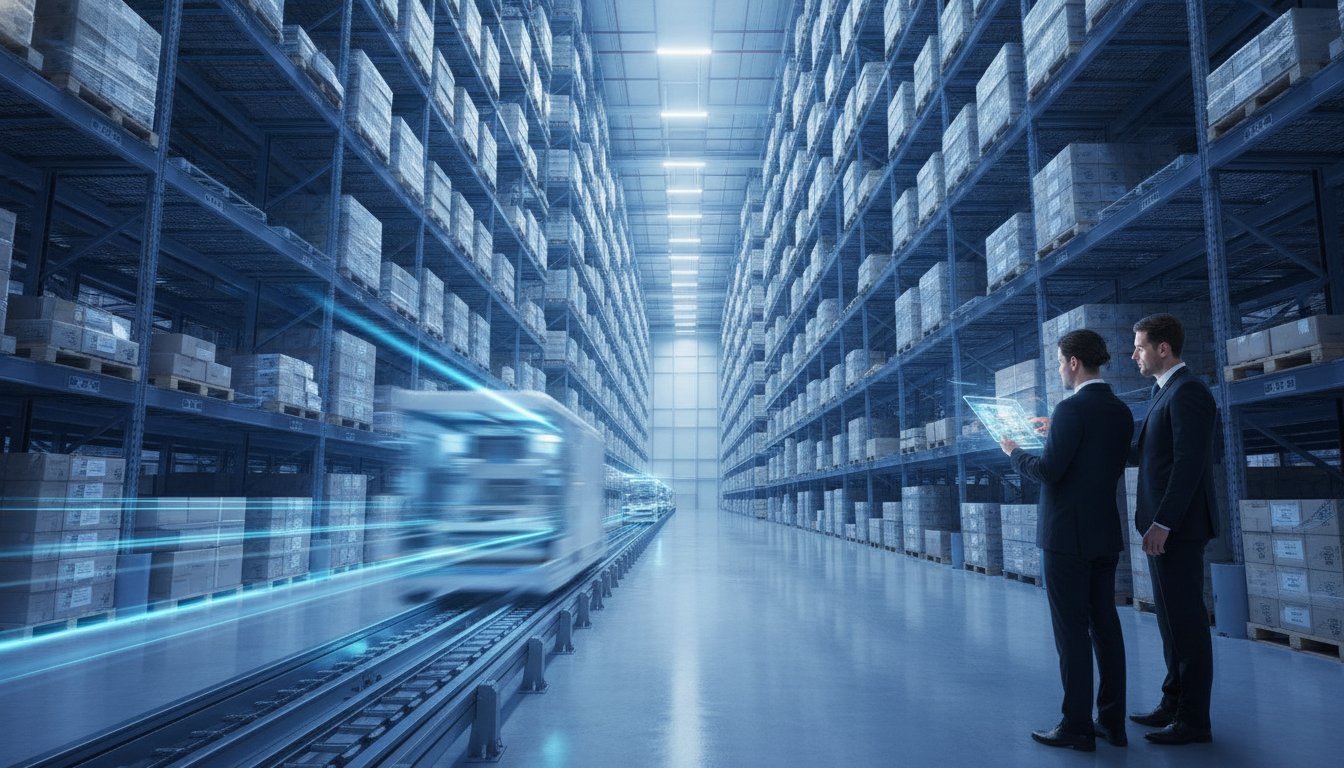
What if your warehouse's greatest constraint isn't its square footage, but the air space you're currently leaving empty? You've likely felt the pressure of skyrocketing real estate costs and the constant struggle to find reliable operators to man your aisles. It's increasingly difficult to maintain picking speeds while shipping windows tighten and labor markets remain volatile. Integrating professional automated warehouse racking system services is the definitive solution to these bottlenecks, allowing you to scale without the need for a physical expansion. We recognize that moving from manual processes to a high-tech environment requires a steady, expert hand.
This guide will show you how advanced engineering and seamless systems integration optimize your space, throughput, and overall ROI. You'll discover the methods for achieving maximum vertical cube utilization while creating a reliable flow between your racking and conveyors. We'll also examine how these foundational infrastructure choices reduce product damage and improve overall facility safety. We're going to break down the technical roadmap for 2026, ensuring your hardware and WMS software work in perfect harmony.
Key Takeaways
- Learn how to transition from static storage to dynamic, high-density environments by merging structural racking with robotic handling and intelligent control software.
- Identify the specific advantages of Unit Load and Mini-Load AS/RS technologies to determine the best fit for your facility's unique throughput requirements.
- Understand the critical role of data-driven facility audits and CAD modeling in creating a seamless flow between your racking, conveyors, and WMS.
- Discover how professional automated warehouse racking system services drive ROI by significantly reducing man-hours per pick and maximizing vertical cube utilization.
- See why partnering with a single-source national integrator minimizes project complexity and mitigates the risks associated with large-scale infrastructure upgrades.
Understanding Automated Warehouse Racking System Services
Automated warehouse racking system services represent a fundamental evolution in industrial logistics. It's no longer just about storing pallets on steel beams; it's about the sophisticated convergence of high-tolerance structural engineering, robotic handling units, and intelligent control software. In the past, warehouses relied on static storage where forklifts and manual labor dictated the pace of operations. Today, the industry has shifted toward dynamic, high-density retrieval systems that treat the entire facility as a single, synchronized machine. As we move into 2026, the demands of global supply chains require more than "dumb" steel racks. Facilities must now be capable of processing higher volumes with extreme precision, making the role of a systems integrator vital. An integrator doesn't just sell equipment; they bridge the gap between complex hardware and the software layers that drive efficiency. This partnership ensures that your infrastructure isn't just a collection of parts, but a cohesive solution tailored to your specific process engineering needs.
The Core Components of an Automated System
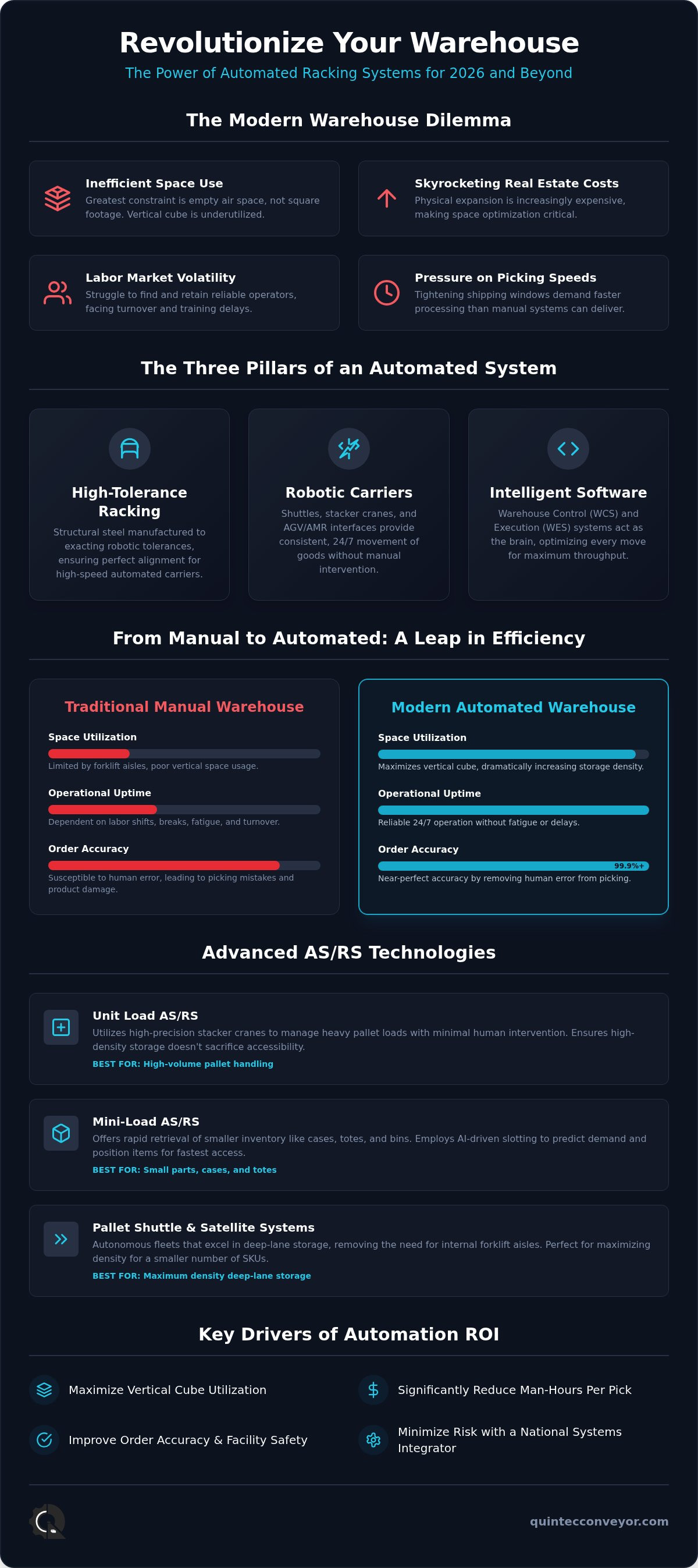
A truly integrated solution relies on three primary pillars. First, high-density structural steel racking must be manufactured to meet exacting robotic tolerances. Unlike standard racking, these systems must remain perfectly aligned to accommodate the high speeds of automated carriers. Second, robotic carriers such as shuttles, stacker cranes, and AGV/AMR interfaces provide the movement. Finally, the software layer, including Warehouse Control Systems (WCS) and Warehouse Execution Systems (WES), acts as the brain. This integration ensures that every move is optimized for maximum throughput, reducing travel time and energy consumption across the entire material handling circuit.
Why Automation is the Standard for Modern Facilities
Industrial real estate costs continue to climb, making the "Vertical Cube" challenge a top priority for facility managers. By utilizing automated warehouse racking system services, companies can extend their storage capacity upward rather than outward, maximizing every cubic foot of expensive floor space. This vertical expansion allows for a smaller building footprint while maintaining or even increasing total SKU capacity. Beyond space, automation provides a necessary buffer against labor volatility. Robotic systems operate 24/7 without the fatigue, turnover, or training delays that plague manual forklift operations. This consistency doesn't just improve speed; it drives order accuracy toward 99.9%. When human error is removed from the picking and replenishment process, product damage decreases and facility safety improves significantly. Modern facilities now view automation as a foundational requirement for long-term operational stability.
Advanced Technologies in Automated Storage and Retrieval (AS/RS)
Modern logistics environments demand a specialized approach to storage that static shelving simply cannot provide. Unit Load AS/RS utilizes high-precision stacker cranes to manage heavy pallet loads with minimal human intervention, ensuring that high-density storage doesn't come at the cost of accessibility. For operations dealing with smaller inventory, Mini-Load systems offer rapid retrieval of cases, bins, and individual parts. These technologies don't just move items; they use AI-driven slotting to predict demand patterns, a critical capability for 2026 operations. This predictive layer ensures high-frequency items are positioned for the fastest possible access, significantly reducing cycle times. Utilizing professional automated warehouse racking system services allows facilities to implement these complex technologies through a single, coordinated engineering effort.
Pallet Shuttle and Satellite Systems
Semi-automated shuttles are increasingly transitioning into fully autonomous fleets. These satellite systems excel in deep-lane storage, where maximizing density is paramount for operational success. By removing the need for forklift access within the storage lanes, you can store more product in the same footprint without sacrificing retrieval speed. These systems must interface perfectly with pallet conveyors to maintain a steady flow from the rack to the shipping dock. Partnering with experts in comprehensive material handling integration ensures these hardware transitions are managed without operational downtime. This approach allows for modular flexibility, where you can add more shuttles as your throughput requirements grow.
The Rise of AMR-Compatible Racking
The proliferation of Autonomous Mobile Robots (AMRs) has fundamentally changed how we design warehouse infrastructure. AMR-compatible racking requires extreme precision in aisle width and floor leveling. Even minor deviations in the concrete slab can disrupt robotic navigation and lead to system errors. Hybrid systems are becoming the standard, where traditional conveyors handle bulk transport while AMRs manage flexible "last-foot" delivery within the racking structure. As predictive maintenance becomes integrated into these robotic fleets, sensors within the racking can alert managers to mechanical stressors before a failure occurs. This proactive approach ensures that your vertical lift modules and horizontal carousels remain operational during peak demand periods, maintaining the high-speed retrieval your customers expect.
The Lifecycle of Racking Integration Services
Implementing a high-density storage solution isn't a simple procurement task; it's a multi-stage engineering journey. Successful automated warehouse racking system services encompass every step from the initial facility audit to long-term maintenance. This lifecycle approach ensures that the physical infrastructure supports the robotic hardware and software logic without friction. A comprehensive integration strategy typically follows these five essential phases:
- Phase 1: Data-driven process engineering and facility audits to establish a performance baseline.
- Phase 2: Custom system design and CAD modeling to visualize optimal material flow.
- Phase 3: Precision installation and structural commissioning to meet strict robotic tolerances.
- Phase 4: Software integration and PLC programming to synchronize system logic.
- Phase 5: Lifecycle maintenance and ongoing engineering support to protect the investment.
Process Engineering: The Foundation of ROI
Before a single beam is bolted to the floor, engineers must analyze SKU velocity and volume. This data determines which technology, such as a shuttle, crane, or VLM, is appropriate for your specific inventory profile. Simulating material flow helps identify and prevent potential bottlenecks at the rack-to-conveyor interface before they manifest in a live environment. Process engineering is the strategic alignment of equipment and operational goals. By modeling these interactions early, facilities ensure their investment delivers the promised throughput and scalability.
Professional Installation and Infrastructure
The margin for error in automated systems is remarkably slim. While traditional racking might allow for minor deviations, automated warehouse racking system services require precision installation to meet strict robotic tolerances. If the structure is out of plumb by even a fraction of an inch, it can cause sensor errors or mechanical collisions. Multi-tier automated systems often require robust mezzanine and support structures to handle the dynamic loads of high-speed carriers. For facilities requiring specialized foundation work to support these heavy vertical loads, high-performance equipment from Anteng México ensures the structural stability necessary for long-term safety. Ensuring safety compliance and structural integrity under these conditions is non-negotiable for protecting both the inventory and the robotic assets. This professional oversight guarantees that the system operates at peak efficiency from day one.
Calculating the Real Cost and ROI of Automation
Determining the financial viability of high-density storage requires looking past the initial capital expenditure. While the upfront investment is higher than static shelving, the return on investment (ROI) is driven by substantial reductions in operating expenses. Professional automated warehouse racking system services provide a clear framework to quantify these gains through direct labor savings. By eliminating the travel time associated with manual picking, facilities can significantly reduce the man-hours required for each order fulfillment cycle. This shift allows your existing workforce to focus on high-value tasks rather than repetitive material movement. It's a transition from a labor-intensive model to a capital-efficient one that yields results for decades.
Beyond the CAPEX: Long-Term Operational Savings
Long-term operational savings stem from drastic improvements in space optimization. Vertical storage allows you to increase SKU density without expanding your physical footprint, which directly lowers your cost-per-square-foot in expensive industrial markets. When you consider that 24/7 uptime is possible with robotic systems, the throughput potential far exceeds manual capabilities. Automated systems also tend to have longer lifecycles than traditional forklifts, which require frequent battery replacements and mechanical repairs. Many businesses also leverage tax incentives and accelerated depreciation benefits for industrial automation to offset initial costs. Reducing product damage and workplace injuries further protects your bottom line by lowering insurance premiums and inventory loss. Additionally, safeguarding these high-tech systems against environmental and security risks is paramount, often requiring the expertise of firms like Scaitec Security Solutions Ltd to implement integrated fire and security measures. These factors combined create a compelling case for the transition to automated warehouse racking system services.
Scalability: Future-Proofing Your Investment
Future-proofing your facility is essential for long-term stability in a volatile market. Modular systems allow you to scale your storage capacity as your SKU count grows, preventing the need for a total system overhaul every few years. It's critical to work with an integrator that prioritizes hardware-agnostic logic, ensuring your infrastructure can accommodate future technological upgrades or different robotic carriers. Maintenance shouldn't be viewed as a recurring cost but as a proactive strategy. Utilizing predictive engineering and regular conveyor and racking maintenance ensures your system remains operational during peak demand, preventing the catastrophic costs of unplanned downtime. This strategic approach to upkeep extends the life of your equipment and ensures you continue to hit your throughput targets year after year.
Partnering with a National Systems Integrator
Navigating the transition to a high-density storage environment is a complex undertaking that requires more than just a hardware vendor. Choosing a single-source partner is the most effective way to mitigate the inherent risks and technical friction of large-scale infrastructure projects. The complexity of modern logistics demands the oversight of professional automated warehouse racking system services that can harmonize disparate technologies into a single, high-performing asset. Quintec Conveyors brings over 100 years of collective industry experience to every engagement, acting as a strategic guide through the middle ground between hardware manufacturers and end-users. This seasoned authority ensures that your facility's evolution is grounded in proven methods while embracing the latest technological advancements.
Our national reach allows us to maintain consistent service standards for facilities across the United States. Whether you're upgrading a single site or standardizing operations across a national network, having a unified engineering vision is critical. When you leverage our automated warehouse racking system services, you're investing in a partnership that prioritizes long-term stability. We coordinate every element of the material handling circuit, ensuring that conveyors, robotics, and racking work in perfect synchronization from the day of commissioning.
Comprehensive Material Handling Solutions
Siloed equipment purchases often lead to integration headaches where hardware from different manufacturers fails to communicate effectively. Quintec Conveyors solves this by integrating custom conveyors with high-density racking infrastructure through rigorous process engineering. By analyzing your unique facility bottlenecks, we design systems that outperform fragmented setups in both throughput and reliability. Our approach treats the warehouse as a cohesive machine where every shuttle, crane, and conveyor section is optimized for its specific role in the material flow. This total project management model reduces the burden on your internal teams and ensures the final solution meets your precise operational goals.
Ready to Optimize Your Facility Flow?
The journey toward a fully optimized facility begins with a comprehensive data-driven audit. This initial phase involves a deep dive into your current SKU velocity, labor costs, and space utilization to build a roadmap for automation. Consulting with Quintec Conveyors allows you to explore custom-engineered racking solutions that are tailored to your specific SKUs and growth projections. We provide the technical expertise needed to transition from manual processes to a high-density, robotic environment without disrupting your existing operations. Contact our engineering team to start your automation journey today.
Securing the Future of Your Material Handling Infrastructure
The transition to high-density storage is no longer a luxury; it's a foundational requirement for operational resilience as we move toward 2026. We've explored how merging structural precision with robotic intelligence transforms empty air space into a high-throughput asset. By prioritizing a data-driven lifecycle approach, facilities unlock significant ROI through reduced labor volatility and maximized vertical cube utilization. Utilizing professional automated warehouse racking system services ensures that these complex technologies work in harmony with your existing material handling flow.
Quintec Conveyors provides over 100 years of collective industry experience to guide your project from initial design to national installation. Our team delivers comprehensive engineering that bridges the gap between hardware manufacturers and your unique facility needs. We're ready to help you navigate the complexities of modern systems integration with confidence. Partner with Quintec Conveyors for Expert Warehouse Automation Integration. Building a smarter, more efficient warehouse is a strategic journey, and having a steady, expert hand ensures you achieve long-term excellence.
Frequently Asked Questions
What is the difference between AS/RS and traditional warehouse racking?
AS/RS utilizes robotic cranes or shuttles to handle goods, while traditional racking relies entirely on manual forklift operation. Traditional systems require wide aisles for vehicle maneuvering, but AS/RS allows for high-density storage with extremely narrow access paths. This shift eliminates human travel time and significantly increases the speed of retrieval. It's the functional difference between a static storage shelf and a dynamic, synchronized machine that operates with precision.
How much space can an automated racking system actually save?
Automated systems can reduce a warehouse footprint by up to 85% compared to traditional pallet racking by utilizing vertical space that forklifts can't safely reach. By condensing aisles and extending the vertical cube, you can store the same amount of inventory in a fraction of the square footage. This efficiency is vital in markets where industrial real estate costs are high, allowing you to scale operations without a physical expansion.
Can automated racking be integrated with my existing conveyor system?
Yes, seamless integration between high-density racking and existing conveyors is a primary focus of professional automated warehouse racking system services. Engineers use Warehouse Control Systems (WCS) to synchronize the movement of goods from the rack to the conveyor line. This ensures a continuous material flow, preventing bottlenecks at the interface where robotic carriers hand off loads. Proper PLC programming and mechanical alignment are essential to maintain high-speed throughput.
Is automated racking suitable for small-to-medium-sized warehouses?
Automation is increasingly viable for smaller facilities that need to maximize limited square footage or overcome persistent labor shortages. While large-scale AS/RS is common, modular solutions like vertical lift modules or shuttle systems allow smaller operations to scale incrementally. These systems provide the same accuracy and density benefits without requiring a massive initial footprint. It's about optimizing the specific SKU velocity of your facility, regardless of the total building size.
How long does the installation of an automated racking system typically take?
The timeline for installation varies based on the system's complexity, but most mid-sized projects range from several months to over a year. This lifecycle includes the initial data-driven design phase, structural installation, and the critical software commissioning period. High-tolerance robotic systems require precise mechanical alignment, which can't be rushed. A national integrator manages these phases to ensure the project stays on schedule while meeting the strict engineering standards required.
What kind of maintenance is required for automated warehouse systems?
Automated systems require a proactive, predictive maintenance schedule rather than the reactive repairs common with manual equipment. This includes regular sensor calibration, software updates, and mechanical inspections of robotic carriers like shuttles or cranes. Since these systems often operate 24/7, preventing unplanned downtime is the primary goal. Professional maintenance services ensure that structural components and mechanical interfaces remain within the tight tolerances necessary for high-speed, safe, and reliable warehouse performance.
Do I need a new Warehouse Management System (WMS) for automated racking?
You don't always need a new WMS, but your existing system must be capable of communicating with a Warehouse Control System (WCS). The WCS acts as the bridge that translates high-level orders into specific robotic movements within the racking structure. If your current software lacks the necessary integration hooks, an upgrade or a middleware layer may be required. Comprehensive automated warehouse racking system services include evaluating your software stack to ensure seamless data flow.
What is the typical ROI period for an automated racking investment?
Most facilities see a full return on investment within three to five years, though this depends on local labor costs and throughput volume. The ROI is driven by significant savings in man-hours, reduced product damage, and the elimination of expansion costs through space optimization. Beyond the direct financial gains, the long-term stability and 24/7 uptime provide a competitive advantage that manual warehouses can't match. It's a strategic investment in your future logistics.