Conveyor System Lifecycle Management for Stable Production
A conveyor’s age alone doesn’t determine when it should be replaced. Quality industrial conveyor installations typically have an expected lifespan of 10-15 years, but replacement becomes a priority when recurring failures, changing handling requirements, production bottlenecks, or poor integration with newer technology limit reliable output. Conveyor system lifecycle management brings service history, maintenance needs, production demands, and phased planning together to guide that decision.
It’s understandable to focus on repair costs or the disruption of a major upgrade. A sound decision also considers how the system performs today, what production will require next, and the combined effects of maintenance, downtime, and replacement planning. This article explains how preventive maintenance supports stable production, which operational changes can signal that a conveyor no longer fits, and how modular upgrades and phased projects can help manage a transition. It also outlines the factors that shape lifecycle costs, helping you assess whether to maintain, modernize, or replace the system.
Key Takeaways
- Base replacement decisions on system condition, recurring downtime, and whether the conveyor still meets current production needs, not age alone.
- Use inspection findings and proactive monitoring to identify wear, misalignment, and developing faults before they disrupt output.
- When production or integration requirements change, assess whether an upgrade or modular adjustment can address bottlenecks before planning a full replacement.
- Compare lifecycle costs across maintenance, parts, labor, downtime, and production losses to understand the broader impact of each option.
- Plan complex replacements in phases to coordinate resources, manage operational disruption, and apply lessons learned as the project progresses.
How can conveyor service support stable production output?
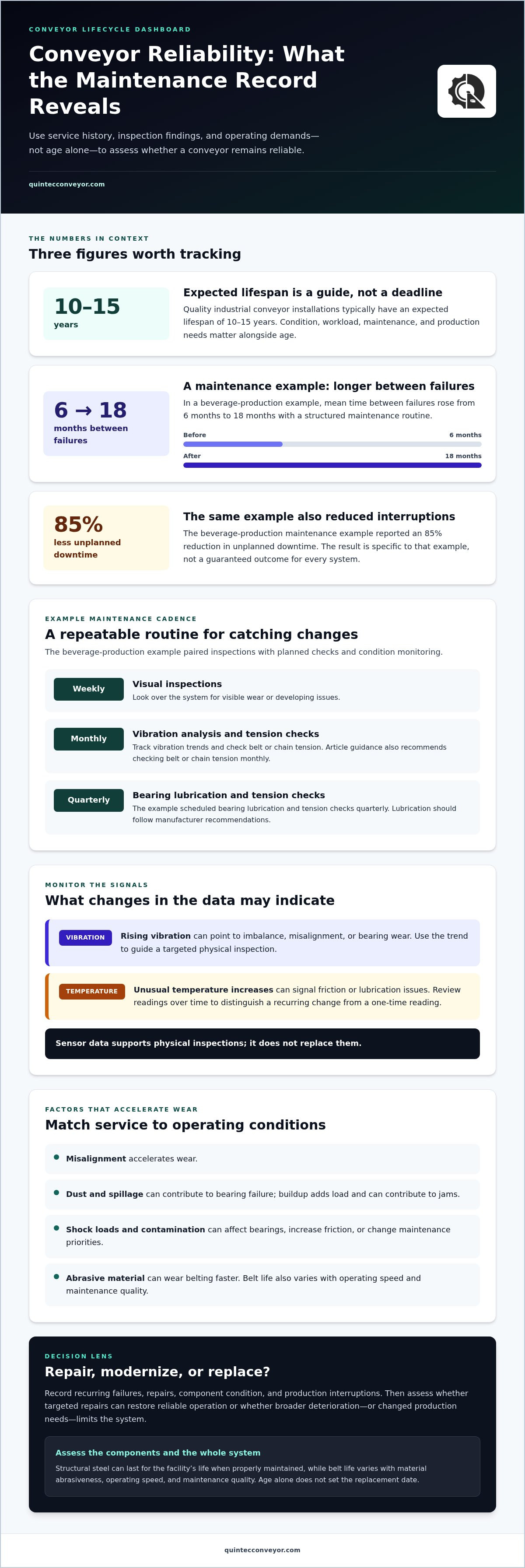
Stable output depends on spotting wear early, matching maintenance to operating conditions, and assessing whether repairs still support production. Quality industrial conveyor installations typically have an expected system lifespan of 10-15 years, but condition and workload matter alongside age.
Sensor-Based Condition Monitoring
Vibration and temperature sensors track changes in conveyor components that may indicate developing mechanical problems. Rising vibration can point to imbalance, misalignment, or bearing wear; unusual temperature increases can signal friction or lubrication issues. Reviewing readings over time helps maintenance teams spot changes, inspect affected components, and plan service before a fault interrupts material flow.
Use sensor data alongside physical inspections, not instead of them. For example, a change in bearing vibration can prompt a targeted inspection for wear, contamination, or inadequate lubrication. Trend records also help distinguish a recurring issue from a one-time reading, giving operations teams a clearer basis for service planning.
Repair and Replacement Decisions
Condition tracking compares a system’s operating history with its current performance to inform repair-versus-replacement decisions. Record recurring failures, repairs, component condition, and production interruptions. Then assess whether targeted repairs can restore reliable operation or broader deterioration affects the installation.
A quality industrial conveyor installation typically has an expected lifespan of 10-15 years, but that range is not a replacement deadline. Structural steel can last for the facility’s life when properly maintained, while belt life varies with material abrasiveness, operating speed, and maintenance quality. Assess components individually as well as the full system.
Maintenance Under Operating Conditions
Condition-based maintenance adjusts inspection and service intervals to the conveyor’s load, environment, and inspection findings. Check belt or chain tension monthly, inspect tracking, and schedule lubrication according to manufacturer recommendations. Misalignment accelerates wear, while dust, spillage, and shock loads can contribute to bearing failure.
Harsh conditions change what maintenance must prioritize. Abrasive material can wear belting faster; contamination can increase friction or affect bearings. Remove buildup regularly, since it adds load and can contribute to jams. A beverage-production maintenance example combines weekly visual inspections with quarterly bearing lubrication and tension checks, plus monthly vibration analysis. In that example, mean time between failures rose from 6 months to 18 months, and unplanned downtime fell by 85%.
Service Life, Safety, and End-of-Life
Assess structural integrity, belt or chain wear, bearings, alignment, and maintenance records against current operating demands. In the United States, OSHA workplace requirements and relevant safety standards should inform conveyor design, operation, servicing, and decommissioning. Applicable provisions depend on the equipment and work environment.
For end-of-life planning, stop operations and control hazardous energy before dismantling. Remove conveyed material, separate components by material, and assess which parts can be reused or recycled. Route remaining waste through suitable disposal processes in line with applicable local requirements.
Changing production and integration requirements
Assess conveyor requirements against the material, handling needs, throughput, available floor space, and operating environment. Select equipment that fits those conditions and connects with the facility’s existing processes and technology.
Production changes can turn a once-suitable conveyor into a bottleneck. Reviewing capacity, product characteristics, and integration needs helps distinguish a targeted upgrade from a system that no longer supports operations.
Phased Integration and Testing
Phased integration brings conveyor equipment and connected systems online in planned stages, with testing before each phase advances. This makes it easier to find interface issues and adjust the design before they affect more of the operation.
In a warehouse automation project, one phase might connect a conveyor section with robotics and controls, then test material flow and handoffs. Teams can use the results to refine settings and address problems before connecting additional areas. Testing each phase also helps stakeholders assess whether the system handles the intended products and workflows.
Integration analysis should account for upstream and downstream processes, not just the conveyor. For example, a faster conveyor may deliver products to a packing station faster than the station can process them. Mapping these handoffs reveals capacity constraints and potential interruptions before installation changes are made.
Warehouse automation may combine conveyors, robotics, and other material handling equipment. These systems must coordinate product movement, accumulation, and release. A phased approach lets teams test interfaces under representative operating conditions, then apply what they learn to the next connection.
Requirements and Equipment Selection
Equipment selection matches conveyor design to products, throughput, facility layout, and environmental demands. A careful assessment matters: mismatches in dimensions, stability, or required speed can restrict capacity or create handling problems.
Start with product dimensions, weight, and stability, then define required throughput and available floor space. Consider whether the environment has cleanroom, electrostatic discharge, or washdown requirements. These factors inform conveyor type and materials, as well as the controls and connections needed for integration.
A changing product mix can alter these requirements. A line designed for stable cartons, for example, may need different handling for irregular items. Assessing the product range and flow shows whether adjustments to existing equipment can meet demand or changed handling requirements call for replacement.
Review how the proposed conveyor will exchange information and material with existing controls, robotics, and warehouse systems. Clear interface requirements help reduce integration gaps during installation. For complex changes, conveyor integration planning can connect equipment decisions with the facility’s operational requirements.
What is performance-based conveyor maintenance?
Performance-based maintenance uses equipment condition and production needs to guide service priorities. In manufacturing, this connects maintenance work with reliable material flow and operating efficiency.
Preventive Maintenance and Proactive Monitoring
Preventive maintenance schedules inspections and service before wear causes failures, while proactive monitoring uses equipment data to prioritize attention. Teams can spot changes, link them to specific components, and plan work around production demand.
For example, compare motor vibration and temperature trends with inspection records, then investigate a developing change during a planned maintenance window. Test and calibrate safety sensors, which help detect unsafe operating conditions. Tracking findings over time shows whether a recurring issue calls for a different repair approach or closer monitoring.
Scheduling preventive work during low-demand periods can limit disruption to manufacturing. Food and beverage or automotive production can lose thousands per hour when a conveyor failure interrupts operations. A planned shutdown window gives teams time to inspect components and complete required service before demand rises.
Lifecycle Maintenance Activities
Lifecycle maintenance covers the recurring tasks that keep a conveyor operating, from routine inspection to component repair and control-system upkeep. Work should reflect actual operating conditions, with inspection findings used to adjust the schedule.
For example, maintenance can include checking belt tracking and tension, lubricating or replacing roller bearings, and aligning motors. Dust, spillage, material abrasiveness, and shock loads affect which components need closer attention. Removing buildup also reduces added weight and friction that can contribute to jams.
Controls need maintenance too. Back up control systems and update software as part of planned work so changes remain documented and operational settings can be restored. Records of completed tasks, findings, and replaced components support condition reviews throughout the conveyor’s service life.
Maintenance Costs and Ownership
Total cost of ownership includes more than scheduled maintenance. When considering replacement, account for routine service, emergency repairs, replacement parts, repair and maintenance labor, and production losses caused by downtime.
Compare those factors with the current conveyor’s condition and operating demands. Frequent repairs to one component may support targeted replacement, while recurring failures across multiple components may point to broader system concerns. This distinction helps teams prioritize maintenance without treating every repair as proof that the whole conveyor needs replacing.
Plan maintenance around the production calendar: schedule preventive work during low-demand periods and coordinate shutdown support with operations. Keep essential tasks, parts needs, and labor requirements visible in the plan. This makes service windows easier to manage and clarifies how maintenance affects ownership costs and production efficiency.
Modularity, scalability, and total cost of ownership
Measure conveyor performance through throughput, availability, and unplanned downtime, then compare reliability and ownership costs over time. Total cost of ownership includes maintenance, repairs, replacement parts, labor, and production losses.
For example, compare a modular upgrade with full replacement using the same production requirements and cost categories. This clarifies the expected operational results instead of focusing on purchase cost alone.
Modularity and Scalability
Modularity uses adaptable sections or components, while scalability lets capacity grow or change with production requirements. Both matter as product mixes, volumes, or facility layouts evolve.
A facility handling lightweight cartons today may later need to move heavier or differently sized products. Modular sections can help adapt layouts, while scalable design leaves room for added capacity. In cleanroom, washdown, or other demanding environments, equipment selection must also account for operating conditions. These choices can make future changes more manageable and reduce the need to replace an entire system.
Modularity isn't automatically the lowest-cost option. Added sections still need to fit the existing layout, controls, and material flow. Assess required throughput and each handoff before deciding which elements should remain flexible. This ties the system plan to actual production needs, rather than adding capacity or features without a defined purpose.
Ownership Costs and Investment Returns
Total cost of ownership captures the expenses and operating losses associated with a conveyor across its useful life. It matters because a lower initial capital cost may come with higher maintenance, labor, parts, or downtime burdens.
Compare alternatives using consistent categories: routine maintenance, emergency repairs, replacement parts, repair and maintenance labor, and production losses during downtime. Then weigh expected benefits, such as improved flow or fewer bottlenecks, against those lifecycle costs. This provides a practical basis for assessing return on investment without relying on purchase price alone.
For a replacement analysis, use maintenance records and observed production constraints. If recurring repairs affect output, include those interruptions alongside direct repair expenses. If the existing conveyor meets current needs, a targeted upgrade may be more appropriate than replacing equipment across the facility.
Capital Costs and Performance Measures
Capital cost management defines essential project scope, assigns spending to priorities, and tracks performance against operating needs. It matters because unnecessary scope can drive cost overruns without improving material flow.
Separate required components from optional enhancements before approving a project. Track throughput, downtime, reliability, maintenance needs, and repair history to assess whether the investment addresses the original operational constraint. Compare those measures before and after changes, using the same definitions and production context.
For example, if a bottleneck limits a specific process, prioritize the conveyor elements that address that constraint. A phased or modular project can focus on essential upgrades while preserving opportunities for later expansion. Review performance and spending at each phase, then adjust subsequent scope based on actual results.
Phased project planning and resource allocation
A phased conveyor project organizes engineering, fabrication, permitting, installation, and testing into manageable work packages. Planning each phase helps coordinate resources, budgets, timelines, and operational needs.
Risk and Contingency Planning
Risk planning identifies potential project disruptions early and assigns actions to reduce their effects. For an industrial replacement, map dependencies between conveyor sections, production areas, and connected equipment before work begins.
Breaking work into phases helps teams address risks while the project scope remains manageable. A phase plan can identify responsible teams, required resources, budget allocations, and fallback arrangements if testing reveals a design issue. Stakeholder feedback at each stage can surface operational concerns before they affect later work.
For example, if one conveyor section fails its integration test, isolate that phase while keeping unaffected work on schedule. Apply lessons from completed phases to improve later design and installation planning. This staged approach can limit production downtime and help teams respond as priorities shift.
Include inspection, testing, and approval milestones in each phase. These checkpoints help identify risks before work moves forward and give decision-makers a clear basis for adjusting resources or schedules. If production requirements change, revise upcoming phases rather than carrying outdated assumptions through the project.
Replacement and Spare Parts Planning
Advance replacement planning connects equipment condition and expected service life with future capital needs. Conveyor operators are advised to build a 5-10 year capital plan that accounts for system condition and expected service life.
Use inspection records, repair history, and operating requirements to identify components that may need replacement. Allow lead time for engineering, fabrication, permitting, and installation. Scheduling upgrades during an offseason rather than peak operations can reduce production disruption.
Spare-parts planning should reflect the components most important to continuous material flow. Review maintenance records to identify recurring replacements, then align parts planning with phased work and planned shutdowns. Sourcing critical hardware through specialized distributors like Jealco International, Inc. helps teams coordinate labor, inventory, and installation needs without treating every component as equally urgent.
Assign budgets to specific phases and track spending against each phase’s scope. This makes capital expenditures easier to monitor and helps control scope growth. A phased plan also creates opportunities to apply lessons learned, improving later work and keeping the final system aligned with current business needs.
For support coordinating conveyor engineering, installation, and phased replacement, plan a conveyor project around your facility’s production requirements.
Quintec Conveyors: Conveyors
Quintec Conveyors can help when production requirements call for a new conveyor system, an upgrade, or coordinated material handling equipment. Its services include conveyor design, engineering, and installation, with robotics and automation, infrastructure, and additional material handling equipment supporting broader facility projects.
Turn to Quintec Conveyors when assessing a replacement, planning a phased installation, or aligning conveyor equipment with warehouse operations. The right project scope depends on material flow, facility constraints, and how systems need to connect. A coordinated engineering approach brings these requirements into the planning process and supports decisions about equipment and integration.
For guidance on your conveyor project, contact Quintec Conveyors.
Turn Lifecycle Insight Into Your Next Move
Make lifecycle decisions part of ongoing operational planning, not a separate replacement exercise. Assign responsibility for reviewing system condition, production changes, and investment priorities, then use those reviews to align future decisions with facility needs. This gives teams a clear framework for deciding what to address now and what to plan for later.
Effective Conveyor system lifecycle management also connects equipment decisions with the wider operation. Conveyor requirements may intersect with robotics and automation, infrastructure, and material flow across the facility. Considering these relationships early helps shape a practical project scope and supports coordinated planning.
Quintec Conveyors provides conveyors, robotics and automation, and infrastructure for industrial applications. If you’re preparing a system upgrade or evaluating a replacement project, contact Quintec Conveyors to discuss your operational needs. A clear plan is a strong starting point for your next production improvement.
Frequently Asked Questions
When Should You Replace a Unit Handling Conveyor System?
Replace a unit-handling conveyor when it can’t meet required throughput or product-handling needs, or when recurring faults and integration limits undermine production. Compare repair history and downtime patterns with ownership costs, then determine whether repairs restore reliable operation or merely postpone broader work. A localized worn roller may call for a component replacement, while repeated failures across several areas can warrant assessing system-level replacement.
How can conveyor maintenance cost be reduced?
Reduce maintenance expense by using inspection records to prioritize work, avoiding unnecessary component replacement, and planning service around production schedules. Track which parts fail repeatedly and whether the same operating condition contributes each time. Adjust maintenance intervals based on inspection findings and manufacturer recommendations. For example, correcting misalignment may address accelerated belt wear at its source, rather than repeatedly replacing affected components without resolving the underlying issue.
How can conveyor operations reduce unplanned downtime?
Reduce unplanned downtime by combining condition monitoring with clear response procedures. When a sensor or inspection reveals a developing issue, identify the affected conveyor section, assess its impact on downstream processes, and plan corrective work. Accumulation can also decouple process dependencies, allowing one stage to continue briefly while another pauses. Keep maintenance findings accessible to operations teams so they can respond consistently to recurring warnings.
What are the stages of a conveyor system lifecycle?
A conveyor lifecycle typically moves through requirements assessment, system design, installation and commissioning, operation, maintenance, upgrades or replacement, and eventual decommissioning. Conveyor system lifecycle management connects these stages through records of operating needs, condition, and performance. For example, data gathered during operation can inform an upgrade’s scope, while end-of-life planning identifies components for reuse, recycling, or appropriate disposal.
What are typical conveyor system design, installation, and commissioning steps?
Project work typically begins by defining the products, load characteristics, required flow, layout constraints, and facility environment. Engineering then develops the system arrangement and interfaces with connected equipment. Fabrication and installation follow the approved design. During commissioning, teams inspect mechanical and control interfaces, test material movement, and resolve issues before routine operation. For a warehouse line, test product transfers between conveyor sections and connected workstations.
What is the typical lifespan of different types of conveyor systems?
Quality industrial conveyor installations typically have an expected lifespan of 10-15 years, while stainless steel conveyor belts can last for decades. These figures describe different equipment scopes, not a universal replacement schedule. Actual service life depends on material abrasiveness, operating speed, maintenance quality, and environment. Structural steel can last for the facility’s life when properly maintained, even if wear-prone components require earlier attention or replacement.
What preventive maintenance schedule should conveyor systems follow?
Set intervals according to operating conditions, manufacturer guidance, and inspection findings. A practical schedule can include frequent buildup removal, monthly belt or chain tension checks, and scheduled lubrication. One beverage-production example uses daily cleaning, weekly visual inspections, and quarterly bearing lubrication and tension checks. Treat these as planning references, not a universal calendar: abrasive material, dust, spillage, and operating intensity affect which components need closer attention.
What are common conveyor system failures and how can they be prevented?
Common problems include belt or chain misalignment, bearing wear or failure, tension problems, and blockages caused by material buildup. Misalignment accelerates wear, while inadequate lubrication, dust, spillage, and shock loads can contribute to bearing failure. Inspect tracking and tension, remove buildup, and lubricate bearings and chains using manufacturer-recommended oil and intervals. When a problem recurs, record its location and operating conditions to guide corrective action.