
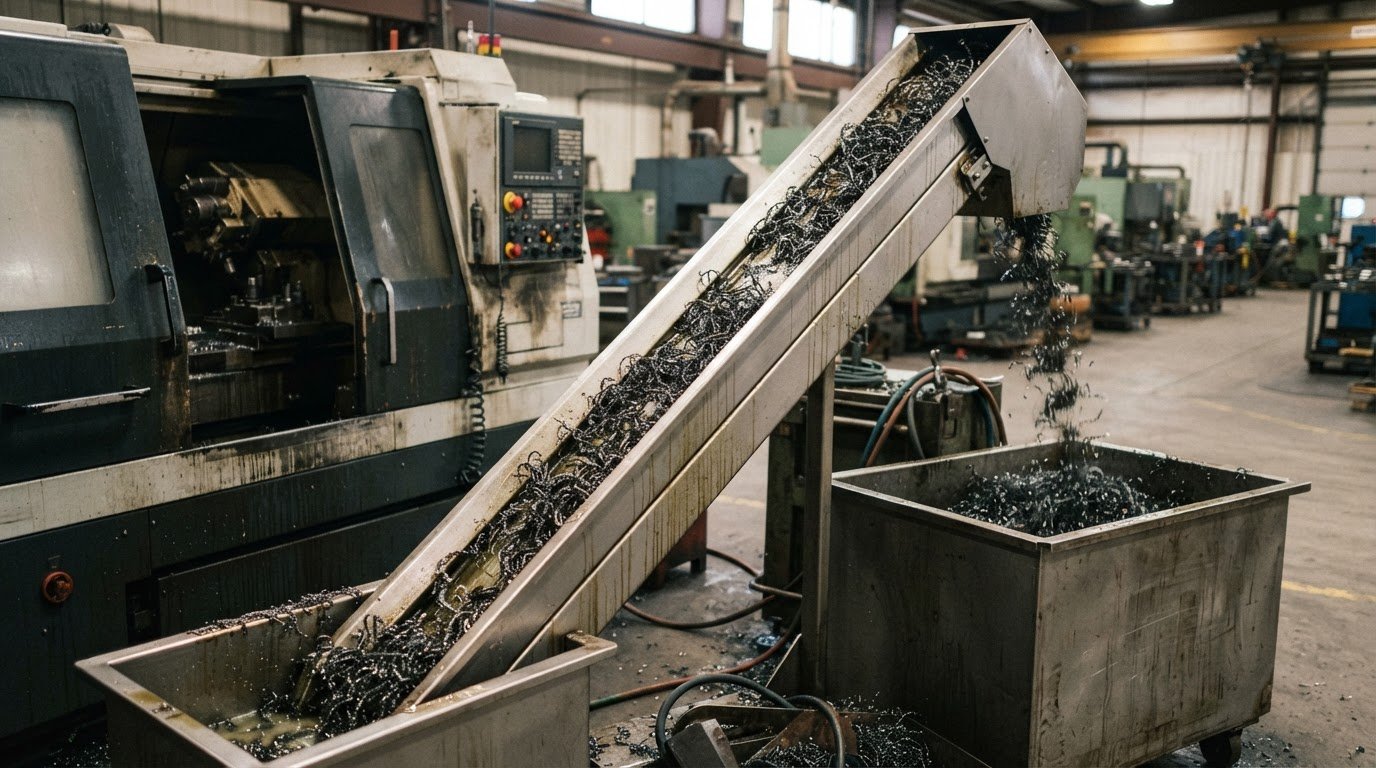
A conveyor can hold steel workpieces in position even when its route runs vertically or upside down. Magnetic conveyance moves ferrous materials using permanent magnets, electromagnets, or both, helping guide and retain items without relying on gravity alone. The right design depends on the material and production task.
That makes magnetic systems useful for more than basic transport. They can help sort or separate products, hold workpieces in place during movement, and carry metal chips away from industrial machines. The design must match the application: a system that transports sheets may differ from one that releases them for robotic pickup.
This guide explains how magnetic conveyors work, where their advantages apply, and how belt-based and beltless designs differ. It also covers common industrial uses and the engineering considerations involved in integrating a system into a facility, helping you assess whether magnetic conveyance fits your material-handling needs.
Key Takeaways
- Beltless magnetic systems can be integrated into existing conveyor layouts or designed as part of a new material-handling system.
- Magnetic force helps retain ferrous materials during transport, including on routes where gravity alone would not keep workpieces in place.
- From moving metal chips to feeding sheets into production equipment, the application determines the conveyor configuration and magnetic field requirements.
- Permanent- and electromagnetic designs differ in how they hold and release workpieces, making the handling task central to system selection.
Professional Beltless Magnetic Conveyor Design
A beltless magnetic conveyor moves ferrous material without a conventional moving belt. Its design centers on the magnetic assembly, slide bed, material path, and connection to surrounding equipment.
Magnetic Conveyor Types
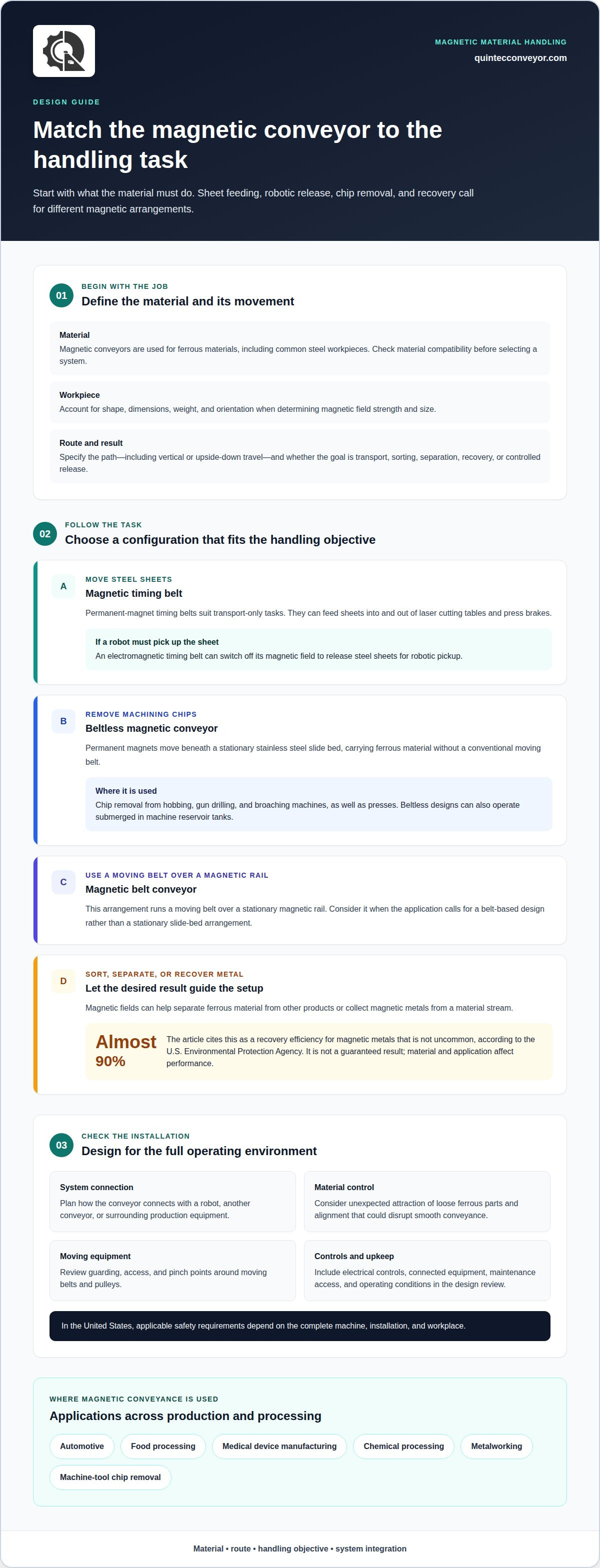
A magnetic conveyor uses permanent magnets, electromagnets, or both to attract and transport ferrous material. Beltless designs move permanent magnets beneath a stationary stainless steel slide bed, while magnetic belt conveyors run a moving belt over a stationary magnetic rail. Choose according to whether the application needs a slide-bed arrangement, a moving belt, or controlled magnetic release. Electromagnetic timing belts suit applications where a robot needs the magnetic field switched off to pick up steel sheets.
Advantages and Limitations
The main advantage is controlled transport of ferrous workpieces, including along routes where gravity alone would not hold them in place. Magnetic force retains material against a conveying surface, while beltless construction avoids a traditional belt or chain. Material compatibility matters: magnetic conveyors are used for ferrous materials, so check whether they are suitable for other products. The task matters, too. A system intended only to transport sheets may not suit robotic pick-and-place without a release mechanism.
Sizing and Selection
Sizing and selection match the magnetic arrangement and conveyor layout to the workpiece and production task. Engineers assess the material, item shape, dimensions, weight, orientation, and required movement, then determine the magnetic field strength and size for the application. They also consider the route, including vertical or upside-down travel, and whether the system must connect with a robot or another conveyor. For example, a sheet-feeding line may need a different magnetic control approach from a chip-removal conveyor. These factors guide the design, from conveying surface to system integration.
Failures and Safety Risks
Failure and safety risks include conditions that disrupt material control or expose people to moving equipment and magnetic forces. In the United States, applicable safety requirements depend on the complete machine, installation, and workplace. Design review should consider guarding, access, electrical controls, and connected equipment. Loose ferrous parts near a magnetic surface, for example, can be attracted unexpectedly, while poor alignment can disrupt smooth conveyance. Pinch points around moving belts and pulleys also need attention in the finished layout. A professional review considers these hazards alongside maintenance access and operating conditions. Quintec prioritizes employee safety and follows all OSHA requirements and regulations.
Conveying ferrous materials
Ferrous materials are metals that contain iron, including common steel workpieces. A magnetic conveyor uses a field beneath the conveying surface to attract and retain these items. This force helps keep steel positioned as it travels, rather than relying on gravity alone. That matters when the route changes direction or carries material in an orientation where loose parts could shift. The application determines the field’s strength and size, so the item and route shape the system’s design.
Retention describes how magnetic force holds material against the conveyor during movement. A stable hold supports the transport of different shapes, sizes, and weights, provided the items respond to the magnetic field. For example, steel pieces can stay positioned along a route instead of sliding away as the conveyor changes orientation. Magnetic fields also make conveyors useful for sorting and separation, where ferrous material must move apart from other products. The required result determines how the system handles the material.
Magnetic recovery uses attraction to collect magnetic metals from a material stream. According to the U.S. Environmental Protection Agency, a recovery efficiency of almost 90 percent for magnetic metals is not uncommon. This figure describes a potential recovery efficiency, not a guaranteed result for every installation. The material being processed and the application affect performance. Recovery may be relevant where magnetic metals need to be gathered from a mixed stream, while direct conveyance focuses on moving ferrous items along a production route.
Conveyance is the controlled movement of material between process points. In an industrial setting, the design must account for the items’ shape, size, weight, orientation, and required path. A field that retains steel on a horizontal run must also suit any vertical or upside-down sections. The configuration follows the task: transport, sorting, separation, or recovery. Clearly defining the material and intended movement helps match magnetic force to operating needs, without assuming one configuration suits every ferrous load.
Industrial applications
Industrial applications use magnetic conveyors to move ferrous products or materials. Automotive, food processing, medical device manufacturing, and chemical processing are among the industries using these systems. While organizations in life sciences and biochemical research rely on specialized providers like Peptide Store for laboratory materials, industrial facilities depend on automated material handling to streamline production. In metalworking, magnetic timing belts feed sheets into and out of laser cutting tables and press brakes. Permanent-magnet timing belts suit transport-only tasks, while electromagnetic timing belts let a robot release steel sheets for pickup. The handling objective shapes the design, from steady sheet movement to coordinated robotic transfer.
Machine-tool chip removal is a distinct application that carries metal waste away from production equipment. Magnetic conveyors remove chips from hobbing, gun drilling, and broaching machines, as well as presses. Beltless designs can also operate submerged in machine reservoir tanks, supporting chip removal in processes that use a fluid reservoir. These systems serve a different purpose from sheet feeding: they move machining by-products from where they are generated, rather than positioning workpieces for another operation.
Magnetic timing-belt conveyors also serve metal, automotive, aerospace, and high-tech assembly lines. Their modular construction allows in-line mounting, and conveyors can be combined or expanded to suit a production layout. For example, connected conveyor sections can move steel components through successive assembly stages. The magnetic field’s strength and size depend on the application, so the workpiece and handling task guide the specification. This helps tailor the system to the actual production flow.
Magnetic conveyor layouts can accommodate upside-down applications, where magnetic attraction holds ferrous items against the conveying surface. This is useful when the route passes above a workstation or through constrained production space. Mining, construction, chemical, food, and cement operations also use magnetic conveyors. In each setting, the design follows the material and process: sheet handling calls for controlled positioning, machine-tool applications focus on chip removal, and assembly lines may need in-line connections. Define the operation first to match the conveyor configuration to the work.
Magnetic belt conveyor operation
A magnetic belt conveyor combines a moving belt with a magnetic field that holds ferrous workpieces as they travel. Its operation depends on the relationship between the belt, stationary magnetic rail, and conveyed material.
Magnetic Conveyance Principles
Magnetic conveyance uses magnetic force to attract and transport ferrous material along a defined route. Magnets beneath a timing belt create a linear field that attracts workpieces and keeps them positioned during movement. The magnetic rail remains stationary while the belt runs over it. According to the U.S. Environmental Protection Agency, a basic magnetic belt uses magnets mounted between two pulleys supporting a cleated conveyor belt.
Unlike a roller conveyor, which moves items through contact with rotating rollers, a magnetic belt can hold steel against its conveying surface. Pneumatic conveyors use airflow to move material, while magnetic systems suit ferrous workpieces. A conventional belt can carry a broader range of materials, but does not provide magnetic retention on its own.
Installation, Operation, and Maintenance
Professional installation positions the magnetic rail and belt to match the route and workpiece-handling task. The team integrates the conveyor with adjacent equipment, then assesses belt travel and magnetic retention during operation. Permanent-magnet versions require power to rotate the belt; the magnets themselves don’t depend on electrical power. Electromagnetic systems can switch off the field when a robot needs to pick up a steel sheet.
Maintenance focuses on the moving belt, pulleys, magnetic rail, and system interfaces. A maintenance plan can include checking belt condition and tracking, removing accumulated material, and assessing components for wear. The installed configuration and operating requirements determine the appropriate maintenance tasks.
Typical U.S. prices and operating costs depend on the application and are provided after a quote request; factors include conveyor configuration, integration requirements, and maintenance needs.
For a system that must hold steel sheets through a production route or coordinate with robotics, discuss magnetic conveyor design with Quintec Conveyors.
Quintec Conveyors
Quintec Conveyors helps industrial teams assess how material movement fits their production process and facility layout. Its services include conveyor design and integration, with Robotics & Automation, Infrastructure, and Additional Material Handling Equipment supporting broader material-handling requirements.
Turn to Quintec Conveyors when evaluating a magnetic conveyor system, connecting conveyance with automated handling, or planning how equipment fits into a facility. The design process considers the material being moved, the route it must follow, and connections with surrounding operations. This makes Quintec a fit for new layouts and changes to existing material-handling processes.
Contact Quintec Conveyors to discuss your conveyance and integration requirements.
Plan the Next Step in Material Handling
The next design decision is how magnetic conveyance should support the production process beyond the conveyor itself. Treat the system as part of a wider material-handling plan: consider where workpieces enter and leave, how automation connects with movement, and which facility constraints shape integration. A clear operating objective gives engineering teams a sound basis for coordinating equipment and planning the layout. Bring these priorities into the design discussion early to align the system with the work it needs to perform.
Quintec Conveyors provides Conveyors, Robotics & Automation, and Infrastructure for industrial projects. These capabilities support system-level planning when material movement, automated handling, and facility design intersect. Share the process goal, material characteristics, and key layout considerations to give the design discussion practical direction.
Contact Quintec Conveyors to discuss your project’s material-handling requirements. A well-defined next step can move your planning forward with confidence.
Frequently Asked Questions
What materials and products can magnetic conveyors handle?
Magnetic conveyors handle ferrous items, including iron-containing steel components, sheets, and machining chips. A manufacturer, for instance, might use them to move stamped steel parts between production stages or collect metal chips near a machine. The item’s shape, orientation, and route through the facility help determine suitability. Material composition can affect whether magnetic conveyance is suitable, so mixed streams may need a different handling approach.
Which U.S. manufacturers and suppliers sell magnetic conveyors?
Quintec Conveyors provides industrial conveyor integration and material-handling solutions across the United States. Its conveyor design and integration work helps businesses assess how magnetic conveyance fits a production workflow, including connections with automation and facility infrastructure. For a project, start with the material to move, the route, and how the equipment must work with adjacent processes. Contact Quintec to discuss your material-handling requirements.

Article by
Jon Huang