Vetting Conveyor Installation Companies: A 2026 Strategic Checklist for Industrial Facilities
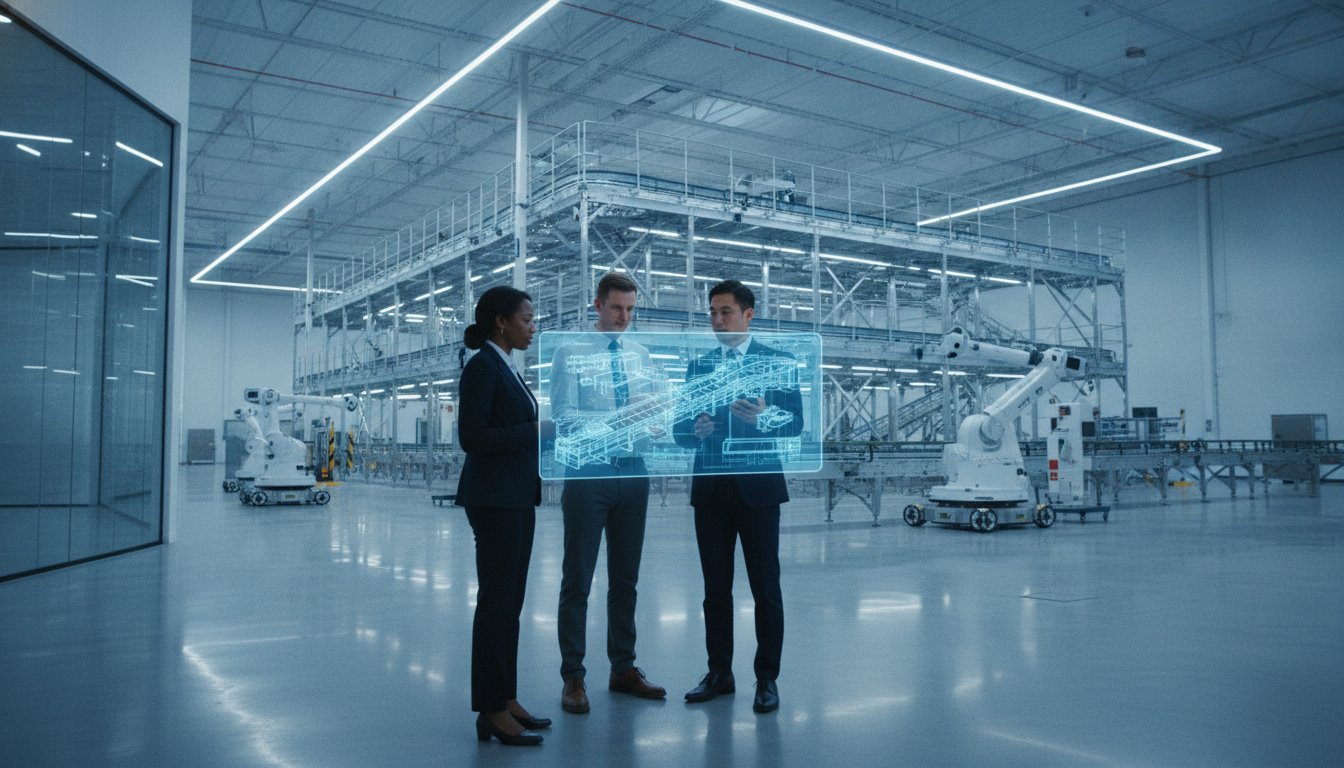
The success of your industrial facility in 2026 doesn't depend on the volume of hardware you purchase, but on the engineering intelligence that integrates it. Most operations leaders recognize the high stakes of a botched rollout, where poor communication between vendors and installers leads to weeks of expensive downtime. You've likely felt the pressure to choose a system that meets today's throughput needs while fearing it won't scale as your business grows. A truly effective custom conveyor system design requires more than just mechanical assembly; it demands a partner who serves as a strategic guide through the complexities of modern warehouse automation.
We believe that a seamless installation is the foundation of long term operational excellence. This article provides a strategic checklist to help you master the selection process for conveyor installation partners. You'll learn how to evaluate a firm's engineering depth, their ability to integrate robotics, and their strict adherence to the updated ASME B20.1-2024 safety standards. We'll move from vetting technical capabilities to ensuring your system is optimized for maximum throughput and sustained reliability. This roadmap ensures you secure a turnkey installation that protects your capital investment and delivers a clear path to high ROI.
Key Takeaways
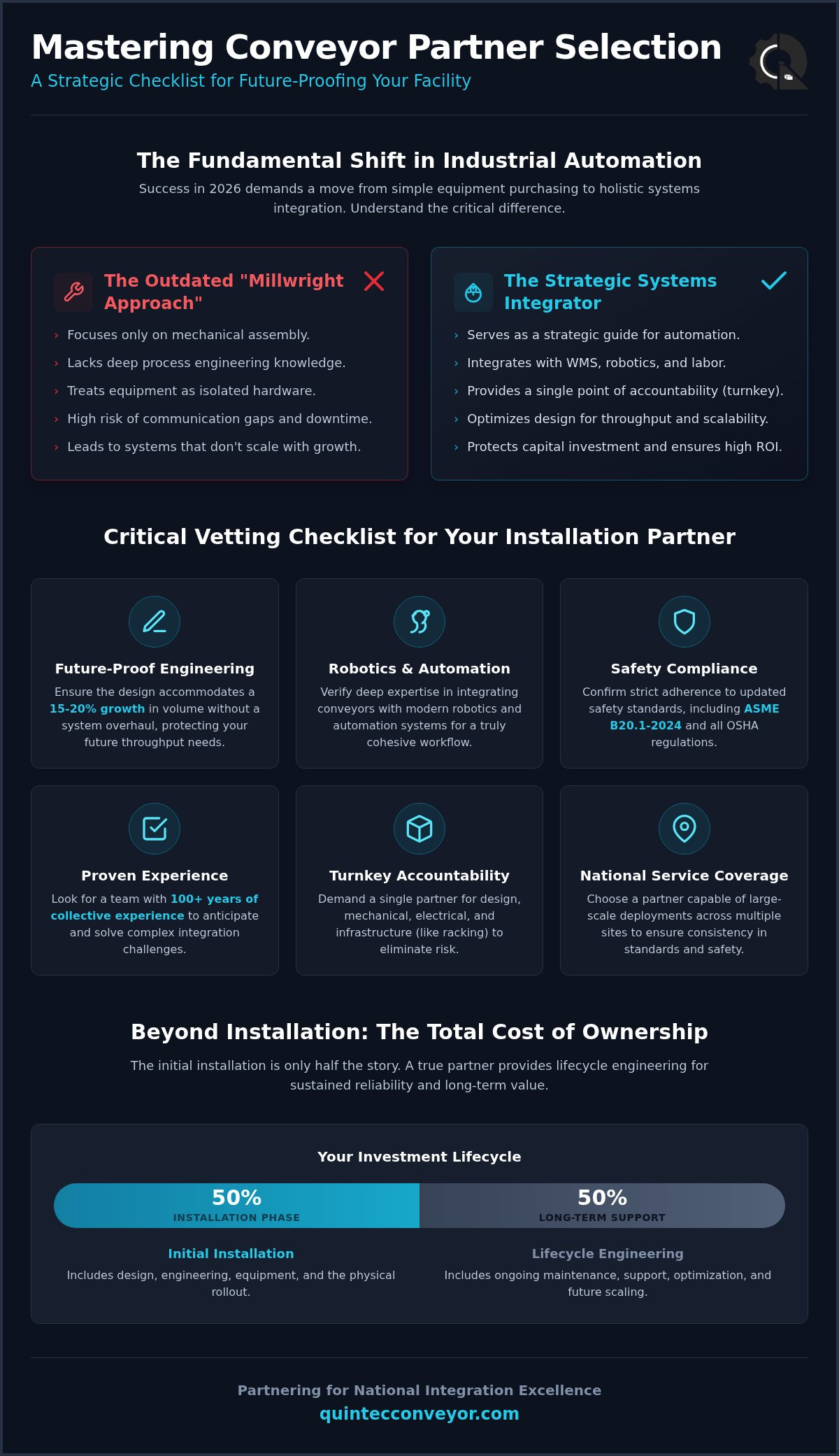
- Understand the fundamental shift from simple equipment vending to holistic systems integration to avoid the common pitfalls of the "millwright approach."
- Identify the critical engineering benchmarks for custom conveyor system design that allow your facility to handle peak throughput demands without mechanical failure.
- Learn how to evaluate installation workflows that prioritize safety and minimize operational downtime, even within active brownfield facilities.
- Discover why the installation phase accounts for only half of the total cost of ownership and how to vet partners for long-term maintenance and support.
- Gain insight into leveraging a process-first mindset to ensure your material handling infrastructure scales alongside your facility's future growth.
The Fundamentals of Vetting Conveyor Installation Companies
Modern industrial facilities are no longer just collections of machines; they're integrated ecosystems. Choosing an installation partner based solely on mechanical labor, often called the "millwright approach," is a recipe for failure in an era of robotics and high-speed sortation. A millwright might know how to level a frame, but they often lack the process engineering depth to ensure that a Conveyor system overview translates into actual facility performance. In 2026, the complexity of automated workflows requires a partner who understands how every motor, sensor, and software handshake contributes to the bottom line.
An equipment vendor sells you a catalog item. A systems integrator, however, takes responsibility for how that equipment interacts with your WMS, your labor force, and your future growth. Before you sign a contract, you must define your facility goals with precision. Are you optimizing for maximum throughput during seasonal peaks, or is footprint conservation your primary driver? This initial phase is where warehouse design services become indispensable. They provide the engineering blueprint that ensures your custom conveyor system design isn't just a purchase, but a strategic asset optimized for scalability.
Experience vs. Expertise: What to Look For
Longevity in the industry provides a vital safety net for complex projects. You should look for a team with 100+ years of collective industry experience, as this depth of knowledge helps anticipate integration hurdles before they cause downtime. It's not just about how long they've been in business, but the complexity of the sectors they've served. A partner with national service coverage can manage large-scale deployments across multiple sites. This ensures consistency in engineering standards and safety compliance regardless of your facility's location.
The Turnkey Solution Requirement
Project risk increases every time a new vendor is added to the chain. A turnkey partner provides a single point of accountability, handling everything from the initial custom conveyor system design to the final mechanical and electrical integration. This comprehensive approach should extend beyond the conveyor itself. Assessing whether a company can integrate warehouse racking and supporting infrastructure is vital for a smooth rollout. When one team manages the racking, the automation, and the robotics, you eliminate the communication gaps that often occur when equipment from different vendors fails to align during installation.
Technical Proficiency and Engineering Capabilities Checklist
Vetting an installer requires looking beyond their toolkits and into their engineering department. A successful custom conveyor system design must account for more than just static weight; it needs to be stress-tested for peak demand cycles that occur during high-volume shifts. You should ask potential partners how they calculate throughput buffers and whether their designs allow for 15 to 20 percent growth in volume without requiring a complete system overhaul. Reliability starts with these calculations, ensuring that your motors and belts don't burn out when your facility hits its maximum capacity.
Drive system selection is another critical indicator of technical expertise. While traditional chain drives are still used for heavy pallet movement, modern facilities often benefit from direct drive systems that offer higher energy efficiency and reduced maintenance requirements. Your partner should be able to explain the lifecycle cost benefits of each option based on your specific application. Additionally, industrial conveyor systems must be engineered to handle specific product properties like weight and fragility to prevent product loss and ensure consistent flow. This engineering must also align with OSHA conveyor safety standards, including the strategic placement of emergency stops and proper guarding around pinch points.
Robotics and Automation Integration
In 2026, conveyors rarely stand alone. They're part of a larger automated chain that includes Autonomous Mobile Robots (AMRs), Automated Guided Vehicles (AGVs), and robotic picking arms. A qualified installer must demonstrate proficiency in PLC programming and control systems to manage the "handshakes" between these different technologies. When evaluating warehouse system integrators, focus on their software compatibility. They should ensure that the conveyor's control logic communicates seamlessly with your Warehouse Management System (WMS) to provide real-time data on package location and system health. If you're looking to modernize your current workflow, consulting with an expert on integrated automation solutions can prevent costly compatibility issues later.
Sortation and Specialized Conveyance
High-speed sortation requires a level of precision that standard transport conveyors don't. Whether your facility needs sliding shoe sorters, cross-belt systems, or pop-up wheel diverts, the installer must prove they can design for the necessary timing and accuracy. This expertise should also extend to vertical conveyance. Utilizing the vertical cube of your facility through spiral conveyors or vertical lifts is essential for footprint optimization. Finally, prioritize modularity. A forward-thinking custom conveyor system design uses standardized sections that can be easily reconfigured as your production demands change, protecting your long-term capital investment.
Project Management and Installation Workflow Evaluation
An impeccable custom conveyor system design only delivers value if the installation process respects the operational realities of your facility. For many industrial leaders, the primary fear isn't the hardware itself, but the potential for costly downtime during the transition. A "No-Downtime" strategy requires meticulous scheduling, often involving phased rollouts or off-peak installation windows that allow your current production to continue. This level of coordination is a hallmark of a professional conveyor system integrator, who acts as the central point of command for managing electrical sub-contractors and mechanical teams while maintaining project momentum.
Safety isn't a post-installation checklist; it's a constant requirement during the build. Your partner must adhere to strict facility planning and design standards to ensure that the construction site doesn't compromise personnel safety or violate OSHA regulations. Frequent communication protocols, including daily milestone tracking and weekly project reviews, provide the transparency needed to stay on schedule. This structured approach ensures that every stakeholder, from the warehouse floor to the executive suite, understands the progress of the deployment.
The 5-Step Installation Workflow
A methodical approach ensures that no detail is overlooked during the physical deployment. This process begins with an on-site facility audit to confirm that the floor plan matches the custom conveyor system design precisely. Following this, staging and logistics management are used to organize components, minimizing floor clutter and maintaining clear traffic pathways. The mechanical and electrical assembly phase involves the precision mounting of frames and the wiring of drive systems. Once assembled, control system integration includes "dry run" testing to verify logic handshakes. Finally, the team conducts load testing under operational conditions and provides comprehensive staff training to ensure a smooth handoff.
Risk Mitigation and Contingency Planning
Industrial environments are rarely perfect. Site conditions often vary from original blueprints, requiring an installation partner who can perform field-engineering on the fly. Whether it's an unexpected floor slope or a structural obstruction, your team must have the experience to adapt without stalling the project. They should also maintain robust contingency plans for supply chain delays affecting specialized components like high-efficiency sensors or motors. Verifying that the company carries comprehensive insurance and liability coverage for their on-site teams is a final, non-negotiable step in protecting your facility from third-party risks during the build-out.
Post-Installation Support and Lifecycle Engineering
The physical completion of a project represents only the beginning of its operational lifecycle. In the industrial sector, the initial installation typically accounts for only 50 percent of the total cost of ownership over a ten year span. This reality makes the transition from the construction phase to the maintenance phase critical for your long term ROI. A partner who understands custom conveyor system design should provide a comprehensive roadmap for lifecycle engineering, moving beyond reactive repairs toward a data driven predictive model. In 2026, leading conveyor system suppliers distinguish themselves by providing custom tailored spare parts kits immediately upon installation. These kits ensure that high wear components like specialized sensors or drive belts are always on hand to prevent extended downtime.
Preventive Maintenance Programs
Reliability is built through consistency, not just emergency fixes. A professional maintenance package includes scheduled inspections of belts, motors, and rollers to identify wear before it leads to a catastrophic system failure. Modern systems now utilize IoT sensors to monitor belt tension and motor temperature in real time, feeding data directly into your management software. By leveraging this information, your integration partner can perform professional process engineering audits. These audits optimize system health based on actual usage patterns rather than arbitrary schedules. This proactive approach ensures your facility remains compliant with the latest maintenance requirements outlined in the ASME B20.1-2024 safety standards.
Scalability and Future-Proofing
Your facility's needs in 24 months will likely differ from today's requirements. A forward thinking custom conveyor system design prioritizes modularity, allowing for the addition of new sortation lanes or robotic picking cells without scrapping your existing infrastructure. You should evaluate whether your installer has the engineering depth to return for system expansions or software updates as robotics technology evolves. This flexibility is essential for brownfield facilities that must adapt to changing e-commerce demands. If your current system feels stagnant or lacks the ability to scale, it's time to schedule a comprehensive maintenance and integration audit to identify clear paths for modernization and growth.
Conclusion: Partnering for National Integration Excellence
The decision to overhaul or install a new material handling system is a pivotal moment for any industrial facility. As we've explored, the stakes involve much more than just the capital expenditure of the hardware itself. The true cost of a project is measured in its ability to integrate with future robotics, its resilience against downtime, and its long term scalability. Choosing an installation partner is a decision that impacts your operational efficiency for the next decade. A misaligned custom conveyor system design can lead to bottlenecks that throttle your throughput; however, a strategic partnership ensures your facility remains agile in a competitive market.
At Quintec, we bring over 100 years of collective industry experience to every project. This depth of knowledge allows us to act as a strategic guide rather than a mere equipment vendor. We approach every challenge with a process-first mindset, ensuring that the engineering logic precedes the mechanical assembly. Because we offer national service coverage across the United States, we provide a level of consistency that is vital for organizations managing multiple facility locations. This national reach ensures that your standards for safety, integration, and performance are upheld across your entire logistics network.
The Quintec Turnkey Advantage
Our commitment to your success begins long before the first piece of steel is bolted to the floor. We provide a comprehensive turnkey service that encompasses everything from initial custom conveyor system design and process engineering to the installation of warehouse racking and infrastructure. This single point of accountability significantly reduces project risk by eliminating the communication gaps often found in multi-vendor deployments. By integrating robotics and automation from the start, we ensure your system is optimized for maximum ROI from day one.
Our team doesn't just walk away once the belts start moving. We view every installation as the start of a long term partnership. This includes providing the maintenance support and engineering insights needed to keep your system at peak performance as your business evolves. If you're ready to move beyond standard equipment and toward a fully optimized automated workflow, our experts are here to help. Contact our team today to schedule a custom system audit and review your facility's logic with a seasoned professional. Together, we can build a system that meets today's demands while securing your operational future.
Securing Your Operational Future with Strategic Integration
Modern industrial success requires moving beyond simple equipment procurement toward a holistic engineering strategy. By prioritizing turnkey accountability and rigorous technical vetting, you ensure your facility isn't just operational today; it's fully scalable for the automation demands of 2026. A successful custom conveyor system design acts as the central nervous system of your warehouse. It requires a partner who understands the intricate handshakes between robotics, software, and mechanical flow.
With over 100 years of collective industry experience, our team specializes in providing national service coverage that maintains engineering excellence across all your locations. We manage every phase from initial process engineering to long term maintenance, providing a single point of responsibility that mitigates project risk. Partner with Quintec for your next custom conveyor system design and installation to transform your material handling into a high-performance asset. We're ready to help you navigate these complex logistical challenges with confidence and precision.
Industrial Conveyor Installation: Frequently Asked Questions
What is the typical lead time for a custom conveyor installation?
Lead times for a comprehensive project generally range from several months to a year depending on the complexity of the custom conveyor system design. This timeline includes the essential process engineering phase, equipment procurement, and physical installation. Large-scale automation projects requiring specialized robotics or custom controls often sit at the longer end of this spectrum. We recommend initiating the vetting process early to account for current supply chain variables and engineering reviews.
Do conveyor installation companies handle electrical and control system integration?
A full-service integrator manages the entire electrical and control system scope as part of a turnkey solution. This includes PLC programming, sensor alignment, and establishing the software handshakes between the conveyor hardware and your Warehouse Management System. Relying on a single partner for both mechanical and electrical integration reduces the risk of communication failures during the startup phase. It ensures that the system logic aligns perfectly with the physical movement of goods.
How do I minimize warehouse downtime during a new system installation?
Minimizing downtime requires a strategic installation plan that often involves phased deployments or off-peak scheduling. Professional installers can perform much of the mechanical pre-assembly off-site to reduce the time spent on your facility floor. By utilizing temporary bypasses or installing systems in sections, you can maintain current production levels while the new infrastructure is integrated. Clear communication between your operations team and the installation partner is vital for a seamless transition.
What is the difference between a conveyor manufacturer and an integrator?
A manufacturer focuses on the fabrication of specific conveyor components or standardized sections. In contrast, an integrator acts as a strategic guide that selects the best hardware for your application and engineers a cohesive system. Integrators take responsibility for the layout, automation, and installation within your facility. They bridge the gap between individual pieces of equipment and a fully operational workflow that meets your specific throughput and ROI targets.
Should I choose a modular conveyor system for my 2026 facility expansion?
Modular systems are highly recommended for facilities anticipating growth or changes in product profiles. These designs allow for rapid reconfiguration and expansion without the need to scrap existing infrastructure. A custom conveyor system design that utilizes modular sections provides the flexibility to add sortation lanes or robotic cells as your volume increases. This approach protects your initial capital investment by ensuring the system remains relevant as your operational requirements evolve over time.
What safety certifications should a conveyor installation company hold?
Your installation partner must demonstrate a deep understanding of the legally enforceable ASME B20.1-2024 safety standards. This includes expertise in the construction, inspection, and operation of conveyor systems as incorporated by reference into OSHA regulations. You should verify that their on-site teams are trained in lockout/tagout procedures and proper guarding techniques. A commitment to these standards ensures that your facility remains compliant and that your personnel are protected from industrial hazards.
How does robotics integration affect the cost of a conveyor system?
Integrating robotics increases the initial capital expenditure but significantly lowers the total cost of ownership by reducing manual labor requirements. While the upfront investment for robotic arms or AMRs is higher than traditional sortation, the long-term ROI is realized through higher throughput and improved accuracy. You should evaluate these costs through the lens of a two to three year payback period. A strategic integrator will help you balance these costs against your long-term operational goals.
Can an installation company work with existing racking and infrastructure?
Professional integrators are skilled at designing and installing systems within "brownfield" facilities that already have established racking and infrastructure. This process requires a detailed facility audit to ensure the new conveyor layout optimizes the available footprint without obstructing existing traffic patterns. By integrating new automation with your current warehouse racking, you can improve efficiency without the cost of a complete facility rebuild. This requires precise engineering to ensure all components work in harmony.