
Automated Guided Vehicle Systems: A Strategic Guide to Warehouse Automation
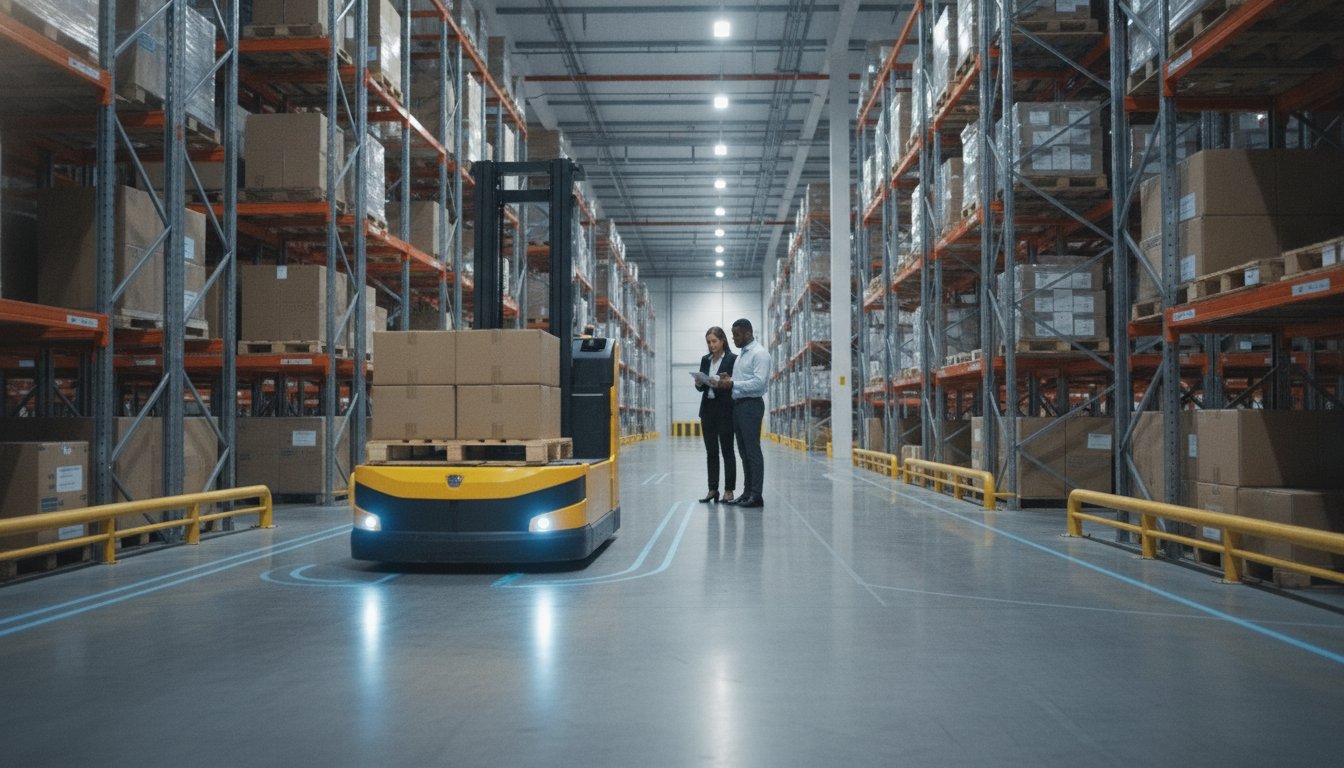
With more than 40% of global manufacturers now utilizing at least one autonomous unit, automated guided vehicle systems have transitioned from futuristic experiments to essential components of the modern industrial floor. You likely recognize the mounting pressure of rising labor turnover and the persistent safety risks associated with manual forklift operation. These bottlenecks in material movement aren't just operational inconveniences. They're direct threats to your facility's long-term stability and throughput.
This guide provides a strategic roadmap to help you harness the precision of automated guided vehicle systems to eliminate these inefficiencies while maintaining the highest safety standards, such as ANSI/ITSDF B56.5-2024. We'll examine the specific types of vehicles available today, establish a clear framework for choosing between traditional AGVs and autonomous mobile robots (AMRs), and outline a methodical approach for seamless system integration. By the end of this article, you'll have the insight needed to transform your warehouse into a highly coordinated, future-proof environment that values both modern excellence and proven reliability.
Key Takeaways
- Understand the evolution of automated guided vehicle systems from basic towing units to sophisticated, computer-controlled nodes that streamline industrial material handling.
- Explore the core navigation technologies, including LIDAR and Vision, that allow modern fleets to maintain high-level precision and safety within your facility.
- Learn to distinguish between AGVs and AMRs to determine which autonomous solution best fits your requirements for payload weight and route predictability.
- Identify the technical requirements for seamless system integration, ensuring precise alignment between robotic carriers and existing conveyor infrastructure.
- Develop a strategic implementation plan that includes facility audits and ROI calculations to justify the investment through labor savings and enhanced uptime.
Understanding Automated Guided Vehicle (AGV) Systems
Modern industrial efficiency is no longer defined by manual speed, but by systemic precision. The integration of automated guided vehicle systems represents a fundamental shift from human-operated machinery to synchronized, computer-controlled fleets. These wheel-based load carriers function without a direct onboard operator, relying instead on a sophisticated blend of sensor technology and software logic to move materials through a facility. While early iterations were often limited to simple towing tasks, today’s units act as autonomous nodes capable of making complex decisions in real-time.
An AGV is not a standalone machine; it's a triad consisting of the physical vehicle, the host control software, and the navigation environment. To understand the full scope of this technology, it's helpful to ask, What is an Automated Guided Vehicle? in the context of modern logistics. It is a system that bridges the gap between static storage and dynamic production. In 2026, the global market for these systems reached a valuation of USD 6.51 billion, signaling a tipping point where mid-sized facilities now view automation as a baseline requirement for competitiveness rather than a luxury for industry giants.
The Core Purpose of Autonomous Material Movement
The primary driver behind adopting automated guided vehicle systems is the stabilization of material flow. By reducing the heavy reliance on manual forklift operation, facilities can drastically lower the frequency of safety incidents and the costs associated with high labor turnover. These systems establish a predictable, 24/7 heartbeat for the warehouse, ensuring that production lines never wait for a pallet and shipping docks never sit idle. An AGV system is a software-driven infrastructure component that provides predictable, repeatable transport within a facility. It's a reliable partner that performs high-volume, repetitive tasks with a level of consistency that human operators simply cannot sustain over multiple shifts.
The Strategic Shift from Manual to Automated Transport
Successful automation requires a transition from point-to-point thinking to continuous flow logic. Instead of viewing transport as a series of disconnected trips, process engineering allows us to treat material handling as a steady, uninterrupted stream. This approach is particularly effective in addressing the chronic shortage of certified industrial vehicle operators, which remains a top pain point for warehouse managers. By offloading long-haul transport to automated systems, your skilled personnel can focus on higher-value tasks that require human problem-solving. This shift is a critical step toward achieving "lights-out" warehousing goals, where the movement of goods between production and shipping occurs with minimal intervention, maximizing both uptime and facility throughput.
The Technology Behind Modern AGV Navigation and Control
The operational intelligence of automated guided vehicle systems is rooted in the sophisticated interplay between localized sensors and a centralized Fleet Management System (FMS). While the vehicle handles the physical movement, the FMS serves as the cognitive core, managing traffic flow, job dispatching, and communication with the broader warehouse network. This coordination ensures that a fleet of vehicles can operate in high-density environments without collision or gridlock. It's the difference between a simple motorized cart and a truly integrated robotic solution.
Navigation Methods: From Magnetic Tape to LiDAR
Choosing the right navigation method is a critical decision in the design of your automation strategy. Traditional fixed-path systems use magnetic tape or sub-floor wires to define a route. These are reliable for high-volume, repetitive loops but lack the flexibility to adapt to floor plan changes. In contrast, free-ranging navigation using LiDAR (Light Detection and Ranging) or Vision-based SLAM allows vehicles to map their environment and navigate without physical floor markings. This technology enables the system to reroute dynamically if a path is blocked.
Natural Navigation has emerged as a preferred solution for dynamic facilities. It uses existing structural features, like pillars or racking, to triangulate position. This is particularly advantageous in environments where floor-based markers would be damaged by heavy traffic or where cleanliness is paramount. Adhering to industry standards for automated vehicles ensures that regardless of the navigation type, the system remains interoperable and scalable within your existing infrastructure.
Safety Systems and Obstacle Detection
Safety is not an optional feature; it is an engineered requirement defined by the ANSI/ITSDF B56.5-2024 standard. This regulation dictates how vehicles must behave when encountering personnel or obstructions. Modern units utilize 360-degree sensor coverage to establish tiered response zones. A "slow-down" zone allows the vehicle to reduce speed when an object is detected at a distance, while the "emergency stop" zone triggers an immediate halt if the perimeter is breached. LiDAR sensors create a dynamic safety perimeter around the vehicle, providing a continuous, real-time buffer that adapts to the vehicle's speed and direction.
Beyond physical stops, automated guided vehicle systems incorporate acoustic and visual signals, such as blue floor lights and audible chimes, to alert workers of their presence. Power management also plays a role in safety and uptime. Facilities must choose between automatic opportunity charging, where vehicles dock during idle periods, and battery swap-out strategies for high-intensity, multi-shift operations. Each choice impacts the overall layout and throughput of the material handling system, requiring careful planning during the process engineering phase.
AGV vs. AMR: Choosing the Right Autonomous Solution
Selecting the ideal autonomous technology requires a clear-eyed assessment of your facility's specific logistical demands. While the industry often groups these technologies together, the distinction between them is significant. The integration of automated guided vehicle systems often depends on the level of environmental stability your workflow provides. AGVs function on predefined paths, essentially acting as a driverless extension of your conveyor network. In contrast, Autonomous Mobile Robots (AMRs) utilize Simultaneous Localization and Mapping (SLAM) to navigate around obstacles in real-time. For a deeper look at these definitions, you can consult What Are Automated Guided Vehicles (AGVs)? to see how they compare in a broader industrial context.
AGVs remain the preferred choice for heavy-lift applications where high-volume throughput and predictable routes are the priority. If your operation involves moving multi-ton pallets from a production line to a shipping dock 24 hours a day, the disciplined nature of an AGV is an advantage. They provide a level of consistency that dynamic robots sometimes struggle to maintain in high-intensity industrial zones. Many facilities adopt a hybrid approach, using AMRs for light-duty sorting in high-traffic areas and automated guided vehicle systems for the heavy-duty "handoffs" between manufacturing cells and warehouse racking.
Performance Comparison: Payload and Precision
When evaluating performance, consider the physical constraints of your floor. AGVs excel in precision alignment, which is critical when interfacing with fixed conveyor pick-up points. However, they require a specific floor quality to maintain traction and sensor accuracy. You should evaluate floor flatness and friction coefficients before installation; uneven surfaces can cause navigation errors in fixed-path systems.
| Feature | AGV Systems | AMR Systems |
|---|---|---|
| Payload Capacity | Very High (Industrial/Heavy Duty) | Low to Medium (Small parcels/totes) |
| Navigation Type | Predefined/Fixed Paths | Dynamic Path Planning (SLAM) |
| Setup Focus | Infrastructure and Engineering | Software and Digital Mapping |
| Path Flexibility | Predictable/Stable | High (Avoids obstacles) |
Cost of Ownership and Long-Term Scalability
The long-term viability of automated guided vehicle systems in heavy-duty environments often comes down to maintenance and re-programming costs. While the initial setup for an AGV might involve more physical infrastructure, like reflectors or magnetic markers, its operational logic is straightforward and easier to troubleshoot in a "lights-out" setting. AMRs offer faster initial deployment because they don't require floor markers, yet they may require frequent re-mapping if your facility layout changes constantly. A modular approach allows you to scale your fleet incrementally. You don't need to automate the entire facility at once; you can start with a single high-impact loop and expand as your ROI is proven through reduced product damage and increased uptime.

Integrating AGVs into Your Material Handling Infrastructure
The true value of automated guided vehicle systems isn't found in the vehicles themselves, but in how effectively they communicate with your existing environment. Integration is the phase where a standalone robot becomes a functional part of your material handling ecosystem. This process requires more than just clear paths; it demands rigorous attention to physical and digital handoffs. If the vehicle can't align with a conveyor or receive a mission from your warehouse software, the resulting bottlenecks can negate the efficiency gains of automation.
Infrastructure preparation is the first step in a successful deployment. While modern navigation is flexible, the physical demands of heavy-duty transport remain constant. Floor leveling is paramount to ensure that high-payload vehicles maintain stability and sensor accuracy during high-speed travel. Additionally, robust Wi-Fi or 5G coverage must be established to prevent communication dropouts between the fleet and the control software. Dedicated charging zones must also be strategically placed to minimize "travel for power" and maximize active uptime across all shifts.
Mechanical Interface: AGVs and Conveyor Systems
The "handoff" between an AGV and a conveyor is a high-precision maneuver that requires mechanical and logical synchronization. Depending on your load type, vehicles can be equipped with roller decks for pallet transfer, lift platforms for racking interface, or specialized clamps for unique geometries. Designing conveyor "spurs" allows for a buffer zone where AGVs can load and unload without interrupting the main flow of the conveyor line. Precision docking relies on high-speed PLC (Programmable Logic Controller) communication to synchronize the vehicle's position with the conveyor's status before any load transfer begins. This ensures that the physical connection is secure and the load is centered, preventing jams or product damage.
Digital Integration: WMS, WCS, and Fleet Control
Digital synchronization ensures that every move the fleet makes adds value to the overall operation. Your Warehouse Management System (WMS) acts as the high-level brain, assigning tasks based on order priority. This "mission" is then sent to the Fleet Manager, which determines which vehicle is best positioned to execute the task. Real-time tracking allows for throughput optimization, identifying potential traffic jams before they occur. This level of coordination is only possible through comprehensive process engineering, which serves as the foundation for mapping optimal stops and routes. By analyzing your facility's specific workflows, you can design an integrated network where automated guided vehicle systems and conveyors work in perfect unison.
To ensure your automation strategy is grounded in operational reality, it's essential to partner with experts who understand the complexities of industrial systems integration.
Engineering the Future: Implementing a Scalable AGV Solution
Successful implementation of automated guided vehicle systems doesn't begin with a purchase order for hardware. It starts with a comprehensive facility audit. Many businesses rush into automation only to find that their existing workflows aren't optimized for robotic transport. By conducting a deep-dive audit, you identify the physical and logical bottlenecks that could hinder performance. This strategic preparation ensures that the technology serves the process, rather than forcing the process to adapt to the technology. Hardware selection is secondary to the engineering logic that drives the entire operation.
Calculating the return on investment goes beyond simple labor replacement. You must account for reduced product damage, improved workplace safety, and the value of 24/7 operational uptime. In 2026, industry scrutiny on ROI has intensified, with leaders moving away from experimentation toward targeted investments that offer a clear payback period. Partnering with a systems integrator, rather than buying direct from a manufacturer, provides the objective perspective needed to select the best-fit technology for your specific KPIs. An integrator looks at the totality of your material handling needs, ensuring the new fleet doesn't create new bottlenecks elsewhere.
The Quintec Conveyors Integration Advantage
With over 100 years of collective industry experience, Quintec Conveyors understands that an AGV is just one node in a larger network. Our approach to Warehouse Automation and Robotics focuses on engineering the entire material flow. We don't just sell equipment; we design the mechanical and digital interfaces that make the equipment effective. Our national installation and maintenance capabilities provide the long-term reliability required to protect your capital investment. We act as a steady partner, guiding you through the complexities of installation and providing the support needed to maintain modern excellence.
Next Steps for Your Facility
The path to automation should be methodical and thorough. Start with a throughput analysis to pinpoint the workflows most ready for automated guided vehicle systems. We often recommend a phased implementation, beginning with a pilot program in a single high-impact zone. This allows you to prove the ROI and refine the system logic before committing to a full-scale rollout. This steady progression builds internal confidence and ensures that your facility is prepared for the next generation of industrial efficiency. It's about building a foundation for growth that remains stable as your volume increases.
Ready to optimize your material handling? Contact Quintec Conveyors for a Custom Automation Assessment.
Optimizing Your Material Handling Ecosystem
Transitioning to automated guided vehicle systems is a strategic investment in the long-term stability and throughput of your facility. By prioritizing process engineering and precise mechanical integration, you transform repetitive material movement into a predictable, 24/7 heartbeat for your operations. Success in modern automation isn't found in a single piece of equipment; it's found in the seamless synchronization of vehicles, software, and existing infrastructure.
Quintec offers the seasoned authority and strategic guidance required to navigate these complex logistical challenges. With over 100 years of collective industry expertise and national scale installation and support, our team delivers custom-engineered automation solutions that ensure your technology investment yields measurable results. Precision is the standard. We don't just provide hardware; we deliver a roadmap for modern excellence and operational reliability.
Your facility's future efficiency is built on the precision of today's planning. Reach out to a leader that values thoroughness and high-level results to begin your transformation. Partner with Quintec for Expert AGV Integration.
Frequently Asked Questions
How much does an automated guided vehicle system cost?
Industry costs for automated guided vehicle systems vary significantly based on vehicle type and payload requirements. In 2026, unit load carriers typically range from $40,000 to $70,000, while specialized forklift models can exceed $200,000 per unit. Beyond the hardware, integration and software connectivity can add between $5,000 and $100,000 to the total project cost depending on the complexity of your warehouse management system.
What is the difference between an AGV and an AMR?
The fundamental difference lies in navigation logic and path flexibility. AGVs follow predefined, fixed paths using markers like magnetic tape or laser reflectors, making them ideal for high-volume, predictable transport. Autonomous Mobile Robots (AMRs) use SLAM technology to navigate dynamically around obstacles. AGVs generally offer higher payload capacities and greater stability for heavy industrial tasks and conveyor handoffs.
Can AGVs work alongside human workers safely?
Yes, AGVs are engineered to work safely alongside personnel by adhering to strict industrial safety standards like ANSI/ITSDF B56.5-2024. They utilize 360-degree sensor coverage to establish tiered response zones. If a worker enters a vehicle's path, the system triggers a programmed slow-down or an immediate emergency stop to prevent contact, ensuring a secure environment for your team.
How long does it take to implement an AGV system in an existing warehouse?
Implementation timelines typically range from 6 to 12 months from the initial facility audit to final commissioning. This duration accounts for the necessary process engineering, hardware manufacturing, site preparation, and software integration. Phased rollouts or pilot programs can often begin delivering operational data and proving ROI within the first few months of the installation process.
What kind of maintenance do AGV systems require?
Maintenance focuses on three primary areas: mechanical hardware, sensors, and software logic. Technicians must regularly inspect drive wheels and battery health while ensuring that LiDAR and optical sensors remain free of industrial dust and debris. Software updates and fleet management system calibrations are also necessary to maintain optimal routing efficiency and traffic coordination across multiple shifts.
Do I need to change my warehouse floor to use AGVs?
Most systems require a clean, level floor with a specific friction coefficient to ensure navigation accuracy and braking safety. While you don't always need a new floor, cracks, joints, or significant slopes can interfere with sensor readings and load stability. A thorough facility audit will determine if your current surface meets the specific manufacturer's technical specifications for autonomous travel.
Can AGVs integrate with my current conveyor system?
Integration with existing conveyor infrastructure is a standard part of a comprehensive automation strategy. This is achieved through mechanical handoff attachments, such as roller decks, and digital synchronization via Programmable Logic Controllers (PLCs). This allows the vehicle and the conveyor to communicate their status in real-time, ensuring the load is perfectly aligned before the transfer begins.
What happens if an AGV loses its Wi-Fi connection?
If a vehicle loses its Wi-Fi connection, it is programmed to perform a controlled stop or continue to a safe designated zone depending on its onboard logic. Modern automated guided vehicle systems include safety protocols that prevent erratic behavior during signal loss. Once the connection is restored, the Fleet Management System re-establishes the mission and resumes operation without manual intervention.