How to Choose a Conveyor System Integrator: A 2026 Strategic Guide
What if the most expensive part of your warehouse upgrade isn't the hardware, but the hidden cost of a fragmented system? Many facility managers find themselves trapped between multiple equipment vendors, facing inconsistent throughput and operational bottlenecks that erode their bottom line. It's frustrating to watch a high-capital investment stall because the robotics don't communicate with the sorting lanes. You need more than just a vendor; you need a conveyor system integrator that acts as a single point of accountability for your entire workflow.
Selecting the right partner is the difference between a project that drains resources and one that delivers a seamless, turnkey automated system with a measurable increase in facility ROI. This 2026 strategic guide provides the framework you need to evaluate engineering depth and national reach. You'll discover how to identify partners who prioritize safety standards like ASME B20.1-2024 while implementing cutting-edge robotics and process engineering. We'll walk through the essential criteria for choosing an integrator capable of transforming your complex logistical challenges into a high-performance, future-proof operation.
Key Takeaways
- Identify the critical distinction between a standard equipment vendor and a strategic systems architect to ensure your facility's long-term operational success.
- Evaluate technical depth through the lens of vendor-neutral sourcing, ensuring your automation choices are driven by performance rather than brand limitations.
- Master the integration lifecycle, from initial process engineering audits to the implementation of advanced robotics and simulation-based design.
- Discover how a professional conveyor system integrator aligns warehouse racking and industrial infrastructure to eliminate bottlenecks and maximize facility ROI.
- Gain insights into leveraging national-scale expertise and engineering-first methodologies to deliver a seamless, turnkey automated system.
What is a Conveyor System Integrator and Why is Selection Critical?
Modern logistics operations have moved far beyond simple mechanical transport. As of 2026, the global material handling integration market has reached an estimated $57.29 billion, reflecting a massive shift toward complex, automated environments. This evolution is mirrored in broader industry movements like Construction Technology ConFeX KSA, which champions the digital and sustainable transformation of the built environment. In this high-stakes environment, a conveyor system integrator serves as the lead architect of your facility's workflow. They're responsible for ensuring that every piece of hardware and every line of code functions as a single, cohesive unit. Choosing the wrong partner often leads to expensive "data silos" where different machines can't communicate, resulting in the very bottlenecks you were trying to eliminate.
There's a fundamental difference between an equipment vendor and a true systems integrator. A vendor typically focuses on a specific product line, fulfilling a bill of materials without necessarily understanding your facility's broader ecosystem. In contrast, an integrator takes a holistic view. They don't just sell you a conveyor system; they engineer a solution that accounts for your specific throughput requirements, spatial constraints, and future scalability. This distinction is vital because 2026 automation demands a unified approach. With the rise of AI-driven sorting and real-time IoT tracking, your hardware and software must be perfectly synchronized from day one.
The Architect of Material Handling
A conveyor system integrator is a strategic engineering partner that designs, implements, and manages the total synchronization of material handling technologies. These experts bridge the gap between raw equipment and your specific operational goals by translating business needs into technical specifications. By managing multi-vendor complexities, they ensure that a robot from one manufacturer works seamlessly with a sorter from another. This high-level oversight prevents the common "DIY" mistake of buying high-end components that fail to perform because they weren't designed to talk to each other.
Risk Mitigation in Large-Scale Automation
Large-scale system upgrades carry significant risks, particularly the danger of "bottleneck shifting." This happens when you speed up one area of the plant only to overwhelm another. A professional integrator uses 2026 modeling tools to ensure all components talk to each other through centralized controls, maintaining a steady flow throughout the facility. They also reduce the burden on your internal facility managers. Instead of your team chasing five different vendors for updates, the integrator provides a single point of accountability for the design, install, and long-term maintenance of the entire system.
Core Competencies: What to Look for in a Material Handling Integrator
Selecting a partner for your facility requires looking beyond polished sales presentations to the engineering reality of their past work. A high-performing conveyor system integrator must demonstrate technical depth across multiple disciplines, including mechanical design, electrical controls, and software development. One of the most critical markers of a top-tier integrator is vendor-neutral sourcing. When an integrator isn't beholden to a single manufacturer's catalog, they can select the specific components that best solve your unique throughput challenges. This objective approach ensures your system is built for performance rather than convenience.
Safety and compliance are equally paramount as we move through 2026. Your partner must be intimately familiar with the latest regulatory updates, such as the ASME B20.1-2024 standard, which now includes specific provisions for electrified monorail conveyors and mobile hopper railcar unloaders. Beyond engineering for efficiency, they must prioritize OSHA conveyor safety standards to protect your workforce and reduce liability. A system that ignores these benchmarks isn't just a safety risk; it's a financial liability that can lead to costly downtime and regulatory fines.
Engineering Expertise and Industry Experience
Experience in this field is measured by the ability to solve problems before they manifest as operational failures. A team with 100+ years of collective industry experience brings a level of intuitive troubleshooting that newer firms simply cannot replicate. You should vet potential partners by looking at the diversity of their portfolio. A capable integrator should have proven success in complex sortation, heavy-duty pallet transport, and the latest robotics and automation trends. In-house process engineering is a non-negotiable requirement; it allows the team to audit your current flow and design a custom solution that addresses the root cause of your bottlenecks. For those seeking this level of technical rigor, exploring custom engineering solutions is a logical next step.
National Reach and Project Management
For organizations managing multiple distribution centers, national reach is a strategic necessity. A national conveyor system integrator provides a level of consistency that local installers often lack. By standardizing equipment and control logic across all your sites, you simplify long-term maintenance and reduce the learning curve for your staff. This unified approach to project management ensures that all your facilities operate with the same precision, regardless of their individual location. It also provides a single point of accountability for large-scale rollouts, ensuring that complex industrial logistics are handled with a steady, veteran hand across the entire project scope.
The Integration Lifecycle: From Process Engineering to Robotics
Successful system implementation relies on a methodical, four-phase lifecycle that prioritizes data over guesswork. A professional conveyor system integrator doesn't start with a catalog; they start with an exhaustive facility audit. This initial assessment identifies exactly where material flow stalls and where manual intervention creates unnecessary risk. By the time the project reaches the design phase, 2026-era simulation tools are used to create digital twins of the proposed layout. These models allow engineers to stress-test the system in a virtual environment, ensuring the physical installation meets throughput targets from the first day of operation. This proactive planning mitigates the fear of costly downtime during system upgrades, as potential issues are resolved before a single bolt is tightened.
Process Engineering: The Logic Behind the Belt
Choosing between Chain Driven Live Roller (CDLR), belt conveyors, or motorized drive rollers depends entirely on the weight, size, and fragility of the product. Process engineering involves analyzing this material flow to ensure the chosen equipment matches the operational reality. This data-driven approach allows for precise scalability, building in the capacity for future growth without requiring a complete system overhaul. Engineers look at peak throughput data to determine if a system needs high-speed diverts or simple gravity lanes. Process engineering ensures that every dollar spent is tied directly to a throughput requirement, effectively preventing over-engineering and the waste of capital on unnecessary hardware.
Integrating Industrial Robotics and Automation
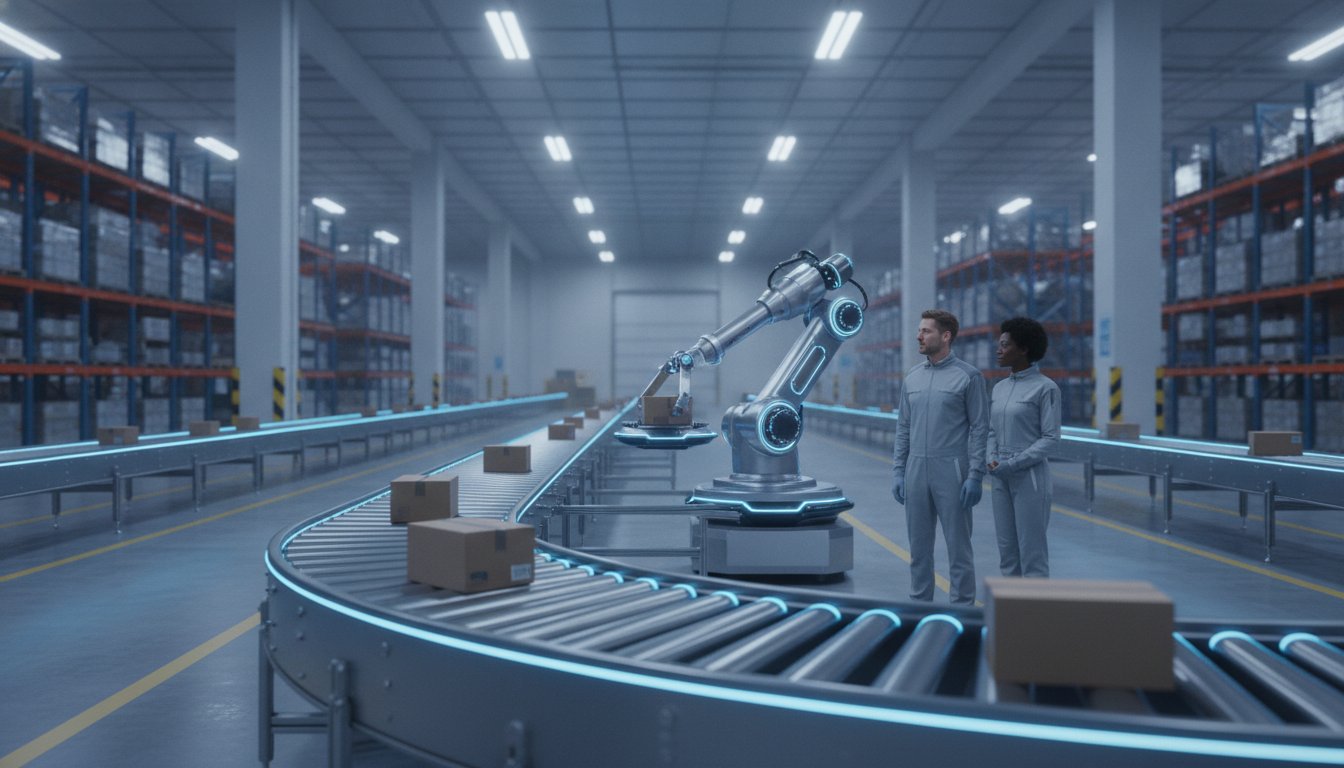
Modern fulfillment centers now rely on a hybrid approach that blends traditional fixed conveyor lines with flexible autonomous mobile robots (AMRs). These robots navigate dynamic environments to transport goods between disparate zones, reducing the need for extensive permanent infrastructure. Automated sortation remains the heart of high-volume e-commerce fulfillment, utilizing high-speed pushers or shoe sorters to direct thousands of packages per hour. A veteran conveyor system integrator ensures that these robotic elements maintain seamless communication with your Warehouse Management System (WMS). This digital handshake is critical for real-time inventory tracking and order accuracy, ensuring the hardware executes the logic provided by your software layer. Protecting these data exchanges from cyber threats is vital; click here to explore advanced stealth tunneling for industrial security. The final phase involves professional installation followed by rigorous system stress-testing to verify that the integrated system handles peak volumes without failure.

Maximizing ROI: Infrastructure, Racking, and Long-Term Maintenance
Achieving a high ROI on an automated system requires a perspective that extends beyond the conveyor belt itself. If the physical environment isn't engineered to support the automation, the system's efficiency will eventually plateau. A strategic conveyor system integrator understands that warehouse racking and conveyor design must be planned simultaneously to avoid structural conflicts and maximize vertical cube utilization. This unified approach ensures that heavy-duty pallet transport systems are supported by industrial infrastructure capable of withstanding the dynamic loads of high-speed sortation. When these elements are siloed, facilities often face expensive retrofits or compromised safety margins that could've been avoided during the initial design phase. By treating the racking and the conveyor as a single unit, you eliminate the friction that often occurs between separate vendors.
Beyond the initial layout, the role of industrial infrastructure in supporting heavy-duty pallet transport is vital. Heavy loads require specialized floor loading considerations and reinforced structural supports that standard warehouses may not possess. A veteran integrator audits these environmental factors during the process engineering phase to ensure the building can handle the weight and speed of modern automation. This prevents the "shifting bottleneck" problem where the machinery is capable of high throughput, but the building's infrastructure creates a physical limit on performance. Integrating these considerations from day one protects your capital investment and ensures the system operates at its peak rated capacity for years to come. This level of coordination is essential for maintaining high-performance workflows that don't just move product, but optimize the entire footprint of the warehouse.
Unified Infrastructure and Racking Solutions
Optimizing vertical space is a necessity for modern fulfillment. Integrated racking and mezzanine systems allow you to double your usable square footage without expanding the building's footprint. However, these structures must be engineered for structural stability. High-speed sortation creates vibration that can stress standard racking if not properly reinforced. Working with a conveyor system integrator who manages both ensures every anchor point is rated for your machinery's specific demands, simplifying the installation process and ensuring a perfect fit between components.
Maintenance: Ensuring 2026 Operational Reliability
The true cost of a system is measured by its lifecycle cost. Maintenance-as-a-service reduces the total cost of ownership by identifying wear patterns before they cause system failure. Instead of waiting for a belt to snap, predictive maintenance uses sensor data to schedule service proactively. This preserves mechanical efficiency and drives ROI. To secure long-term reliability, consider partnering with a team that offers comprehensive conveyor maintenance and infrastructure planning.
Partnering with Quintec Conveyors for National System Integration
Choosing a partner for a large-scale industrial project is a decision that impacts your operational stability for a decade or more. As a specialized conveyor system integrator, Quintec moves beyond the role of a passive vendor to become a proactive engineering partner. Our "Engineering-First" philosophy dictates that every decision is backed by rigorous process analysis and technical validation. We don't just supply hardware; we design high-ROI automated workflows that are tailored to the specific spatial and throughput requirements of your facility. This commitment to precision ensures that the final installation isn't just a collection of machines, but a high-performance asset that drives long-term profitability.
Consistency is often the biggest challenge for organizations managing multiple distribution centers across the country. Quintec addresses this through national deployment capabilities that ensure facility performance remains uniform regardless of geography. By standardizing design protocols and equipment selection across your entire network, we simplify maintenance and training for your local teams. This national scope allows us to act as a single point of accountability for your most complex material handling challenges; it provides the steady hand needed to guide a project from the initial concept through to final commissioning and long-term maintenance.
The Quintec Difference: A Century of Expertise
Our team brings over 100 years of collective industry experience to every project we undertake. This veteran perspective is particularly valuable during the site installation phase, where unforeseen challenges like floor irregularities or power supply discrepancies can derail a project's timeline. We've seen nearly every possible complication in the field. We know how to pivot quickly to keep your upgrade on track. This dedication to custom-engineered solutions is why major industrial players trust us for their national rollouts. We don't rely on cookie-cutter templates; we innovate specifically for your constraints.
Your Next Steps Toward Seamless Automation
Moving from a facility plagued by bottlenecks to a streamlined, turnkey operation begins with a thorough consultation. Our team conducts an on-site audit of your material flow to identify the root causes of inefficiency. We then translate those findings into a comprehensive design that incorporates conveyors, robotics, and optimized racking. This process removes the guesswork from automation, providing you with a clear roadmap for your facility's future. If you're ready to transform your warehouse into a high-throughput asset, take the first step today. Contact Quintec for a System Integration Consultation and let our engineers design your path to operational excellence.
Securing Your Operational Future Through Strategic Integration
The landscape of material handling in 2026 demands a shift from simple equipment purchasing to comprehensive systems architecture. You've seen how the right conveyor system integrator transforms fragmented workflows into high-ROI automated systems by prioritizing process engineering and structural infrastructure. Success isn't found in a single piece of hardware; it's the result of a unified design that accounts for everything from warehouse racking to predictive maintenance. This strategic approach ensures your facility remains competitive and scalable as throughput demands continue to rise.
Quintec brings over 100 years of collective industry experience to every project, offering national integration and installation coverage across the United States. We bridge the gap between complex engineering challenges and seamless operational execution through comprehensive process engineering and maintenance programs. Our team is ready to audit your facility flow and implement a turnkey solution that supports your long-term growth. Don't let operational bottlenecks limit your potential. Optimize Your Facility with Quintec Integration Services today. We look forward to building a more efficient future together.
Frequently Asked Questions
What is the role of a conveyor system integrator in warehouse automation?
The integrator acts as the lead architect and single point of accountability for your entire automated workflow. They synchronize hardware, software, and controls to ensure every component functions as a cohesive unit. This comprehensive role includes everything from initial process engineering to final installation, preventing the data silos and operational bottlenecks that often occur when using multiple uncoordinated equipment vendors.
How do I choose between a local installer and a national conveyor integrator?
Choose a national conveyor system integrator if your project requires multi-site consistency, advanced engineering depth, or high-volume scalability. While local installers may handle simple mechanical setups, national partners provide standardized equipment and control logic across all facilities. This ensures that maintenance protocols and operator training remain uniform throughout your entire distribution network, regardless of geographic location.
What are the benefits of integrating robotics with traditional conveyor systems?
Integrating robotics with conveyors allows for high-speed sortation and precision pick-and-place operations that manual labor cannot match. These automated systems reduce human error and mitigate labor shortages by handling repetitive tasks at a consistent pace. In 2026, the use of autonomous mobile robots and cobots has become essential for facilities aiming to increase throughput while maintaining a safe, energy-efficient environment.
Why is process engineering important for conveyor system design?
Process engineering is the analytical foundation that ensures a system design matches your actual material flow and throughput goals. It prevents over-engineering and capital waste by using data to determine the precise conveyor types and speeds needed. Without this phase, facilities risk installing expensive equipment that either underperforms under peak loads or provides unnecessary capacity that never delivers a measurable return on investment.
Can an integrator help with warehouse racking and infrastructure as well?
Yes, a full-service conveyor system integrator manages warehouse racking and industrial infrastructure to ensure structural compatibility with the automation. Coordinating these elements simultaneously prevents structural conflicts, such as racking uprights interfering with conveyor paths or mezzanine vibrations affecting sortation accuracy. A single-source provider ensures that all floor loading and vertical space optimizations are engineered as a unified, stable system.
How does a conveyor maintenance program impact long-term ROI?
A professional maintenance program preserves mechanical efficiency and extends the operational lifespan of your equipment, which directly increases facility ROI. By moving from reactive repairs to predictive maintenance, you minimize the risk of costly, unplanned downtime during peak fulfillment periods. Scheduled inspections by expert technical teams ensure that small wear patterns are addressed before they escalate into major, expensive system failures.
What is the typical timeline for a custom conveyor integration project?
Timelines vary based on complexity, but most custom integration projects span six to twelve months from the initial audit to final commissioning. This period includes phases for process engineering, custom system design, equipment sourcing, and rigorous stress-testing. A structured, methodical approach ensures that all safety standards, such as ASME B20.1-2024, are met and that the system is fully optimized before going live.
How do integrators ensure different equipment brands work together?
Integrators use centralized control systems and standardized communication protocols to bridge the gap between different equipment brands. By acting as a vendor-neutral partner, they select the best-in-class components for each specific task and write custom code to ensure seamless data exchange. This engineering-first approach eliminates compatibility issues, ensuring that a sorter from one manufacturer communicates perfectly with a robotic arm from another.