Chain Conveyor Systems: 2026 Strategic Engineering Guide
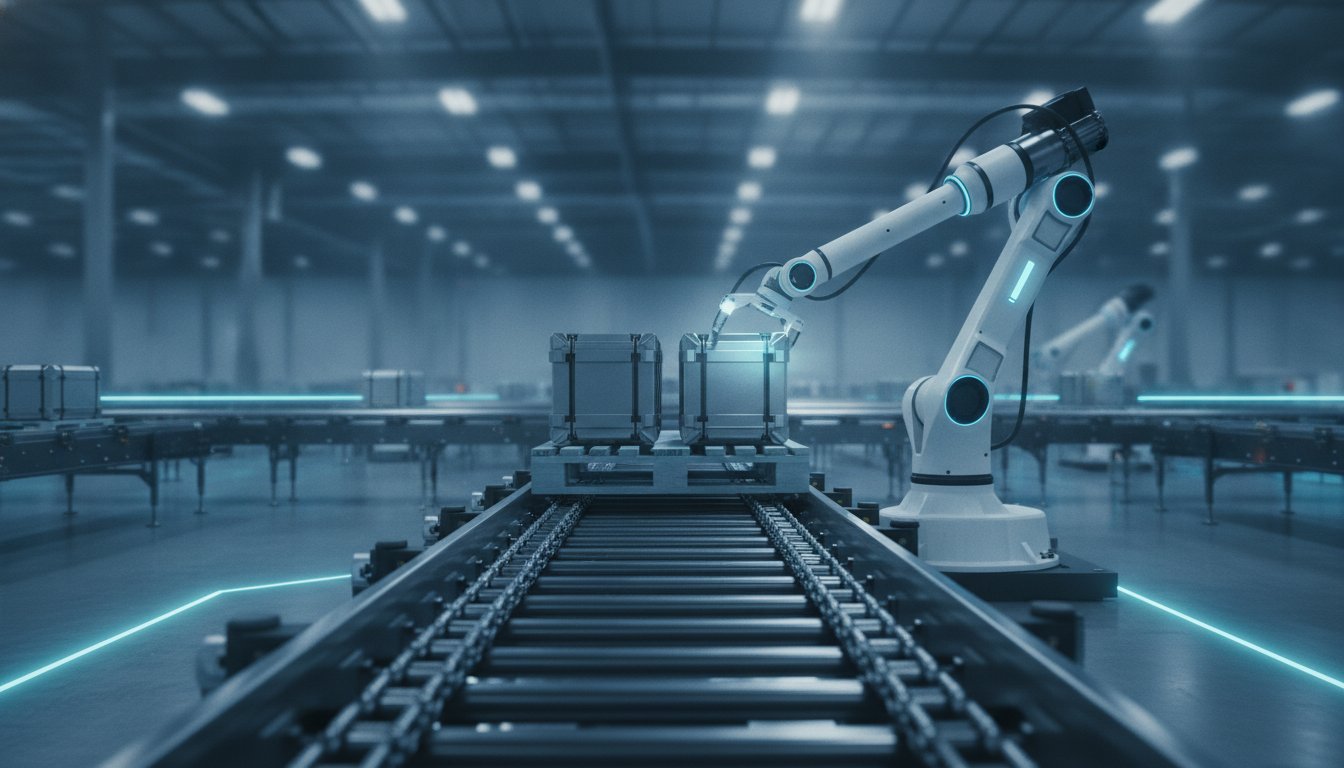
The most expensive component of your warehouse isn't the square footage, it's the cumulative cost of downtime caused by equipment that can't handle the strain. If you've experienced frequent mechanical failures or sluggish pallet handling, you've likely seen how standard rollers struggle under extreme industrial loads. Implementing robust chain conveyor systems is often the missing link for facilities that require high-load capacity and long-term reliability. It's a common frustration to see automation goals stalled by hardware limitations, but a strategic approach to engineering can solve these systemic issues.
In this 2026 Strategic Engineering Guide, you'll discover how to leverage heavy-duty systems to optimize throughput and integrate seamless warehouse automation. We'll show you how to eliminate operational bottlenecks and achieve a high ROI through system durability. This overview covers the technical insights needed to align your infrastructure with modern robotics and custom process engineering. You'll gain a clear understanding of how professional integration transforms complex logistical challenges into streamlined, profitable workflows that stand the test of time across your national operations.
Key Takeaways
- Evaluate the mechanical advantages of drag, slat, and multi-strand configurations to identify the ideal setup for your specific industrial throughput needs.
- Understand the strategic factors that make chain conveyor systems the preferred choice over roller or belt systems for high-load and high-density storage applications.
- Learn how to integrate heavy-duty conveyors with advanced robotics and warehouse automation to create a seamless, high-efficiency workflow.
- Discover the essential preventative maintenance practices required to protect your investment and ensure the long-term reliability of your infrastructure.
The Strategic Role of Chain Conveyor Systems in 2026
Industrial facilities are undergoing a fundamental shift toward higher density and greater load requirements. Chain conveyor systems have transitioned from being simple transport tools to sophisticated, precision-indexing components within complex automated ecosystems. For a foundational understanding, this Chain conveyor systems overview details how these machines utilize continuous chain loops to move materials through a production line. The 2026 shift toward high-density storage relies on the ability to stack and move loads vertically and horizontally with zero margin for error, a task that demands the rigid strength of chain-driven tracks. These systems are the undisputed heavy lifters of the industry, engineered to thrive where lighter equipment fails. Their evolution now includes integrated sensors and variable frequency drives that allow for the exact positioning of heavy pallets within a fraction of an inch.
When to Prioritize Chain Over Traditional Rollers
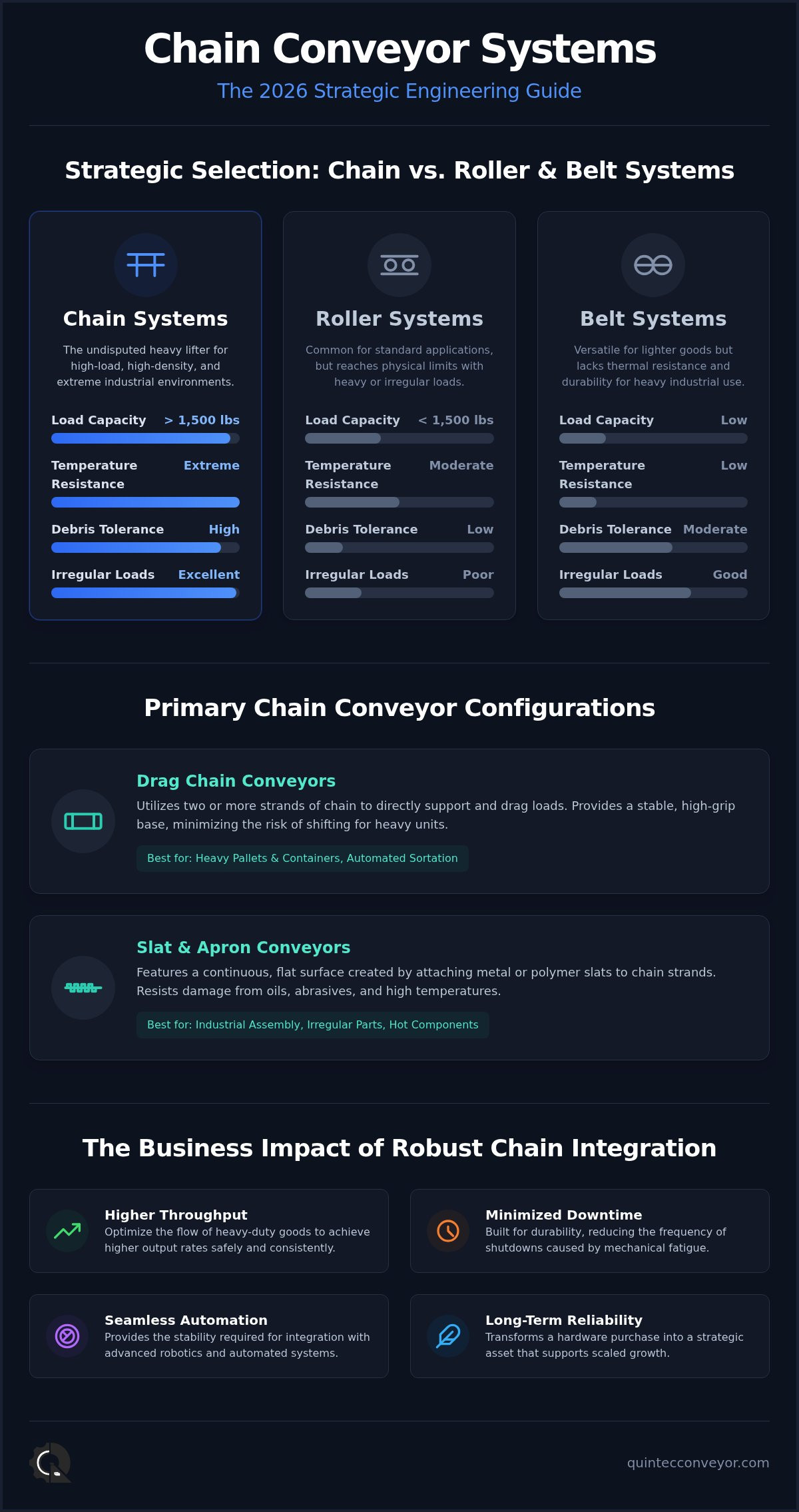
Standard roller conveyors often reach their physical limits when tasked with moving heavy wooden pallets, steel containers, or items with irregular footprints. Chain systems provide the necessary surface contact and mechanical grip to prevent slippage or stalling. In environments characterized by extreme heat, such as foundries, or sub-zero temperatures in cold storage, industrial chains offer a level of thermal resistance that rubber belts simply cannot match. Most facilities find the tipping point for a system upgrade occurs when load weights consistently exceed 1,500 pounds per unit or when debris-heavy environments cause premature roller bearing failure. Choosing a chain-based solution ensures that irregular crates or heavy containers remain stable throughout the entire travel path.
The Business Impact of Robust Chain Integration
Investing in high-grade chain integration directly affects the bottom line by minimizing unplanned maintenance cycles. Because these systems are built for durability, they reduce the frequency of facility-wide shutdowns caused by mechanical fatigue. Chain conveyor systems serve as the mechanical backbone of heavy industrial automation, providing the foundational stability required for high-capacity workflows. By optimizing the flow of heavy-duty goods, companies can achieve higher throughput rates without risking the safety of their infrastructure or the consistency of their output. This reliability transforms a simple hardware purchase into a long-term strategic asset that supports scaled growth and predictable operational costs across a national footprint.
Primary Configurations: Drag, Slat, and Multi-Strand Systems
Selecting the correct mechanical configuration is a critical step in engineering a resilient facility. While simple transport is often the primary goal, the physical properties of the load dictate whether a drag, slat, or multi-strand setup is required. When comparing conveyor system types, engineers must account for friction, weight distribution, and environmental stressors. Custom chain conveyor systems provide the versatility to handle these variables through specialized attachment chains and robust drive mechanisms.
Drag Chain Conveyors for Pallet Handling
Drag chain systems are the industry standard for moving heavy pallets and containers through high-volume logistics hubs. These systems utilize two or more strands of chain to support the pallet directly, providing a stable base that minimizes the risk of shifting. This configuration is particularly effective when integrated with automated sortation systems, as it allows for precise control during high-speed transfers. For a deeper dive into how these components fit into a broader facility strategy, see our Industrial Conveyor Systems: The 2026 Executive Guide to Integration. The logic behind drag chain load distribution ensures that even the heaviest loads move with minimal energy loss.
Slat and Apron Conveyors for Industrial Assembly
Slat conveyors offer a continuous, flat surface by attaching metal or reinforced polymer slats to the chain strands. This design is indispensable in automotive and heavy equipment manufacturing, where irregular parts or hot components must move through assembly stages. Unlike standard belts, slat-based chain conveyor systems resist damage from oils, abrasives, and high-heat materials. Engineers can choose between steel slats for maximum durability or reinforced polymers for applications requiring lower noise levels or chemical resistance.
Multi-strand configurations are essential for balancing exceptionally wide loads that would otherwise tilt or sag on narrower tracks. By adding third or fourth strands, the system ensures stable transport for oversized crates and industrial machinery. Specialized attachment chains further enhance this precision, allowing for exact product positioning during robotic interactions. If you're planning a complex layout, our team provides the custom industrial infrastructure and expertise needed to ensure every strand is perfectly aligned for maximum throughput.
Strategic Selection: Chain vs. Roller and Belt Systems
Deciding between material handling technologies requires a rigorous analysis of application-specific variables. While rollers and belts have their place, Chain conveyor systems offer a distinct mechanical advantage for high-capacity industrial workflows. According to recent Conveyor System Market Trends, the demand for specialized systems is rising as facilities move toward more complex, heavy-duty automation. This selection process isn't just about moving a box; it's about aligning equipment durability with long-term operational goals and the physical realities of the load.
Load and Stability Comparison
Roller systems rely on friction and surface contact, which often fails when dealing with non-uniform bottom surfaces like wooden pallets or skids. In contrast, chain drives provide a positive mechanical engagement that eliminates slippage, ensuring consistent indexing even under maximum load. While belt systems typically handle lighter loads up to a few thousand pounds, heavy-duty chain systems are engineered to move tens of thousands of pounds without compromising mechanical integrity. This stability is crucial for maintaining the precise alignment required for robotic picking and palletizing stations. Space optimization is another critical factor. Low-profile chain designs allow for integration into tight footprints where bulky roller beds would be impractical. While older chain models were known for high noise levels, modern engineering has introduced precision-machined components and dampening materials that significantly reduce decibel levels, making them suitable for contemporary, worker-friendly warehouse environments.
Environmental and Maintenance Trade-offs
The environment of your facility often dictates the longevity of your equipment. Belt systems are highly susceptible to degradation from industrial oils, sharp debris, and abrasive dust; however, steel or reinforced polymer chains maintain their structural integrity in these harsh conditions. When conducting a Total Cost of Ownership (TCO) analysis for a 10-year lifecycle, the initial investment in a chain system is often offset by significantly lower replacement costs and reduced maintenance intervals. For facilities prioritizing agility alongside this durability, exploring The Strategic Guide to Modular Conveyor Systems provides a roadmap for combining heavy-duty power with scalable design. This strategic approach ensures your infrastructure can adapt as production volumes fluctuate without requiring a complete system overhaul. By choosing the right mechanical foundation today, you secure the operational flexibility needed for the demands of 2026 and beyond.
Engineering for Efficiency: Integration and Layout Optimization
Engineering a high-throughput facility requires more than just high-quality hardware. It demands a holistic view of the entire warehouse layout. Warehouse design services ensure that chain conveyor systems are positioned to maximize floor space while facilitating smooth product movement. A common challenge involves managing transitions where loads move between chain and roller sections. Without precise engineering, these points become friction zones that cause pallet damage or sensor errors. Successful integration relies on calculating the exact speed and height differentials to maintain momentum across different mechanical platforms.
Scalability is a core pillar of the 2026 strategy. Designing a system that only meets today's volume is a recipe for premature obsolescence. We engineer layouts with modular expansion in mind, allowing for additional strands or extended tracks as your throughput grows. This forward-looking approach ensures that your initial infrastructure investment supports future robotics and automation upgrades without requiring a complete teardown. By aligning your chain conveyor systems with automated cells, you create a seamless flow that handles heavy pallets with the same precision as small parcels.
Custom Process Engineering for Chain Systems
Process engineering is the discipline that turns a collection of machines into a synchronized operation. By identifying potential bottlenecks in heavy-duty lines, engineers can adjust the logic and layout of multi-strand systems to ensure maximum footprint utility. For example, optimizing the pitch and drive speed of a three-strand system can significantly increase the stability of oversized loads during rapid indexing. Safety remains a non-negotiable priority in these high-load environments. Integrating advanced guarding and strategically placed emergency stops protects both your personnel and your equipment. A well-optimized layout doesn't just move products; it creates a predictable, safe environment for high-volume manufacturing.
Partnering with a System Integrator
The complexity of modern logistics requires a partner who understands the nuances of mechanical installation and software synchronization. With over 100 years of collective industry experience, the team at Quintec Conveyors approaches every project as a full-service integrator rather than a mere equipment vendor. We manage the entire lifecycle of a conveyor integration project, from the initial conceptual design and engineering to the final national installation. Selecting the right partner is critical for ensuring your system delivers on its promised ROI and operational longevity. For more insights on this selection process, read our guide on How to Choose a Conveyor System Integrator. Our goal is to provide the custom process engineering necessary to transform your operational challenges into competitive advantages.
Ensuring Operational Longevity: Maintenance and Reliability
The true value of chain conveyor systems is realized over years of consistent, high-capacity operation rather than just the first few months. Achieving this longevity requires a transition from reactive repairs to a sophisticated preventative maintenance strategy. By 2026, the industry standard has shifted toward predictive maintenance, where integrated sensors monitor vibration and heat to detect potential failures before they occur. This proactive approach ensures that your infrastructure remains a reliable asset rather than a source of unexpected downtime.
Mechanical reliability centers on three critical wear points: sprockets, chain tension, and lubrication. Sprockets must be inspected for "hooking," a sign of wear that can lead to chain damage or derailment. Maintaining proper chain tension is equally vital; too much tension causes premature bearing failure, while too little leads to surging and poor indexing. Modern monitoring systems now allow facility managers to track these variables in real-time, providing the data necessary to schedule maintenance during planned windows rather than emergency shutdowns.
Routine Maintenance Best Practices
Facility managers should implement a tiered inspection approach to catch minor issues before they escalate into systemic failures. Daily checklists should focus on visual and auditory cues, such as unusual clanking or signs of chain slack. Monthly inspections require a deeper dive into the mechanical components, including the verification of sprocket alignment and the removal of debris from the track. Consistent and precise lubrication significantly extends the operational lifespan of industrial chains by reducing friction and preventing corrosive wear. If your team notices recurring alignment issues, it's often a sign that the underlying infrastructure requires a professional adjustment.
Professional Maintenance and System Audits
Internal teams are excellent for daily upkeep, but complex industrial systems occasionally require a comprehensive engineering audit. These audits assess the overall health of your chain conveyor systems and identify opportunities to upgrade legacy components for compatibility with modern automation. For example, replacing older drive motors with high-efficiency variable frequency drives can improve control and reduce energy consumption. Leveraging Quintec's national support network provides access to specialized conveyor maintenance expertise across the country. Our team brings over 100 years of collective experience to every audit, ensuring your material handling equipment continues to meet the rigorous demands of your evolving workflow. This commitment to professional oversight transforms standard equipment into a durable foundation for long-term industrial success.
Infrastructure Resilience for the Next Decade
The industrial landscape of 2026 demands more than just simple movement; it requires absolute precision and resilience under the heaviest loads. You've seen how selecting the right configuration, whether drag or slat, provides the mechanical foundation for high-density storage and seamless robotics integration. Transitioning from standard rollers to robust chain conveyor systems allows your facility to eliminate chronic downtime and optimize throughput for a decade of growth. Achieving this level of performance isn't just about the hardware; it's about a holistic approach to layout and maintenance.
Success in these large-scale projects depends on partnering with an integrator that understands the full scope of custom process engineering. Our team offers a collective experience of over 100 years in material handling, providing the national engineering support and full-scale automation expertise needed to transform complex logistical hurdles into stable, profitable workflows. We're ready to help you design a system that scales alongside your evolving throughput needs. Contact Quintec Conveyors for a Custom Chain Conveyor Integration Quote to begin your facility's transformation. We look forward to partnering with you to deliver a solution that ensures modern excellence and long-term stability.
Frequently Asked Questions
What are the main advantages of chain conveyor systems over belt conveyors?
Chain conveyor systems offer superior load-bearing capabilities and mechanical durability compared to standard belt designs. While belts rely on friction and are prone to tearing under sharp or heavy loads, chains provide a positive drive that eliminates slippage. This makes them ideal for transporting heavy pallets, steel containers, or items with irregular footprints. They also excel in extreme temperatures where rubber or fabric belts would degrade rapidly.
Can chain conveyors be used for accumulation in automated warehouses?
Yes, chain conveyors can be engineered for accumulation through the use of specialized low back pressure rollers or zero-pressure accumulation logic. This allows pallets to pause on the line without the chain stopping, preventing product collisions and reducing pressure on the drive motor. It's a critical feature for integrating heavy-duty transport with robotic palletizing cells where precise timing is essential for maintaining consistent throughput.
What is the maximum load capacity for a standard multi-strand chain conveyor?
A standard multi-strand chain conveyor typically supports loads ranging from 2,500 to 5,000 pounds per pallet. However, custom-engineered systems can be designed to handle significantly higher weights by adding additional strands or utilizing heavy-duty industrial chains. The specific capacity depends on the chain pitch, sprocket size, and motor torque. Consulting with a process engineer ensures the infrastructure is rated for your facility's heaviest anticipated units.
How often do industrial chain conveyors require lubrication and tensioning?
Industrial chain systems generally require lubrication every 100 to 200 hours of operation, though automated lubrication systems can streamline this process. Tensioning should be checked monthly during the initial break-in period and quarterly thereafter. Regular inspections prevent chain stretch, which is actually wear in the pin and bushing joints. Proactive maintenance ensures the sprockets and chains remain perfectly synchronized, avoiding costly mechanical fatigue or derailments.
Are chain conveyors suitable for incline or decline applications?
Chain conveyors are highly effective for incline or decline applications when fitted with slats or specialized attachments. These components provide the mechanical grip necessary to move heavy loads between different mezzanine levels without the risk of sliding. For steep angles, cleated chains or high-friction slats are used to secure the load. This versatility allows for multi-level warehouse designs that maximize vertical space while maintaining stable product flow.
What industries benefit most from slat conveyor configurations?
Slat configurations are most beneficial for industries involving heavy assembly or harsh processing conditions. Key sectors include:
- Automotive manufacturing for chassis and engine transport
- Heavy appliance assembly lines
- Foundries and steel processing facilities
- Construction and agricultural equipment manufacturing
These industries value slats for their ability to withstand high heat, oils, and abrasive materials that would destroy traditional conveyor surfaces.
How does Quintec Conveyors approach custom chain conveyor integration for large facilities?
Quintec Conveyors operates as a full-service integrator, utilizing over 100 years of collective industry experience to design bespoke material handling solutions. The process begins with comprehensive engineering to identify specific workflow constraints, followed by national installation and maintenance support. By focusing on the synchronization between chain conveyor systems and advanced robotics, the team ensures that every installation provides maximum throughput and long-term mechanical reliability for complex industrial environments.
What are the noise level considerations for chain conveyors in 2026?
Modern engineering has significantly reduced the decibel levels associated with industrial chains. In 2026, Quintec Conveyors addresses noise management through the use of precision-machined sprockets, high-performance polymer wear strips, and variable frequency drives that dampen mechanical vibrations. These advancements allow facilities to maintain a safer, more productive environment. When properly maintained, contemporary chain conveyor systems operate with a controlled, low-frequency hum rather than the disruptive clanking characteristic of legacy equipment.