Chain-Driven Heavy Duty Conveyor Systems for Industry
Heavy duty conveyor systems can be customized to suit the size, weight, and material of the loads they move. For heavy units that need powered movement along a roller line, a chain-driven live roller conveyor is one option. The right design starts with the load and its route, not a one-size-fits-all conveyor.
A conveyor system should handle demanding loads while fitting the realities of your operation. This article explains how load dimensions, weight, and material affect conveyor design, where chain-driven live roller systems fit, and what to consider when planning a custom industrial solution. It also explains how conveyor selection connects to the wider material-handling process, helping you assess equipment in the context of your facility’s workflow.
Key Takeaways
- Match conveyor design to the load’s dimensions, weight, and material to support dependable movement through your operation.
- Consider chain-driven live rollers when heavy units need powered travel along a roller conveyor.
- Assess how material handling connects metalworking, automotive, warehousing, and other process steps to identify workflow bottlenecks.
- For a custom industrial solution, Quintec Conveyors can help align conveyor equipment with your facility’s broader material-handling needs.
What is a Heavy-Duty Conveyor System?
Heavy duty conveyor systems transport large, heavy components through manufacturing and assembly operations. They can also move bulk materials, from agricultural commodities to finished products, along a planned route.
Load-Handling Capabilities
These systems are configured to support demanding loads and move them between defined points. They might handle a metal component traveling between workstations or bulk material moving through a processing area. When assessing a system, consider the load’s size, weight, and shape, as well as how it contacts the conveyor. Each factor affects the support and movement required.
In the United States, safety planning should account for applicable OSHA requirements and workplace hazards around moving equipment. Maintenance frequency depends on operating conditions, load, and wear; inspections should consider conveyor components and changes in performance.
Material Handling Applications
Metalworking and automotive manufacturing use conveyors to move parts between production steps. A walking-beam conveyor advances material gradually, allowing machining at each workstation before it moves onward, according to Ghostarchive. In warehousing, conveyors help move goods through handling and distribution processes. Mapping where products enter, transfer, and leave the line helps clarify how equipment fits the workflow.
Not every application needs a heavy-duty arrangement. Medium-duty conveyors can handle cartons and drums, while assembly lines move parts between tasks. In agriculture, conveyors carry bulk materials such as grain, fertilizer, and feed. The material and route help determine the suitable system, whether it moves raw inputs toward processing or finished products toward storage.
Conveyor customization for different load sizes, weights, and materials
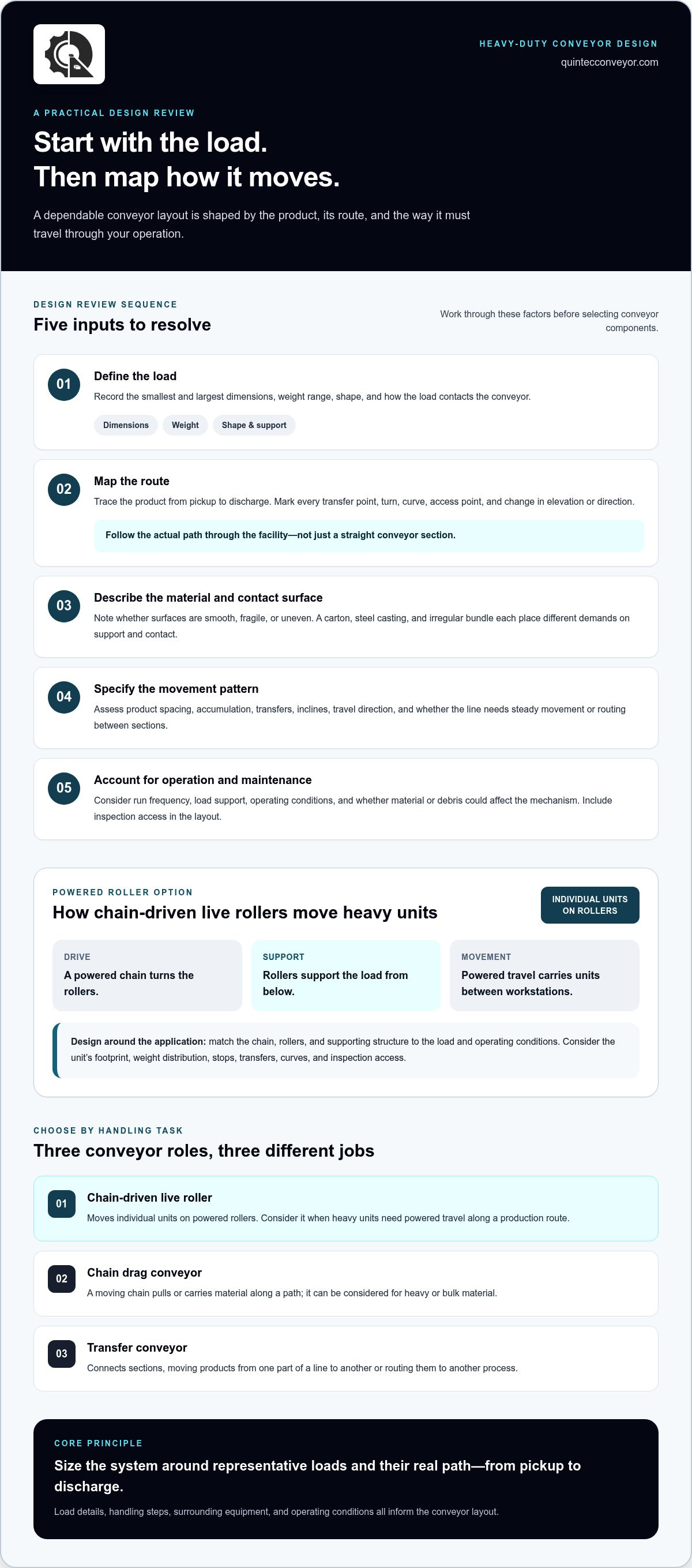
Customization starts with the product and its route through the facility. Compare load dimensions, weight, surface, and movement requirements before selecting components.
Load Size and Material Customization
A carton, steel casting, and irregular bundle each place different demands on conveyor support and contact. Record the smallest and largest load dimensions, weight range, and whether surfaces are smooth, fragile, or uneven. Then map every transfer point, turn, and change in elevation. Trolleys support and guide loads along a conveyor system, while rails provide their track. Together, they can guide loads of varying shapes along defined paths.
Motor-Driven Roller Capacity
For motor-driven roller conveyors, assess the load carried across the rollers and how products move through each zone. A heavy component may rest across several rollers, while a smaller item may contact fewer. Product spacing, accumulation, transfers, and inclines also affect system performance. Use the heaviest intended load and its footprint as design inputs, then account for the movement pattern and operating environment.
Heavy-Load Applications
Heavy-load applications require a capacity assessment that considers individual items and the system’s full operating pattern. A large metal part moving between workstations differs from bulk material traveling along a processing route. Identify load distribution, support points, travel direction, and transfer conditions. These details guide component selection and help determine whether reinforced support or a different conveyor arrangement is suitable.
For precise planning, document representative loads and trace their path from pickup to discharge. Include material characteristics, handling steps, and surrounding equipment, since each can influence the conveyor layout. This gives the design process practical inputs rather than assumptions. Explore industrial conveyor solutions as part of evaluating a system for your facility’s applications.
Chain-driven live roller conveyors for heavy units
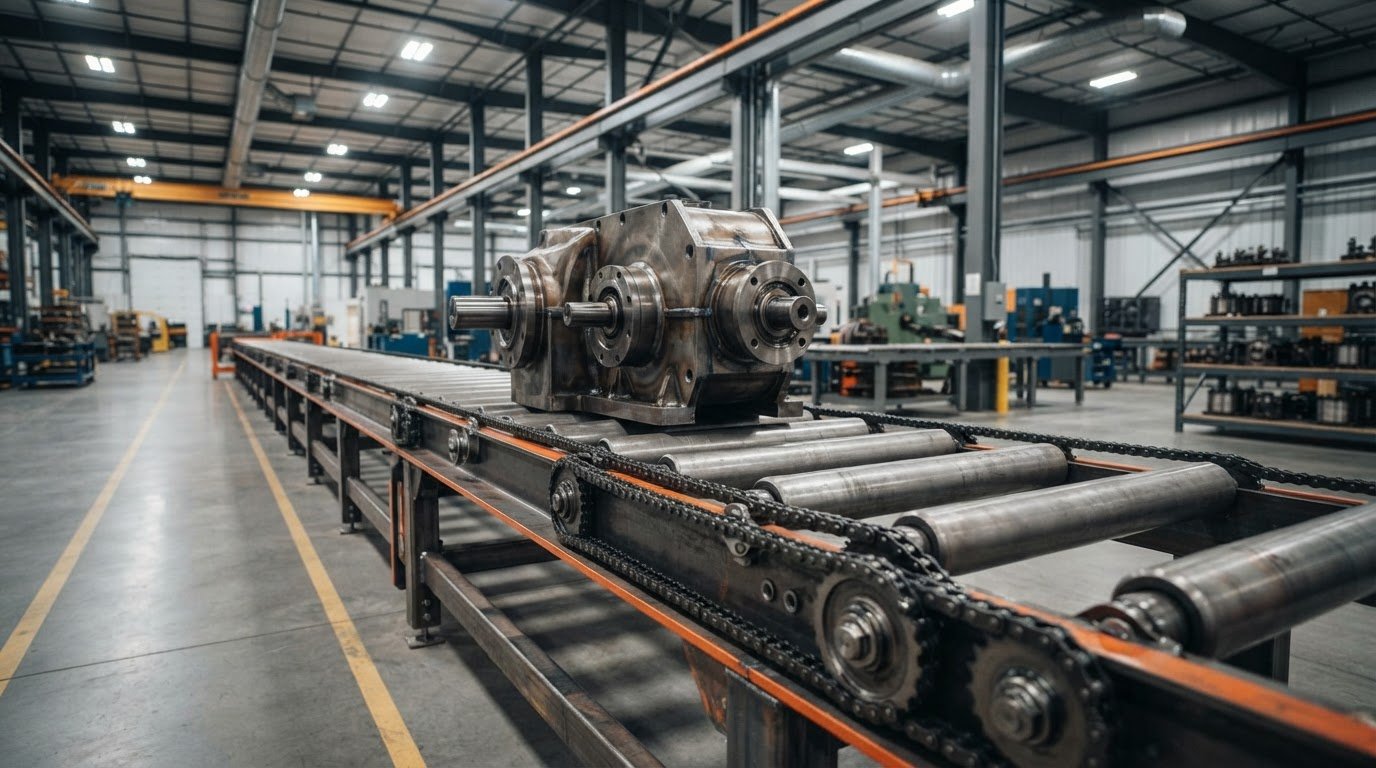
A chain-driven live roller conveyor uses a powered chain to turn its rollers and move units along a production route. The rollers support the load from below, while powered movement carries items between workstations. This arrangement suits heavy units that need controlled travel, such as large assemblies moving through manufacturing. Map transfers, stops, and curves when assessing how the conveyor fits into the line.
Heavy-duty conveyor chains are designed to withstand the stress and wear associated with heavy loads and continuous operation. The chain transmits motion through the conveyor, so its design and the roller arrangement must suit the load and operating conditions. Consider how often the line runs, how the load is supported, and whether material or debris could affect the mechanism. These factors inform component selection and maintenance planning.
Chain drag conveyors serve a different handling need: a moving chain pulls or carries material along a path. They can be considered for heavy or bulk material, while live roller systems move individual units on rollers. Transfer conveyors connect sections, moving products from one part of a line to another. For example, a production layout may use a live roller section to advance a unit, then a transfer point to route it to another process.
Start the design review by documenting the unit’s footprint, weight distribution, and required route. Next, determine whether it needs steady travel, accumulation, or transfer between lines. A heavy assembly with a broad, stable base needs different support from an uneven component. Check for curves, access points, and changes in direction, as these affect how loads enter and leave each section.
Chain-driven designs can support efficient movement, but the application determines the right arrangement. Match the chain, rollers, and supporting structure to the load and operating environment. Include inspection access in the layout so wear can be identified and maintenance planned without overlooking critical drive components.
Need Custom Industrial Conveyor Solutions?
Industrial conveyor design should address the actual bottleneck, load, and route through the facility. Compare conveyor types and operating demands to define a solution that fits the process.
Industrial Conveyor Pain Points
Recurring jams, uneven product flow, and manual transfers can interrupt movement between production steps. Map where queues form, such as cartons backing up before packing or components waiting between workstations. Worn or misaligned parts and obstructions are common issues. Routine inspections and clear cleaning access help identify problems early. Safe operating procedures should address moving parts and pinch points around transfer areas.
Automation and Custom Design
Available types include gravity roller conveyors, powered chain-driven live rollers, belt conveyors, and chain drag conveyors. Gravity rollers move loads without a motor, while powered designs provide driven transport. Energy use and operating costs depend on factors such as drive requirements, load, route, and operating pattern. Compare systems against the actual duty cycle.
Automatic conveyors can connect processes such as assembly, transfer, and packing. Custom industrial design starts by mapping each process, identifying where products enter and leave, and integrating conveyor movement with surrounding equipment. For example, a line that moves assemblies between workstations needs coordinated transfers and controlled flow.
Industrial Conveyor Belt Types
Belt conveyors provide a continuous surface for moving products, while roller systems support loads on rollers. Chain-driven live rollers suit powered movement of heavy units, and chain drag conveyors move material along a path. Compare the product’s base, route, and transfer needs to select an appropriate approach. The conveyor should be engineered for its application and operating environment.
Industries Served
Conveyor applications span warehousing, metalworking, automotive manufacturing, agriculture, mining, and distribution. A warehouse may need to move goods between receiving and storage; an automotive line may transfer components through assembly. In mining, conveyors transport minerals, ores, and aggregates. Identify the material, process stages, and facility layout to prioritize design requirements and address handling bottlenecks.
For an industrial layout that needs coordinated conveyor design, discuss custom conveyor solutions for your operation.
Quintec Conveyors: Conveyors
Quintec Conveyors can help translate your load requirements and process flow into a custom industrial conveyor solution. Turn to the team when standard material movement needs to be considered alongside connected production steps, warehouse operations, or automation objectives.
Quintec provides conveyor design, engineering, and installation, alongside Robotics & Automation, Infrastructure, and Additional Material Handling Equipment for broader facility needs. This integrated approach helps you plan equipment in context, from the route products travel to how movement connects with the surrounding operation.
For your next step, outline the loads, process stages, and facility requirements the system must address. Contact Quintec Conveyors to discuss your industrial conveyor project.
Put Your Conveyor Plan Into Motion
Turn your operating priorities into a clear project brief. Identify the loads that create the greatest handling demands, the process stages they must pass through, and where movement currently slows. This gives your planning team a practical basis for evaluating Heavy duty conveyor systems against real facility needs, rather than choosing equipment in isolation.
Consider how conveyor design should connect with automation and facility infrastructure as the operation develops. Quintec Conveyors works across conveyors, Robotics & Automation, and Infrastructure, bringing these considerations into the same planning conversation. A coordinated view clarifies how equipment fits into the wider workflow and supports informed decisions about the next phase of your material-handling project.
Share your project goals and operational requirements with Quintec Conveyors to begin a focused discussion. Contact Quintec Conveyors to explore the next step for your facility.
Frequently Asked Questions
What Are Industrial Conveyor Systems, and Why Do They Matter to You?
Industrial conveyor systems move products between work areas, storage points, and shipping operations. Their value comes from fitting the facility’s workflow, not simply moving items from one place to another. For example, a distribution center can plan a route connecting receiving, sorting, and dispatch. Mapping each handoff helps identify unnecessary handling and shows where better coordination could support daily operations.
What materials can heavy-duty conveyor equipment handle?
Heavy duty conveyor systems can be designed for discrete items or bulk materials, depending on the conveyor type and application. Examples include metal components, automotive assemblies, cartons, grain, fertilizer, feed, minerals, ores, and aggregates. Before selecting a configuration, determine whether the material travels as individual units or a continuous flow. Its shape, surface, and how it enters the conveyor all affect the handling approach.
What load capacities, belt widths, speeds, and lengths should you expect?
Specifications depend on the system design and the work it must perform. Capacity relates to the load and its distribution; belt width and conveyor length must accommodate the product and route. Speed should align with the surrounding process, including how products arrive and leave. Before setting design criteria, document representative loads, the available path, and the required connection points.
Which industries use these systems, and what applications suit each type?
Manufacturing and automotive operations use conveyors to move components through production tasks, while warehouses and distribution centers move goods between facility stages. Agricultural operations convey bulk commodities, and mining or quarry sites transport minerals, ores, and aggregates. Roller conveyors support discrete loads, belts carry products on a continuous surface, and chain drag arrangements move material along a defined route. The application guides the choice.
How do you choose the right conveyor arrangement for a facility?
Start with the workflow and its most demanding products. Record load dimensions, weight distribution, surface, entry and discharge locations, and every required transfer. Then compare those needs with the facility layout and adjacent equipment. For example, if a process handles both cartons and irregular metal parts, assess each load separately. This ensures the design accounts for varied support and movement needs instead of relying on one representative item.
What installation and facility requirements should be considered?
Review the available floor area, route, loading and discharge points, service access, and connections to nearby equipment. The layout should also account for worker interaction with the system and applicable safety requirements. Quintec puts employee safety first and follows all OSHA requirements and regulations. Include these considerations early so equipment placement supports the facility’s workflow and safe operation.