Conveyor Maintenance Services: A Strategic Guide to Reliability
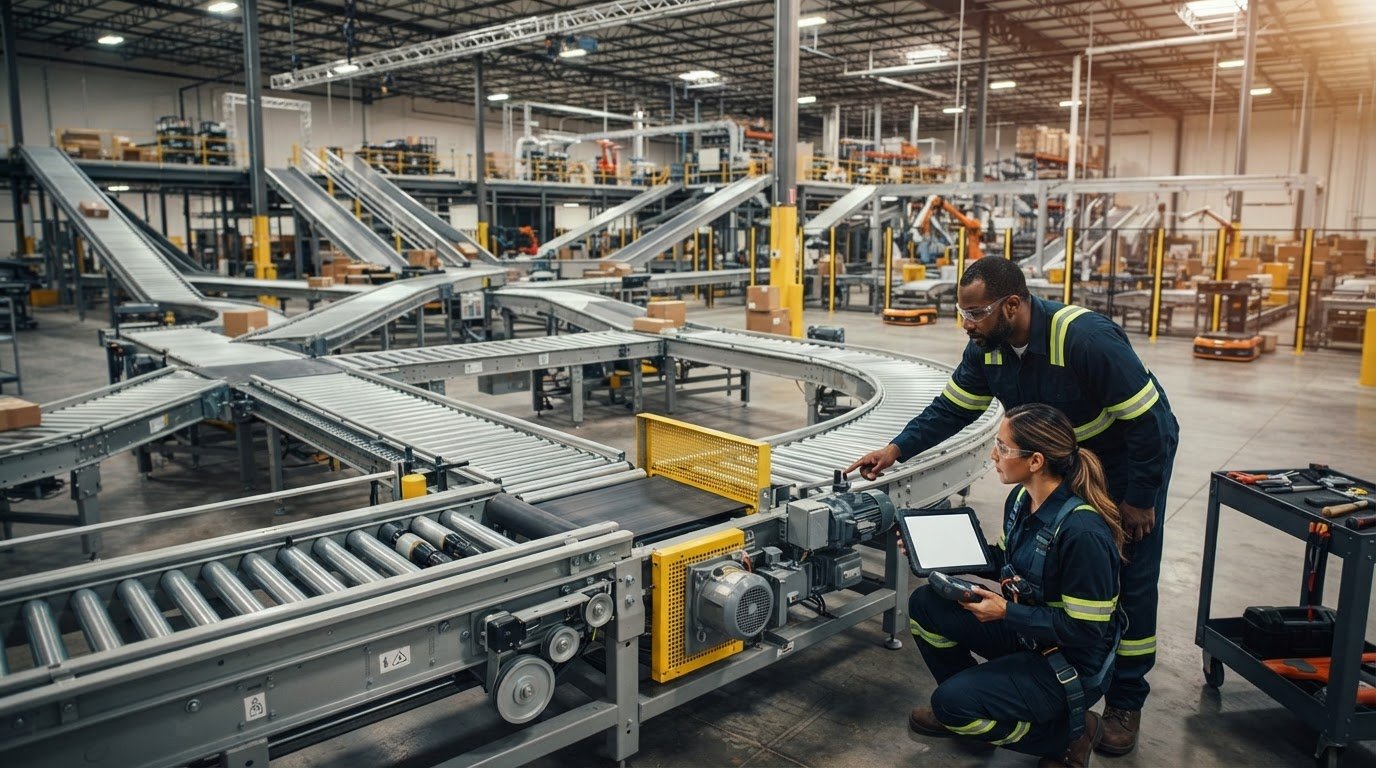
A conveyor can receive regular attention and still underperform when upkeep focuses only on individual parts. Effective conveyor maintenance services start with the full material-handling system: how equipment connects, where material flow depends on it, and which operating priorities it must support.
Unexpected conveyor issues can interrupt material flow, while unclear responsibilities make it harder to set priorities or plan useful service. A practical maintenance plan should do more than respond to visible wear. It should define a clear scope, account for system condition and operating demands, and connect maintenance with engineering and improvement goals. This guide explains how to assess that scope, what information to gather about your equipment and facility, and how reactive, preventive, and predictive approaches differ.
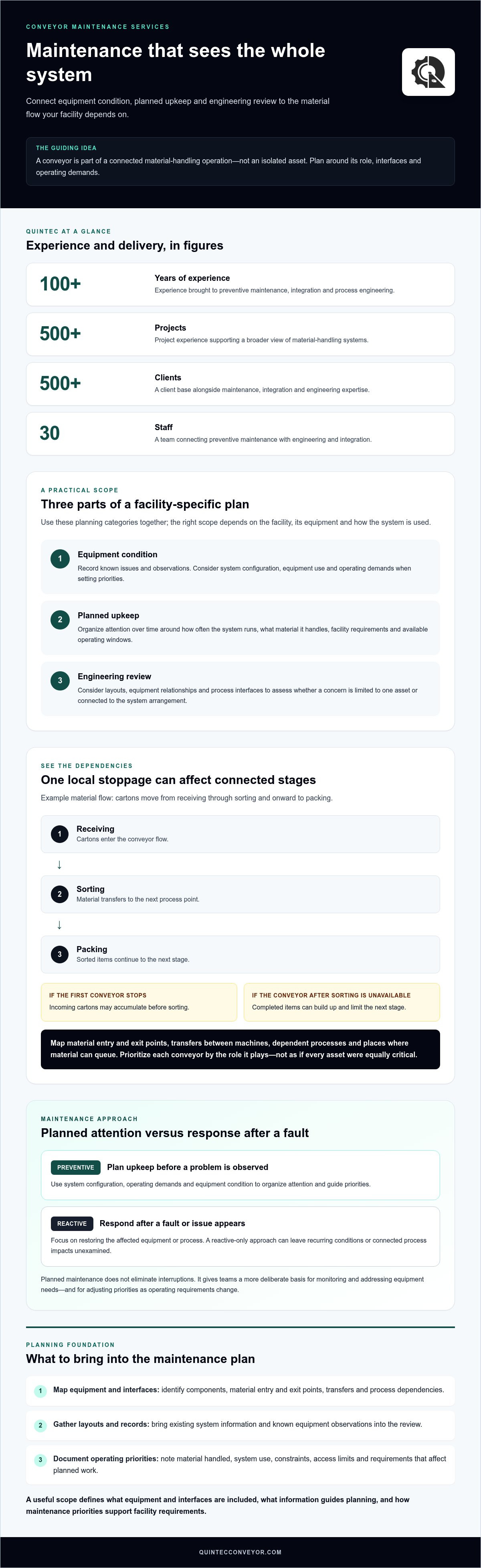
Quintec Conveyors brings preventive maintenance together with integration and process engineering expertise, grounded in OVER 100 YEARS OF EXPERIENCE! That broader perspective considers the conveyor as part of the operation, not an isolated asset.
Key Takeaways
- Assess conveyor maintenance services in the context of the full material-handling system, including connected processes and workflow dependencies.
- Define a useful scope by separating equipment condition review, planned upkeep, and engineering opportunities.
- Compare maintenance approaches by their scope, system context, engineering input, and communication practices.
- Prepare for planning by mapping equipment, gathering existing layouts and records, and documenting operating priorities.
- Quintec connects preventive maintenance with engineering and integration, backed by OVER 100 YEARS OF EXPERIENCE!, 500+ PROJECTS, 500+ CLIENTS, and 30 STAFF.
Why conveyor maintenance services matter to the whole material-handling system
Conveyors rarely operate as isolated assets. They move material between people, equipment, storage areas, and production steps, so a problem in one section can disrupt work beyond the point where it begins. Conveyor maintenance services support the reliability of material-handling systems by helping facilities understand equipment condition and organize upkeep around how the system is used.
Maintenance priorities depend on system configuration and operating requirements. A conveyor serving a process bottleneck may need different attention from one with an alternative route or a buffer area. The Conveyor System Overview illustrates the range of conveyor types and applications. In practice, connections between equipment and process steps matter just as much as the conveyor design itself.
How maintenance supports connected material flow
Consider a facility where receiving sends cartons along a conveyor to a sorting point, then onward to packing. If the first conveyor stops, incoming cartons may accumulate before sorting. If the conveyor after sorting is unavailable, completed items can build up and limit the next stage. The initial issue may be local, but its effects can travel in both directions: upstream teams may need to adjust their work, while downstream processes wait for material.
A useful review considers interfaces as well as equipment condition. Map where material enters and exits each conveyor, identify transfers between machines, and note which processes depend on uninterrupted flow. This helps distinguish a component concern from a wider constraint, such as an awkward handoff or limited space for material to queue. Maintenance priorities can then reflect each conveyor’s role in the facility instead of treating every asset as equally critical.
Preventive maintenance versus reactive repair
Preventive maintenance is planned attention intended to support reliable operation. It gives a facility a way to organize upkeep before a problem is observed, using the system’s configuration, operating demands, and equipment condition to guide priorities. Reactive repair begins after a fault or other issue appears and focuses on restoring the affected equipment or process.
Both approaches have a place in equipment management, but relying only on reactive repair can leave teams responding to symptoms without considering recurring conditions or connected process impacts. Planned maintenance doesn’t eliminate the possibility of interruption. It provides a more deliberate basis for monitoring and addressing equipment needs. A practical approach also makes room to review new issues and adjust priorities as operating requirements change.
Effective conveyor maintenance services connect equipment upkeep with the flow it supports. Start by understanding how assets interact, what processes depend on them, and where maintenance attention can best support operating goals.
What conveyor maintenance services can cover across a facility
A useful maintenance scope is more than a catalogue of individual tasks. It defines how equipment condition, planned upkeep, and engineering review relate to the facility’s operating needs. Shape the scope around the equipment in place, how it is used, and the process requirements it supports. That may mean looking beyond conveyors to connected material-handling equipment and the transitions between them.
Consider three planning categories: condition review establishes what is happening with equipment; planned upkeep organizes attention over time; and engineering optimization considers whether the system’s arrangement and operation remain aligned with workflow needs. These categories provide a framework, not a universal checklist. Conveyor Maintenance Best Practices offers additional maintenance considerations. A facility-specific scope should reflect its own assets and operating context.
Defining a preventive maintenance scope
Equipment type is only one input. Use and operating context matter too: how frequently a system runs, what material it handles, and how it connects with adjacent equipment can all affect maintenance priorities. Begin by documenting the system’s components and known constraints, such as access limitations, process dependencies, or operating windows that affect when planned work can be arranged.
This documentation gives maintenance planning a practical foundation. A clearly defined scope identifies which equipment and interfaces are included, what information will guide planning, and how priorities relate to facility requirements. Because layouts and operating demands differ, tailor the scope to the facility instead of copying a generic task list.
Where process engineering fits into maintenance
Maintenance can also raise broader questions about how a material-handling system serves its workflow. Process engineering brings that context into the review. System layouts, process requirements, and equipment relationships can help clarify whether an observed concern is limited to one asset or connected to the way the operation is arranged. The goal is informed evaluation, not an assumption that every issue requires a redesign.
- Equipment condition: Record known issues and observations that may inform maintenance priorities.
- Planned upkeep: Organize recurring attention around equipment use and facility requirements.
- Engineering review: Consider layouts and process interfaces when assessing system-level concerns.
For example, if material transfer between a conveyor and another handling stage repeatedly complicates operations, consider both equipment condition and the interface between process steps. This keeps maintenance planning connected to real operating requirements without presuming a particular solution or promising a quantified result.
Quintec provides preventive maintenance for material-handling systems alongside process engineering and conveyor integration. Facilities can explore Quintec’s conveyor and material-handling expertise as part of a broader engineering and integration perspective.
How to assess conveyor maintenance services for operational fit
A maintenance scope is useful only if it reflects the equipment and workflow it is meant to support. A long task list may look comprehensive but still leave gaps if it treats each conveyor as a separate asset and overlooks interfaces with automation or other material-handling equipment. Assess conveyor maintenance services by how clearly they connect planned work to the facility’s operating needs.
Use the criteria below to assess the structure of a maintenance approach. They help distinguish a task list from coordinated planning without assuming that every facility needs the same breadth of support.
Scope: What systems and operational processes are included? A clear scope identifies the equipment under discussion and its boundaries.
System context: Does the assessment consider how conveyors connect with upstream and downstream equipment, automation, and material flow?
Engineering input: Is there a way to consider process requirements and system integration alongside equipment condition?
Communication: How are priorities, observations, decisions, and scope changes recorded and shared?
A coordinated approach makes these connections explicit. It links the equipment in the plan to the processes it supports, identifies how engineering considerations fit into maintenance discussions, and provides a basis for revisiting priorities when operating needs change. A task list may state what work is planned without explaining why it matters to the facility or how related systems are considered.
Questions that clarify service scope
Use focused questions to make the scope understandable and relevant. Which systems and operational processes is the plan intended to address? How do maintenance discussions connect with process engineering and system integration? If production requirements or equipment relationships change, how will the revised scope and priorities be documented? Clear answers establish shared expectations.
Describe the workflow the maintenance plan needs to support. For example, a conveyor that transfers product into an automated process has different dependencies from one serving a standalone handling task. The scope should make those distinctions visible instead of applying a uniform approach across unrelated assets.
Assessing maintenance within a wider system
Map how conveyors interface with robotics, automation, and other material-handling equipment. Then consider the workflow dependencies around each interface: what supplies the conveyor, what receives its output, and where a disruption could affect the sequence of work. This wider view helps align service scope with facility needs instead of adding unrelated tasks.
Quintec’s work across conveyor integration and process engineering connects maintenance discussions with system context. Keep the assessment practical: define the equipment and processes in scope, make engineering considerations visible, and establish how decisions will be communicated. This gives the facility a clearer basis for coordinating maintenance with its operating goals.
How to prepare a facility-specific conveyor maintenance plan
A well-prepared plan starts with reliable information about the system and the work it supports. Before scoping conveyor maintenance services, bring together facility, operations, and maintenance perspectives. This helps turn general priorities into a practical discussion about equipment, process dependencies, access, and safe coordination.
Information to gather before scoping maintenance
Start by mapping conveyor areas and the processes they connect. Note where material enters and leaves each section, which equipment depends on the flow, and any known constraints that could affect maintenance planning. The information does not need to be perfect. A clear record of what is known, missing, or uncertain gives the planning conversation a useful starting point.
- System information: Collect available layouts, equipment documentation, and records of previous maintenance or recurring concerns.
- Process context: List connected processes, material-handling equipment, and dependencies that could be affected by planned work.
- Observed concerns: Record what operators have noticed, including where and under what operating conditions it occurs, without assuming a cause.
- Planning constraints: Identify access limitations, operating windows, and other facility requirements that may affect coordination.
Separating observations from diagnosis is valuable. For instance, note where a transfer appears inconsistent and when it was observed, rather than deciding in advance that one component is responsible. This keeps the scope grounded in evidence and leaves room to assess related equipment or process interfaces.
Coordinating maintenance planning with facility operations
Identify the operational priorities that should guide scheduling and communication. Facility teams can determine which processes are most sensitive to planned interruptions, who needs advance notice, and which coordination points are appropriate before work begins and after it concludes. Clear roles and a shared record of decisions help keep maintenance planning aligned as requirements evolve.
Safety must be part of this preparation, not an afterthought. Before maintenance work, the facility’s safe-work planning should address applicable OSHA requirements, including control of hazardous energy and lockout/tagout under 29 CFR 1910.147. Employee safety is Quintec’s first priority, and Quintec follows all OSHA requirements and regulations at all times.
Quintec’s conveyor maintenance can be considered alongside its process engineering and integration expertise, helping facilities frame upkeep within the larger system. For system-level planning, the perspective of a conveyor system integrator can help connect equipment interfaces with facility requirements.
With layouts, records, dependencies, constraints, and priorities gathered, your team can begin a focused maintenance planning discussion. Discuss facility-specific conveyor maintenance planning with Quintec.
Quintec conveyor maintenance services connect upkeep with engineering
Maintenance planning is more effective when it accounts for how equipment fits into the facility’s wider operation. Quintec provides preventive maintenance for material-handling systems alongside conveyor integration and process engineering. This combination brings upkeep into the context of system design, equipment connections, and the processes each part of the system supports.
Quintec’s turnkey approach spans engineering, design, construction, installation, and ongoing maintenance. This continuity helps facilities bring maintenance considerations into a broader project conversation, whether they’re planning a new system or reviewing needs within an existing operation. Not every maintenance discussion requires a redesign. The integrated approach makes room to consider equipment condition alongside relevant process and integration context.
Quintec’s integrated approach to conveyor upkeep
Quintec connects preventive maintenance with conveyor integration and process-engineering expertise. Service planning is tailored to the facility and its material-handling needs, with attention to how the system supports its workflow. Where layout is relevant, warehouse design services can inform discussion of how equipment and facility requirements relate.
This integrated perspective is useful when maintenance planning touches system interfaces or evolving process requirements. Quintec brings OVER 100 YEARS OF EXPERIENCE!, 500+ PROJECTS, 500+ CLIENTS, and 30 STAFF to material-handling work. These figures reflect the experience and project background behind its engineering, integration, and maintenance capabilities, without implying a guaranteed operational result.
Discuss your conveyor maintenance requirements with Quintec
A focused conversation can begin with the information your facility already has: system context, operating priorities, known concerns, and maintenance objectives. Layouts and equipment records can help frame the discussion, while details about process dependencies and access constraints provide useful context for defining a scope.
Safety is central to that planning. Employee safety is Quintec’s first priority, and Quintec follows all OSHA requirements and regulations at all times. Bringing operational requirements and safety considerations into the same conversation keeps planning grounded in the realities of the facility and the work being considered.
Quintec’s preventive maintenance, process engineering, and integration capabilities provide a connected starting point for discussing upkeep within the wider material-handling system. Share your system context, operational priorities, and maintenance objectives to begin defining a facility-specific scope. Discuss your conveyor maintenance needs.
Make your maintenance plan part of ongoing improvement
A maintenance plan can evolve with your facility. As workflows, equipment, or production priorities change, revisit whether the plan still reflects the way material moves through the system. Keeping observations and decisions organized gives operations and maintenance teams a shared reference point and helps them identify when priorities need review.
This feedback can make conveyor maintenance services part of a broader operating strategy rather than a plan that sits unchanged after it’s created. Start with the information your team has today, then refine the scope as facility needs become clearer. Bring your system context, known concerns, and operating objectives into one focused conversation.
Quintec combines conveyor maintenance with engineering and integration expertise. Employee safety is its first priority, and Quintec follows all OSHA requirements and regulations at all times. Start planning your conveyor maintenance scope with Quintec.
Frequently Asked Questions
What do conveyor maintenance services typically include?
Conveyor maintenance services can include equipment condition review, planned upkeep, and discussion of engineering needs, with the scope shaped around the facility’s system. For example, a review may consider how a conveyor transfers material to adjacent equipment, not just the conveyor itself. A useful scope states which assets and interfaces are addressed and how observations will inform maintenance priorities.
How often should a conveyor system receive preventive maintenance?
There isn’t one interval that suits every conveyor system. Timing depends on factors such as equipment guidance, how the system is used, its operating environment, and its maintenance history. Review available records and observations to assess whether the current schedule remains appropriate. If operating patterns change or the same concern recurs, reassess the plan with those details in view instead of relying on a calendar alone.
Can conveyor maintenance help reduce unplanned downtime?
Planned maintenance can help teams identify concerns and address equipment needs before they become unexpected interruptions, but it can’t eliminate downtime. Its practical value is in supporting earlier attention and better coordination. For example, documenting recurring observations can help a facility determine whether an issue is limited to one conveyor or relates to a connected process. That context can inform priorities and planning for affected teams.
What information should I prepare before discussing conveyor maintenance services?
Gather available equipment layouts, asset documentation, maintenance records, and a brief description of the material-handling workflow. Note where a concern occurs, what operators observe, and whether it appears under particular operating conditions. Include known dependencies, access limitations, and periods when work may be easier to coordinate. You don’t need to diagnose the cause. Clear observations help frame the discussion and identify useful next steps.
How do preventive maintenance and conveyor repair differ?
Preventive maintenance is planned before a specific fault is reported, with attention organized around equipment needs and operating context. Conveyor repair responds to a problem that has already been observed and focuses on the affected equipment. A recurring repair may also prompt a broader review of maintenance priorities or system interfaces. The two approaches serve different purposes and can both inform responsible equipment planning.
Does conveyor maintenance need to account for connected automation equipment?
Yes, planning should consider automation where it connects with or depends on conveyor flow. A conveyor may feed a robotic or automated process, so maintenance coordination can account for the interface, affected workflow, and teams involved. This doesn’t mean every conveyor maintenance scope includes work on automation equipment. Documenting the connection helps define boundaries and coordinate activities with the facility’s operating requirements.
What safety requirements apply during conveyor maintenance?
Applicable OSHA requirements include control of hazardous energy under 29 CFR 1910.147 and machine guarding under 29 CFR 1910.212. Maintenance planning should address how hazardous energy is controlled and how guards are handled so equipment isn’t operated in an unsafe condition. Site procedures and the equipment’s hazards matter.