Conveyor Project Management: 2026 Comprehensive Guide
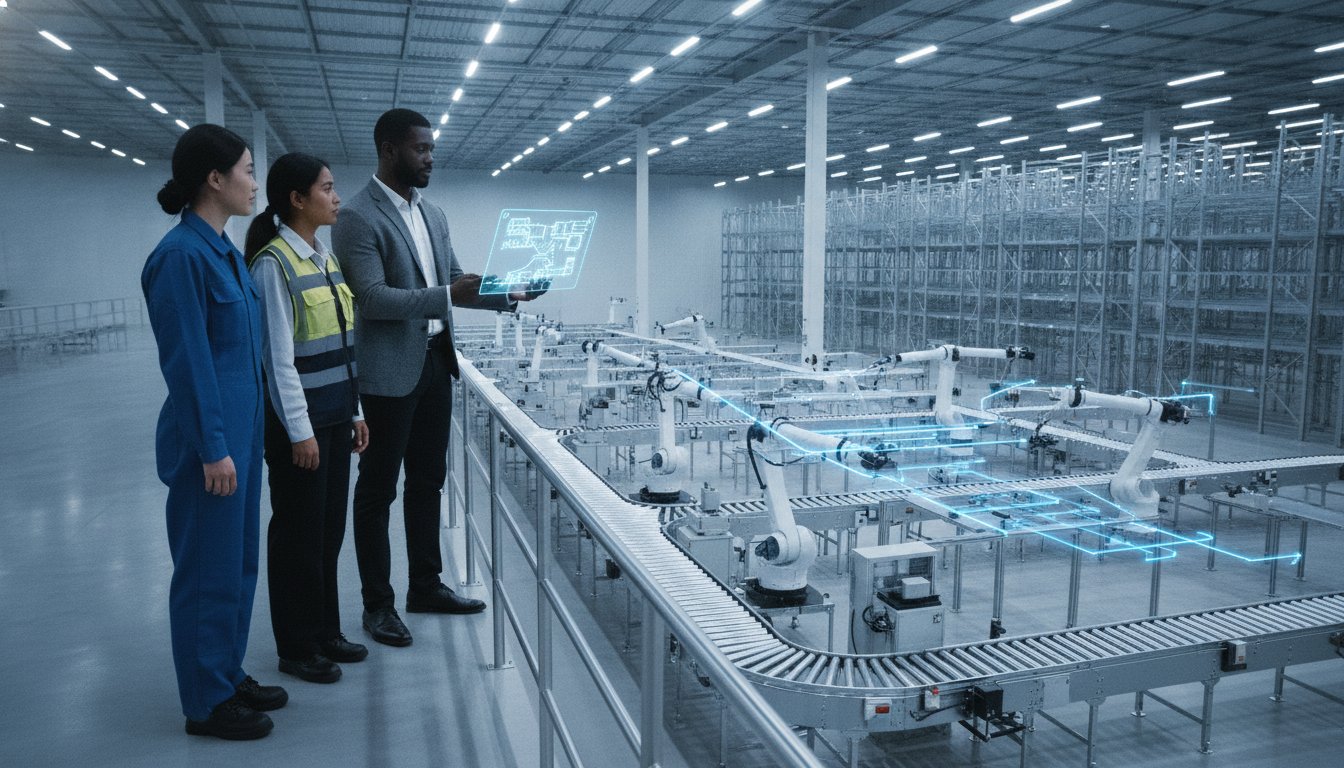
What if the primary obstacle to your facility's 2026 expansion isn't the hardware itself, but the invisible gaps between your mechanical installers and electrical engineers? You've likely felt the anxiety of a looming deadline while worrying that your new automation won't speak the same language as your existing warehouse software. It's a valid concern. Coordinating complex systems often leads to supply chain bottlenecks and expensive project delays that eat into your bottom line. Effective conveyor project management serves as the strategic bridge between purchasing raw equipment and operating a high-performance facility.
This comprehensive guide provides a professional roadmap to help you navigate the complexities of system integration with confidence and precision. We'll outline the critical milestones for planning, the technical nuances of execution, and the strategic operational handover required for a seamless transition. By following this structured approach, you can ensure project accountability and achieve the high ROI your facility demands through optimized material flow. Whether you're integrating robotics or expanding your warehouse racking, these insights will help you maintain a steady hand throughout the entire project lifecycle.
Key Takeaways
- Understand how professional conveyor project management has transitioned from simple equipment placement to the complex coordination of integrated automated systems.
- Identify facility bottlenecks through strategic process engineering to ensure your system design accommodates both current needs and future scalability.
- Learn to navigate the logistics of multi-vendor procurement by establishing a master project timeline with clearly defined critical path milestones.
- Discover the step-by-step commissioning protocols required to move from initial mechanical run-in to full-load testing while maintaining active facility operations.
- Secure long-term system reliability by mastering the operational handover process, including the essential role of operator training in preventing downtime.
What is Conveyor Project Management in an Automated Era?
In the current industrial environment, conveyor project management is defined as the centralized coordination of design, engineering, and installation of material handling systems. It isn't just about moving boxes from point A to point B anymore. The modern era demands a shift from simple belt installation to the complex oversight provided by warehouse system integrators. While a foundational conveyor system overview highlights the mechanical variety available, the management of these systems now requires total harmony between hardware and digital controls.
Utilizing a single point of contact model is essential for reducing vendor friction. When one entity manages the entire lifecycle, miscommunication between manufacturers and installers vanishes. This precision has a direct financial impact, significantly reducing the Total Cost of Ownership (TCO). By preventing design clashes and installation delays, professional conveyor project management ensures the facility achieves its intended throughput without the hidden taxes of post-launch corrections.
The Core Pillars of Industrial Integration
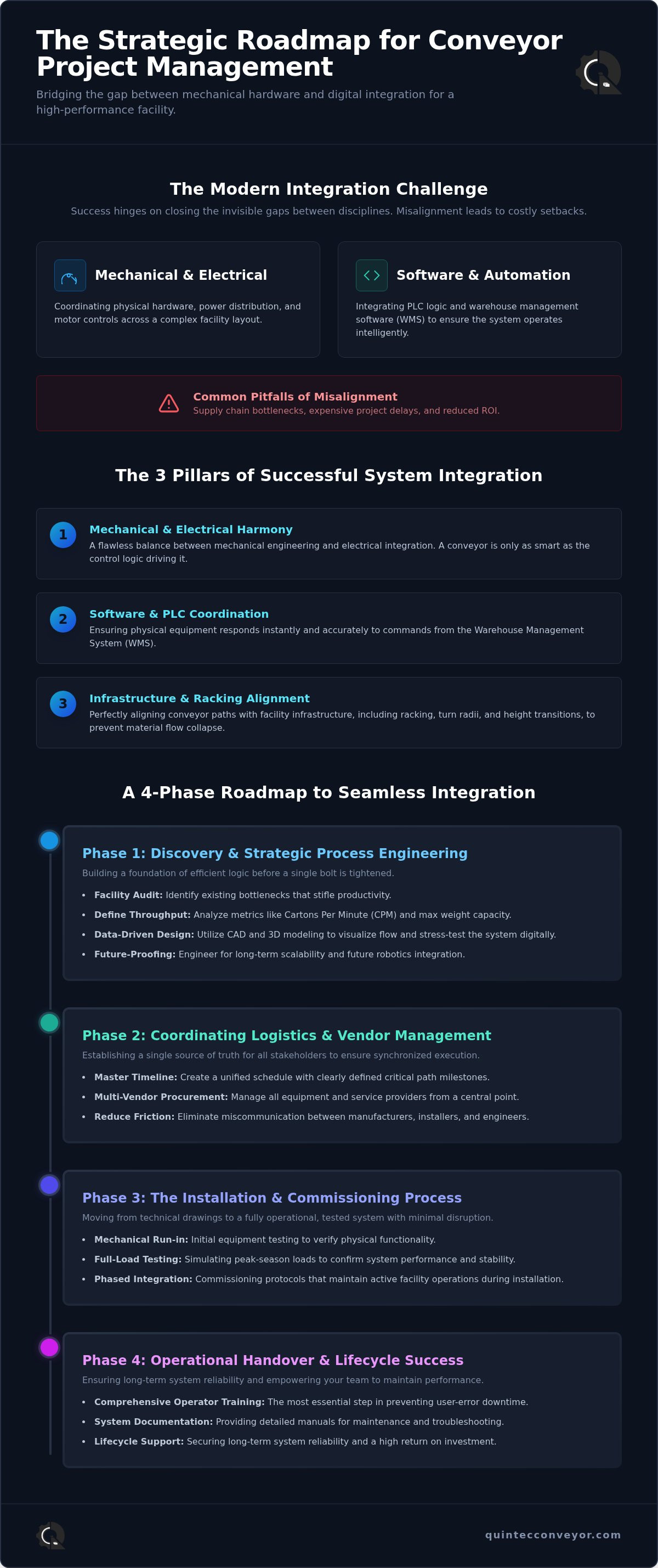
Successful integration rests on three foundational pillars. First, the balance between mechanical engineering and electrical integration requirements must be flawless; a conveyor is only as smart as the control logic driving it. Second, software and PLC (Programmable Logic Controller) coordination ensures that the physical equipment responds instantly to warehouse management system commands. Finally, infrastructure and racking must align perfectly with conveyor paths. If the racking isn't built to accommodate the turn radii or height transitions of the automation, the entire material flow collapses.
Why In-House Management Often Fails
Many facilities attempt to manage these projects internally to save costs, yet they often face the overwhelming complexity of coordinating multiple specialized subcontractors. It's difficult for a general plant manager to mediate between a mechanical installer and a software engineer when technical disputes arise. Technical oversights in the design phase often remain hidden until the commissioning stage, where they manifest as expensive retrofits. Conveyor project management is the strategic alignment of hardware, software, and facility flow. Professional management identifies these risks during the initial facility audit, ensuring that the roadmap to automation is grounded in practical engineering reality.
Phase 1: Discovery and Strategic Process Engineering
The most sophisticated automation fails if it's built on a foundation of inefficient logic. Before a single bolt is tightened, a thorough facility audit must identify the existing bottlenecks that stifle your productivity. High-level conveyor project management begins here, focusing on the strategic alignment of your operational goals with your physical space. By utilizing strategic warehouse design services, we map future growth trajectories to ensure the system remains viable for years to come.
Defining throughput requirements is a non-negotiable part of this phase. We analyze specific metrics like cartons per minute (CPM) and maximum weight capacities to select the correct hardware for the application. Integrating robotics and automation into the initial system logic allows for a cohesive flow that reduces manual touches and enhances accuracy. This proactive engineering approach prevents the patchwork systems that often plague facilities skipping the discovery phase. If you're looking for a partner to guide this technical deep dive, our process engineering experts can help you visualize the optimal layout.
Data-Driven System Design
Modern engineering relies on digital precision. We utilize CAD and 3D modeling to visualize facility flow, allowing stakeholders to see how the system interacts with the existing environment. These models aren't just for show; they allow us to simulate peak-season loads. By stress-testing the proposed design digitally, we identify potential congestion points before construction begins. This ensures that the equipment selection aligns with long-term scalability goals, preventing the need for costly retrofits later.
Risk Mitigation in the Engineering Phase
Engineering for 2026 requires a deep understanding of physical and regulatory constraints. Ceiling heights, floor load limits, and existing utility paths must be documented with absolute accuracy. Compliance is equally critical, as systems must adhere to OSHA conveyor safety standards and ANSI requirements to protect personnel. Finally, identifying long-lead items in the supply chain early is vital. By securing critical components months in advance, we prevent timeline shifts that could derail your operational go-live date. This level of foresight is what separates professional conveyor project management from simple equipment sales.
Phase 2: Coordinating Logistics and Vendor Management
Once the engineering logic is finalized, the focus shifts to the logistical orchestration of hardware. Effective conveyor project management requires a high level of coordination to manage the procurement of industrial conveyor systems from various manufacturers. It's not enough to simply order equipment; you must ensure every component meets the rigorous standards set by the Conveyor Equipment Manufacturers Association (CEMA). This phase is about transforming a digital design into a physical reality through disciplined vendor oversight.
Staging is a critical component of this phase. Equipment must arrive in a precise installation sequence to avoid overcrowding the facility floor or stalling the crew. Simultaneously, infrastructure preparation must be completed before the first sections are uncrated. This includes electrical drops, compressed air lines, and floor anchoring. Proper synchronization prevents the "hurry up and wait" scenario that often inflates labor costs and extends project timelines. Our national reach allows us to coordinate these moving parts across the United States, ensuring that local site conditions never compromise the master plan.
The Master Project Schedule
The backbone of successful execution is the master project schedule. We define the "Critical Path" as the sequence of tasks that directly impacts the go-live date. If a specific sortation module or an AI-driven robotic arm is delayed, it can halt the entire project. Weekly progress reporting keeps all stakeholders informed, providing a transparent view of the timeline. Managing change orders is another reality of large-scale projects. A professional manager evaluates the impact of every request on both the budget and the schedule, ensuring that minor adjustments don't lead to major derails.
Vendor and Subcontractor Oversight
Managing a diverse team of millwrights, electricians, and software technicians requires a steady hand. Vetting conveyor system suppliers for technical support and reliability is the first step in ensuring a unified result. In 2026, the challenge often lies in integrating advanced AI sortation and robotics into the traditional mechanical timeline. A seasoned integrator ensures that software technicians have the access they need exactly when the mechanical installation is ready for testing. This coordination guarantees that all vendors adhere to the unified system design, preventing the "finger-pointing" that often occurs when systems don't communicate correctly.
Phase 3: The Installation and Commissioning Process
The physical transition from a blueprint to an operational system is the most high-stakes period of any facility upgrade. Professional conveyor project management ensures that the physical conveyor installation occurs without forcing a total operational shutdown. By utilizing a phased approach, crews can work in specific zones while your team maintains throughput in others. This requires a granular level of coordination between the millwrights and your facility manager to ensure safety and productivity coexist on the same floor.
Commissioning is the final validation that a system meets its designed operational parameters. This phase bridges the gap between mechanical completion and full-scale production. It involves rigorous software integration where the Warehouse Management System (WMS) is synchronized with the conveyor's PLC logic. Without this digital alignment, the most expensive hardware remains a series of disconnected belts. Final safety inspections are conducted at this stage to verify that all emergency stop (E-stop) circuits and guarding meet the 42 inch minimum height requirements mandated by ANSI/ASME B20.1 standards. If you are ready to begin your facility's physical transformation, contact our integration team to discuss your installation timeline.
Step-by-Step Commissioning
The commissioning process follows a strict, logical progression to ensure system integrity. We begin with dry run testing, where we check belt tracking, motor performance, and sensor alignment without any product load. Once the mechanical foundation is verified, we move to full-load testing. This stage is critical for verifying that throughput speeds and weight capacities match the engineering specifications defined in Phase 1. We look for any signs of vibration, heat buildup, or logic lag that could indicate future maintenance issues.
System Optimization and Fine-Tuning
In the 2026 landscape, optimization often involves fine-tuning AI-driven sortation logic and robotic interfaces. Sensors and photo-eyes must be adjusted to account for diverse product packaging, from polybags to high-gloss cartons. We focus on the precision of automated picking arms and sortation divert timing to ensure maximum accuracy. This level of fine-tuning reduces the "recirc" rate of packages, which directly improves your facility's efficiency. By the time the project moves to the final handover, the system isn't just running; it's optimized for the specific nuances of your inventory and flow.
Phase 4: Operational Handover and Lifecycle Success
The successful completion of a conveyor project management lifecycle occurs when the system is fully integrated into the daily operations of your facility. This transition isn't a single event but a methodical transfer of knowledge from the integrator to your management team. Effective conveyor project management doesn't end when the last belt is tensioned; it continues through the successful adoption of the system by your staff. Providing a comprehensive documentation package is the first step in this process. This includes technical manuals, spare parts lists, and detailed PLC logic maps that allow your internal teams to understand the digital architecture behind the automation. Without this clarity, even the most advanced systems become difficult to manage as they age.
Establishing a proactive conveyor maintenance schedule from day one is vital for protecting your investment. High-performance facilities don't wait for a breakdown to occur; they utilize the data gathered during the commissioning phase to set baseline performance metrics. By following a structured maintenance roadmap, you reduce the risk of catastrophic failures and extend the operational life of every motor, belt, and sensor. This long-term stability is what ensures the system delivers on its promised ROI.
The Training Framework
Operator error remains a leading cause of system downtime in automated environments. We implement a multi-tiered training framework to mitigate this risk. Operators receive safety training and learn daily inspection protocols to identify wear before it leads to a stoppage. Your maintenance team receives deeper technical training focused on first-level troubleshooting and mechanical adjustments. Finally, we provide training on software dashboards, enabling your leadership to monitor performance in real-time and make data-driven decisions. This ensures that every team member is equipped to handle the nuances of the new system.
Ensuring Long-Term ROI
Long-term success is measured by the system's ability to maintain high uptime and adapt to changing business needs. We help you set Key Performance Indicators (KPIs) to track throughput and reliability against the original design specs. As your volume grows, the flexibility of modular conveyor systems allows for seamless expansions without rebuilding the entire line. Partnering with a seasoned conveyor system integrator for annual engineering audits ensures that your facility remains at the cutting edge of efficiency as technology evolves. This strategic partnership transforms a one-time project into a sustainable operational advantage that scales with your business.
Securing Your Operational Future with Strategic Integration
As we look toward 2026, the success of your facility depends on the seamless alignment of mechanical precision and digital intelligence. We've explored how professional coordination transforms a collection of equipment into a high-performance automated ecosystem. By prioritizing data-driven engineering and disciplined vendor oversight, you eliminate the friction that often leads to delays and budget overruns. The final handover is just the beginning of your system's lifecycle; long-term stability is maintained through consistent maintenance and operator excellence. It's about more than just moving product; it's about building a resilient foundation for growth.
When you're ready to modernize your facility, you need a partner who understands the entire lifecycle of industrial automation. Quintec Conveyors brings over 100 years of collective industry experience to every project, offering comprehensive national integration services across the United States. We are specialists in custom warehouse robotics and automation, ensuring your facility remains at the cutting edge of efficiency as technology evolves. Partner with Quintec Conveyors for Expert Conveyor Project Management and take the first step toward a more resilient supply chain. Your path to optimized material flow starts with a proven roadmap.
Frequently Asked Questions
What is the role of a project manager in a conveyor installation?
A project manager serves as the centralized point of coordination for the design, engineering, and installation of material handling systems. They bridge the gap between mechanical installers and electrical engineers to ensure every component aligns with the master design. By providing a single point of contact, they reduce vendor friction and prevent miscommunication that often leads to delays. This expert oversight is essential for maintaining project accountability and ensuring the final system meets all throughput requirements.
How long does a typical conveyor project management lifecycle take?
While timelines vary based on system complexity, a typical conveyor project management lifecycle for a mid-to-large scale facility often spans four to nine months. This duration includes the initial discovery phase, process engineering, procurement, physical installation, and commissioning. Complex systems involving robotics or AI-driven sortation may require additional time for software integration and testing. Establishing a master project schedule with critical path milestones early in the process helps ensure the project remains on schedule.
What are the biggest risks in conveyor system integration?
The most significant risks include system incompatibility with existing warehouse software, project delays due to long-lead supply chain items, and bottlenecks caused by poor process engineering. Technical oversights during the design phase can lead to expensive retrofits during installation. Additionally, failing to coordinate between different specialized subcontractors often results in mechanical and electrical clashes. Professional management mitigates these risks through detailed facility audits and 3D modeling to stress-test the system before construction begins.
How do you coordinate multiple vendors during a warehouse automation project?
Coordination is achieved through a unified master project schedule that defines the critical path for all parties involved. We establish weekly progress reporting and clear stakeholder communication protocols to keep millwrights, electricians, and software technicians aligned. By acting as the strategic integrator, we ensure every vendor adheres to the same system logic and safety standards. This centralized oversight prevents the "finger-pointing" that often occurs when multiple specialized subcontractors work in the same space.
What is the difference between installation and commissioning?
Installation refers to the physical placement and assembly of the conveyor hardware, racking, and infrastructure within the facility. Commissioning is the subsequent validation process where the system is tested to ensure it meets designed operational parameters. This includes dry runs to check belt tracking and motor performance, followed by full-load testing to verify throughput speeds. Commissioning also involves the critical synchronization of the conveyor's PLC logic with your Warehouse Management System to ensure seamless digital communication.
How does process engineering affect the success of a conveyor project?
Process engineering is the foundation of a successful project because it identifies and resolves bottlenecks before any hardware is purchased. It ensures the system design is based on actual throughput requirements, such as cartons per minute and weight capacities. Without this strategic engineering, facilities often end up with patchwork systems that fail to scale. Proper engineering ensures that the hardware, software, and facility flow are perfectly aligned to deliver the highest possible return on investment.
What documentation should I receive at the end of a managed conveyor project?
Upon completion, you should receive a comprehensive documentation package to support the system's lifecycle. This includes technical operation manuals, preventive maintenance schedules, and a full spare parts list to minimize future downtime. Additionally, you should receive PLC logic maps and software dashboard instructions for your maintenance and management teams. This documentation ensures your internal staff can perform first-level troubleshooting and understand the digital architecture required to keep the automated system running at peak performance.
Do I need a separate project manager if I have an internal maintenance team?
Yes, because conveyor project management requires specialized expertise in system integration that goes beyond standard equipment maintenance. While internal teams are excellent at day-to-day repairs, an external project manager handles the complex coordination of multiple vendors, engineering logic, and large-scale installation logistics. This allows your maintenance team to focus on operational uptime while the project manager ensures the new integration is completed on time, within budget, and in compliance with all safety standards.