Conveyor System Inlets: Designing Reliable Material Entry Points
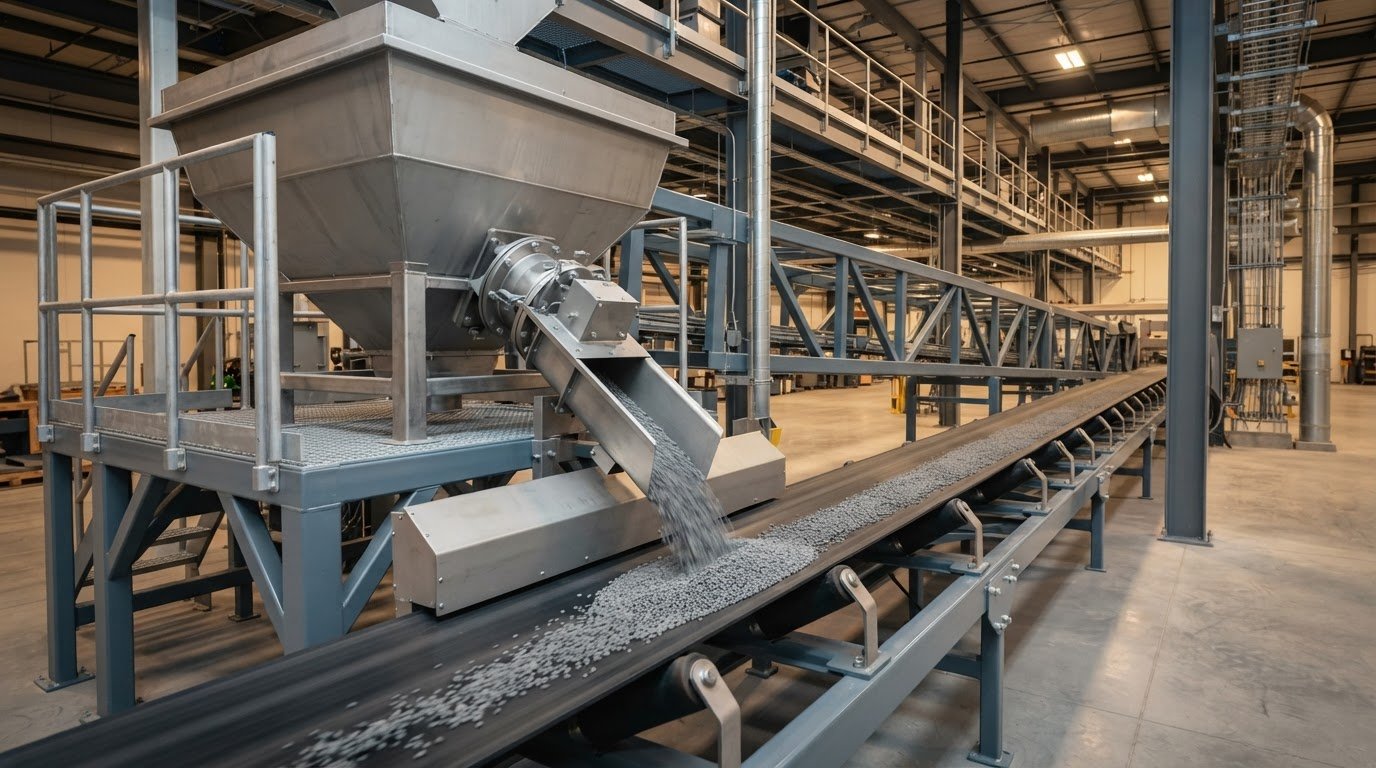
A conveyor’s most consequential design decision may sit before the belt ever moves. Conveyor system inlets do more than provide an opening for material: they shape how product enters the line, how consistently it moves downstream, and how equipment works together. A poorly matched entry point can contribute to uneven flow, spillage, dust, or avoidable wear.
The right inlet depends on the material and operation, not on a one-size-fits-all configuration. This guide explains the inlet’s role as a process interface and compares common approaches, including hoppers, chutes, feeders, and direct loading points. You’ll learn which operating requirements influence that choice and what information helps engineers integrate the inlet with upstream equipment, downstream conveyors, facility layout, and controls. Considering the entry point as part of the complete material handling process makes it easier to plan for consistent flow through the system.
Key Takeaways
- Map the material’s path from source equipment to its destination to clarify what the inlet needs to manage.
- Compare direct loading, chute-fed, hopper-fed, and feeder-controlled entry based on material form, flow control, and available layout.
- Specify conveyor system inlets with clear details about material, required flow, operating pattern, footprint, access, and equipment interfaces.
- Account for inlet connections to conveyor layout, process engineering, automation, and facility infrastructure during system planning.
- Use an integrated design approach to resolve component interfaces and support consistent downstream handling.
What Is a Conveyor System Inlet, and Where Does Material Enter?
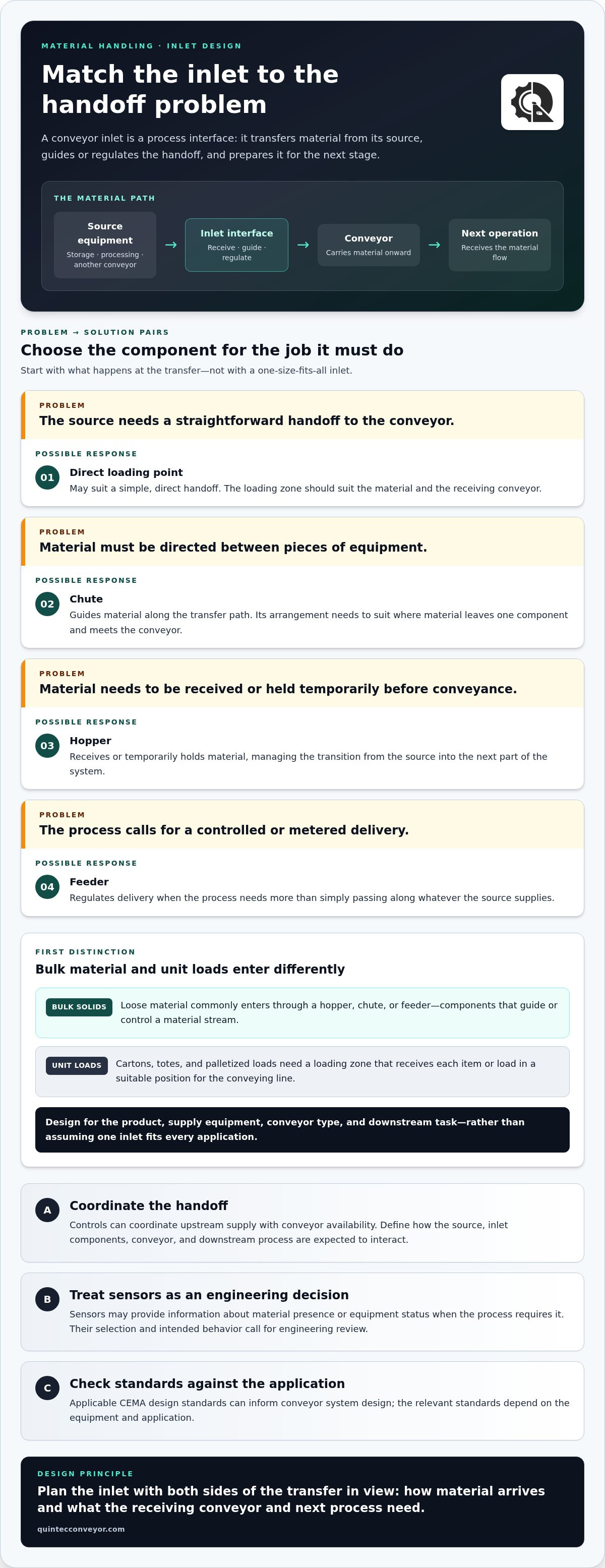
A conveyor’s inlet is the point or assembly where material enters the conveying line. It may be a simple loading zone or a coordinated arrangement of chutes, hoppers, feeders, and controls. The configuration helps transfer material from its source, position or distribute it on the conveyor, and prepare it for the next handling stage. An inlet is a process interface, not just an opening in the equipment.
The broader conveyor system connects equipment and movement into a material flow path. At the inlet, upstream storage or processing equipment hands material to the conveyor. The interface must suit both sides: the incoming material and its delivery pattern, plus the receiving conveyor and downstream equipment. If those elements don’t work together, material may enter unevenly or reach the next stage in a way that complicates handling.
How does a conveyor inlet fit into the material flow path?
Trace the route from the source. Material might leave a storage bin, processing machine, or another conveyor before reaching the inlet. A chute can guide it toward the belt, a hopper can receive and direct it, and a feeder can regulate its release. Controls may coordinate the handoff with upstream supply or conveyor operation. Together, these components influence how material transfers, where it lands, and how consistently it continues downstream.
Consider conveyor system inlets alongside the equipment they connect. The source determines how material arrives; the conveyor and next process determine what they need to receive. Designing for both sides makes the connection more coherent than selecting an entry point in isolation.
Are bulk-material inlets and unit-load loading points the same?
No. The term “inlet” can describe different entry arrangements depending on what the system moves. Bulk solids, such as loose material discharged from a process, typically enter through a hopper, chute, or feeder. These arrangements guide or control a stream of material onto the conveyor.
Cartons, totes, and palletized loads are discrete unit loads. Their loading zones focus on receiving each item or load in a suitable position for the conveying line, rather than containing a loose stream. A carton arriving from a packing operation has different entry needs from bulk solids flowing out of storage. Base the design on the product, supply equipment, conveyor type, and downstream task rather than assuming one inlet configuration fits every application.
How Conveyor Inlets Control Feeding, Transfer, and Material Flow
Material flow through an inlet is a sequence: source equipment releases material, the inlet guides or regulates the transfer, and the conveyor carries it toward the next operation. Each transition affects how material arrives on the conveying surface. If the entry point doesn’t suit the source or process, material may be delivered inconsistently or positioned poorly for downstream handling.
A conveyor inlet is the interface that manages the handoff from material supply to conveyance. That handoff may rely on a chute, hopper, feeder, or a combination of components. Design it around the material’s path and the operating needs on both sides. Applicable CEMA design standards can inform conveyor system design; the relevant standards depend on the equipment and application.
What roles can a hopper, chute, or feeder perform?
These components serve different functions in an inlet assembly:
- Hoppers receive or temporarily hold material before it enters the conveyor. They manage the transition from the source into the next part of the system.
- Chutes direct material between pieces of equipment. Their arrangement must suit the transfer path, including where material leaves one component and meets the conveyor.
- Feeders regulate delivery when the process calls for a controlled or metered feed, rather than simply passing along whatever the source supplies.
For example, a process that needs material supplied at a controlled rate may use a feeder at the inlet. If the main need is to guide material between equipment or elevations, a chute may be central to the transfer. The appropriate combination depends on the material and process requirements.
How do controls coordinate an inlet with the conveyor?
Controls can coordinate upstream supply with conveyor availability so material is introduced in a planned sequence. The operating logic depends on the application. Sensors may provide information about material presence or equipment status when the process requires it, but their selection and intended behavior call for engineering review. Don’t assume that a particular sensor or sequence suits every inlet.
For integrated conveyor system inlets, define how the source, inlet components, conveyor, and downstream process are expected to interact. Quintec designs and engineers conveyor systems with equipment interfaces considered as part of the wider material handling system. Explore integrated conveyor solutions to see how connected equipment and process requirements can be addressed together.
Which Conveyor Inlet Configuration Fits the Material and Application?
There’s no single inlet arrangement that suits every conveying task. The choice depends on what the system handles, how material arrives, whether delivery needs to be controlled, and how the source equipment connects to the receiving conveyor. A direct loading point may suit a straightforward handoff, while a chute, hopper, or feeder may address a specific transfer or process need.
When might direct loading, a chute, or a hopper be appropriate?
Direct loading can suit an arrangement where source equipment delivers material to the conveyor without an intermediate guiding or receiving component. A chute directs material between equipment when the transfer path requires it. A hopper provides a receiving or holding point before material moves onto the conveyor. These functions can also be combined to suit the process and physical layout.
| Configuration | Material form | Feed-control needs | Layout and interface considerations |
|---|---|---|---|
| Direct loading | Material discharged directly from a source; may include discrete loads or bulk material. | Depends on how the source releases material and how the receiving conveyor operates. | Requires a suitable source-to-conveyor position and a compatible handoff. |
| Chute-fed entry | Loose material or loads that need to be directed between components. | Guides the transfer path; does not by itself provide metered delivery. | Requires the chute path to suit the equipment positions and receiving point. |
| Hopper-fed entry | Material that needs a receiving or holding point before conveyance. | May receive material before it continues to the conveyor; feed behavior depends on the full arrangement. | Adds an interface between the source and conveyor that must fit the available layout. |
| Feeder-controlled entry | Material for processes that call for managed delivery. | Provides a means to regulate material entering the conveying line. | Requires coordination between the feeder, supply source, and conveyor. |
When does a controlled feeder become part of inlet design?
A feeder may suit a process that needs material delivered in a managed way. Unlike a passive chute, which directs material along a transfer path, a feeder regulates delivery. Whether that control is needed depends on process requirements and equipment interfaces, not simply on the presence of bulk material.
Use the table to narrow the options, then assess the complete handoff, including source equipment, available space, and downstream needs. For more context on how inlet choices fit into an integrated system, explore industrial conveyor systems and integrated design. The best fit among conveyor system inlets is the arrangement that works with the process and connected equipment as a whole.
How to Specify a Conveyor System Inlet Before Integration
A useful inlet design brief describes the full handoff, not just the point where material meets the conveyor. Capture what arrives, how it is supplied, what the process needs, and where material goes next. This gives engineers a basis for evaluating the inlet alongside connected equipment, available space, and facility flow.
What material and process information should the design brief include?
Use this brief to organize the information. Record known values and operating conditions, and flag unknowns for engineering review rather than filling gaps with assumptions.
- 1. Material: Describe its form and relevant handling characteristics, such as whether it arrives as loose bulk material or discrete loads. Include process-specific requirements that affect its transfer.
- 2. Supply source: Identify the equipment or process supplying material and how it connects to the inlet. Note how the source releases or presents the material.
- 3. Required flow: State the process’s flow requirements and distinguish established information from values that still need to be determined. Consider the inlet and receiving conveyor together so the handoff aligns with downstream handling needs.
- 4. Operating pattern: Describe when and how the system operates, including whether supply is continuous, intermittent, or tied to another process step. This helps define how the inlet interacts with upstream supply and conveyor availability.
- 5. Destination: Identify the receiving conveyor and the next equipment or process in the material path. Describe what the destination needs from the incoming flow.
How should layout and existing equipment shape the inlet?
Map the physical connection from the supply source to the receiving conveyor. Include the available footprint, relative equipment positions, access needs, and relevant facility infrastructure. Note interfaces with existing conveyors, automation, and controls. A layout constraint can influence whether a direct transfer or an intermediate component better fits the process, so capture the actual arrangement before settling on a configuration.
Review upstream supply behavior alongside downstream conveyor requirements. An inlet may connect equipment that operates in different patterns, so make those relationships visible during integration planning. Consider how facility flow, warehouse racking, and other infrastructure affect equipment placement, conveyor routes, access, and movement through the facility.
Clear inputs help engineers evaluate conveyor system inlets as part of the complete material handling process. Quintec’s conveyor design and integration services connect inlet requirements with the wider system. Plan your conveyor system integration.
Integrating Conveyor Inlets Into a Reliable Material Handling System
An inlet works within a chain of equipment and facility decisions. Its design can affect how upstream machinery releases material, how the conveyor receives it, and how the next process handles it. Treating each component separately can leave important connection points unresolved. An integrated approach considers the inlet alongside process engineering, conveyor layout, automation, and facility infrastructure.
Inlet performance depends on how well the entry point fits the wider process, from material supply through downstream handling. That fit includes physical connections and operating relationships. Consider a chute, hopper, or feeder alongside the equipment it connects, the space available, and the way material moves through the facility.
What can an integrated engineering approach bring to inlet design?
Engineering the inlet as part of the complete system helps align upstream and downstream equipment requirements. For example, the source may release material according to one operating pattern, while the receiving conveyor serves another process step. System design can address how those components connect and how the inlet fits the overall conveyor route.
Automation and robotics can also be part of the wider material handling design when they support the process, such as coordinating equipment or handling loads. They should serve a defined operational need. Infrastructure and warehouse racking matter, too: their placement can shape conveyor routes, equipment positions, access, and facility movement. Considering these elements together helps surface layout conflicts and interface requirements during planning.
What are the next steps for a conveyor inlet project?
Bring together the key project inputs before moving into design: the material and its handling requirements, the supply source, required flow and operating pattern, destination equipment, and facility layout. Include the available footprint, access needs, existing conveyors, automation, and relevant infrastructure. Mark unknowns clearly so engineering can assess them rather than replace them with assumptions.
With those requirements understood, conveyor system inlets can be evaluated as part of an integrated material handling solution. System design and installation are connected stages: design establishes how equipment and interfaces fit the process, while installation brings the planned system into the facility. Quintec Conveyors designs, engineers, and installs custom conveyor systems and integrated material handling solutions for industrial operations.
For a project-specific approach that connects inlet requirements with the wider system, explore Quintec conveyor system integration.
Design the Entry Point Around the Whole System
Reliable conveyor system inlets start with understanding the full material path. The inlet must suit the material and supply source while connecting effectively with the receiving conveyor and downstream process. Choosing between direct loading, a chute, hopper, or controlled feeder depends on operating requirements and facility layout.
A clear design brief brings the essential details together: material characteristics, supply behavior, required flow, destination equipment, available space, and existing interfaces. Considering these factors as part of one material handling system helps align inlet decisions with conveyor layout, process engineering, controls, and infrastructure.
Quintec brings more than 100 years of collective industry experience to custom conveyor system design, engineering, and installation. For an integrated approach tailored to your operation, explore Quintec’s conveyor integration capabilities.
Thoughtful planning at the entry point can support a more coordinated system from the first transfer onward. Start with the process, then build the right connections around it.
Frequently Asked Questions
What is a conveyor system inlet?
A conveyor system inlet is the point or assembly where material enters a conveying line. It connects supply equipment, such as a process machine or hopper, to the conveyor. Depending on the application, it may include a chute, feeder, or controls that guide or regulate the handoff. The inlet is one interface in the system, not the full conveyor, which transports material between processes or work areas.
What is the difference between a conveyor inlet and a discharge point?
A conveyor inlet is where material enters the conveying line; a discharge point is where it leaves. The inlet connects the conveyor to an upstream source and manages the incoming handoff. The discharge connects it to a receiving area, another conveyor, or the next process. These interfaces serve different roles, so design each around its equipment connections, material path, and operating requirements.
How do I choose a conveyor inlet for my material?
Choose an inlet by considering the material’s form and handling characteristics, how the supply equipment delivers it, the required flow, and the available layout. Then account for what the downstream conveyor or process needs to receive. Direct loading, a chute, hopper, or feeder may suit different arrangements, but none is universally best. The preferred configuration depends on the material, process requirements, and connected equipment.
Can a hopper feed a conveyor directly?
Yes, a hopper may feed a conveyor directly, depending on the process and system design. It can receive or hold material before transferring it to the conveying line. The arrangement needs to match how material arrives, how it should enter the conveyor, and what the downstream process requires. In some systems, a chute or feeder may form part of the connection between the hopper and conveyor.
When does a conveyor inlet need a feeder?
An inlet may need a feeder when the process calls for managed material delivery rather than passive transfer. A chute guides material along a path, while a feeder regulates how material is supplied to the conveyor. Whether that control is necessary depends on the process, source equipment, and receiving conveyor. Engineering review can establish the appropriate arrangement and any related control requirements.
What information is needed to design a conveyor system inlet?
A design brief should describe the material, supply source, operating pattern, required flow, and destination equipment. Include the facility layout, available footprint, access needs, and interfaces with existing conveyors, automation, and infrastructure. Consider upstream supply behavior alongside downstream conveyor requirements so the handoff fits the full process. Record known information clearly and flag unknown values for engineering review instead of relying on assumptions.
Can a conveyor inlet be integrated with existing equipment?
Yes, a conveyor inlet can be integrated with existing equipment when the physical, process, and control interfaces are addressed through project engineering. The design needs to account for how the source delivers material, where the inlet connects, and how the receiving conveyor and downstream process operate. Existing conveyors, automation, and facility infrastructure can also influence the layout. Integration planning brings these connections into view as one system.