Conveyor System Suppliers: A Guide to Industrial Integration in 2026
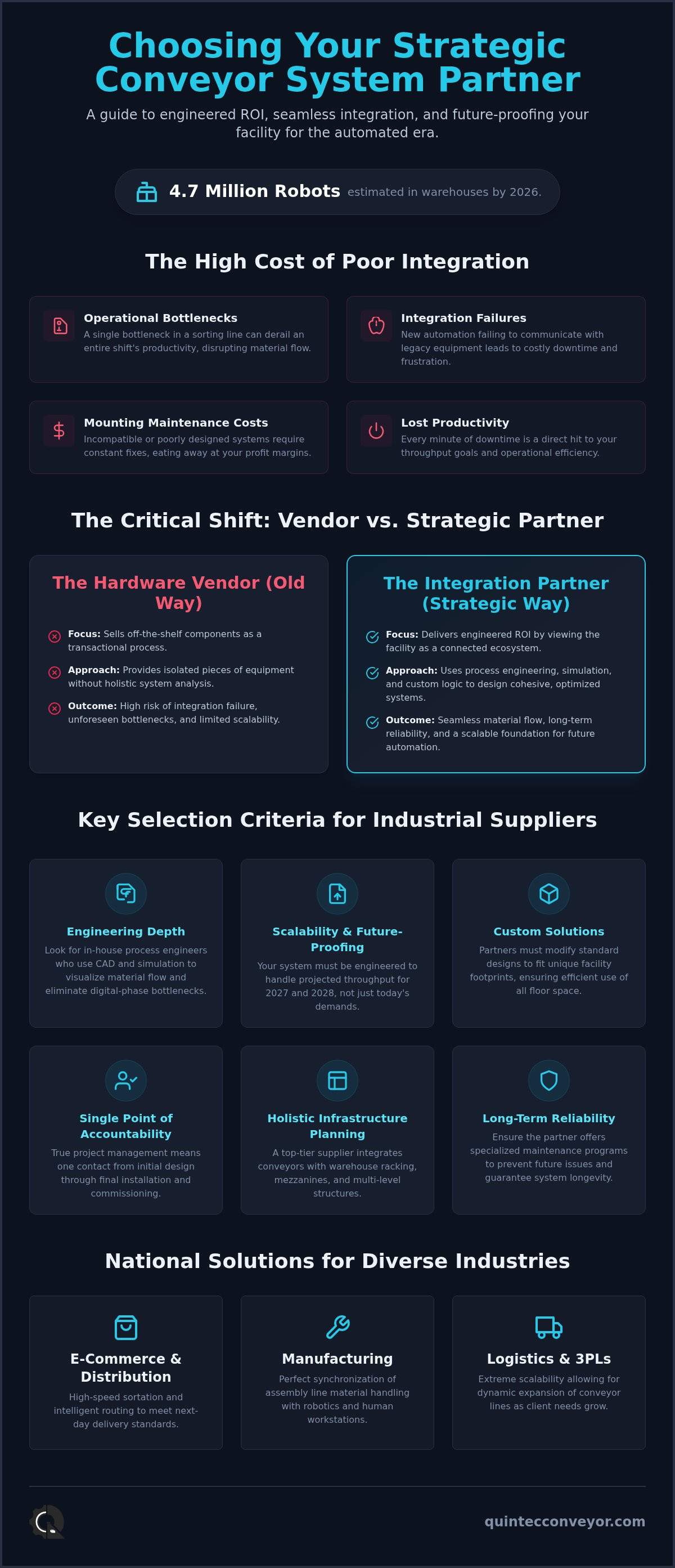
With an estimated 4.7 million robots operating in warehouses by 2026, the era of static hardware is officially over. In this high-velocity environment, selecting the right conveyor system suppliers is no longer just a procurement task; it's a critical decision for your facility's long-term operational logic. You likely understand that a single bottleneck in your sorting line can derail an entire shift's productivity. It's frustrating when new automation fails to communicate with legacy equipment, leading to integration failures and mounting maintenance costs that eat away at your margins.
We recognize that you need more than just a vendor; you need a strategic partner who views your facility as a connected ecosystem. This guide will show you how to evaluate conveyor system suppliers to find a partner that delivers engineered ROI through custom integration and scalable automation. We'll examine the shift toward AI-driven orchestration, the necessity of modular design, and the specific engineering benchmarks required to achieve seamless material flow and long-term system reliability.
Key Takeaways
- Evaluate conveyor system suppliers based on their engineering depth and ability to provide custom process logic rather than just off-the-shelf hardware.
- Discover how a single point of contact for design and installation eliminates integration failures between new automation and legacy systems.
- Understand the convergence of traditional conveyors and robotics, including how AMRs and automated sortation drive e-commerce efficiency in 2026.
- Learn to identify long-term reliability benefits through specialized maintenance programs and infrastructure planning that prevents future bottlenecks.
- Leverage over a century of collective industry expertise to implement national-scale material handling solutions tailored to your facility's unique footprint.
What Defines a Strategic Conveyor System Supplier?
The industrial landscape in 2026 demands far more than just mechanical components. The most effective conveyor system suppliers have shifted their focus from being simple hardware vendors to acting as strategic integration partners. This evolution is driven by the complexity of modern warehouse environments where a single piece of equipment cannot function in isolation. A conveyor system supplier is a partner in material flow optimization, ensuring that every belt, motor, and sensor contributes to a larger, cohesive operational goal.
While an Original Equipment Manufacturer (OEM) focuses on the fabrication of specific units, a full-service integrator views the entire facility as a living organism. They prioritize understanding your specific facility throughput goals, such as peak units per hour or labor reduction targets, before suggesting hardware. This distinction is vital because a high-quality machine is useless if it creates a bottleneck elsewhere in your process.
Hardware vs. Integration: A Crucial Distinction
Buying individual units is a transactional process; commissioning an integrated system is an engineering endeavor. A standard conveyor system might move a box from point A to point B, but it doesn't necessarily optimize the journey. Process engineering plays a critical role here, ensuring that new equipment is compatible with legacy systems and future automation. Off-the-shelf solutions often fail in complex industrial workflows because they lack the flexibility to handle unique facility footprints or varying load profiles. A strategic partner uses simulation and data to ensure equipment compatibility before a single bolt is tightened.
Industries Served by National Suppliers
National conveyor system suppliers possess the reach and technical depth to support diverse industrial sectors. They don't just ship parts. They deploy specialized teams that understand the nuances of specific markets. For example, e-commerce distribution requires high-speed sortation and intelligent routing to meet 2026 delivery standards. In contrast, manufacturing environments need assembly line material handling that synchronizes perfectly with robotics and human workstations. Logistics providers and 3PLs require extreme scalability, allowing them to expand their warehouse racking and conveyor lines dynamically as their client base grows over time. By choosing a partner with national coverage, you ensure that your facility receives consistent engineering standards regardless of its location.
Key Selection Criteria for Industrial Conveyor Suppliers
Selecting from the pool of conveyor system suppliers requires a rigorous vetting process that extends far beyond price per linear foot. In 2026, the most successful facilities prioritize engineering depth, looking for partners with in-house process engineers who can bridge the gap between abstract throughput goals and physical reality. To ensure your own internal standards match this level of excellence, Align Quality offers consulting services to help businesses streamline their quality management systems and achieve certification. You need a team capable of modifying standard designs to fit unique facility footprints, ensuring every square inch of your floor space is utilized efficiently. This level of customization prevents the "square peg, round hole" scenarios that lead to integration failures.
It's equally vital to consider scalability. Your system shouldn't just meet today's demands; it must be engineered to handle your 2027 and 2028 throughput projections. True project management means having a single point of accountability from the initial design phase through final installation and testing. This includes rigorous commissioning phases where the system is stressed under peak load conditions to ensure it performs exactly as promised before the handover is complete.
Look for teams that bring multi-decade collective industry experience to the table. This seasoned perspective is essential when using CAD design and system simulation to visualize material flow before a single piece of hardware is installed. Simulation helps identify potential bottlenecks in the digital phase, saving significant time and capital during the physical rollout. Remember that process logic, the underlying intelligence of your facility, should always dictate the choice of conveyor technology. When you work with a partner that provides comprehensive material handling integration, you gain the security of a system designed for long-term stability.
Comprehensive Infrastructure and Racking
A common oversight in system design is treating the conveyor as an isolated component. A high-tier supplier must understand how conveyors integrate with warehouse racking and storage systems. This includes planning for mezzanines and multi-level structures that maximize vertical space without compromising accessibility. Your partner must ensure that floor load capacities are calculated accurately and that all installations adhere to OSHA safety standards. This holistic approach prevents structural failures and ensures a safer environment for your workforce. By integrating infrastructure and racking from the start, you eliminate the risk of equipment clashing with the building's physical constraints.
The Integration Advantage: Optimizing Material Handling
The primary difference between standard equipment vendors and strategic conveyor system suppliers lies in the application of process logic. While a manufacturer focuses on the mechanical integrity of a single belt or roller, an integrator evaluates how that component interacts with your entire facility. This holistic view allows integrators to eliminate bottlenecks that simple manufacturers might miss, such as mismatched speeds between picking zones and sortation headers. By acting as a single point of contact for design, hardware, and installation, an integrator assumes the burden of technical coordination, significantly reducing the "integration risk" that occurs when mixing equipment from multiple sources.
| Feature | Direct Manufacturer | Full-Service Integrator |
|---|---|---|
| Primary Focus | Hardware production and sales | System-wide throughput and ROI |
| Scope of Solution | Limited to their specific product line | Multi-brand, custom-engineered systems |
| Engineering Depth | Product-specific mechanical design | Comprehensive process and logistics logic |
| Accountability | Individual component performance | Single point of contact for the entire project |
Relying on a partner that understands the standards set by the Conveyor Equipment Manufacturers Association (CEMA) ensures your system meets the highest benchmarks for safety and performance. This is particularly important when your workflow involves complex transitions between conveyors, robotics, and high-density racking. A strategic partner ensures these disparate systems communicate flawlessly, preventing the technical friction that often leads to costly field modifications during the startup phase.
Custom Design and Installation Services
The lifecycle of a custom integration project moves through a disciplined progression from initial data analysis to final go-live. During the design phase, engineers map out every touchpoint to minimize facility downtime during the physical installation. We prioritize a phased rollout strategy that allows your existing operations to continue while new automation is brought online. Once the hardware is in place, rigorous post-installation testing and throughput verification ensure the system hits its engineered targets under real-world stress. This methodical approach guarantees that the final result isn't just a collection of machines, but a high-performance asset.
Long-term Maintenance and System Reliability
Maintaining peak performance requires a shift from reactive repairs to proactive maintenance schedules. High-tier conveyor system suppliers provide comprehensive support that extends well beyond the initial warranty period. This includes the ability to source replacement parts across diverse conveyor brands, ensuring your facility isn't crippled by a single failed component from an obscure vendor. Periodic engineering audits are also essential; they provide the insight needed to optimize existing systems as your SKU profiles or order volumes change. This long-term commitment to system reliability protects your capital investment and ensures your material flow remains uninterrupted for years to come.
Future-Proofing with Robotics and Warehouse Automation
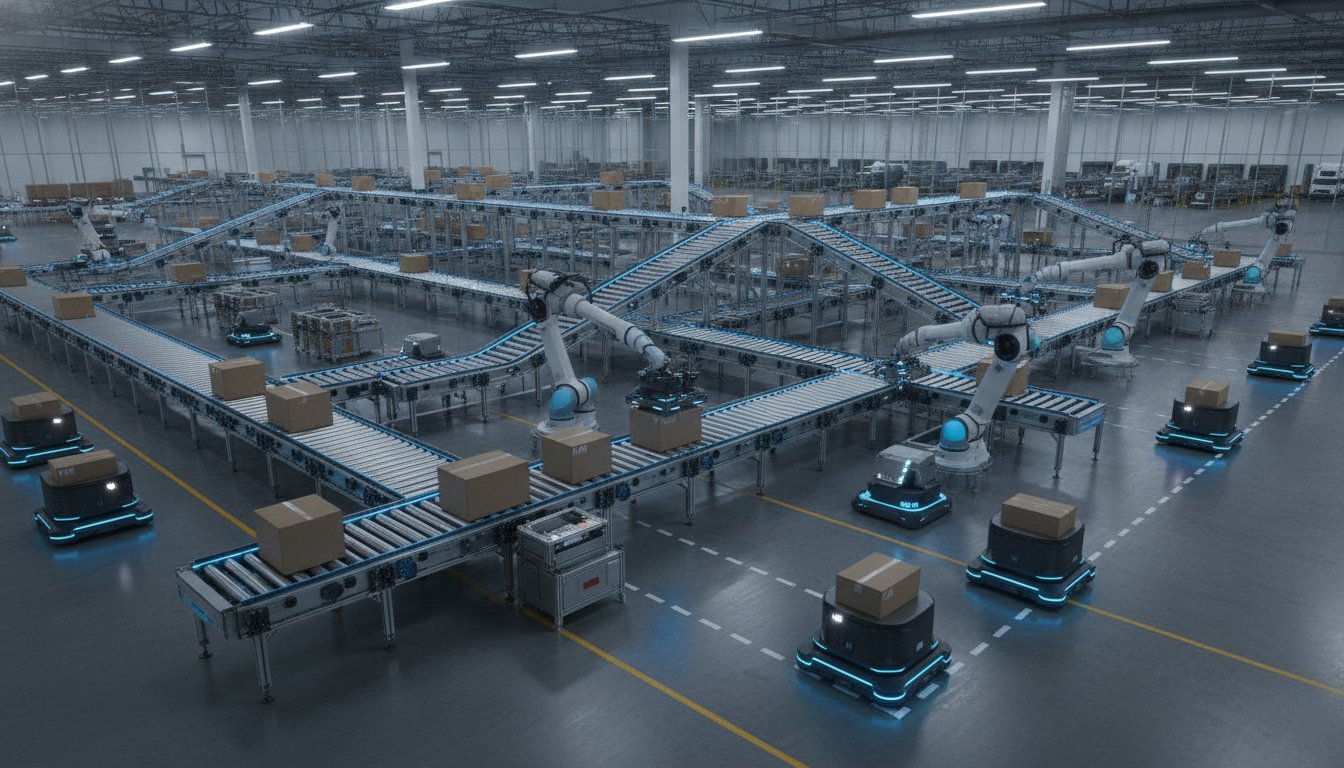
By 2026, the boundary between fixed transport and autonomous movement has effectively vanished. Leading conveyor system suppliers are now deploying integrated robotic ecosystems that adapt to throughput changes in real-time rather than relying on rigid, pre-programmed paths. In 2026 logistics, Smart Conveyors serve as the central nervous system of the facility, utilizing embedded sensors and decentralized control logic to autonomously route, track, and optimize material flow without manual intervention.
The convergence of traditional conveyors and Autonomous Mobile Robots (AMRs) is a defining trend of the current industrial era. With an estimated 4.7 million robots expected in warehouses by 2026, your material handling partner must understand how to synchronize these mobile units with fixed sortation lines. This synergy is particularly critical for high-volume e-commerce fulfillment, where automated sortation systems serve as the heart of the operation, ensuring that thousands of individual SKUs reach the correct packing station with zero latency. Robotics improve picking and packing efficiency at the end of the line by eliminating the fatigue-related errors common in manual palletizing.
Advanced Robotics and Sortation
Modern integration involves much more than moving boxes; it requires the precise application of robotic arms for automated palletizing and de-palletizing. High-speed sortation logic has also evolved, requiring engineers to choose between cross-belt sorters for fragile items or shoe sorters for high-speed, heavy-duty applications. For these systems to be effective, they must share a seamless data connection with your Warehouse Management System (WMS). This integration allows for real-time inventory tracking and instant exception management, ensuring that every item on the belt is accounted for at all times.
Scalable Automation Strategies
Building a future-proof facility doesn't require full automation on day one. A strategic approach involves starting with modular conveyor systems that allow for easy robotic additions as your volume grows or your SKU profile changes. A thorough cost-benefit analysis often reveals that semi-automated workflows provide the best ROI for mid-sized operations, provided the underlying infrastructure is ready for expansion. This preparation includes installing the necessary power drops and high-speed data cabling required for future robotic deployments. If you're ready to modernize your facility, our team specializes in robotics and warehouse automation that scales with your business goals.
Partnering with Quintec Conveyors for National Solutions
Quintec stands apart from other conveyor system suppliers by prioritizing engineered outcomes over simple equipment sales. We don't just deliver hardware; we build the sophisticated industrial infrastructure necessary for your long-term success. With over 100 years of collective industry experience, our team brings a veteran's perspective to the most complex logistical challenges. We operate on a truly national scale, providing comprehensive engineering and installation services across the United States. Our commitment to your facility begins with high-level process engineering and extends through the entire lifecycle of the system, including dedicated conveyor maintenance to ensure total operational reliability. Our national reach allows us to deploy specialized installation teams to any facility in the country, ensuring that your project maintains a consistent engineering standard regardless of the location.
Why Choose Quintec for Your Next Project?
Our primary value lies in our ability to provide integrated solutions that address every facet of modern material handling. Rather than forcing you to manage a fragmented network of equipment vendors, you gain a single partner with deep expertise in warehouse racking, robotics, and complex sortation logic. This comprehensive approach is designed specifically to maximize your operational ROI. We ensure that every component, from the structural infrastructure to the final automated sortation line, works in perfect synchronization. We're proactive problem-solvers who value long-term stability. Our team stays at the cutting edge of technology, ensuring your facility isn't just functional today but remains competitive as 2026 industry standards continue to evolve.
Getting Started with a Facility Audit
The path to a more efficient facility starts with a professional assessment of your current operations. During a facility audit, our engineers identify the specific bottlenecks and flow challenges that are currently limiting your throughput. This is a collaborative design process where your unique requirements are transformed into a technical blueprint. We analyze your historical data and future projections to ensure the proposed solution handles your peak volumes and anticipates significant growth. By looking at the facility as a whole, we can suggest improvements in infrastructure and warehouse racking that a hardware-only vendor might overlook. This methodical approach ensures that your investment delivers the results you expect. Contact our engineering team today to discuss your integration needs.
Building the Future of Material Handling
The industrial landscape of 2026 demands a departure from traditional procurement. Success now hinges on your ability to transform isolated equipment into a synchronized, data-driven ecosystem. As you evaluate conveyor system suppliers, remember that the most valuable partners are those who prioritize process logic and scalable automation over simple hardware sales. By focusing on engineering depth and seamless robotic integration, you can eliminate the bottlenecks that hinder long-term growth.
Quintec brings over 100 years of collective industry experience to every project, offering specialized process engineering and robotics experts to guide your facility's evolution. With full-scale national installation capabilities, we ensure your systems are implemented with precision across the United States. It's time to move beyond standard equipment and invest in a partnership that delivers engineered ROI. Partner with Quintec for your next conveyor integration project. We look forward to helping you achieve a more efficient, reliable, and future-proof operation.
Frequently Asked Questions
What is the difference between a conveyor manufacturer and a conveyor system supplier?
A manufacturer focuses on the fabrication of specific hardware components like belts or rollers. In contrast, conveyor system suppliers act as integrators who provide complete, engineered solutions. These partners evaluate your facility logic and throughput goals to combine various technologies into a single material flow. This approach shifts the focus from buying individual parts to commissioning a high-performance asset that delivers measurable ROI through custom design and professional installation.
How do I choose the right conveyor system for my specific industry?
Selection depends on your specific throughput requirements and SKU profiles. High-speed e-commerce distribution requires intelligent sortation, while heavy manufacturing needs robust assembly line handling. You should look for partners with specialized process engineering experience in your sector. They can recommend whether a belt, roller, or modular system best serves your facility footprint and long-term scalability goals. This ensures your system remains effective as your business grows through 2027 and beyond.
Can a conveyor supplier help with warehouse automation and robotics?
Yes, strategic conveyor system suppliers are essential for integrating robotics and warehouse automation. These partners bridge the gap between fixed transport and autonomous mobile robots (AMRs). They design the control logic that allows robotic palletizers or picking arms to communicate with your conveyor lines. This ensures a seamless transition of goods, which is vital for facilities aiming to reach 2026 automation benchmarks without facing integration failures between disparate systems.
What should be included in a conveyor system installation contract?
A comprehensive contract must detail the engineering scope, project timeline, and specific performance benchmarks. It should include provisions for final system testing and throughput verification under peak load conditions. Ensure the agreement covers safety compliance, such as OSHA standards, and outlines the training process for your staff. Clear documentation regarding long-term maintenance and the sourcing of replacement parts is also a critical component of a professional, long-term partnership agreement.
How often should industrial conveyor systems undergo professional maintenance?
Professional maintenance should occur on a proactive, quarterly schedule to prevent unplanned downtime. High-volume industrial systems benefit from regular audits that check for mechanical wear, sensor calibration, and software updates. By implementing a consistent maintenance program, you protect your capital investment and ensure the system remains reliable. This proactive approach is significantly more cost-effective than waiting for a mechanical failure to occur during peak shifts, which can derail your entire operation.
Do conveyor suppliers provide custom racking and infrastructure solutions?
High-tier suppliers provide comprehensive infrastructure, including warehouse racking and mezzanine structures. Integrating these elements with your conveyor system maximizes vertical space and optimizes overall facility flow. A single-source provider ensures that the structural components don't interfere with the material handling equipment. This holistic planning is essential for maintaining floor load capacities and meeting rigorous safety standards in multi-level storage environments, providing a one-stop-shop appeal for complex projects.
What are the average lead times for custom conveyor systems in 2026?
Lead times in 2026 vary based on the complexity of the custom integration and current supply chain conditions. While standard components may ship quickly, a fully engineered system typically requires several months from the initial design phase to go-live. It's best to consult with your engineering team early in the planning process to establish a realistic timeline. This schedule must account for CAD design, system simulation, and on-site testing to ensure a seamless rollout.
How do I integrate a new conveyor system with my existing warehouse software?
Integration occurs through a robust Warehouse Execution System (WES) or Warehouse Management System (WMS) interface. Your supplier's process engineers utilize standardized APIs to ensure real-time data exchange between the conveyor sensors and your facility software. This connection allows for intelligent routing, inventory tracking, and exception management. It's the key to transforming a physical transport line into a connected, responsive component of your digital supply chain, ensuring long-term operational excellence.