Industrial Conveyor Systems: The 2026 Executive Guide to Integration
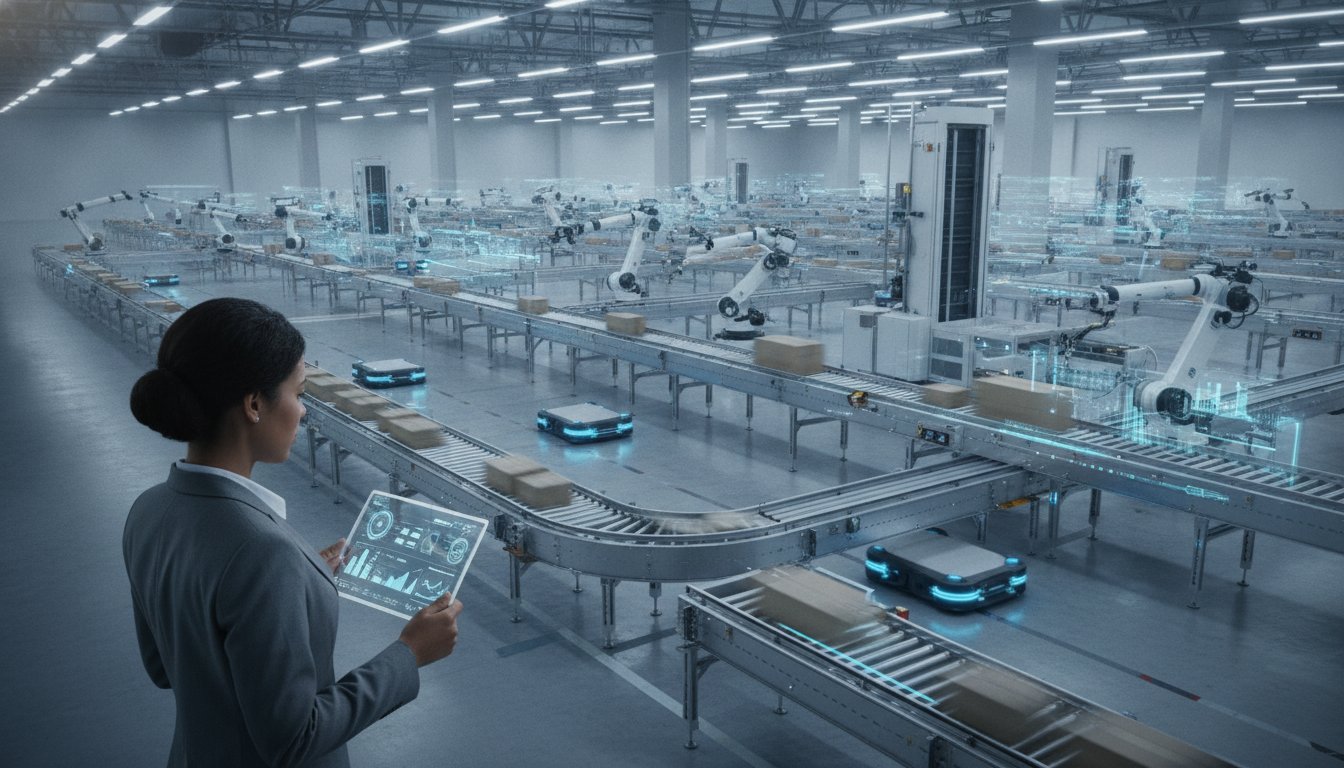
Industrial conveyor systems in 2026 are no longer just mechanical belts; they are data-driven strategic assets defined by integration logic. While the global market for these systems has reached an estimated $11.60 billion, many facilities still struggle with the same legacy bottlenecks and rising labor costs that have persisted for years. It's a common frustration. You invest in modern hardware, but integration friction between different equipment types prevents you from seeing a real return on investment. You've likely felt the pressure of space constraints and the urgent need for a system that doesn't just move product, but scales alongside your robotics and automation goals.
This guide provides the strategic roadmap you need to master these complexities. We'll show you how to transform your material handling from a series of disconnected components into a unified, high-performance network. You'll learn the latest in system integration, from AI-enabled routing to OSHA-compliant safety standards, ensuring your infrastructure is both reliable and future-proof. We're moving beyond simple mechanics to explore facility optimization that drives throughput and lowers operational overhead for the long term.
Key Takeaways
- Understand the evolution from simple transport to intelligent, automated networks that define modern warehouse efficiency.
- Identify the right industrial conveyor systems for your facility, ranging from floor-based belt and CDLR solutions to space-saving vertical transport.
- Learn why custom process engineering is the critical link in preventing integration friction and costly throughput bottlenecks.
- Discover strategies for maximizing cubic space and designing scalable infrastructure that accommodates future robotics and SKU expansion.
- Gain insight into leveraging over 100 years of collective engineering expertise to ensure seamless national installation and long-term system reliability.
What are Industrial Conveyor Systems in the Modern Warehouse?
Modern industrial conveyor systems represent far more than a simple means of transport. In the current industrial climate, they function as integrated networks of automated machinery designed to orchestrate the precise movement, sortation, and management of material flow. To understand What is a conveyor system in a 2026 context, one must view it as a strategic asset rather than a utility. The industry has shifted decisively from basic transport toward intelligent conveyance, where every movement is governed by data and system logic.
A high-performance system consists of three primary pillars. First, the hardware includes the physical belts, rollers, and drives that handle the load. Second, the controls encompass the PLC (Programmable Logic Controller) and sophisticated software that direct traffic. Third, the structural infrastructure provides the necessary physical support, often integrating with warehouse racking to maximize facility footprint. By 2026, facilities require these elements to work in total harmony. Standalone mechanical units often create integration friction, leading to the very bottlenecks they were intended to solve.
Primary Functions: Beyond Moving Point A to B
The role of conveyance has expanded into complex operational tasks. Automated sortation is now a requirement for high-volume e-commerce fulfillment, allowing for the rapid redirection of goods based on shipping criteria. Beyond sortation, buffering and accumulation zones are essential to balance production line variances. These zones prevent a single delay from halting the entire operation. Precise sequencing also ensures products arrive at robotic palletizing or packing stations in the exact order needed for efficient handling.
The ROI of Automated Conveyance
Investing in integrated automation delivers measurable financial returns. It significantly reduces labor dependency in high-turnover environments, allowing human workers to focus on higher-value tasks. Controlled acceleration and deceleration cycles minimize product damage, protecting your inventory and reducing waste. These systems also improve worker safety by automating heavy lifting and repetitive motions, mitigating the risk of workplace injuries and long-term strain. When you prioritize process engineering during the design phase, the resulting efficiency gains directly impact the bottom line.
Essential Technologies: From Belt Conveyors to Robotics
Selecting the appropriate hardware is the first step in building a resilient material handling network. While industrial conveyor systems have existed for decades, the technology driving them has undergone a radical transformation. By 2026, belt conveyor systems continue to hold the largest market share at approximately 42.8%, yet their design now prioritizes modularity and data connectivity. Modern facilities no longer view these as static installations. Instead, they're dynamic assets that can be reconfigured as SKU profiles and volume demands shift.
In sectors where material sizing is as important as movement, this hardware selection includes specialized screening components. For instance, Compass Wire Cloth Corporation manufactures the industrial vibratory and aggregate screens necessary to ensure that bulk material handling systems remain productive and reliable under heavy loads.
Floor-Based Solutions for Heavy Duty Loads
For operations handling pallets and heavy industrial loads, Chain Driven Live Roller (CDLR) conveyors remain the industry standard. These systems provide the positive drive necessary for consistent movement of heavy weights that would otherwise slip on traditional belts. In contrast, belt-driven live roller systems offer a versatile solution for smaller package transport, allowing for accumulation without scuffing the product. When integrating these systems into tight footprints or existing machinery, low-profile designs are essential. These compact units maintain high throughput while fitting into spaces that standard frames cannot accommodate. Regardless of the configuration, all installations must strictly adhere to conveyor safety standards to protect personnel and ensure long-term operational uptime.
Vertical and Overhead Systems
Maximizing cubic footage is a primary concern for modern warehouse managers facing rising real estate costs. Spiral conveyors offer high-throughput vertical movement within an incredibly small footprint, allowing for seamless transport between mezzanine levels. For complex manufacturing paths where floor space is at a premium, power and free overhead systems provide the flexibility to move items through finishing or assembly processes without obstructing ground-level traffic. Using vertical space effectively allows facilities to bypass floor-level bottlenecks, creating a multi-dimensional flow that traditional layouts simply cannot match.
The most significant shift in 2026 is the seamless integration between industrial conveyor systems and robotics. Modern conveyors now act as the primary interface for Autonomous Mobile Robots (AMRs) and high-speed picking arms. This requires precise positioning and specialized "handshake" logic to ensure that a robot can accurately retrieve or place an item without halting the entire line. Achieving this level of precision requires a deep understanding of both mechanical tolerances and software integration. If you are planning a facility upgrade, it's helpful to consult with an integration specialist to ensure your hardware is ready for the next generation of automation.
As you prepare for these technological shifts, you can learn more about EdNex Automation to understand how collaborative robotics are shaping the future of Industry 4.0 on a global scale.
The Critical Role of System Integration and Process Engineering
Many executives view equipment procurement as a hardware-first transaction. This perspective often leads to the "off-the-shelf" trap, where isolated pieces of machinery fail to communicate with one another. While you can find technical specifications in a complete guide to industrial conveyors, the mechanical components are only half of the equation. True operational excellence requires process engineering to map the material handling logic before any equipment is installed. Without this foundational planning, even the most expensive hardware can create new facility-wide bottlenecks.
The control systems and software serve as the "brain" of modern industrial conveyor systems. These platforms coordinate conveyor speed, sortation timing, and accumulation logic in real time. For a facility to remain competitive in 2026, new equipment must talk to existing Warehouse Management Systems (WMS) and Warehouse Execution Systems (WES) without friction. This digital handshake ensures that data dictates movement, allowing the system to adjust dynamically to changing floor conditions or priority shifts.
Designing for Flow, Not Just Movement
Successful integration starts by identifying "choke points" in the system long before installation begins. Process engineers calculate required throughput speeds to match peak seasonal demand rather than just average daily volume. This foresight prevents the system from being overwhelmed during high-stress periods. Custom engineering also plays a vital role when dealing with non-standard product dimensions or fragile goods. This often requires specialized components made from materials like acrylic or composites; utilizing precision services like CNC Cut to Size ensures these custom parts integrate perfectly with your system. By tailoring the hardware to the specific SKU profile, you eliminate the variances that typically lead to jams and downtime.
The Integration Lifecycle
The path to a reliable system follows a methodical progression from the initial site audit through final commissioning. This lifecycle requires the precise coordination of mechanical, electrical, and software components to ensure every sensor and motor performs as intended. System integration is the harmonization of hardware and software logic. By treating industrial conveyor systems as a single, unified organism, you ensure long-term reliability and a scalable infrastructure that can adapt to future technological shifts.

Strategic Planning for Scalability and Facility Footprint
Facility footprint is a finite resource. In 2026, the most efficient operations are those that stop looking at the floor and start looking at the ceiling. Maximizing cubic footage through multi-tier mezzanine and warehouse racking integration allows you to double or triple your usable space without expanding the building's physical perimeter. Designing industrial conveyor systems with this verticality in mind ensures that your material flow remains unobstructed by ground-level congestion. This multi-level approach is no longer a luxury for large-scale distribution centers; it's a necessity for any facility facing rising real estate costs.
Future-proofing your infrastructure requires a balance between modularity and fixed stability. While fixed systems offer unmatched speed for high-volume, consistent SKU profiles, modular conveyor systems provide the flexibility to reconfigure your layout as business needs change. This is especially critical as SKU counts grow and order profiles become more complex. For enterprises managing multiple locations, a national rollout strategy ensures that hardware, controls, and safety protocols remain consistent across every facility in the network. This consistency simplifies training, reduces the need for diverse spare parts inventory, and streamlines corporate-level reporting on facility performance.
Analyzing Throughput and Bottlenecks
Strategic planning relies on data simulation. Before any physical construction begins, we use material flow data to identify where potential jams might occur during peak periods. Sortation logic plays a massive role here. If your system isn't designed to handle "ugly" or non-conveyable items, these outliers will eventually halt your high-speed lines. Planning for these exceptions early in the design phase prevents costly manual interventions later. It's about creating a system that manages the 5 percent of exceptions as efficiently as the 95 percent of standard packages.
Maintenance and Lifecycle Management
Reliability is built through proactive oversight. Modern industrial conveyor systems utilize IoT sensors to monitor motor heat, belt tension, and vibration levels. This predictive maintenance approach allows you to identify wear before it leads to a catastrophic failure, shifting the focus from reactive repairs to planned uptime. For multi-site operations, the necessity of a national service partner cannot be overstated. Consistency in maintenance standards ensures that a facility in one region operates as reliably as a facility in another. If your current infrastructure is aging, upgrading existing systems with modern automation controls can often extend their lifecycle by a decade or more. To ensure your facility is ready for 2026 and beyond, you can plan your national rollout with our engineering team.
Partnering for Success: The Quintec Conveyors Advantage
Achieving the operational excellence described in this guide requires more than just high-quality hardware. It demands a partnership with an integrator that understands the nuances of complex material handling. At Quintec Conveyors, we leverage over 100 years of collective industry experience to deliver industrial conveyor systems that are as reliable as they are innovative. We don't just sell equipment; we provide a comprehensive suite of services including custom design, precise process engineering, national installation, and long-term maintenance. This end-to-end involvement ensures that your project maintains its integrity from the initial concept to the final commissioning.
Our commitment to professional engineering standards means we treat every facility as a unique ecosystem. We specialize in custom warehouse solutions tailored to your specific industrial workflows, ensuring that your infrastructure supports your business goals rather than limiting them. With a national reach that spans the United States, we provide the scale necessary for large-scale industrial projects while maintaining the precision of a boutique engineering firm. This combination of seasoned authority and forward-looking innovation positions us as a strategic guide for executives navigating the complexities of modern automation.
Why Expertise Matters in Integration
In the high-stakes environment of 2026 logistics, poor system coordination is a primary cause of project failure. Our engineering team focuses on optimizing facility ROI by eliminating friction between disparate equipment types. By acting as a single-source partner for industrial conveyor systems, robotics, and warehouse racking, we ensure that every component of your infrastructure works in total harmony. This holistic approach prevents the common pitfalls of fragmented planning and ensures your facility is built for long-term stability and modern excellence.
Getting Started with Your Integration Project
Initiating a facility upgrade is a significant undertaking that requires a methodical approach. The Quintec process begins with a detailed facility audit and a system design consultation to identify your specific throughput needs and space constraints. Our collaborative engineering model keeps you informed at every stage of project management, from the first CAD drawing to the final site installation. If you are ready to modernize your operations and implement a scalable material handling network, contact our team to discuss your national requirements and secure a steady hand for your next major project.
Building a Resilient Infrastructure for the Next Decade
The landscape of material handling has evolved into a sophisticated blend of mechanical precision and digital logic. Successfully implementing industrial conveyor systems in 2026 requires moving beyond simple hardware procurement toward a holistic integration strategy that prioritizes data-driven flow and vertical scalability. By addressing facility bottlenecks through custom process engineering and embracing modular technologies, you ensure your infrastructure remains agile enough to adapt to future robotics and shifting SKU demands.
Reliability in these complex networks isn't accidental; it's the result of meticulous planning and professional engineering standards. Leveraging over 100 years of collective industry experience, Quintec stands ready as your strategic partner for national installation and engineering support. We specialize in custom warehouse automation and robotics, providing the steady hand needed to navigate large-scale logistical challenges and drive long-term facility ROI. Optimize your facility with Quintec’s expert conveyor integration services. Your path to a more efficient, future-proof operation starts with a single, well-engineered step.
Frequently Asked Questions
What is the difference between a standalone conveyor and an integrated system?
Standalone conveyors operate as independent mechanical units while an integrated system functions as a unified network controlled by centralized logic. Integrated industrial conveyor systems communicate directly with your Warehouse Management System to synchronize material flow across different zones. This connectivity prevents the localized bottlenecks often caused by standalone units that lack visibility into broader facility operations.
How much space do I need for an industrial conveyor system?
The space required depends entirely on your throughput goals and product dimensions, though modern designs prioritize verticality to save floor space. Utilizing spiral conveyors or multi-tier mezzanines allows you to transport high volumes within a compact footprint. A professional site audit is the most reliable way to determine the exact dimensions needed for your specific industrial application.
Can I integrate robotics into my existing conveyor lines?
You can integrate robotics into existing lines by upgrading control systems and establishing precise mechanical interfaces. This process requires engineering a handshake protocol so the conveyor can signal a robot to pick or place items accurately. It's often more cost-effective to retrofit an existing line with automation than to replace the entire infrastructure from scratch.
How long does a typical industrial conveyor installation take?
Typical installations range from a few weeks for small modular setups to several months for large-scale integrated networks. The timeline depends on the complexity of the process engineering and the level of software integration required. We provide a detailed project roadmap during the design phase to ensure your facility remains operational during the transition period.
What are the maintenance requirements for automated conveyor systems?
Automated systems require a mix of traditional mechanical upkeep and modern digital monitoring. This includes regular lubrication of rollers and belt tension adjustments along with the use of IoT sensors for predictive maintenance. These sensors identify motor heat or vibration anomalies before they lead to unexpected downtime, ensuring long-term system reliability and safety.
How do I determine the right conveyor speed for my facility throughput?
Conveyor speed is determined by calculating the required units per hour needed to meet your peak seasonal demand. You must also account for product spacing and the time required for sortation or robotic interactions. Running a system too fast can cause product damage, while running it too slow creates unnecessary bottlenecks in your production line.
Is it better to use floor-based or overhead conveyors for warehouse storage?
Overhead conveyors are superior for maximizing warehouse storage and bypassing floor-level obstacles, while floor-based systems remain the standard for heavy pallet handling. The choice depends on your specific facility footprint and whether you need to maintain clear paths for ground-level traffic. Many modern facilities utilize a hybrid approach to leverage the benefits of both configurations.
What is the lifespan of a modern industrial conveyor system?
A modern industrial conveyor system typically has an operational lifespan of 15 to 20 years if maintained correctly. While the mechanical frame remains durable, the control systems and software may require upgrades every 7 to 10 years to stay compatible with new automation technologies. Proactive maintenance and timely component replacements are the keys to extending this lifecycle.