Custom Material Handling System Design: A 2026 Buyer’s Guide to Sourcing Suppliers
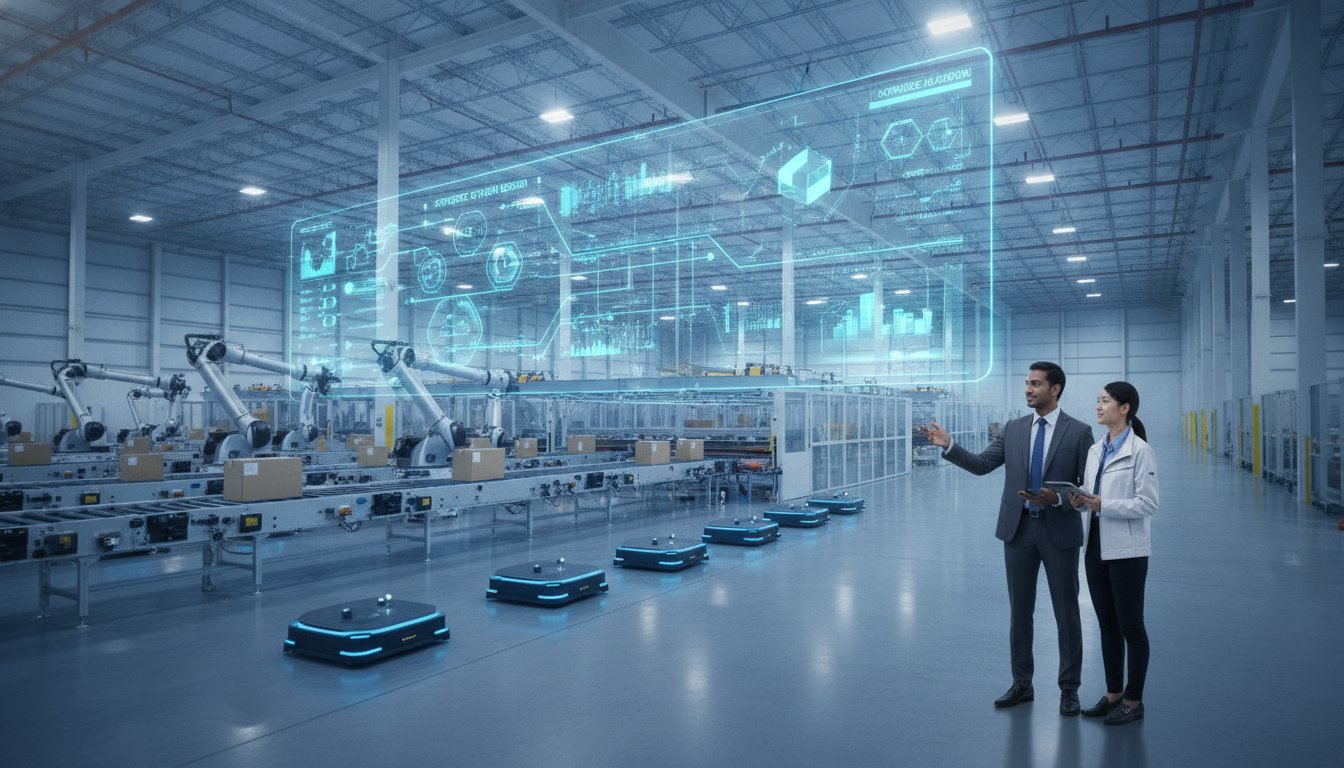
The most expensive mistake a facility manager can make in 2026 isn't buying the wrong conveyor; it's investing in hardware before the entire operation has been engineered for flow. You likely recognize the frustration of persistent bottlenecks or the high maintenance costs that stem from poorly integrated equipment. When custom material handling system design is treated as a series of separate purchases rather than a unified strategy, your facility's throughput inevitably suffers. Finding a single-source partner who can bridge the gap between complex engineering and national installation is the only way to protect your long-term margins.
We understand that sourcing a reliable partner for large-scale projects often feels like a high-stakes gamble. This guide provides a clear roadmap for evaluating material handling equipment suppliers to find a strategic design partner rather than a simple vendor. You'll learn how to identify experts who prioritize process engineering to solve logistical challenges before a single bolt is tightened. We'll explore how to achieve a lower Total Cost of Ownership and build a scalable system that evolves alongside e-commerce demand. This overview ensures your next capital investment delivers the streamlined facility and high throughput your business requires.
Key Takeaways
- Shift from viewing suppliers as equipment vendors to strategic partners who optimize facility flow for the high-demand e-commerce landscape.
- Understand why custom material handling system design is essential for reducing bottlenecks and lowering the total cost of ownership compared to standard catalog solutions.
- Learn to evaluate potential partners based on their process engineering expertise and ability to provide national-scale integration and installation.
- Explore the critical hardware categories, including transport, storage, and automation, that form a scalable material handling ecosystem.
- Discover how a single-source partner with deep industry experience can guide you through the entire project lifecycle from design to maintenance.
The Strategic Role of a Material Handling Equipment Supplier in 2026
The role of a material handling equipment supplier has undergone a fundamental transformation. In the past, businesses often viewed these providers as mere vendors of steel and rollers. By 2026, the complexity of global supply chains has repositioned the supplier as a strategic partner essential for facility optimization. Material handling is no longer just about moving items from point A to point B; it's about the precision-engineered movement of data and physical goods in tandem. This evolution moves the focus away from manual hardware and toward fully integrated automated ecosystems.
The explosion of e-commerce has forced a shift in operational priorities. High-volume order fulfillment requires a level of agility that standard catalog parts simply cannot provide. This is why custom material handling system design has become a critical competitive advantage for modern distributors. It allows facilities to bypass the limitations of generic setups, replacing them with tailored solutions that address specific operational gaps. Modern logistics prioritizes flow over hardware. While the physical equipment is necessary, the strategic arrangement and intelligent control of that equipment dictate your ultimate success.
From Equipment Vendor to Systems Integrator
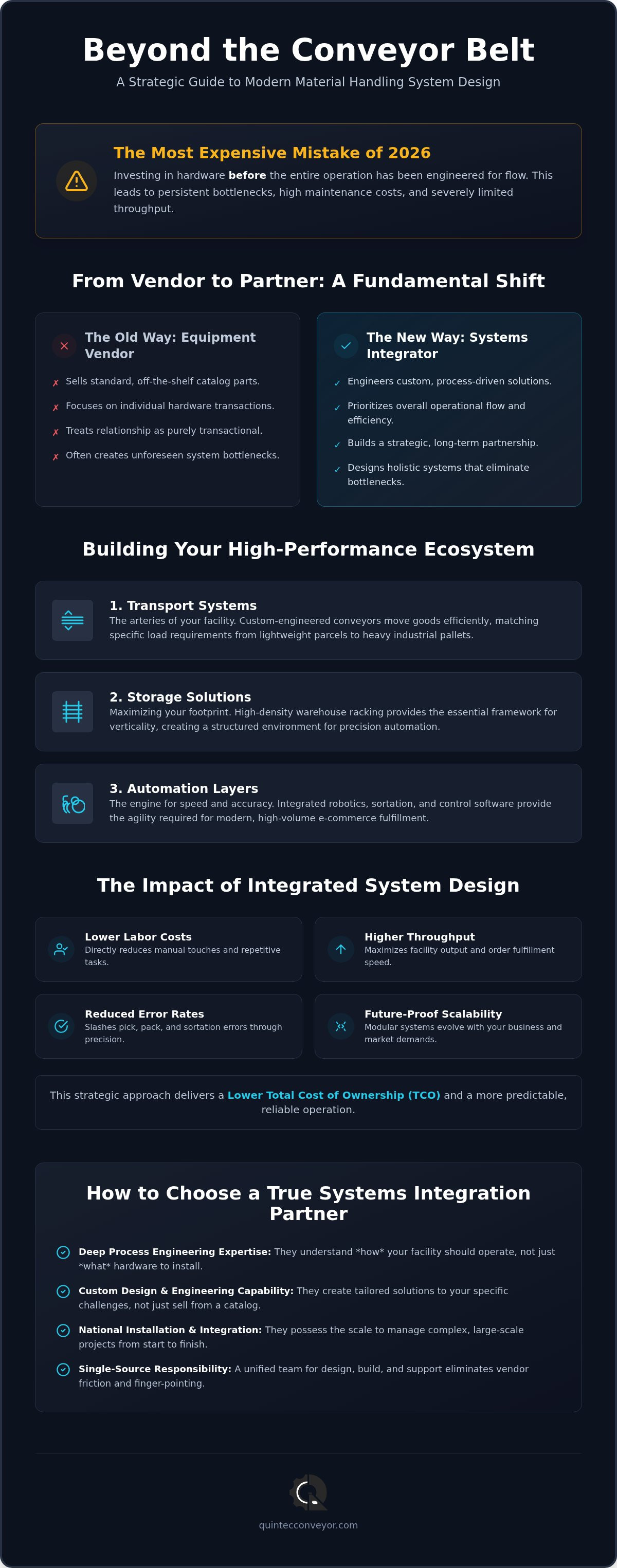
Buying a standalone conveyor is a simple transaction; investing in an integrated sortation system is a long-term strategy. A systems integrator doesn't just sell you a machine. They engineer a solution that accounts for your specific SKU mix, peak volume periods, and facility constraints. In 2026, modern facilities require deep process engineering to ensure synergy between robotics, conveyors, and warehouse racking. Without this high-level custom material handling system design, even the most expensive hardware can become a bottleneck. Choosing a single-source partner for design, engineering, and national installation eliminates the friction and finger-pointing often found when juggling multiple vendors.
Impact on Operational Throughput and ROI
The financial implications of a custom-designed system are immediate and measurable. A well-engineered flow reduces manual touches, which directly lowers labor costs and slashes pick error rates. When your equipment is modular and scalable, you aren't just solving today's problems; you're preparing for future growth. System integration is the seamless blending of hardware and software to maximize facility output. By focusing on long-term stability rather than a quick fix, you secure a significantly higher return on investment. Efficient systems don't just move products faster. They create a more predictable, reliable operation that can scale with market demands without requiring a total overhaul of your infrastructure.
Key Equipment Categories: Building Your Material Handling Ecosystem
A high-performing facility operates as a single, cohesive ecosystem rather than a collection of isolated machines. To achieve peak efficiency, your infrastructure must be categorized by three primary functions: Transport, Storage, and Automation. Transport hardware moves goods through the facility; storage systems maximize the footprint; and automation layers provide the speed necessary for modern fulfillment. Integrating these elements requires a deep understanding of custom material handling system design to ensure that every component supports the next.
Maximizing vertical space is often the most cost-effective way to increase capacity without expanding your physical footprint. High-density warehouse racking provides the essential framework for this verticality, creating a structured environment where automated systems can operate with precision. Selecting the right industrial conveyor systems is equally critical. These systems must be engineered to match specific load requirements, whether you are handling lightweight e-commerce parcels or heavy industrial pallets. When these components are poorly matched, the resulting friction leads to mechanical wear and operational delays.
Conveyor Systems: The Arteries of the Facility
Conveyors serve as the primary arteries of any distribution or manufacturing center. Standard belt conveyors are excellent for consistent transport of small to medium goods, while live roller systems allow for zero-pressure accumulation, preventing product damage during surges. For facilities facing unpredictable growth, modular conveyor systems offer the flexibility to reconfigure layouts as business needs evolve. In heavy manufacturing environments, heavy-duty pallet conveyors are indispensable for moving massive loads with safety and reliability. Choosing the correct transport method is the first step in establishing a predictable facility flow.
Robotics and Automated Storage Solutions
The 2026 logistics landscape is increasingly defined by the integration of robotics. Autonomous Mobile Robots (AMRs) have moved from experimental technology to a standard requirement for flexible material transport. These units navigate dynamic environments without the need for fixed tracks, complementing traditional conveyor setups. Automated sortation systems are now essential for handling the high SKU variety and rapid turnaround times typical of e-commerce. By integrating robotics with conveyors, facilities can eliminate repetitive manual tasks, allowing human labor to focus on higher-value oversight. If you are unsure which automation level fits your current volume, consulting with process engineering experts can help clarify your technical requirements. This holistic approach to custom material handling system design ensures that your automation investments deliver measurable improvements in pick accuracy and cycle times.
Evaluating Supplier Capabilities: A MOFU Comparison Framework
Selecting a material handling equipment supplier is a high-stakes decision that dictates your operational future. While many vendors offer catalog parts, few possess the engineering depth required for a truly optimized facility. The primary objection to custom material handling system design is often the perceived upfront cost compared to off-the-shelf components. However, generic hardware frequently results in "square peg, round hole" scenarios that lead to expensive bottlenecks and premature system failure. Investing in a tailored solution ensures that every piece of equipment serves a specific purpose, ultimately delivering a lower total cost of ownership through reduced maintenance and higher throughput.
When you evaluate potential partners, prioritize those who act as strategic guides rather than passive equipment vendors. A veteran team brings a level of insight that only comes from decades of practical application. For example, Quintec Conveyors leverages over 100 years of collective industry experience to navigate complex logistical challenges. This seasoned authority ensures that your project is grounded in proven methods while still embracing the latest technological advancements in automation and robotics.
Engineering Depth vs. Catalog Breadth
A supplier with in-house engineering capabilities is inherently superior to a basic re-seller. Resellers are incentivized to move inventory, whereas engineers are incentivized to solve logistical puzzles. Utilizing professional warehouse design services allows you to visualize and test your facility flow before a single piece of hardware is ordered. This proactive approach identifies potential friction points and prevents the need for costly retrofits later. To verify a supplier's capability, ask for documented proof of their ability to handle custom industrial workflows. If they can't explain the "why" behind an equipment recommendation, they aren't designing a system; they're just filling an order.
National Installation and Maintenance Infrastructure
For organizations with multi-site operations, a supplier's national footprint is non-negotiable. You need a partner capable of executing large-scale projects across the United States without regional bias or logistical delays. The integration process isn't finished when the equipment arrives at your loading dock. It's only complete when the system is fully commissioned, tested on-site, and integrated with your existing software layers. Ongoing conveyor maintenance services are equally vital to ensure system longevity. For industrial operators in the energy sector, you can explore Glycol Reclamation and Technical Field Services to ensure your process equipment receives the same level of professional support. A true strategic partner provides a steady hand from the initial custom material handling system design phase through long-term operational support, ensuring your infrastructure remains a scalable asset as your business grows.
The Lifecycle of a Custom Material Handling System Design Project
A successful project starts long before the first piece of steel arrives at your facility. It requires a partner who acts as a strategic guide throughout the entire lifecycle, from the initial data audit to the final commissioning. Your conveyor system integrator should lead the project management, ensuring that every phase aligns with your long-term operational goals. This methodical approach to custom material handling system design uses data-driven analysis to prevent bottlenecks during the critical design phase. It's a journey from conceptual flow to physical reality that demands precision at every turn.
Process Engineering and Bottleneck Identification
The discovery phase is the foundation of operational excellence. We begin by analyzing your current material flow and future growth projections to ensure the system doesn't become obsolete as your SKUs expand. Process engineering identifies hidden inefficiencies that simple hardware replacement won't solve. By using advanced CAD and simulation tools, we visualize the new facility layout in a digital environment. This allows us to stress-test the design before any equipment is ordered. It ensures that the final custom material handling system design is optimized for maximum throughput from day one. We don't just guess where the friction is; we prove it with data.
Integration and Commissioning Excellence
Moving from a digital model to a physical installation requires precise logistics management, especially for national-scale projects. Coordination is vital when delivering and installing equipment across multiple locations to maintain a consistent standard of quality. The commissioning phase is perhaps the most critical step in the lifecycle. This is where we ensure that your hardware and automation software speak the same language. A system that isn't properly synced will never reach its rated capacity, regardless of how much you spent on the hardware.
Post-installation support and preventive conveyor maintenance ensure that your investment continues to perform at peak efficiency for years to come. Reliability isn't a one-time event; it's the result of ongoing professional oversight and a commitment to stability. If you're ready to move from a generic setup to a precision-engineered facility, it's time to partner with a veteran design team that understands the complexities of 2026 logistics. We provide the steady hand needed to navigate large-scale industrial projects from concept to completion.
Choosing Your Partner: Why Quintec Leads in System Integration
Selecting the right partner is the final, most critical step in transforming your operational flow. Throughout this guide, we've explored the necessity of moving beyond simple hardware procurement toward a strategy of total system integration. Quintec stands as the ideal partner for this transition, offering a unique blend of veteran authority and an innovative spirit. We don't just act as a vendor; we serve as a strategic guide. Our core focus on custom material handling system design ensures that your facility is not only optimized for today's throughput requirements but is also prepared for the technological shifts of the next decade. We provide the comprehensive conveyor system integration and material handling solutions necessary to turn logistical challenges into competitive advantages.
100 Years of Collective Engineering Expertise
A century of collective industry experience isn't just a point of pride. It's a practical asset that translates directly into fewer mistakes and faster project timelines for our clients. This deep well of knowledge allows our team to anticipate mechanical and software friction points that less experienced providers might overlook. Our reputation for reliability is built on steady, high-level competence. We adopt a proactive problem-solving approach that defines our brand personality. If a bottleneck exists in your current process, our engineering team identifies it during the initial audit phase. This commitment to precision ensures that your system is grounded in proven methods while remaining at the cutting edge of modern efficiency.
Customized Solutions for National Industrial Workflows
Large-scale industrial applications require a partner with the infrastructure to support national operations. We provide consistent quality and seamless installation across the United States, ensuring that multi-site organizations maintain a unified standard of excellence. Our breadth of offerings is extensive. We handle everything from high-density warehouse racking and infrastructure to advanced robotics and automated sortation systems. This single-source capability eliminates the complexity of managing multiple contractors, allowing you to focus on your core business. We remain a steady hand for clients navigating large-scale projects, providing both the vision for custom material handling system design and the mechanical expertise for long-term conveyor maintenance. Contact Quintec Conveyors to start your material handling system design today.
Optimizing Your Operational Future with Strategic System Design
As the logistics landscape of 2026 continues to evolve, the distinction between a simple equipment vendor and a strategic systems integrator hasn't been clearer. Achieving long-term ROI requires a transition from buying standalone hardware to investing in a unified ecosystem. By prioritizing flow over catalog parts, you eliminate bottlenecks and secure a scalable infrastructure that grows alongside your e-commerce demand. Successful facility optimization depends on a professional custom material handling system design that bridges the gap between complex engineering and national installation.
Quintec brings over 100 years of collective industry experience to every project, offering comprehensive process engineering and national integration capabilities that ensure your success. We provide the steady hand and technical expertise needed to navigate large-scale industrial transformations from concept through long-term maintenance. It's time to move beyond reactive fixes and toward a proactive, engineered solution that delivers measurable results for your bottom line.
Partner with the Experts: Request a Material Handling System Design Consultation
Frequently Asked Questions
What is the difference between a material handling vendor and a systems integrator?
A material handling vendor typically functions as a re-seller of standalone hardware, while a systems integrator acts as a strategic partner who engineers an entire facility flow. Integrators oversee the project from initial audit through national installation. They ensure that conveyors, robotics, and software communicate seamlessly. This holistic approach prevents the common "square peg, round hole" problems that occur when buying catalog parts without a unified engineering strategy for your specific SKU mix.
How much does a custom material handling system design cost?
The cost of a custom material handling system design varies significantly based on SKU diversity, throughput requirements, and the level of automation required. Rather than focusing on the initial purchase price, facility managers should evaluate the Total Cost of Ownership (TCO). A well-engineered system reduces labor costs and maintenance expenses over time. We recommend a strategic consultation to analyze your specific operational data and determine the most cost-effective path toward long-term scalability.
Does Quintec provide national installation services for conveyor systems?
Yes, Quintec provides comprehensive national installation and integration services for industrial conveyor systems. Our team manages the logistics of large-scale projects across the United States, ensuring consistent quality regardless of location. We handle everything from the initial design and process engineering to on-site commissioning and testing. This single-source approach provides a steady hand for clients navigating complex multi-site operations, ensuring that your infrastructure meets professional standards nationwide.
Can an existing conveyor system be integrated with new automation and robotics?
Integrating existing conveyor systems with modern robotics and automation is a core capability of professional process engineering. We analyze your current hardware to determine where automated sortation or AMRs can provide the most significant throughput gains. By layering intelligent software and advanced robotics over your established infrastructure, you can modernize your facility without a total overhaul. This approach allows for a scalable transition that matches your current budget and e-commerce demand.
What industries do your material handling services typically cover?
Our material handling services cover a broad range of industrial applications, with a particular focus on high-volume distribution and manufacturing environments. We specialize in designing systems for e-commerce fulfillment centers, large-scale industrial warehouses, and complex logistics hubs. Whether your operation requires specialized warehouse racking or high-speed sortation conveyors, our 100 years of collective experience ensures that we can address the specific mechanical and operational challenges unique to your industrial sector.
How long does a typical conveyor system integration project take from design to installation?
Project timelines vary based on the complexity of the custom material handling system design and the physical scale of the facility. A typical lifecycle includes a discovery phase for data analysis, an engineering phase for CAD modeling, and a final installation and commissioning phase. Large-scale national projects require meticulous coordination to ensure that hardware and software are fully synced. We prioritize thorough testing on-site to guarantee that your system reaches its rated capacity immediately upon completion.
Why is process engineering important before purchasing new material handling equipment?
Process engineering is essential because it identifies hidden bottlenecks and operational friction points before you commit to a capital investment. Buying hardware before understanding your facility's flow often leads to costly retrofits and system failures. By analyzing SKU data and labor touches first, we ensure that every conveyor and robotic unit serves a specific purpose. This data-driven approach protects your margins by ensuring the equipment you purchase actually solves your throughput challenges.
What are the warning signs that my current material handling system needs an upgrade?
Persistent bottlenecks, rising maintenance costs, and an inability to meet peak e-commerce demand are primary indicators that your system requires an upgrade. If your staff spends more time clearing jams than picking orders, your current flow is likely outdated. Additionally, if you find it difficult to integrate new technology or scale your vertical storage, your infrastructure may be at its limit. Upgrading to a custom-designed system can lower your total cost of ownership and increase accuracy.