
Flexible Conveyor Systems: The 2026 Strategic Guide to Warehouse Agility
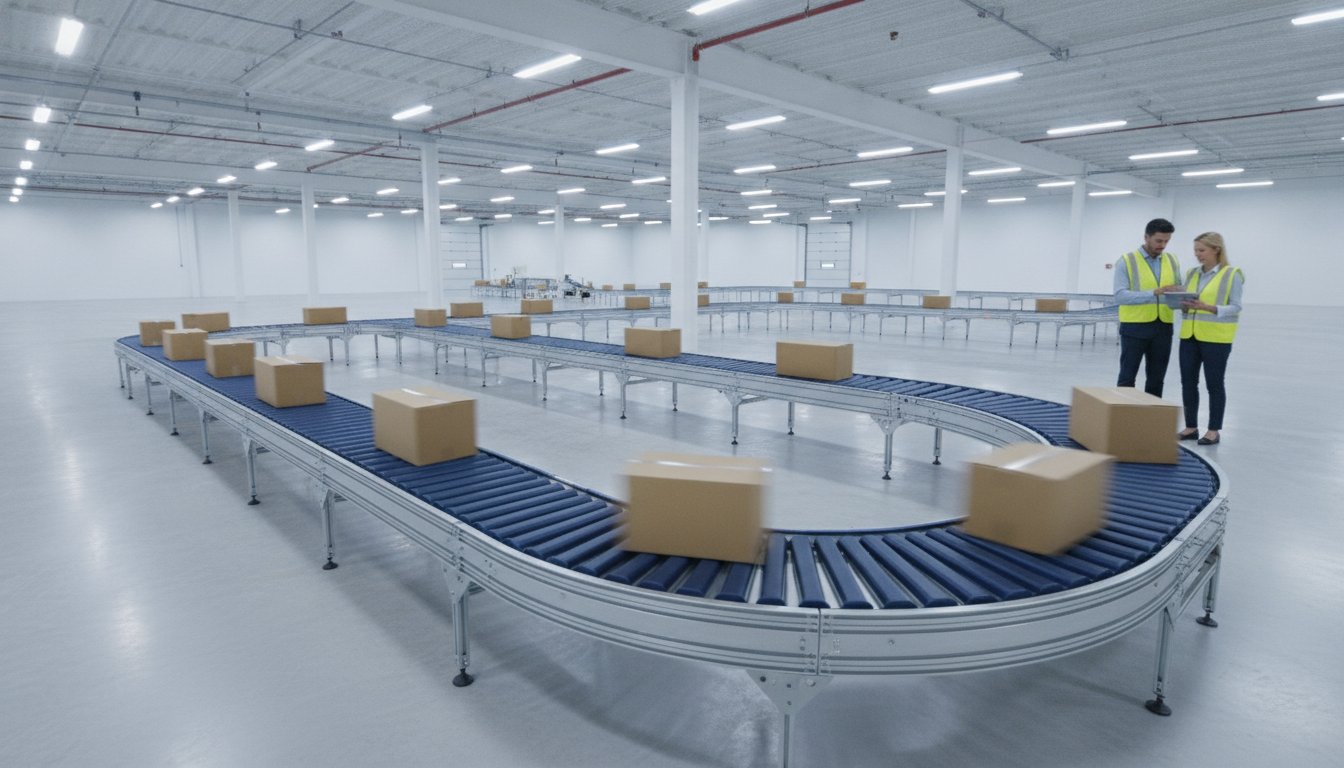
By the end of 2026, the modular and flexible conveyor segment is projected to expand at a rate of 9.12 percent, significantly outpacing traditional fixed infrastructure. This shift isn't merely a trend; it's a strategic response to a marketplace where rigid layouts often fail to accommodate seasonal peaks or evolving SKU profiles. You've likely experienced the limitations of permanent installations that refuse to scale, leaving your team to manage complex logistical challenges with excessive manual labor in loading zones.
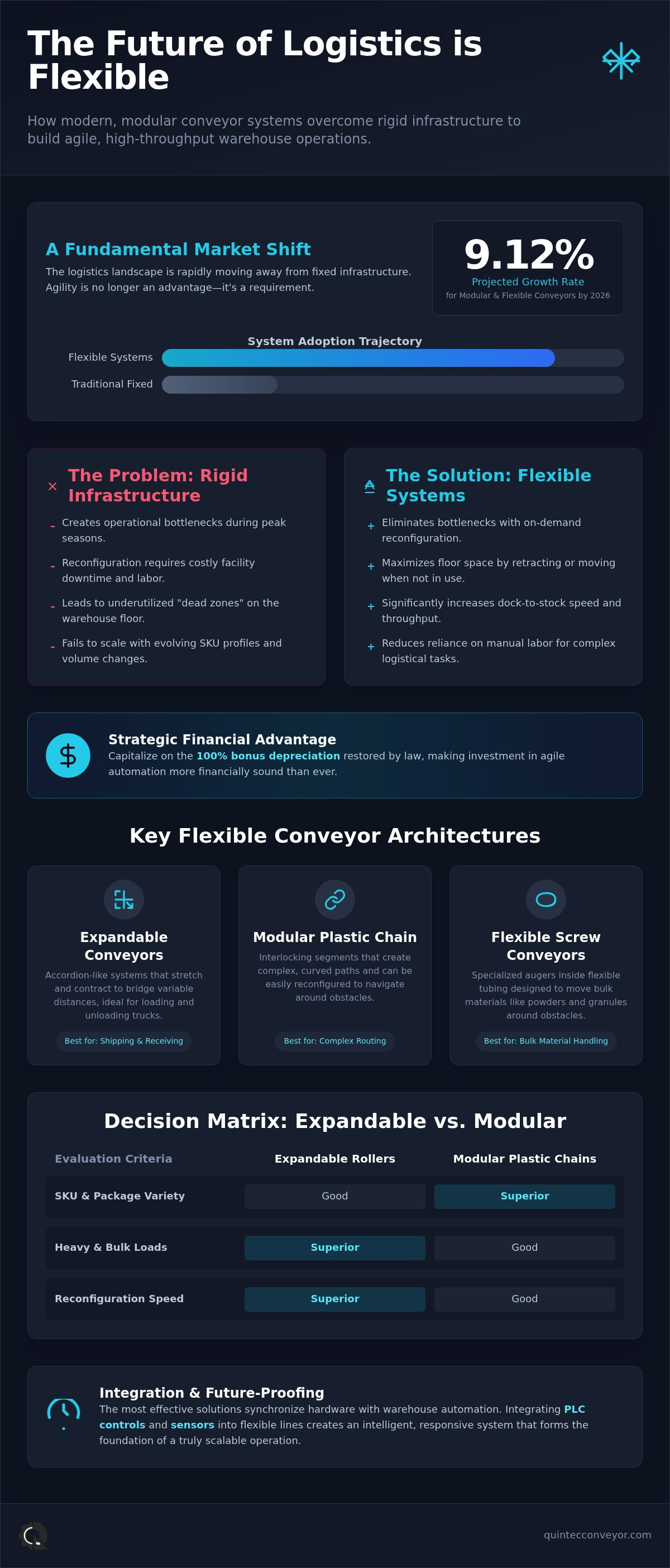
We understand that a warehouse is a living ecosystem that requires a steady hand and precise engineering to remain efficient. This guide details how modern flexible conveyor systems can eliminate bottlenecks and maximize floor space, transforming your facility into an agile powerhouse. You'll discover how these scalable architectures reduce manual handling and increase dock-to-stock speed while taking advantage of the 100 percent bonus depreciation restored by the One Big Beautiful Bill Act. We'll provide a roadmap for integrating intelligent, high-level solutions that grow alongside your business volume, ensuring your material handling operations remain at the cutting edge of industrial excellence.
Key Takeaways
- Adapt to the 2026 logistics landscape by transitioning from rigid, fixed-path systems to dynamic, modular workflows that respond to real-time operational shifts.
- Evaluate the specific performance criteria of expandable rollers versus modular plastic chains to ensure your equipment matches your unique SKU variety and weight requirements.
- Quantify the strategic impact of flexible conveyor systems on your facility's ROI through increased dock-to-stock speeds and significantly reduced manual labor costs.
- Learn how to synchronize your hardware with advanced warehouse automation by integrating PLC controls and sensors directly into your flexible lines.
- Understand the value of a custom-engineered approach that prioritizes total system scalability and long-term maintenance over simple off-the-shelf hardware procurement.
Defining Flexible Conveyor Systems for 2026 Logistics
A Conveyor system was once considered a permanent, static fixture of the industrial floor. In 2026, this definition has shifted toward high-agility architectures that prioritize rapid reconfiguration and repositioning. Flexible conveyor systems are modular frameworks engineered to expand, contract, or curve based on real-time operational needs. This transition from rigid, fixed-path systems to dynamic workflows allows facilities to treat their floor space as a fluid asset rather than a locked grid.
The core components of these systems include expandable frames, modular chains, and portable power units. These elements work in tandem to provide a "plug-and-play" capability that traditional infrastructure lacks. By utilizing lightweight materials and high-torque motors, modern flexible designs offer the same reliability as fixed units while maintaining the portability required for modern e-commerce demands. This flexibility is your primary defense against seasonal e-commerce volatility, where SKU profiles and volume can change in a matter of days.
The Problem of Rigid Infrastructure
Fixed conveyors often become a liability when throughput requirements change. During peak seasons, a layout designed for average volume creates permanent bottlenecks that restrict product flow. Reconfiguring these traditional systems is a costly endeavor; it frequently requires days of facility downtime and specialized labor. Many managers identify "dead zones" in their warehouses, which are areas where permanent equipment is impractical but manual handling is too slow. Flexible intervention solves this by bridging the gap between fixed lines and loading zones, ensuring that no part of the floor remains underutilized.
Key Categories of Flexible Conveyance
Identifying the right architecture depends on the specific logistical challenge at hand. In 2026, logistics leaders generally categorize these systems into three functional groups:
- Expandable Gravity and Powered Conveyors: These are the workhorses of shipping and receiving. They stretch deep into trailers to facilitate faster loading and retract when not in use to save floor space.
- Modular Plastic Chain Conveyors: These are best for complex, curved paths in tight spaces. They allow for intricate routing around existing infrastructure without the need for custom-welded frames.
- Flexible Screw Conveyors: These specialized units are designed for bulk material handling, moving powders or granules through versatile tubing that can navigate around obstacles.
Choosing between these architectures requires a deep understanding of SKU variety and weight requirements. When integrated correctly, flexible conveyor systems provide the structural foundation for a truly agile warehouse environment that can scale without the need for a total facility overhaul.
Expandable vs. Modular: Navigating Flexible Conveyor Architectures
Choosing between expandable and modular architectures requires a strategic assessment of your facility's specific pain points. While both fall under the umbrella of flexible conveyor systems, they serve distinct operational roles. Expandable systems are primarily designed for linear reach, stretching or contracting like an accordion to bridge gaps between docks and sorting areas. In contrast, modular plastic chain systems focus on complex pathing and permanent flexibility within the internal warehouse flow.
Modular Scalability in 2026 logistics represents the ability to add, remove, or reposition standardized conveyance segments within minutes to accommodate fluctuating throughput demands without altering the primary facility infrastructure.
When selecting a system, your engineering team should evaluate three primary criteria:
- SKU Variety: High-mix environments with varied packaging sizes favor modular chains for superior product stability.
- Weight Requirements: Heavy-duty expandable rollers are better suited for handling bulkier, heavier loads at the shipping dock.
- Reconfiguration Frequency: If your team needs to move equipment multiple times per shift, gravity-fed expandable units offer the fastest deployment with zero power tethering.
Expandable Conveyors for Dock Operations
The shipping dock remains the most volatile area of any modern distribution center. Expandable rollers are the ideal solution for truck loading, unloading, and cross-docking because they eliminate the need for manual carrying deep within the trailer. To ensure long-term durability, it's essential to specify units with reinforced "impact zones" where the first few rollers are built to withstand the constant dropping of heavy parcels. The choice between powered and gravity units often comes down to volume and flow control. Motorized expansion maintains a consistent flow rate, which is critical for high-volume 2026 fulfillment centers. Beyond throughput speed, these systems significantly improve the ergonomics of flexible conveyors by reducing the physical strain on workers during repetitive loading tasks.
Modular Chain Systems for Internal Flow
Internal logistics often require navigating vertical changes and tight corners that expandable units cannot manage. Modular plastic chain conveyors utilize a low-profile design to maximize your existing facility footprint, snaking through narrow aisles or around structural columns. One of the greatest advantages of this architecture is the ease of maintenance. Instead of replacing an entire belt section when damage occurs, technicians simply swap out individual plastic links. This modularity ensures minimal downtime and a longer service life for your material handling investment. For businesses seeking a truly customized material handling strategy, integrating flexible conveyor systems into a larger automation plan is the most effective way to future-proof operations.
The Strategic Impact on Throughput and Facility ROI
Investing in flexible conveyor systems represents a shift toward operational resilience. Unlike fixed assets that depreciate while occupying static floor space, these systems offer a "Space as a Service" advantage. When throughput drops or a specific zone isn't required, the equipment retracts or relocates. This reclaims high-value square footage for staging or alternative workflows. This agility is a core pillar of modern industrial conveyor systems, where every inch of the facility must justify its cost through active utility.
The return on investment is primarily driven by labor optimization and cycle time reduction. By bringing the conveyor directly to the product rather than forcing workers to navigate to a fixed line, facilities see a marked increase in units moved per hour. This also addresses the critical issue of worker fatigue. Reducing the distance employees carry heavy parcels lowers the risk of ergonomic injuries, which directly impacts long-term insurance costs and staff retention. In a tight labor market, providing a safer and more efficient environment is a competitive necessity.
Maximizing Dock Efficiency
Dock operations represent the most significant opportunity for immediate throughput gains. Telescopic and expandable loaders allow teams to process trailers with surgical precision. By integrating flexible conveyor systems with automated sortation, distribution centers can effectively handle three times their previous volume without the capital expense of adding new dock doors. This scalability ensures that your current footprint remains viable even as business volume surges during seasonal peaks. Faster truck turn times also reduce detention fees, contributing another layer of cost savings to the facility's bottom line.
Long-term Cost of Ownership
Strategic procurement requires looking past the initial sticker price. The least expensive equipment often incurs the highest maintenance costs over a five-year period. Industrial-grade casters and reinforced steel frames are necessary to withstand the daily rigors of expansion and contraction. Without these high-quality components, systems quickly succumb to "accordion fatigue," where the joints and supports lose their structural integrity. We focus on engineered solutions that prioritize durability. Preventing downtime is far more cost-effective than frequent repairs on sub-standard hardware. To see how costs are structured in other bespoke production environments, you can explore Custom Manufacturing and Quilting Service Fees for insight into specialized labor and material values. A robust maintenance plan, paired with high-level engineering, ensures these systems remain a reliable part of your workflow for years to come.
Modern material handling requires more than just mechanical movement; it demands a seamless connection between the physical floor and the digital brain of the facility. Flexible conveyor systems in 2026 act as the vital connective tissue that bridges the gap between fixed high-speed sortation and dynamic dispatch zones. Through high-level integration, these modular systems communicate directly with your Warehouse Management System (WMS) to ensure real-time visibility and precise load balancing across the entire floor. Process Engineering optimizes flexible hardware placement by analyzing historical flow patterns and peak-load data to ensure every segment contributes to a leaner, faster, and more predictable operation.
Software and Control Synchronization
The effectiveness of a modular line depends on its ability to synchronize perfectly with existing permanent infrastructure. Programmable Logic Controllers (PLCs) and sophisticated photo-eye sensors allow flexible segments to detect upstream volume and adjust motor speeds without human intervention. Variable speed controls are essential in these configurations. They prevent package pile-ups when a fixed line slows down or a sorter reaches its temporary capacity. To maintain maximum uptime, we implement "Plug-and-Play" electrical connections and standardized communication protocols. This allows your team to deploy or relocate sections in minutes, responding to the hourly fluctuations of modern e-commerce without the need for complex rewiring or specialized electrical labor.
Robotics and Flexible Synergies
A significant advancement in 2026 is the growing synergy between flexible hardware and mobile robotics. Flexible conveyor systems now serve as critical pick-up and drop-off (P&D) stations for Autonomous Mobile Robots (AMRs) and automated guided vehicle systems. By precisely calibrating conveyor height and pitch, engineers create a stable interface for robotic arm integration, enabling automated palletizing in temporary work zones that were previously manual-only. The evolution of these "Smart" systems also includes integrated vision sensors and zero-pressure accumulation (ZPA) technology. These features verify SKU accuracy and prevent product damage before items transition to the next stage of the fulfillment process.
If you're ready to move beyond basic hardware and implement a fully synchronized solution, partner with our engineering team to design a system that scales with your future automation goals.
Engineering Scalability with Quintec Conveyors Integration
While hardware vendors focus on the transaction of a single unit, a professional integrator like Quintec Conveyors views flexible conveyor systems as integrated components within a complex, high-performance machine. We provide the specialized expertise required to ensure that your modular equipment doesn't just occupy floor space but actively improves your bottom line. With over 100 years of collective industry experience, our team acts as a strategic guide for facilities navigating the shift toward 2026 agility. Our national footprint ensures that whether you operate a single hub or a multi-state network, you receive consistent engineering excellence and dedicated installation support. This comprehensive perspective is what separates a simple hardware purchase from a truly engineered solution.
The Quintec Integration Process
Every successful project begins with strategic warehouse design services to identify the exact flow logic required for your specific SKUs. Quintec Conveyors doesn't just provide off-the-shelf hardware. Instead, our process engineering team analyzes your throughput data to tailor a solution involving flexible conveyor systems that eliminates bottlenecks before they disrupt your workflow. We evaluate the weight of your parcels, the frequency of seasonal peaks, and the physical constraints of your loading docks to ensure maximum utility.
Our national maintenance coverage further protects your long-term investment. We ensure that your flexible assets remain operational through scheduled inspections and professional upkeep. This proactive approach prevents the mechanical fatigue that can plague unmanaged systems, ensuring your facility maintains its competitive edge. Quintec Conveyors positions itself as a proactive problem-solver, acting as a steady hand for clients navigating large-scale projects.
Building Your 2026 Scalability Roadmap
Achieving total warehouse agility is a methodical journey that often starts with simple modular components. By partnering with Quintec Conveyors, you can implement a phased approach that scales from basic flexible lines to full robotic automation. This strategic roadmap allows you to manage capital expenditure while staying at the cutting edge of logistics technology. We value long-term stability and modern excellence, providing a narrative of competence through every stage of your project. We don't just provide equipment; we deliver a partnership focused on total facility optimization.
Consult with a Quintec Conveyors expert today for a custom flexible solution.
Securing Your Competitive Edge in 2026 Logistics
Navigating the complexities of modern material handling requires a shift away from the bottlenecks of rigid infrastructure. By adopting flexible conveyor systems, your facility gains the agility to handle seasonal SKU volatility while reclaiming valuable floor space for high-value tasks. We've examined how modular architectures and robotic synergies create a foundation for long-term scalability and improved ROI through reduced manual labor. It's clear that a successful transition depends on a custom-engineered strategy rather than a simple hardware purchase. Our team at Quintec Conveyors provides the seasoned authority needed to guide your project from design to final installation.
With over 100 years of collective industrial experience, we offer the reliability your operations demand. Our national installation and maintenance coverage ensures your systems remain operational across your entire network. We combine this reach with specialized expertise in robotics and system integration to deliver results that grow with your business volume. You're not just buying equipment; you're securing a partnership dedicated to modern excellence. Optimize Your Facility with Quintec Conveyors Flexible Conveyor Systems today and build a more resilient warehouse ecosystem.
Frequently Asked Questions
What is the weight capacity of a typical flexible conveyor system?
Weight capacity depends on the specific model and roller diameter, but industrial-grade systems generally support between 50 and 150 pounds per linear foot. Heavy-duty expandable units are engineered to handle the upper end of this range for bulkier SKUs. Our team analyzes your product profiles during the process engineering phase to ensure the framework and motor torque match your heaviest loads without risking structural fatigue or motor burnout.
How long do expandable flexible conveyors usually last in a 3PL environment?
In high-volume 3PL environments, an industrial-grade expandable conveyor typically has a service life of five to ten years when supported by professional maintenance. Longevity depends heavily on the quality of the casters and the frequency of reconfiguration. Systems that are frequently overextended or used for loads beyond their rated capacity will see faster wear. Regular inspections of the impact zones and joints are essential for maximizing this investment.
Can flexible conveyors be integrated with existing fixed sortation systems?
Yes, flexible conveyor systems are frequently integrated with fixed sortation lines to provide a dynamic bridge to loading docks. This is achieved through PLC-controlled synchronization and photo-eye sensors that monitor product flow. These controls allow the flexible segments to adjust their speed based on the throughput of the primary sorter. This ensures a seamless transition of goods while preventing bottlenecks or product damage at the interface of the two systems.
What is the difference between gravity and powered flexible conveyors?
Gravity flexible conveyors rely on a slight decline and manual force to move goods, making them ideal for low-to-medium volume loading tasks where power access is limited. Powered units utilize motorized rollers or belts to maintain a consistent flow rate regardless of the conveyor's pitch. Powered systems are preferred for high-volume 2026 fulfillment centers because they reduce manual pushing and allow for better integration with automated sortation and warehouse management software.
How do I maintain the rollers and joints on an expandable conveyor?
Maintenance involves regular cleaning of the rollers to prevent debris buildup and periodic lubrication of the expansion joints. You should also inspect the casters for flat spots and ensure that the locking mechanisms remain secure. Because these systems are designed for constant movement, checking the alignment of the accordion framework is critical. Quintec Conveyors provides national maintenance coverage to handle these technical assessments, ensuring your flexible assets remain operational and safe for your warehouse team.
Are modular chain conveyors better for tight turns than flexible rollers?
Modular plastic chain conveyors are superior for tight, fixed turns and complex routing within a facility's internal flow. While flexible rollers can curve, modular chains provide greater product stability and can navigate vertical changes or 90-degree bends in much smaller footprints. This makes them the preferred choice for navigating around structural columns or existing infrastructure. They offer a low-profile design that maximizes your facility's square footage while maintaining high-speed throughput.
Does Quintec Conveyors offer national installation for flexible conveyor systems?
Quintec Conveyors provides comprehensive national installation and maintenance for all conveyor architectures across the United States. Our team manages the entire process, from initial design and process engineering to the final on-site setup and testing. This national reach ensures that multi-facility operators receive consistent engineering standards and reliable support regardless of their location. We act as a strategic guide, ensuring your flexible conveyor systems are integrated correctly for long-term operational success.
How much floor space can I save by using a flexible conveyor instead of a fixed one?
You can reclaim up to 75 percent of the floor space occupied by a conveyor when it's not in active use. Expandable systems retract to a fraction of their full length, allowing you to use that area for staging, forklift traffic, or alternative workflows during off-peak hours. This Space as a Service approach ensures that your warehouse footprint remains fluid and productive, preventing permanent equipment from becoming an obstacle during shifting operational requirements.