Executive Guide: Cross-Belt Sorter Systems
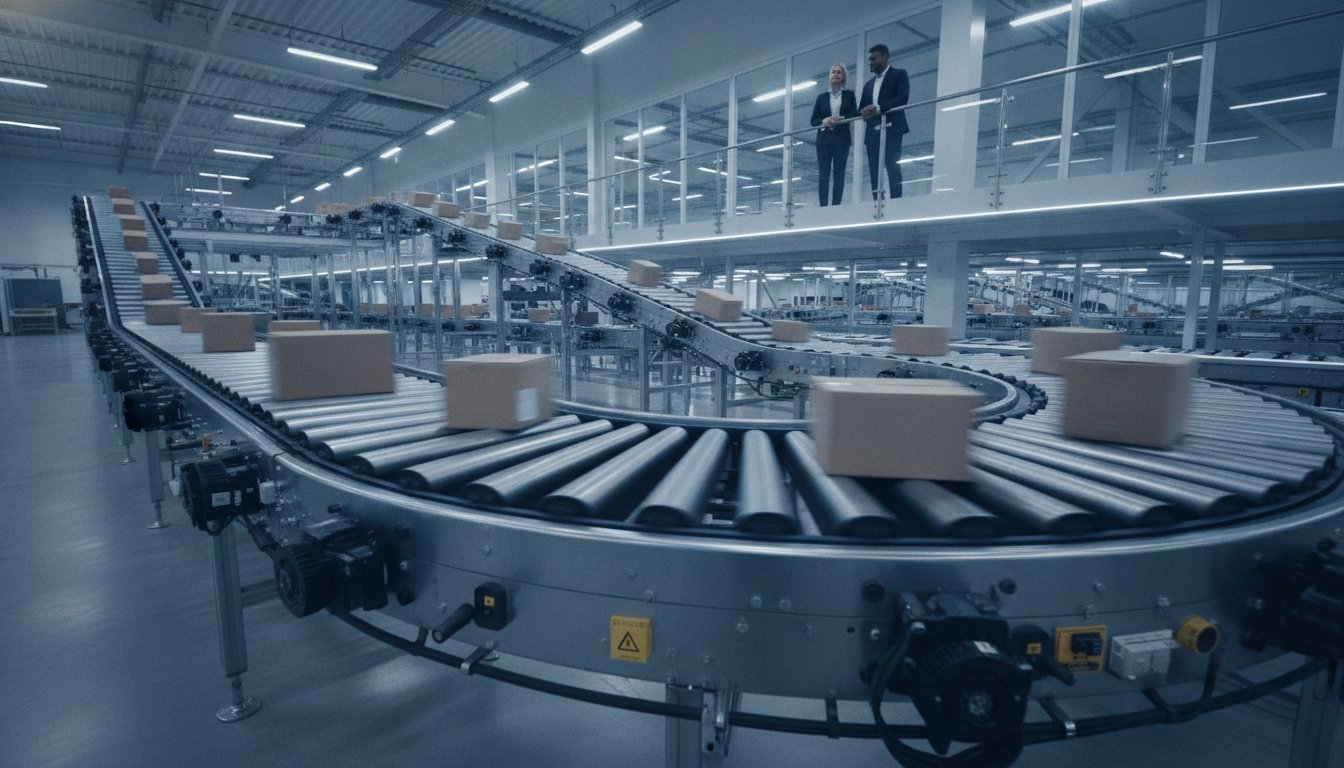
With Q1 2026 e-commerce sales reaching $326.7 billion, a 9.8% year-over-year increase, the pressure on your facility has never been higher. You've likely noticed that manual sorting can't keep pace with these volumes without causing high damage rates or mounting labor costs. Cross-belt sorter systems offer a sophisticated solution by combining extreme throughput with the gentle handling required for modern, diverse inventories. It's a strategic shift from being a passive equipment user to an operational leader.
We understand that scaling for 2026 logistics demands requires more than just faster belts; it demands precision and reliability. This guide provides the technical insight you need to achieve 99.9% sortation accuracy and significantly reduce operational overhead. We'll explore the essential mechanics, examine the long-term ROI of automation, and outline a roadmap for integrating these high-capacity systems into your existing workflow. By the end, you'll have a clear strategy to future-proof your operations and maintain a competitive edge in a rapidly evolving market.
Key Takeaways
- Understand how bi-directional belt carriages enable high-speed sortation while maintaining the precise control required for diverse product mixes.
- Compare horizontal and vertical configurations to determine which layout best optimizes your facility's specific floor space and throughput goals.
- Leverage cross-belt sorter systems to achieve speeds exceeding 2.5 meters per second without sacrificing the gentle handling required for fragile inventory.
- Discover how active belt control during the discharge phase eliminates miss-sorts and ensures near-perfect accuracy across multi-destination loops.
- Learn why strategic process engineering and partnership with a systems integrator are essential for seamless hardware compatibility and long-term ROI.
What is a Cross-Belt Sorter System?
A Cross-Belt Sorter System represents the pinnacle of high-speed automated sortation. It consists of a series of individual conveyor-carriages linked in a continuous loop or straight line. Each carriage features a small, independently driven bi-directional belt mounted perpendicular to the main travel direction. This configuration allows the system to divert items to either side with surgical precision. By 2026, cross-belt sorter systems have become the industry standard for facilities requiring both extreme volume and delicate handling.
The dominance of this technology in modern logistics is driven by the need for massive scalability. Current research indicates that modern systems can handle up to 20,000 parcels per hour, effectively improving sorting speeds by 20 to 25 percent compared to older mechanical alternatives. These systems aren't just about speed; they integrate IoT-enabled sensors for real-time monitoring. This technical sophistication ensures that high-volume operations, such as postal services and baggage handling, maintain a steady flow without the bottlenecks common in traditional setups.
Cross-Belt vs. Traditional Sortation Methods
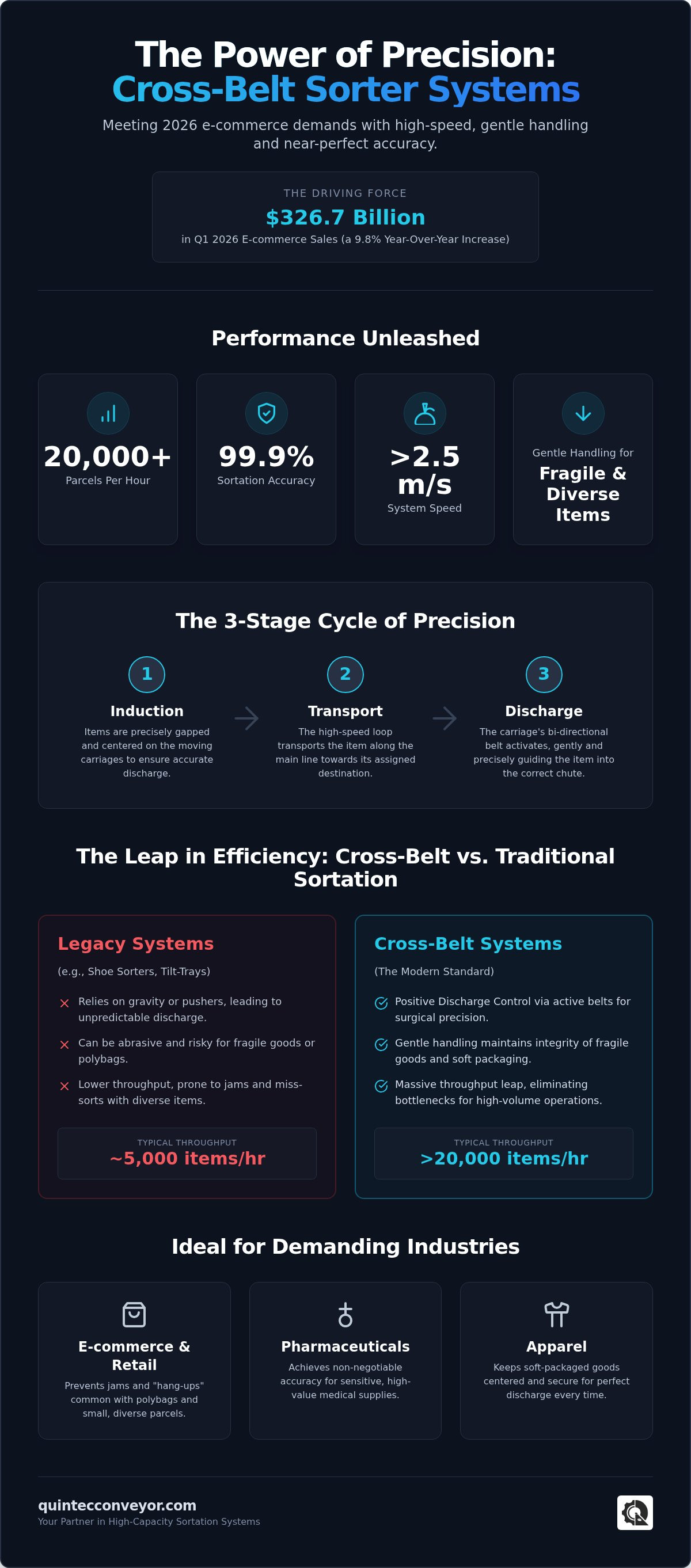
Traditional methods often struggle with the diversity of modern inventory. Shoe sorters, while reliable for heavy cartons, can be abrasive and risky for fragile goods. Tilt-tray sorters rely on gravity, which occasionally leads to unpredictable item positioning during discharge. In contrast, cross-belt technology provides positive discharge control. The carriage belt actively drives the item into the destination chute at the exact microsecond required. This precision allows throughput to leap from 5,000 items per hour in legacy systems to well over 20,000, representing a significant jump in operational efficiency.
Common Industries for Cross-Belt Implementation
Success in high-speed logistics depends on matching the equipment to the product profile. Cross-belt systems are particularly effective in these sectors:
- E-commerce and Retail: The rise of polybags and small parcels demands a soft touch. Cross-belts prevent the jams and "hang-ups" common in systems with physical diverters.
- Pharmaceuticals: High-precision sorting is non-negotiable for sensitive medical supplies. Active belt control ensures near-perfect accuracy for small, high-value items.
- Apparel: Soft-packaged goods often behave unpredictably on standard conveyors. Cross-belt carriages keep these items centered and secure until the exact moment of discharge.
Achieving these results requires more than just purchasing hardware. It demands expert process engineering to ensure the system integrates seamlessly with your facility's existing data and physical workflows.
The Mechanics of Precision: How Cross-Belt Sorters Work
Understanding the operational cycle of cross-belt sorter systems is essential for optimizing warehouse throughput. The process follows a structured three-stage cycle: induction, transport, and discharge. It begins at the induction area, where items are precisely gapped and centered on the carrier. This stage is critical; if an item isn't centered, the discharge physics change, which can impact sortation accuracy. Once loaded, the carriage transports the item along the main line until it reaches the assigned destination. At that precise microsecond, the carriage's internal belt activates to drive the product into the discharge chute.
Mechanical simplicity is the hallmark of this design. Unlike complex pusher systems, cross-belt carriages have fewer moving parts. This leads to higher uptime and easier maintenance schedules. A sophisticated Warehouse Control System (WCS) manages the logic behind every move, coordinating the speed of the carriers with the timing of the induction belts. This orchestration ensures that even at high speeds, the system maintains a steady, predictable flow. For those looking to optimize these workflows, consulting with a sortation specialist can help identify potential bottlenecks in your existing logic layer.
The Technology of Linear Induction Motors (LIM)
A significant advancement in 2026 sortation is the use of Linear Induction Motors (LIM). Think of LIM as an unrolled electric motor. Instead of a rotating shaft, it uses electromagnetic force to propel the sorter carriages along a track without physical contact. This lack of friction means there's virtually no mechanical wear on the propulsion components. It also results in significantly lower noise levels and superior energy efficiency compared to chain-driven systems. This technology is a primary reason why modern facility designs prioritize LIM for the long-term reliability of industrial conveyor systems.
Induction Methods: Manual vs. Automated
The method you choose to load the sorter directly impacts your total capacity. Manual induction is often the best fit for facilities with lower speed requirements or highly varied item profiles that need human oversight. However, to reach the 20,000 items per hour threshold, automated induction is necessary. These cross-belt sorter systems use high-speed belt feeders to inject items onto moving carriages with millisecond precision. Before the item ever reaches a carriage, scanning tunnels verify dimensions and weight. This data allows the WCS to adjust carriage speed or belt torque, ensuring 99.9% accuracy even for challenging polybags or fragile parcels.
Horizontal vs. Vertical Cross-Belt Sorters
Selecting between horizontal and vertical configurations is a pivotal decision in facility design. It directly impacts your cubic volume utilization and long-term throughput potential. While both types of cross-belt sorter systems utilize the same fundamental carriage technology, their physical footprints and operational flows differ significantly. Industry data from 2025 shows that horizontal cross-belt sorters held 68.2% of the market share, largely due to their flexibility in high-volume, multi-destination environments. However, the rise of urban micro-fulfillment is driving a renewed interest in vertical designs.
Your choice depends on more than just available square footage. It requires a deep dive into your sortation logic, item profiles, and future expansion plans. A well-engineered layout doesn't just fit the space; it optimizes the movement of every parcel from induction to the final shipping lane. This strategic alignment is where expert process engineering becomes invaluable for ensuring a high return on investment.
When to Choose a Horizontal Loop Configuration
Horizontal sorters operate in an endless loop, making them the preferred choice for large-scale distribution centers with dozens of shipping lanes. One of their primary advantages is the ability to recirculate "no-read" items or parcels destined for full chutes. Instead of stopping the line or requiring manual intervention, the item simply travels the loop again until the system can successfully discharge it. These systems also offer bi-directional discharge. Carriages can divert items to both the left and right sides of the track, effectively doubling the number of sort destinations within the same linear distance. This layout is ideal for complex e-commerce fulfillment where parcel variety is high and destination density is critical.
The Advantages of Vertical (Linear) Sorters
Vertical sorters, often referred to as linear or "over-under" sorters, are designed for facilities where floor space is at a premium. By returning the empty carriages underneath the active sorting line, these systems drastically reduce the overall footprint compared to a loop. They are particularly effective for single-side discharge applications, such as returns processing or small parcel sortation. While they lack the built-in recirculation benefits of a loop, their compact design allows for easier integration into tight, existing infrastructures. They're often the go-to solution for facilities looking to automate without undergoing a massive structural expansion.
Scalability remains a key factor in your selection. Horizontal loops are generally easier to expand by adding more track and carriers to the existing circuit. Vertical systems, however, offer a modular approach that's well-suited for the rapid deployment needs of modern logistics. Proper planning ensures that whichever configuration you select, the system is tuned for the specific demands of your industry.
Key Advantages: Throughput, Accuracy, and Product Care
Achieving unmatched throughput in a high-volume facility requires more than just raw speed. Modern cross-belt sorter systems operate at velocities exceeding 2.5 meters per second. But speed is only half the story. The true value lies in how these systems maintain control at those rates. While legacy equipment often relies on impact-based diversion, the active belt on each carriage ensures a positive discharge. The system doesn't just hit the item into a chute; it drives it with a controlled, synchronous motion. This level of precision allows for a near-zero miss-sort rate, even when processing up to 20,000 parcels per hour.
The versatility of this technology is equally impressive. A single line can handle an incredibly diverse product mix, ranging from a 1oz letter to a 50lb carton. This flexibility eliminates the need for multiple specialized sorting lines, streamlining your entire material handling infrastructure. Because each item remains centered on its own dedicated belt, the risk of jams or product damage is significantly reduced. It's a level of adaptability that makes these systems a cornerstone of modern e-commerce fulfillment.
Maximizing ROI Through Error Reduction
Miss-sorts carry heavy hidden costs, including additional labor for manual re-sorting, expensive shipping delays, and the long-term erosion of customer trust. The precision of cross-belt technology justifies the initial capital expenditure by virtually eliminating these operational drains. Sortation ROI is the precise intersection where maximum throughput meets near-perfect accuracy. By leveraging AI-driven optimizations that can reduce errors by up to 30 percent, facilities realize a much faster payback period than with traditional mechanical sorters.
Handling Fragile and Irregular Items
Traditional pushers or shoe sorters create an impact force that can damage fragile goods or cause irregular items like polybags to tumble. Cross-belt carriages eliminate this impact. The transition from the carriage to the discharge chute is smooth and fluid, preserving the integrity of sensitive inventory. This is particularly vital for pharmaceuticals or high-end electronics where even minor cosmetic damage is unacceptable. This predictability also ensures consistent orientation, which is essential for optimizing downstream warehouse design services. When items arrive at the packing station in a predictable state, it allows for more efficient palletizing and final dispatch workflows.
To see how these advantages can transform your specific operation, speak with our engineering team today.
Strategic Integration: Implementing Sortation in Modern Facilities
Successful implementation of cross-belt sorter systems requires more than just high-quality hardware. It demands a holistic approach where every mechanical component and software layer works in harmony. This is why choosing a conveyor system integrator is the most critical step in your automation journey. An integrator acts as the strategic architect, bridging the gap between your high-level operational goals and the complex physical machinery required to meet them.
The integration process typically unfolds in three distinct phases. Phase 1 involves rigorous process engineering and data analysis. We examine your historical parcel mix and projected peak volumes to determine the exact sorter specifications required for your facility. In Phase 2, we focus on the custom design of induction and discharge lanes. These lanes must be engineered to handle your specific product profiles without creating bottlenecks. Finally, Phase 3 involves the digital handshake with your existing Warehouse Management System (WMS). This integration ensures that the sorter receives real-time instructions and provides the data feedback necessary for total inventory visibility.
Ensuring Long-Term Reliability and Maintenance
Maintaining peak performance in a high-speed environment requires proactive vigilance. Facility managers must stay alert for the Warning Signs of Impending Conveyor Maintenance, such as unusual acoustic signatures or carriage misalignments. Because cross-belt sorter systems rely on millisecond timing, preventive sensor calibration is essential. Regular checks of the carriage belts and propulsion systems prevent small issues from becoming catastrophic failures. Leveraging over 100 years of collective industry experience, Quintec provides the technical partnership needed to maintain system health and ensure your facility operates at maximum capacity year-round.
Future-Proofing Your Sortation Strategy
The logistics landscape of 2026 is defined by volatility and rapid growth. Designing your facility around modular conveyor systems allows you to scale your throughput as e-commerce demands shift. This modularity ensures that you can add carriers or extend loops without a complete system overhaul. Additionally, the impact of AI and machine learning on sortation logic cannot be overstated. Modern systems now use predictive algorithms to optimize routing and reduce energy consumption during off-peak hours. We engineer these systems to grow with your business, providing a stable foundation that adapts to future technological advancements and volume spikes.
Optimizing Your Operational Future
The transition to cross-belt sorter systems represents a decisive step toward achieving 99.9% sortation accuracy and meeting the scaling demands of 2026 logistics. By prioritizing active belt discharge over legacy mechanical pushers, your facility gains the ability to handle a diverse inventory with unmatched precision. This guide has detailed how these systems balance extreme throughput with the gentle touch required for fragile items, ensuring your operations remain both efficient and resilient.
Success in this transition depends on more than just hardware; it requires a partner who understands the intricacies of process engineering and systems integration. With over 100 years of collective industry experience, we provide comprehensive design, engineering, and installation services backed by national US support. We're ready to help you navigate these complex logistical challenges and build a facility that thrives under pressure. Partner with Quintec for Custom Sortation Integration today. Your path to unmatched warehouse throughput is within reach.
Frequently Asked Questions
What is the maximum throughput of a cross-belt sorter system?
Modern systems can handle up to 20,000 parcels per hour, which represents a 20 to 25 percent improvement over legacy mechanical alternatives. This high capacity is achieved through precise induction timing and high carriage speeds. While individual facility results vary based on item size and induction methods, these systems are specifically engineered to eliminate bottlenecks in high-volume environments. They're particularly effective for e-commerce hubs and postal centers requiring rapid sortation.
How do cross-belt sorters handle fragile or high-value items?
These systems protect fragile inventory by utilizing an active belt discharge mechanism instead of mechanical pushers or gravity-based diverters. This method eliminates the impact force that often causes damage to sensitive goods or high-value electronics. The item remains centered on its own carriage until it's driven smoothly into the discharge chute. This positive control ensures that products maintain their integrity throughout the entire high-speed sortation cycle without the risks of tumbling.
Can cross-belt sorters be integrated into existing warehouse layouts?
Integration into existing facilities is highly feasible, particularly when utilizing vertical configurations that minimize the total footprint. These designs return empty carriages beneath the active line, making them ideal for tight spaces. Horizontal loops offer more flexibility for facilities with large floor plans and multiple shipping lanes. A professional integrator can assess your current infrastructure to design a custom layout that optimizes your available cubic volume without requiring massive structural changes or expansions.
What is the difference between a cross-belt sorter and a tilt-tray sorter?
The primary difference lies in the discharge method; cross-belt carriages use an active motor-driven belt, while tilt-trays rely on gravity. Because cross-belt sorter systems actively drive the item off the carriage, they offer superior precision and can handle a wider variety of product profiles. Tilt-trays can struggle with flat or round items that don't slide predictably. Active discharge also allows for higher carriage speeds since the timing isn't dependent on gravity alone.
What kind of maintenance do cross-belt sorter systems require?
Maintenance focuses on preventive sensor calibration and regular inspection of the individual carriage belts. Because modern systems often utilize Linear Induction Motors (LIM), there are fewer friction-based moving parts to wear out compared to traditional chain-driven conveyors. Scheduled inspections of the Warehouse Control System logic and electrical connections ensure that the timing remains precise. Proactive monitoring of acoustic signatures can also help identify potential mechanical issues before they lead to unexpected downtime or failures.
Are cross-belt sorters suitable for small parcel and polybag sortation?
Yes, they're the industry standard for sorting polybags and small parcels that often jam other equipment types. The active belt on the carriage prevents these light, flexible items from getting caught in diverter gaps or sliding unpredictably. This makes them particularly effective for apparel and e-commerce fulfillment where parcel variety is high. The system's ability to maintain item orientation is a significant advantage for downstream automated bagging or labeling processes in high-speed environments.
How does a cross-belt sorter improve warehouse accuracy?
Accuracy is improved through active belt control and advanced scanning tunnels that verify dimensions and weight before induction. By reducing miss-sorts to near-zero, these systems eliminate the labor costs associated with manual re-sorting. Integration with artificial intelligence has pushed sorting accuracy to over 99.9% in some 2026 installations. This precision ensures that orders reach the correct shipping lane every time, directly reducing shipping delays and improving overall customer satisfaction throughout the supply chain.
What is the typical ROI period for a cross-belt sortation system?
The ROI period is typically driven by significant reductions in labor costs and the elimination of expensive miss-sort errors. While the initial capital expenditure is higher than simpler conveyor types, the leap in throughput and accuracy provides a faster payback for high-volume operations. Most facilities see a return on investment through improved operational efficiency and the ability to handle larger volumes with cross-belt sorter systems. Strategic process engineering ensures the system is scaled correctly.