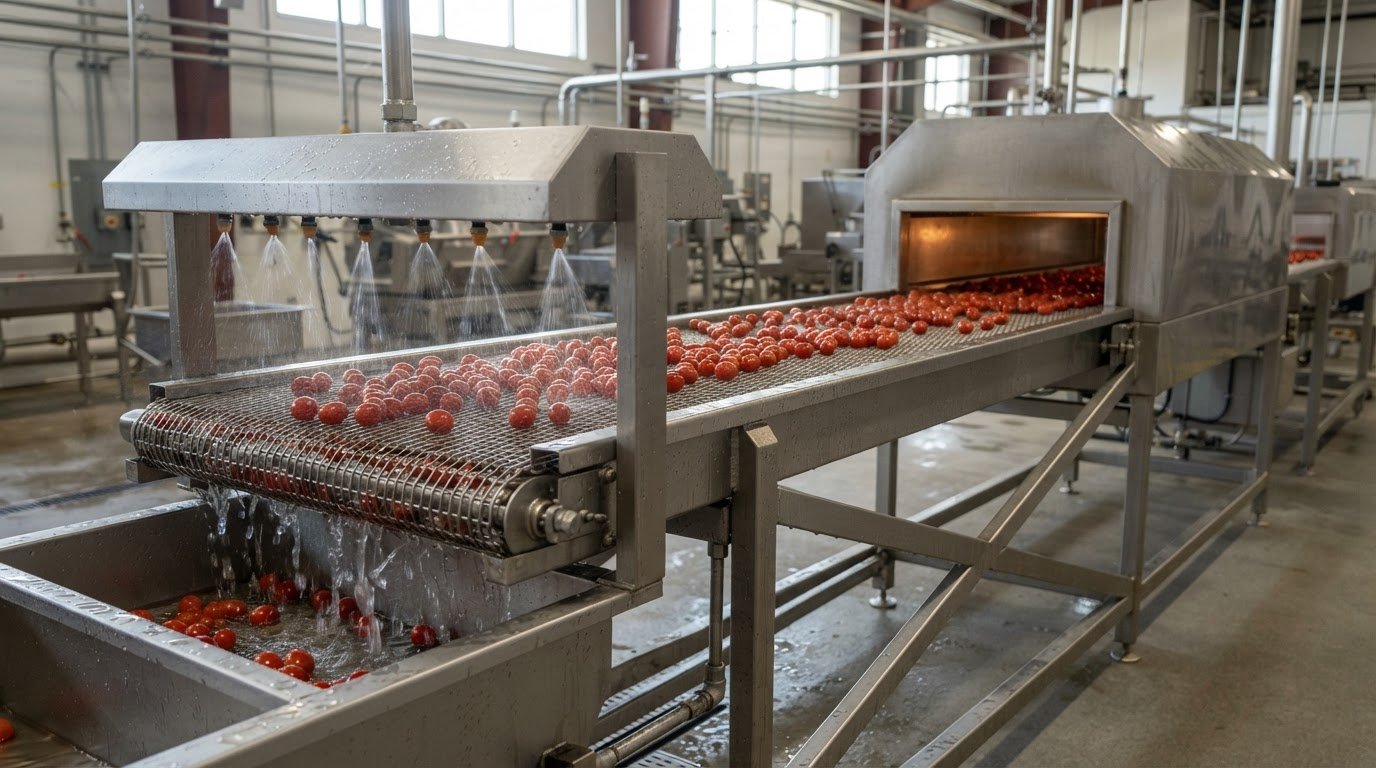
The belt is only one part of a successful food-processing line. Food grade conveyor systems move products through washing, coating, and drying, while system design and integration determine how well the equipment fits the product, process, and cleaning requirements.
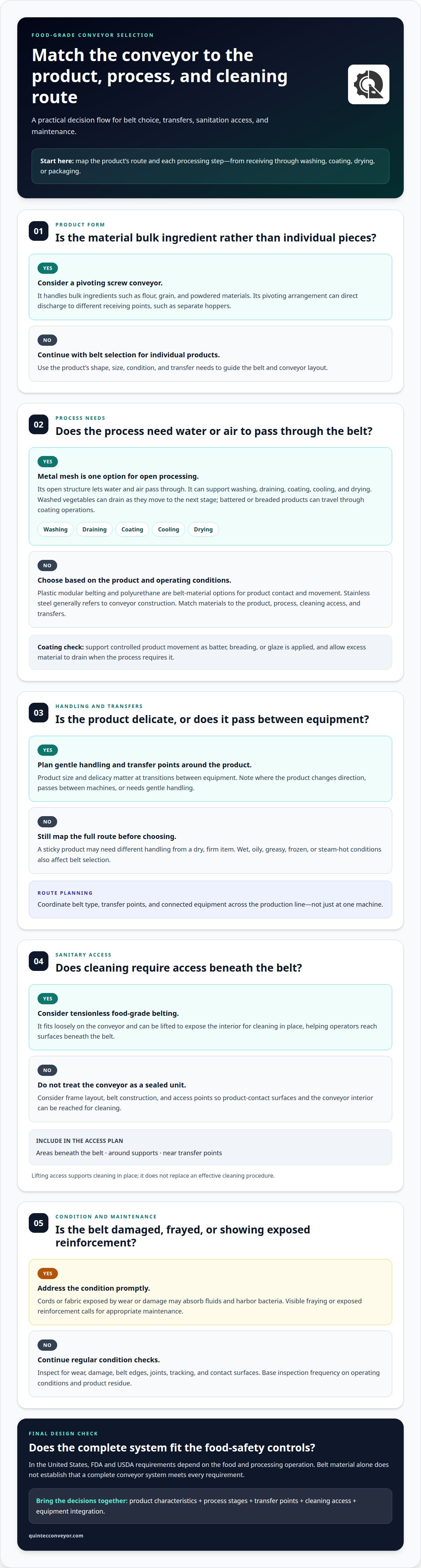
Choosing a conveyor involves more than selecting a food-compatible belt. Product shape and condition, transfer needs, cleaning access, and line layout all affect the right system. For example, a metal mesh belt can suit washing, coating, and drying, while other belt types may better match different products and operating conditions.
This article explains how conveyor belts support washing, coating, and drying, what sanitary construction means for cleaning, and how material selection relates to product characteristics. It also shows how custom design and integration bring these decisions together, helping you assess a conveyor as part of the complete production process.
Key Takeaways
- Match belt type to the process: metal mesh belting can support washing, coating, draining, drying, and gentle transfers.
- Plan for sanitary access by considering how the belt and conveyor interior can be reached for cleaning, and how belt wear may expose reinforcing materials.
- Base conveyor design on the product’s shape, size, and condition, including whether it is wet, sticky, oily, frozen, or hot.
- Consider how material choice and integration affect the full line; conveyor maintenance can also support ongoing equipment operation.
1. Belt applications for washing, coating, and drying
Metal mesh food-grade belting can serve several processing steps, including washing, draining, coating, cooling, and drying. Its open structure lets water and air pass through. Washed vegetables, for example, can drain as they move to the next stage, while battered or breaded products can travel through coating operations on this belt type.
Coating lines need controlled product movement through battering, breading, or glazing. The belt should support products as coating is applied and let excess material drain when the process requires it. Metal mesh belting is one option. Product size and delicacy matter too, especially at transfers between equipment.
Drying and cooling depend on airflow around the product. Open mesh can expose more of the product surface than a solid belt, while drainage supports washing. Sprocket-driven positive tracking systems help prevent belt mistracking and potential damage. This can be useful when a line moves products through several stages, such as washing, draining, and drying.
Stainless steel generally refers to conveyor construction, while plastic modular belting and polyurethane describe belt materials. Stainless steel is selected for the conveyor structure; modular plastic and polyurethane belts are considered for product contact and movement. The right choice depends on the product, process, cleaning access, and transfer needs.
Pivoting screw conveyors handle bulk ingredients such as flour, grain, and powdered materials. Their pivoting arrangement can direct discharge to different receiving points, such as separate hoppers. This differs from mesh-belt handling of individual pieces. A screw conveyor suits bulk material; belt selection depends on the product’s shape, size, and condition.
Start by mapping each process step, such as washing, coating, draining, or drying. Then identify whether the product is delicate, sticky, wet, or granular. Food grade conveyor systems are part of a process line, so match belt style and transfer points to the handling task at each stage.
2. Sanitary construction and cleaning features
Sanitary design depends in part on whether operators can reach product-contact surfaces. A belt that conceals residue beneath its carrying surface can make cleaning harder. Frame layout, belt construction, and access points therefore matter alongside material selection. In a washdown area, a design that exposes the conveyor interior can make cleaning more direct.
Tensionless food-grade belting fits loosely on the conveyor and can be lifted to provide access to the interior for cleaning in place. This loose fit is a design feature, not a substitute for an effective cleaning procedure. It allows operators to reach surfaces beneath the belt rather than treating the conveyor as a sealed unit.
Reinforced belts need attention as they wear. Cords or fabric can become exposed when a belt is damaged or worn, and exposed material may absorb fluids and harbor bacteria. During inspection, look for visible damage, fraying, or exposed reinforcement. These signs can affect sanitation and call for appropriate maintenance.
In U.S. food processing, FDA and USDA requirements depend on the food and the processing operation. Conveyor selection should support hygienic handling and cleaning within the applicable food-safety controls. Belt material alone does not establish that a complete conveyor system meets every requirement.
Plan cleaning access during conveyor design, not after installation. Identify areas beneath the belt, around supports, and near transfer points where residue could collect. Consider how the belt can be moved or lifted to expose the interior. With tensionless belting, that access can support cleaning in place. A damaged reinforced belt presents a different concern: exposed cords or fabric may retain fluid and harbor bacteria. Sanitary construction and maintenance go together. Accessible equipment still needs sound belt condition and suitable cleaning practices.
3. Custom food-grade conveyor design and integration
Choose a conveyor by starting with the product and its route. Shape, size, and condition affect how it moves, transfers, and responds to processing. A sticky product may need different belt handling from a dry, firm item. Wet, oily, greasy, frozen, or steam-hot products also affect belt selection.
Next, map each production step, from receiving through washing, coating, drying, or packaging. Note where products change direction, pass between machines, or need gentle handling. These transitions shape conveyor layout and integration. A system designed around the full route can coordinate belt type, transfer points, and connected equipment.
How often should food-grade conveyor belts be inspected and replaced? Inspect belts regularly for wear, damage, and exposed reinforcing cords or fabric. Replacement timing depends on belt condition and operating demands, since damaged reinforcement can absorb fluid and harbor bacteria.
Build inspection access into the design. A maintenance check can cover belt edges, joints, tracking, and contact surfaces. Visible fraying or exposed reinforcement, for example, calls for prompt attention. Operating conditions and product residue also inform inspection frequency. For a belt handling wet or greasy products, base checks on its actual condition.
In the United States, food processors use conveyor manufacturers and systems integrators. Manufacturers supply conveyor equipment, while integrators coordinate conveying with connected machinery and production flow. The right fit depends on the line’s product, process stages, and integration requirements, not just the belt material.
Custom design connects these decisions. A project typically starts by documenting product characteristics and process stages, then mapping transfers and equipment interfaces. Engineering uses that information to guide belt selection and conveyor configuration. For example, a line moving wet product into drying needs a layout that supports product movement and the next process stage.
Food grade conveyor systems must fit both the product and the production line as a whole. Clear process requirements guide design, integration, and maintenance planning.
4. What are food grade conveyor systems and what materials are used?
A food-grade conveyor moves products through processing in a way that suits the product and production task. The system includes the belt and the equipment that supports and moves it. Belt choice affects product handling, transfers, and how the line supports steps such as washing, coating, or drying.
Modular plastic belting is made from interlocking sections and can be molded in materials suited to different product temperatures. Some options suit products as cold as -50°F, while others suit products as warm as 200°F. The appropriate range depends on the material selected and the product’s operating conditions.
Modular plastic belting offers corrosion and abrasion resistance and can be customized for food applications. Its modular construction can suit conveying needs that call for different belt configurations. For example, it may fit a production line when its material properties and design suit the product and process.
Metal mesh belting has a different profile. It is transparent and metal detectable, and it allows tight transfers that can help move small or delicate products gently. Mesh openings also let water and air pass through, making this belt type relevant to washing, draining, and drying.
Color can support visual inspection. Blue food-grade conveyor belting is used in food processing plants because soil and impurities are easier to see against its color. This can help make visible contamination easier to spot during routine observation, though color alone does not determine suitability.
Compare materials by considering product temperature, size, delicacy, and process conditions. A small, delicate item may benefit from the tight transfers available with metal mesh, while modular plastic may suit a customized conveying application. The conveyor must also fit the production line: belt material is only one part of the selection decision.
For a line that needs coordinated equipment, plan a conveyor system around the product and its process stages.
Modular plastic belts consist of interlocking sections and can be customized for food applications. Their material options suit different temperatures and offer corrosion and abrasion resistance. The article provides no comparable properties for stainless steel or polyurethane belts.
Quintec Conveyors: Conveyor Maintenance
Quintec Conveyors provides conveyor maintenance to support food-processing lines as equipment wears or operating needs change. Turn to maintenance when belt damage, tracking problems, or other equipment concerns affect a conveyor’s role in the process. Timely attention can help address developing issues before they disrupt how equipment moves products through the line.
For broader projects, Quintec Conveyors also provides conveyors, robotics and automation, and infrastructure. These services may fit when a production line needs equipment changes or closer integration between conveying and automated processes. The project scope depends on the system and operational requirements.
If you’re planning conveyor maintenance or a line improvement, contact Quintec Conveyors to discuss your requirements.
Plan the next stage of your production line
As products, processes, or facility layouts change, conveyor decisions become part of a broader operational plan. Treat Food grade conveyor systems as one element of that plan, aligning equipment and material movement with production needs. Defining the next operational priority helps shape a practical discussion about system requirements.
Quintec Conveyors provides conveyors, robotics and automation, and infrastructure for material handling projects. These capabilities can support a new line or help equipment fit into a facility. Connect your production goals with the requirements of the system you’re planning.
Discuss your conveyor project with Quintec Conveyors and explore a considered path forward for your operation.
Frequently Asked Questions
What conveyor belt materials are approved for food contact, including FDA 21 CFR and NSF standards?
Approval depends on the specific belt formulation and its intended food-contact conditions, not just its material name. FDA 21 CFR and NSF references should be evaluated against the exact belt product and application. For example, a plastic belt’s suitability cannot be established from “plastic” alone. Include the food type, temperature, and process conditions when selecting a belt with documented food-contact suitability.
What are the cleaning and sanitation requirements for food processing conveyors?
Cleaning procedures should cover product-contact surfaces and areas where residue can collect. Inspect transfer points, belt joints, and the frame around the belt, then clean them using the facility’s established sanitation procedures. The method and frequency depend on the product and operation. Align procedures with the production process, and address damaged surfaces that could make cleaning less effective.
What are common food conveyor contamination risks and how can they be prevented?
Contamination risks include residue in hard-to-reach areas and worn or damaged belt surfaces. Check belt joints, edges, and transfer points for trapped material or visible damage. Design access into cleaning routines, remove residue using established procedures, and address belt damage promptly. For example, a torn surface can make cleaning harder and create places for material to collect.
How do stainless steel, plastic modular belt, and polyurethane food conveyors compare?
Stainless steel generally describes the conveyor structure, while modular plastic and polyurethane are belt materials. Modular plastic offers corrosion and abrasion resistance and can be molded for different product temperatures. The article provides no comparable properties for polyurethane.