Industrial Robotics and Automation Services: A 2026 Strategic Integration Guide
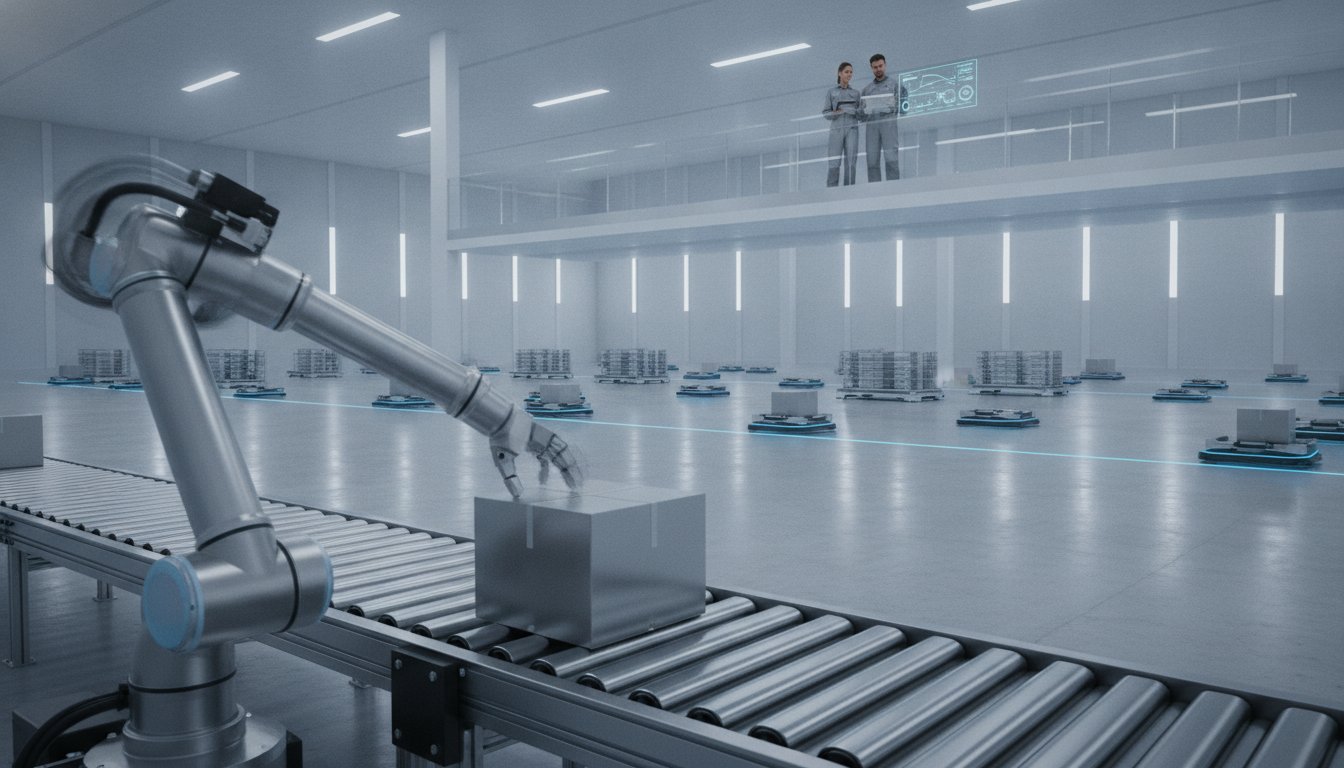
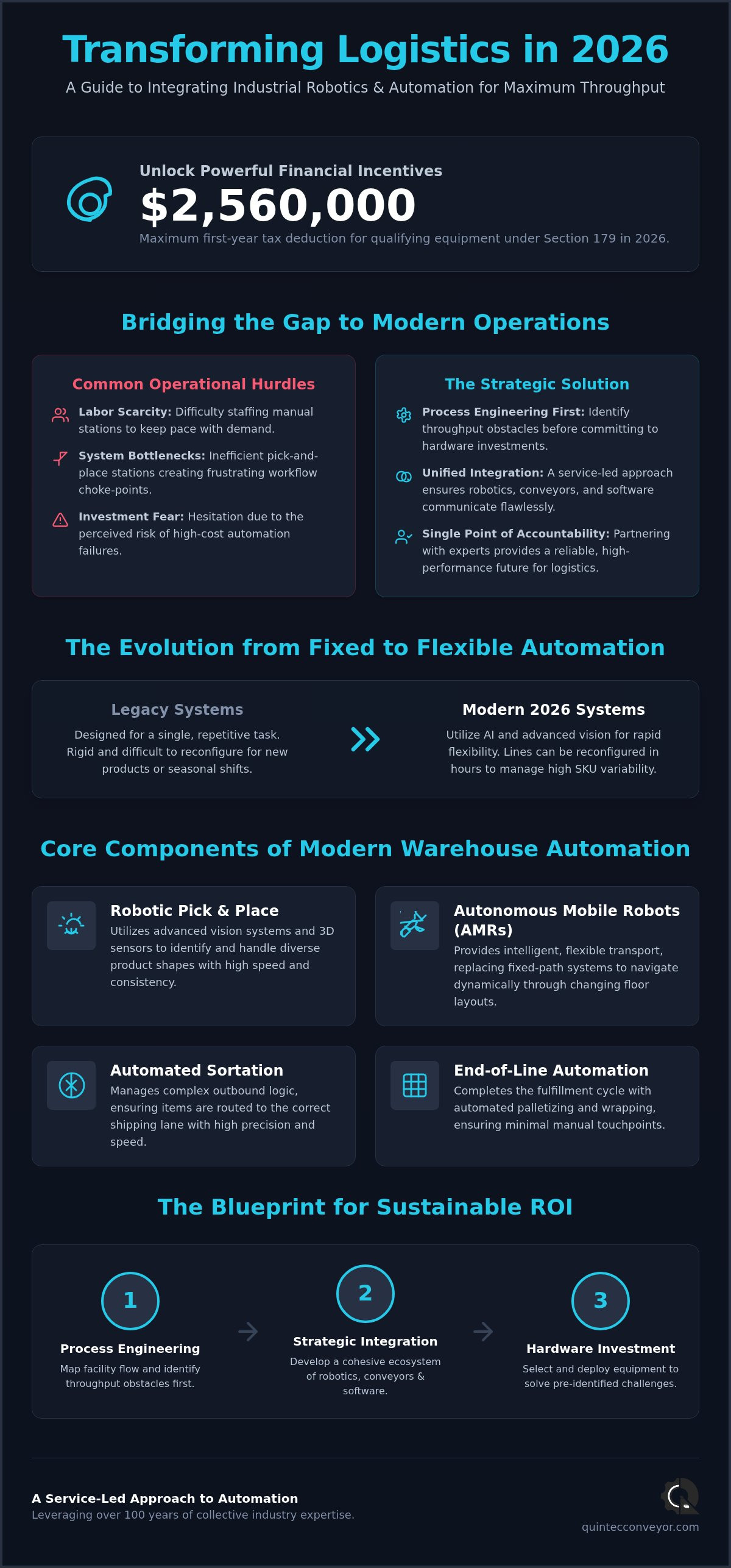
In 2026, the maximum first-year tax deduction for qualifying equipment has reached $2,560,000 under Section 179, providing a powerful financial incentive for facilities to finally integrate professional industrial robotics and automation services. You've likely felt the mounting pressure of labor scarcity and the frustrating bottlenecks that occur when manual pick-and-place stations can't keep pace with demand. It's a common challenge. The fear of a high-cost automation failure often keeps decision-makers tethered to inefficient, legacy processes, even when the need for change is clear. We believe a successful transition requires more than just new hardware; it demands a strategic alignment of technology and workflow.
This guide will help you leverage these advanced technologies to transform your warehouse throughput and maximize your operational ROI. You'll discover how to move beyond isolated equipment purchases toward a seamless, integrated flow that reduces long-term costs. We'll preview critical updates like the ISO 10218-1:2025 safety standards and outline a roadmap for scalable automation that grows with your business. By bridging the gap between advanced robotics and proven process engineering, you can secure a reliable, high-performance future for your logistics operations.
Key Takeaways
- Understand how modern industrial robotics and automation services bridge the gap between physical manipulators and the software logic required to optimize facility flow.
- Learn how to eliminate pick-and-place bottlenecks by synchronizing robotic cycle times with high-performance industrial conveyor systems.
- Discover why process engineering is the essential first step to identify throughput obstacles before committing to significant hardware investments.
- Explore the transition from fixed paths to flexible autonomous mobile robots (AMRs) to create a truly scalable warehouse infrastructure.
- Gain insights into achieving long-term ROI through a unified integration approach that leverages over 100 years of collective industry expertise.
Defining Industrial Robotics and Automation Services in 2026
Modern industrial environments have moved beyond the distinction between mechanical movement and digital logic. Professional industrial robotics and automation services now treat these two elements as a single, unified discipline. To understand the 2026 landscape, we must define the primary components of this integration:
- Industrial Robotics Services: These involve the deployment of an Industrial robot, or a series of programmable manipulators, to execute physical material handling tasks like palletizing and sorting.
- Automation Services: These encompass the control systems and software logic that manage the overall facility flow and equipment synchronization.
By 2026, AI-driven decision-making has effectively merged these previously distinct fields. Robots don't just follow a fixed script; they respond to real-time data from across the warehouse floor. This evolution makes a service-led approach far superior to a hardware-first procurement strategy. When you prioritize services over hardware, you focus on the operational outcome. This ensures that every piece of technology is selected and tuned to solve specific throughput challenges rather than simply filling floor space.
The Shift from Fixed to Flexible Automation
Modern facilities can't afford the rigidity of traditional hard automation. While older systems were designed for a single, repetitive task, 2026 technologies prioritize rapid flexibility. Advanced vision systems and machine learning allow warehouse lines to be reconfigured in hours to meet seasonal shifts. This adaptability is vital for managing high SKU variability. Modern software now handles the complex logic required to switch between different product shapes and weights without the need for extensive manual intervention or hardware changes.
Why Integration is the Core Service
A robot alone isn't a solution; it's a component. The true value of industrial robotics and automation services lies in the integration of disparate systems into a cohesive ecosystem. As a strategic partner, Quintec serves as the single point of accountability for your entire system's performance. We leverage our collective 100 years of industry experience to ensure that your robotics, conveyors, and software communicate flawlessly. We utilize our comprehensive warehouse design services to map out the automation logic before any equipment is installed. This strategic mapping ensures that every robotic arm and conveyor belt works toward the ultimate goal of improved throughput and reduced operational risk.
Core Components of Modern Warehouse Automation Services
Modern warehouse infrastructure relies on a modular yet deeply integrated set of technologies. Effective industrial robotics and automation services don't treat equipment as standalone units; they focus on how each component contributes to the collective flow of the facility. This modularity allows for a scalable architecture where you can add capacity as your volume grows. It's about creating a responsive environment that adapts to shifting market demands while maintaining a high level of reliability.
Four primary pillars define the 2026 warehouse automation landscape. First, robotic pick and place handles high-frequency item selection with consistent speed. Second, Autonomous Mobile Robots (AMRs) provide intelligent, flexible transport that replaces old fixed-path systems, navigating dynamically through changing floor layouts. Third, automated sortation manages complex outbound logic, ensuring items reach the correct shipping lane with high precision. Finally, end-of-line automation, including palletizing and wrapping, ensures the fulfillment cycle is completed with minimal manual touchpoints. These components work together to eliminate the physical bottlenecks that typically slow down facility throughput.
Robotic Manipulation and Precision
E-commerce growth has accelerated the adoption of robotic pick and place systems. These units utilize advanced vision systems and 3D sensors to identify and handle diverse product shapes. It's a significant shift; according to industry data, articulated robots held the largest market share by robot type in 2025 at 62.52%. By reducing human error and fatigue at these high-volume stations, facilities maintain a steady pace during peak demand periods. The integration of 2026 AI models allows these arms to learn new SKU profiles in minutes, making them far more versatile than previous generations of industrial machines.
Advanced Sortation and Packaging
Strategic integration with on-demand packaging solutions, such as Packsize and what their company does, allows for boxes to be custom-built for every order. This reduces dimensional weight charges and packaging waste. When combined with high-speed sortation logic, these systems significantly lower labor costs and transit times. There are many compelling reasons for investing in industrial robots, but the ability to synchronize packaging with sortation offers one of the fastest paths to measurable ROI.
Achieving this level of synergy requires a partner who understands both the mechanical and digital layers of the warehouse. If you're looking to modernize your current setup, our experts can help you select the right mix of hardware and logic through a national integration partnership. By choosing comprehensive industrial robotics and automation services, you ensure that your facility is prepared for the volume challenges of tomorrow.
The Synergy of Robotics and Conveyor System Integration
Robots are precision instruments, but their performance is capped by the material handling systems that support them. High-quality industrial conveyor systems act as the circulatory system of the warehouse, ensuring a consistent flow of product to robotic cells. If the conveyor speed isn't perfectly synchronized with robotic cycle times, you create artificial bottlenecks. Professional industrial robotics and automation services prioritize this mechanical handshake to ensure that movement and manipulation occur in perfect harmony. This level of synchronization is what separates a collection of machines from a high-performance system.
Custom-engineered transfer points are where the most critical interactions happen. These zones require precise positioning and mechanical stability to allow robotic sensors to identify and grasp items accurately. While much focus is placed on Robotic process automation (RPA) for digital workflows, the physical orchestration of modular conveyors is what drives throughput in a distribution center. Modular designs allow for quick adjustments to these workstations, supporting a more agile response to changing SKU profiles as your business evolves.
Fixed Conveyors vs. Robotic AMRs
High-capacity belt conveyors remain the gold standard for moving large volumes over fixed distances with maximum efficiency. However, robotic carts or AMRs offer the flexibility needed for non-linear paths and dynamic floor plans. Modern industrial robotics and automation services often deploy hybrid systems to capture the benefits of both technologies. These setups use fixed conveyors for the heavy lifting between primary zones and AMRs for the flexible delivery to specific workstations. Integrated designs like these can improve overall facility flow by 30% by reducing travel time and floor congestion.
Infrastructure Requirements for Robotic Integration
Precision robotics require a stable foundation to maintain accuracy over millions of cycles. Investing in robust industrial infrastructure, including reinforced flooring and specialized racking, is essential to prevent vibration-induced errors. Safety is another critical layer of the modern floor. We design collaborative zones where humans and Cobots can work side-by-side using light curtains and pressure-sensitive mats to maintain a safe environment. Finally, a fully automated floor must account for high-density power and data cabling to support real-time communication between the robots and the facility's control systems.
Evaluating ROI: Why Process Engineering is the Foundation
Successful implementation of industrial robotics and automation services doesn't happen by accident. It begins with process engineering, which is the strategic logic that dictates every hardware selection. Before you invest in expensive robotic arms, you must identify the precise bottlenecks slowing your facility down. Investing in a high-speed palletizer won't improve your ROI if the upstream conveyor flow is erratic. By analyzing the entire material handling cycle, we ensure that every piece of technology serves a specific operational purpose.
Calculating the Total Cost of Ownership (TCO) is another critical step in the evaluation process. The initial installation is only one part of the financial equation. You must also account for energy consumption, software licensing, and specialized labor over the life of the system. Future-proofing is equally essential. We design systems with the capacity to scale for your projected 2027 and 2028 growth. This ensures your infrastructure doesn't become obsolete as your SKU counts or order volumes increase.
The Discovery and Design Phase
Effective warehouse robotics integration starts with a comprehensive data audit. We use simulation and modeling to visualize the flow of goods before the first bolt is turned. This allows us to test different scenarios and set clear Key Performance Indicators (KPIs) for success. Typical metrics include hourly throughput, picking accuracy, and system uptime. Seeing the system function in a digital twin environment reduces the risk of costly post-installation adjustments and ensures the logic holds up under peak stress.
Maintenance and Long-Term Reliability
Long-term reliability depends on proactive conveyor and robot maintenance. Integrated systems offer a distinct advantage; they simplify the spare parts supply chain by using standardized components across the line. We utilize remote monitoring and predictive diagnostics to identify potential failures before they cause downtime. This proactive stance protects your investment and ensures that your industrial robotics and automation services continue to deliver value for a decade or more. If you're ready to optimize your facility's logic, partner with Quintec for a comprehensive process engineering review.
The Quintec Approach to Seamless Automation Services
Selecting a partner for industrial robotics and automation services requires a balance of veteran experience and modern technical vision. Quintec unifies over 100 years of collective industry knowledge into a single, cohesive integration partnership. We don't just sell equipment. Our "Concept to Completion" philosophy ensures that your facility's unique operational logic is baked into the physical layout from the very first design draft. This comprehensive approach encompasses design, engineering, and installation, providing a streamlined path for mid-sized distribution centers to modernize their operations without the friction of managing multiple, disconnected vendors.
National Scale, Professional Standards
Our national deployment capabilities ensure that facilities across the United States receive the same high level of professional service, regardless of their location. We manage large-scale rollouts with a focus on consistency, eliminating the regional service gaps that often plague nationwide projects. Our team adheres to strict industrial safety and engineering standards, ensuring that every robotic cell and conveyor line operates with maximum reliability. We've spent decades navigating complex logistical hurdles. This seasoned perspective allows us to anticipate challenges before they impact your timeline, maintaining a steady project rhythm from the initial site visit to the final system handover.
Partnering for Your 2026 Automation Journey
The transition to advanced automation is a long-term investment in your facility's resilience. We move beyond the role of a traditional equipment vendor to act as your strategic automation partner. This means our relationship doesn't end when the installation is complete. We remain engaged to ensure that your industrial robotics and automation services continue to meet the evolving demands of your business. As SKU profiles shift and order volumes grow, our scalable designs allow your infrastructure to adapt without requiring a total system overhaul.
The journey toward a fully optimized floor begins with a detailed facility flow assessment. Our experts analyze your current throughput and identify the specific areas where robotics can provide the highest return on investment. We help you move from manual bottlenecks to a seamless, automated workflow that protects your bottom line. If you're ready to transform your warehouse throughput and secure your operational future, consult with Quintec's automation experts today.
Securing Your Operational Future Through Strategic Automation
The transition to a high-performance distribution center requires more than just purchasing the latest hardware; it demands a strategic alignment of physical movement and digital logic. As we've explored, the most effective industrial robotics and automation services in 2026 are those that prioritize process engineering and seamless conveyor integration. By identifying bottlenecks early and designing for future scalability, you protect your capital investment and ensure your facility is prepared for 2027 and beyond.
Quintec brings over 100 years of collective industry expertise to every project, offering comprehensive national integration across the United States. Our "Concept to Completion" philosophy covers everything from initial design and engineering to long-term maintenance, providing a steady hand for facilities navigating complex technological shifts. You don't have to face these logistical challenges alone. Our team is ready to help you build a resilient, high-throughput environment that grows alongside your business.
Optimize Your Facility Flow with Quintec's Automation Services
The future of material handling is automated, flexible, and fully within your reach. Let's begin the journey toward your most efficient year yet.
Frequently Asked Questions
What is the difference between industrial robotics and general warehouse automation?
Industrial robotics specifically refers to programmable mechanical manipulators that interact with the physical world, such as articulated arms used for palletizing. General warehouse automation is a broader category that includes fixed equipment like conveyors and the software logic that governs facility flow. While robotics provides the "hands" for manipulation, general automation provides the "circulatory system" and digital "brain" that keeps the entire operation synchronized and moving efficiently.
How much does it cost to implement industrial robotics services in a mid-sized DC?
The investment required for industrial robotics and automation services depends on several variables, including the required payload, reach, and the complexity of the integration with existing software. A complete system typically includes the robotic arm, specialized end-of-arm tooling, safety guarding, and custom-engineered control logic. While initial capital outlay varies, many facilities find that strategic automation significantly reduces long-term operational costs by eliminating throughput bottlenecks and reducing reliance on scarce manual labor.
Can robotics be integrated into my existing conveyor system?
Most modern robotics can be integrated into existing material handling setups through the use of custom-engineered transfer points and synchronized control systems. Successful integration requires a thorough audit of your current conveyor speeds and physical layout to ensure the robotic cycle times match the product flow. We specialize in bridging the gap between legacy hardware and new technology, ensuring that your existing infrastructure supports the precision required for automated manipulation without requiring a total facility overhaul.
What are the primary benefits of using a systems integrator like Quintec?
Partnering with a systems integrator like Quintec provides a single point of accountability for your entire project. We leverage over 100 years of collective industry experience to manage everything from initial process engineering to final installation and maintenance. This holistic approach prevents the communication gaps that often occur when dealing with multiple equipment vendors. Our national US coverage ensures that professional standards are maintained across all your facilities, providing a reliable roadmap for complex technological transitions.
How long does a typical industrial automation project take from design to installation?
A typical industrial automation project moves through several distinct phases: discovery, data auditing, system design, equipment procurement, and final installation. The duration of this process depends on the scale of the deployment and the level of custom engineering required. While smaller robotic cells can be deployed relatively quickly, full-scale warehouse integrations usually require several months of planning and testing. This methodical approach ensures that the final system meets all safety standards and performance KPIs from day one.
What is the expected ROI for robotic pick and place systems in 2026?
In 2026, the return on investment for robotic pick and place systems is driven by improved productivity, quality, and operational resilience rather than just labor savings. Facilities often see a measurable increase in throughput and a significant reduction in order error rates. Tax incentives like the Section 179 deduction, which allows for a maximum first-year deduction of $2,560,000 for qualifying equipment in 2026, also accelerate the timeframe for achieving a positive financial return on automation investments.
Do I need to replace my entire staff once we automate?
Automation is designed to augment your existing workforce rather than replace it entirely. By deploying industrial robotics and automation services, you can move human workers away from repetitive, high-strain tasks like heavy palletizing and into more strategic roles such as system monitoring and quality control. This transition helps solve the ongoing challenge of labor scarcity while creating a safer work environment. Most facilities find that automation allows their current staff to focus on higher-value activities that drive business growth.
What maintenance is required for integrated robotic and conveyor systems?
Integrated systems require a proactive maintenance schedule to ensure long-term reliability and minimize unplanned downtime. This includes regular mechanical inspections of conveyor components and precision checks on robotic sensors and end-of-arm tooling. Modern systems often utilize remote monitoring and predictive diagnostics to identify potential wear before a failure occurs. Following a structured maintenance plan, supported by our engineering experts, protects your investment and ensures that your automation infrastructure continues to perform at peak efficiency for years.