The Strategic Guide to Conveyor System Layout Design in 2026
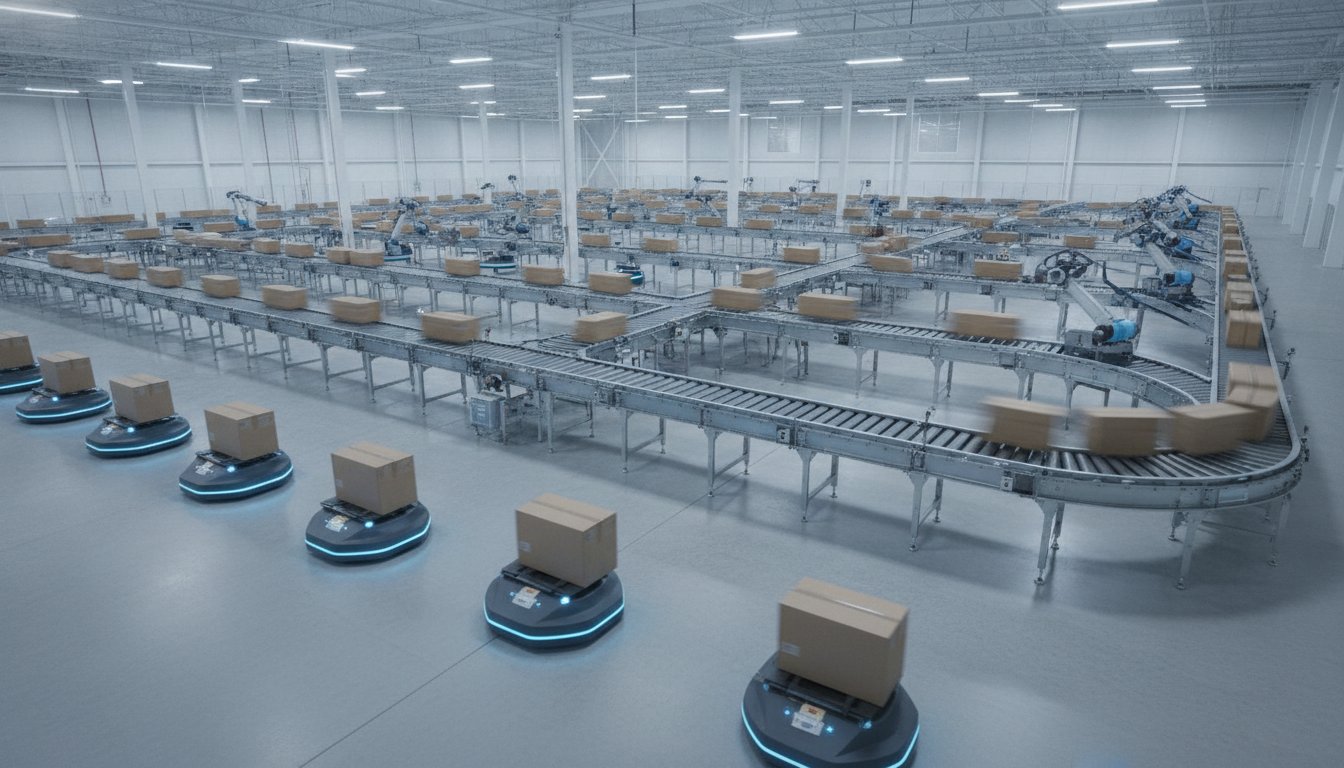
If your facility's footprint isn't actively generating ROI, the cause is likely a floor plan built for yesterday's volume rather than tomorrow's complexity. In a global market valued at 11.60 billion dollars in 2026, the difference between a market leader and a struggling operation often comes down to the logic of their material flow. You've likely felt the frustration of operational bottlenecks or the pressure of rising labor costs caused by an inflexible, outdated flow. It's a common challenge when rapid growth outpaces your existing infrastructure, leaving your team to manage chaos instead of throughput.
This strategic guide provides the engineering framework you need to master conveyor system layout design, ensuring your facility achieves a high-throughput, scalable flow that eliminates waste. By applying seasoned process engineering principles, you can transform your floor into a seamless, automated environment that significantly reduces operational overhead. We'll examine how to leverage digital twin simulations and adhere to the latest ASME B20.1-2024 safety standards to create a future-proofed material handling system. From optimizing belt conveyor segments to integrating robotics, this is your roadmap to achieving modern excellence and long-term stability.
Key Takeaways
- Learn why strategic conveyor system layout design serves as the nervous system of your facility, ensuring every square foot contributes to your bottom line.
- Discover how to apply process engineering and the Theory of Constraints to identify and eliminate throughput bottlenecks before they impact your operations.
- Explore the critical balance between versatile belt conveyors and modular systems to build a material handling infrastructure that scales with your business.
- Understand how to strategically integrate warehouse robotics and automated guided vehicles to optimize irregular paths and high-volume picking zones.
- Gain insight into the essential role of a system integrator in bridging the gap between conceptual design and a high-performance, physical reality.
Fundamentals of Conveyor System Layout Design
Effective conveyor system layout design is the strategic arrangement of material handling components to optimize both physical space and the logical flow of goods. It isn't merely a matter of placing equipment on a floor; it's the high-level engineering of a facility's operational logic. In a modern industrial environment, the layout serves as the nervous system, connecting disparate processes into a single, cohesive unit. When this system is designed correctly, it ensures that materials move with precision and speed. If the layout is flawed, the entire facility suffers from "arrhythmia," leading to costly delays and wasted energy. Understanding conveyor system fundamentals is the first step toward building a facility that functions as a high-performance asset.
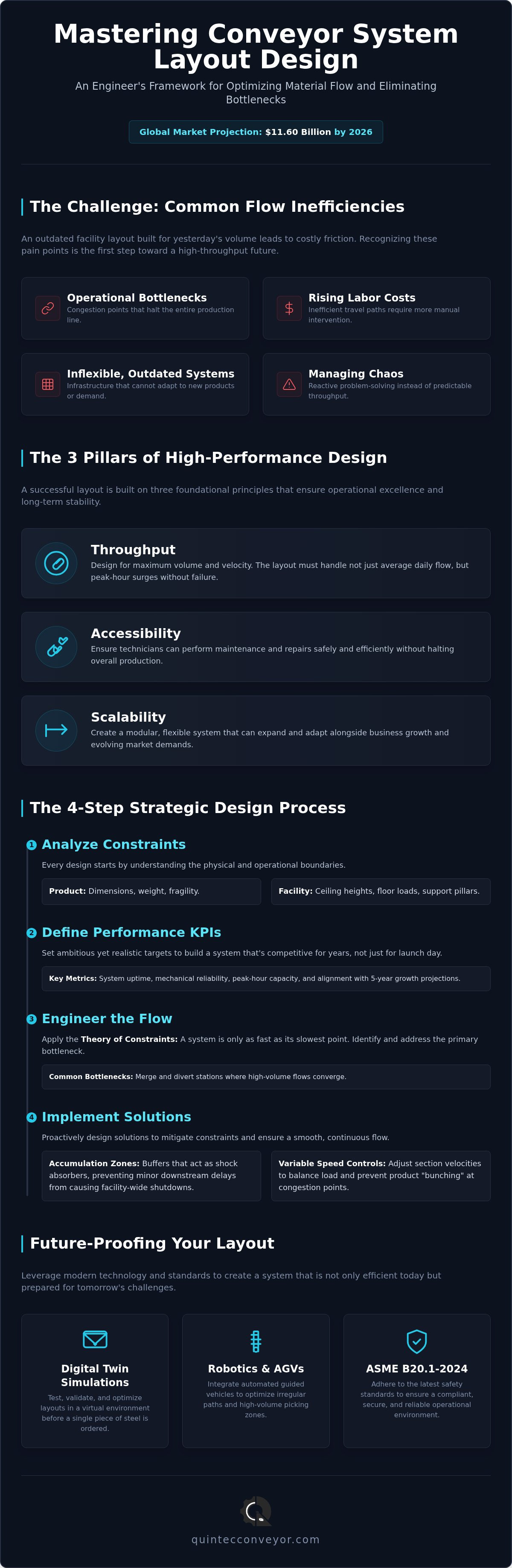
Successful designs rest on three critical pillars: Throughput, Accessibility, and Scalability. Throughput measures the volume and velocity of items moving through the system. Accessibility ensures that technicians can perform maintenance without halting production, while scalability allows the system to expand alongside business growth. Engaging with professional warehouse design services during the initial planning phase is vital. This early-stage engineering identifies potential friction points before they become physical obstacles, preventing the need for expensive retrofits in the future.
Analyzing Product and Facility Constraints
Designers must first evaluate the physical characteristics of the products being moved. Dimensions, weight distribution, and fragility are primary drivers of equipment selection and pathing. For example, a system designed for lightweight e-commerce parcels requires a different logic than one handling heavy industrial pallets. Beyond the product, the facility itself presents constraints. Ceiling heights, floor load capacities, and the location of existing support pillars dictate where tracks can run. Mapping the physical journey of a product from receiving to shipping allows engineers to identify the most efficient path, minimizing travel time and reducing wear on the machinery.
Setting Throughput and Performance KPIs
A layout that works for average daily throughput may fail during peak-hour surges. It's essential to establish clear Key Performance Indicators (KPIs) that reflect these fluctuations. Engineers look at system uptime and mechanical reliability as core metrics. If your layout goals don't align with your five-year growth projections, you're building a system that's already obsolete. By setting ambitious yet realistic performance targets, you ensure the facility remains competitive. This methodical approach transforms a simple equipment purchase into a strategic investment in operational longevity.
Engineering the Flow: Analyzing Throughput and Bottlenecks
Effective conveyor system layout design requires moving beyond simple equipment placement to embrace rigorous process engineering. This discipline treats the facility as a dynamic circuit where every turn, merge, and stop affects the total output. At the heart of this approach is the Theory of Constraints. This principle dictates that the overall system capacity is only as high as its most restricted point. By identifying these constraints during the design phase, engineers can implement accumulation zones. These buffers act as essential shock absorbers, allowing upstream processes to continue even if a downstream station faces a temporary stoppage. This prevents a minor hiccup from cascading into a facility-wide shutdown.
Managing complex product mixes also requires sophisticated sortation logic. Without precise control over how items are diverted and merged, the system quickly descends into congestion. Utilizing custom-engineered solutions ensures that your facility maintains a steady, predictable rhythm even during peak volume surges. If you're looking to refine your current flow, our team at Quintec can provide a detailed process audit to identify hidden inefficiencies in your current setup.
Identifying and Mitigating Bottlenecks
Bottlenecks often hide at merge and divert stations where high-volume flows converge. We use detailed flow analysis to pinpoint these congestion points before they disrupt live operations. One effective strategy involves implementing variable speed controls. By adjusting the velocity of different sections, you can balance the load and prevent "bunching" at critical junctions. Additionally, designing redundant paths provides a safety net for your operations. If a primary line requires maintenance, these secondary routes ensure that your facility's throughput remains consistent, preventing total system downtime and protecting your bottom line.
Optimizing Travel Distance and Cycle Times
Optimizing cycle times requires a meticulous reduction of total travel distance. Every foot of unnecessary movement increases energy consumption and mechanical wear on belts and rollers. When planning for automation and future expansion, we also calculate the specific impact of incline and decline sections. These elevations often add a 30% to 50% cost premium over flat sections and can slow down the overall cycle time if not properly powered. To maximize efficiency, we leverage vertical space. Utilizing overhead systems or mezzanine-level conveyors increases transport density without expanding the facility footprint. This approach ensures that your square footage is utilized to its absolute maximum potential.
Equipment Selection: Integrating Belt Conveyors and Modular Systems
Selecting the right hardware is the bridge between theoretical flow and physical throughput. It's the moment where engineering logic meets mechanical reality. The Conveyor Equipment Manufacturers Association (CEMA) provides the rigorous engineering standards that guide this selection process, ensuring every component meets specific safety and performance benchmarks. Belt conveyors remain the foundational workhorse for most facilities due to their reliability and ability to handle diverse product types. However, for operations facing rapid shifts in demand, modular conveyor systems offer a level of agility that fixed systems can't match. This choice between fixed and modular equipment is a defining factor in your long-term operational success.
For heavy-duty applications, such as moving loaded pallets weighing thousands of pounds, CDLR conveyors are essential. These chain-driven live roller systems provide the high torque necessary for consistent movement under extreme loads. In contrast, flexible conveyor systems are ideal for temporary workflows, such as seasonal trailer loading or dynamic cross-docking operations. Successfully integrating these varied types into a single conveyor system layout design requires a deep understanding of how each component interacts with the overall facility logic. It's about finding the right tool for the specific task at hand while keeping the entire system synchronized.
The Role of Belt Conveyors in Modern Layouts
Engineers must carefully select belt materials based on the specific friction and durability needs of the product being moved. High-grip or cleated belts are often necessary for incline sections to prevent product slippage and ensure consistent spacing. In tight pick modules, low-profile belt conveyors allow for maximum density without sacrificing accessibility for human workers or robotic arms. This precision ensures that your conveyor system layout design remains efficient even in space-constrained environments. By matching the belt texture to the product's surface, you reduce the risk of jams and mechanical wear.
Designing for Scalability with Modular Components
Modular sections provide a plug-and-play architecture that simplifies future expansion. Because these frames are pre-engineered, they drastically reduce installation downtime when you need to add a new line or reconfigure an existing one. Standardizing these components across your facility also streamlines maintenance and reduces the complexity of your spare parts inventory. This approach allows your facility to evolve without the need for a total system overhaul. It's a strategic way to future-proof your investment, ensuring that your material handling infrastructure can grow as quickly as your market demands.
Advanced Layout Integration: Robotics and Automated Storage
Modern industrial facilities no longer treat robotics as an optional add-on; it's a core structural element of high-performance logic. Strategic conveyor system layout design must now account for the physical footprint and power requirements of warehouse robotics integration from the earliest planning stages. For facilities with irregular paths or low-volume throughput, automated guided vehicle systems provide a flexible alternative to fixed conveyor lines, allowing for rapid floor-plan reconfigurations without permanent infrastructure changes. The interface between conveyors and Automated Storage and Retrieval Systems (ASRS) demands sub-millimeter alignment to ensure seamless handoffs during high-speed retrieval cycles. Collaborative robots require specific layout safety clearances to ensure they can operate alongside human staff without risk of collision or entrapment.
Robotic Pick and Place Integration
Achieving maximum ROI from robotic arms requires extreme precision in the conveyor's in-feed sections. If the product orientation isn't consistent, vision systems will struggle to identify SKUs, leading to increased error rates and system downtime. Engineers must calculate precise cycle time synchronization between the belt's velocity and the robot's pick rate. This ensures the arm isn't waiting for the next item, nor is the belt overwhelming the robot's capacity. Advanced vision systems now allow robots to identify and sort diverse SKUs on the fly, but the conveyor must provide a stable, vibration-free platform for cameras to function at peak accuracy.
Automated Sortation and Divert Logic
The choice of sortation hardware depends heavily on your specific throughput tiers and product fragility. While high-speed shoe sorters are ideal for high-volume parcel environments, pop-up wheel diverts offer a versatile solution for varied product sizes. Incorporating scanning tunnels allows the system to capture data in real-time, making split-second routing decisions based on package weight, dimensions, or final destination. We always design "re-circulation" loops into the layout to manage no-reads or full-lane conditions. This prevents a single blocked lane from causing a system-wide bottleneck and keeps the facility moving at a steady rhythm. Our engineering team can help you design a system that bridges the gap between hardware and software; start your automation consultation today.
Executing the Design: The Role of Expert System Integration
The final phase of any project is where theoretical efficiency meets the physical reality of the facility floor. A high-performance conveyor system layout design is only as effective as the team that installs and commissions it. This transition from paper to power requires a strategic partner capable of managing multifaceted engineering requirements. This is why engaging a seasoned conveyor system integrator is essential. At Quintec, we leverage over 100 years of collective industry experience to ensure that complex logistical challenges are solved with precision. We act as your strategic guide, bridging the gap between high-level process engineering and a fully operational, integrated environment.
Professional engineering oversight during the installation phase prevents the common pitfalls that lead to operational delays. We don't simply bolt equipment to the floor; we deliver a synchronized solution where every component is tuned for maximum reliability. This execution involves rigorous testing and commissioning protocols, including static alignment checks and dynamic load testing. We verify every software handshake and sensor trigger before the system goes live. This methodical approach guarantees that your facility reaches its intended performance KPIs from day one, providing a sense of security that your investment is in capable hands.
From CAD Design to Physical Installation
We utilize advanced 3D modeling and simulation tools to validate the material flow before a single component is manufactured. This virtual validation allows our mechanical, electrical, and software teams to coordinate their efforts, ensuring a seamless system startup. Managing large-scale projects requires national installation capabilities that don't disrupt your ongoing operations. Our structured progression ensures that the transition from a CAD drawing to a physical layout is smooth and purposeful, mirroring the organized nature of industrial planning. We prioritize clarity and logical grouping of ideas to keep the project on schedule and within scope.
Post-Installation Maintenance and Optimization
A system's ROI is protected long after the initial installation through a structured preventative maintenance schedule. We use real-time data analytics to identify post-launch optimization opportunities, making fine adjustments to belt speeds or divert timings as your operational volume evolves. Training your facility staff is a critical final step in our process. We ensure your team understands the emergency protocols and operational nuances of the new equipment. This long-term partnership approach values stability and modern excellence, turning your material handling system into a permanent competitive advantage that's built for the future.
Engineering Your Facility for Long-Term Operational Excellence
A facility is only as efficient as its underlying flow. By prioritizing process engineering and the three pillars of throughput, accessibility, and scalability, you ensure your floor plan remains a high-performance asset. This strategic approach to conveyor system layout design transforms a collection of equipment into a cohesive, automated ecosystem capable of handling 2026's complex logistics demands. When your layout logic is sound, every square foot of your facility works toward a measurable return on investment.
Transitioning from a CAD drawing to a live, high-speed operation requires more than just hardware. It demands a partner who understands the nuances of custom systems integration and national deployment. With over 100 years of collective industry experience, Quintec specializes in custom engineering for complex industrial workflows. We provide the steady hand needed to navigate large-scale automation projects from initial design through to long-term maintenance. It's time to move beyond passive equipment vendors and invest in a proactive, integrated solution.
Partner with Quintec for Custom Conveyor Integration to future-proof your facility today. Your operational success is our priority. Let's build a more efficient future together.
Frequently Asked Questions
What are the most important factors in conveyor system layout design?
The primary factors in conveyor system layout design include throughput requirements, facility constraints, and long-term scalability. You must evaluate the physical characteristics of your product, such as weight and fragility, alongside environmental factors like ceiling height and floor load capacity. Effective layouts prioritize a logical flow that minimizes travel distance while ensuring maintenance teams have easy access to critical drive components and sensors.
How do I determine the right conveyor width and speed for my layout?
Width is determined by the largest product dimension plus a standard clearance margin to prevent jams. Speed is a calculation of your required units per minute during peak volume periods. It's important to remember that incline sections often require higher torque and different speed settings to maintain consistent spacing. Consulting with a process engineer ensures these variables are balanced to prevent product bunching or system-wide gaps.
Can I integrate robotics into an existing conveyor layout?
Integrating robotics into existing layouts is entirely possible and often necessary to improve picking accuracy. This process usually involves adding precision in-feed sections to ensure products are oriented correctly for robotic sensors. While traditional industrial robots might require safety cages, modern collaborative robots can often be integrated with smaller footprints. This allows you to automate high-volume tasks without a complete overhaul of your current material handling infrastructure.
What is the difference between a modular and a custom-engineered conveyor system?
Modular systems utilize pre-engineered sections that allow for "plug-and-play" installation and rapid reconfiguration. They're ideal for businesses expecting frequent changes in their logistics environment. Custom-engineered systems are built from the ground up to solve unique challenges, such as extreme weight loads or highly specialized process flows. Quintec provides both options, using over 100 years of collective experience to determine which architecture best supports your long-term operational goals.
How much space should I leave for maintenance access in my conveyor layout?
You should ideally leave a minimum of 30 to 36 inches of clearance around drive motors, pulleys, and control panels. Proper spacing ensures that your maintenance team can perform routine inspections and repairs safely and efficiently. If a layout is too cramped, simple maintenance tasks become time-consuming projects that require significant downtime. Designing for accessibility from the start protects your system's ROI and extends the life of your mechanical components.
How does sortation logic affect the overall layout design?
Sortation logic is the brain of your layout, determining where items are scanned, diverted, and merged. It requires the strategic placement of scan tunnels and the inclusion of re-circulation loops to handle "no-read" errors or full-lane conditions. Without these overflow paths, a single error at a divert point can cause a backup that impacts the entire facility. A well-designed sortation path ensures that high-speed throughput remains steady and predictable.
What are the benefits of using vertical space in a conveyor system layout?
Leveraging vertical space allows you to increase your facility's transport density without the expense of a building expansion. By moving material flow to overhead conveyors or mezzanine levels, you free up valuable floor space for racking or human-centric work zones. This approach is particularly effective in high-density warehouses where every square foot must be optimized. It turns underutilized ceiling height into a functional part of your material handling strategy.
How often should a conveyor layout be re-evaluated for efficiency?
We recommend a comprehensive efficiency audit every 12 to 24 months. As your SKU mix changes and order volumes grow, the original logic of your layout may no longer be the most efficient path. Regular re-evaluations help identify new bottlenecks or underutilized sections of your system. Staying proactive with these audits ensures your facility continues to operate at peak performance even as your business requirements evolve over time.