Loading Dock Equipment Integration: A Guide to Connected, Efficient Operations
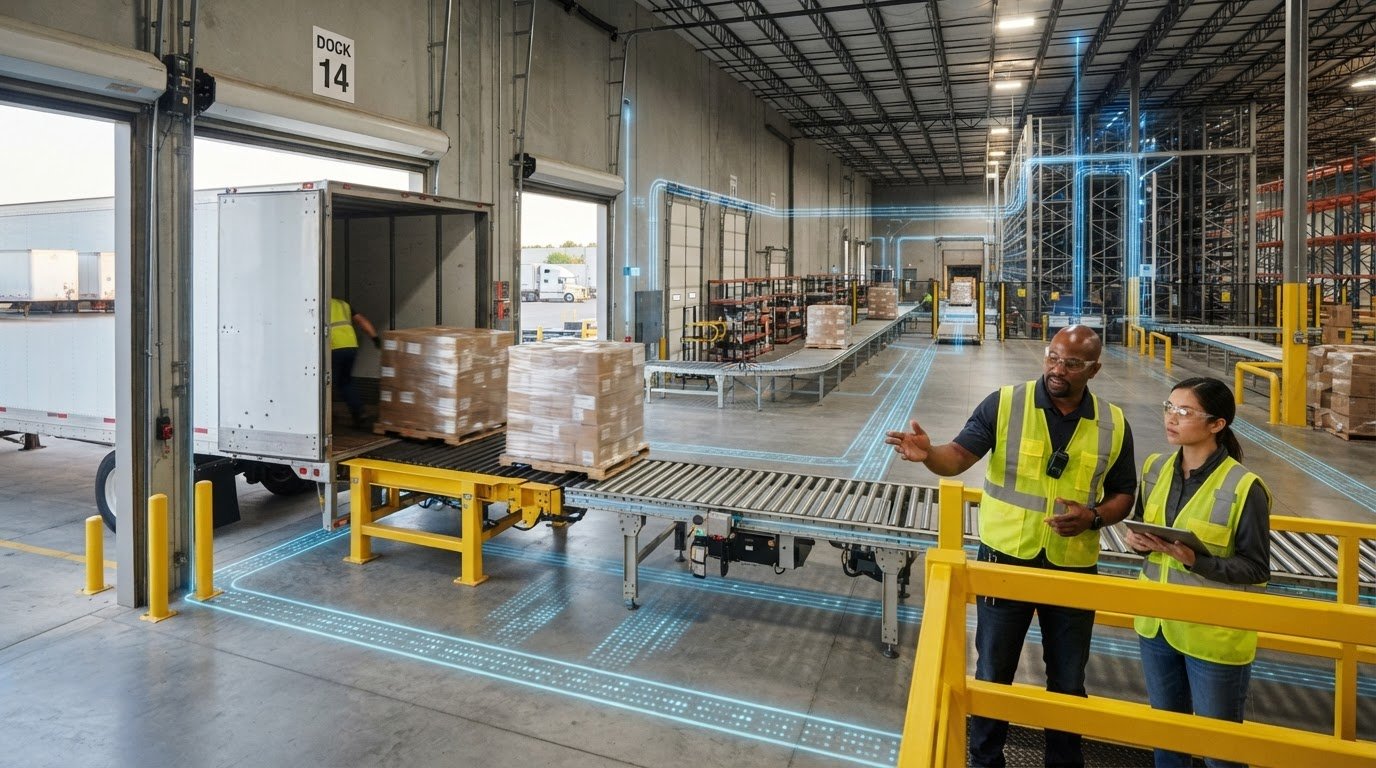
What if dock congestion isn’t caused by one piece of equipment, but by the handoffs between the dock and the rest of the facility? Loading dock equipment integration connects equipment, controls, and material-handling workflows so goods can move consistently from arriving vehicles into warehouse operations. When those interfaces aren’t coordinated, disconnected processes can create delays and make it harder to maintain a steady flow.
It’s understandable to focus first on equipment that meets a dock’s immediate needs. But reliable operations also depend on how that equipment fits with vehicle flow, conveyors, automation, and facility processes. A coordinated plan helps teams address those connections instead of treating each piece as a separate decision.
This guide explains which interfaces may need coordination, compares integration approaches, and outlines how to shape a project scope around your operational requirements. You’ll also see how process engineering and coordinated conveyor design can support material-flow handoffs near the dock and help create more consistent movement through the facility.
Key Takeaways
- Loading dock equipment integration works best when vehicle flow, dock activity, and downstream material handling are planned as connected parts of one operation.
- Map the handoff from trailer unloading through staging and into conveyor or storage workflows to identify where sequencing and responsibilities need clarification.
- Compare dock-only, dock-to-conveyor, and facility-wide integration based on the interfaces your operation needs to coordinate.
- Build a practical project scope by documenting dock activity, vehicle patterns, goods handled, existing equipment, and process constraints.
- Process engineering and coordinated conveyor design can help align dock handoffs with broader warehouse automation workflows.
Loading Dock Equipment Integration: Why the Dock Is a Material-Flow Interface
Loading dock equipment integration coordinates dock equipment and material-flow processes where vehicles, buildings, and warehouse operations meet. The dock is not an isolated work area. Trailer arrival influences when a bay is ready, dock access affects how goods can be transferred, and unloading pace shapes the flow into staging, storage, or production. A delay or unclear handoff at one point can affect the steps that follow.
In practical terms, loading dock equipment integration is the planned coordination of dock equipment, operating sequences, and material transfers so goods can move reliably between a vehicle and the facility’s next workflow. A collection of equipment items alone does not make an operation integrated. Integration means considering how each component fits the work, what must happen before the next step, and how people know when responsibility or material has passed from one process to another.
A loading dock can include components with different functions, but the right combination depends on the facility. Planning around interfaces helps teams consider the full movement of goods instead of selecting equipment in isolation.
What belongs in a loading dock integration scope?
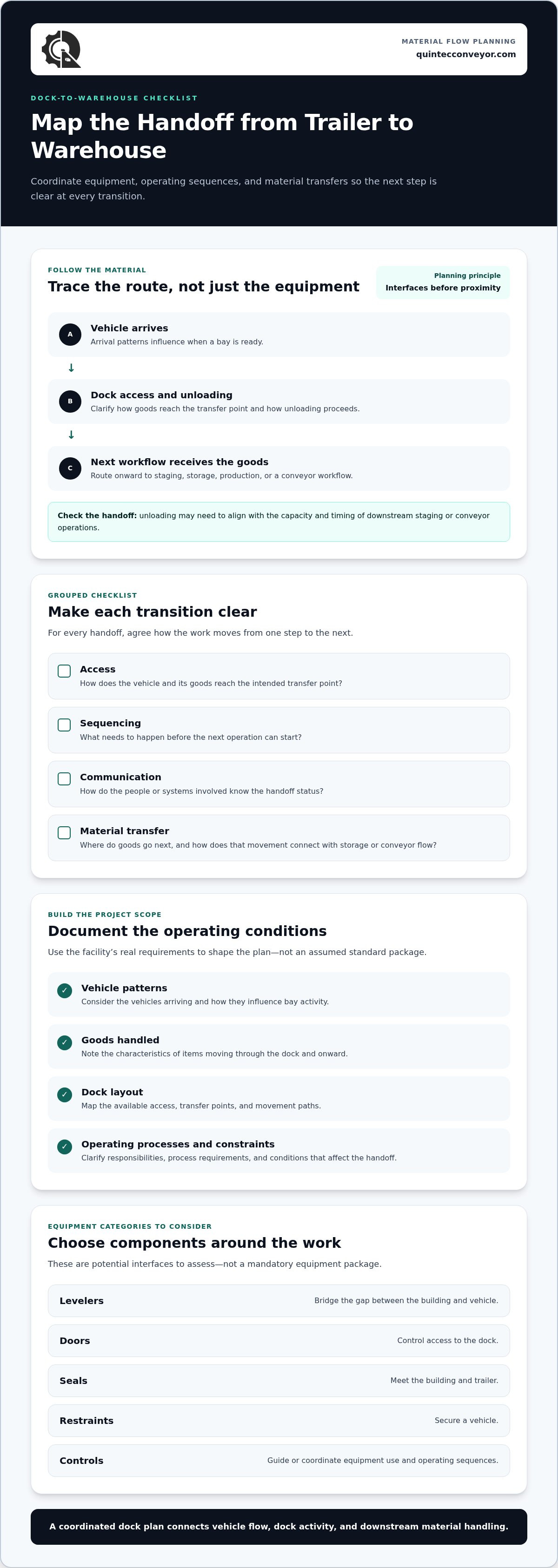
Potential interfaces include levelers that bridge the gap between building and vehicle, doors that control access, seals that meet the building and trailer, restraints that secure a vehicle, and controls that guide or coordinate equipment use. These are categories to consider, not a mandatory package. Requirements depend on vehicle patterns, goods handled, dock layout, and operating processes.
Define the scope by asking what each handoff requires: access to the bay, a suitable transfer point, clear sequencing, and communication between the people or systems involved. This keeps the plan tied to actual operating needs rather than assuming every dock needs the same configuration.
Where dock operations connect with warehouse material flow
Trace the movement from vehicle to dock, then onward to a staging area, storage location, or conveyor. At each transition, clarify how goods are accessed, when the next step can begin, who is responsible, and how material is transferred. For example, unloading may need to align with the capacity and timing of a downstream staging or conveyor workflow.
These connections matter when a facility is planning conveyors or automation beyond the dock. A clear view of the full route helps define transfer points and avoid designing a dock process that conflicts with warehouse movement. The industrial conveyor systems guide explores how conveyor choices can fit into wider facility workflows.
- Access: How does a vehicle and its goods reach the intended transfer point?
- Sequencing: What needs to happen before the next operation starts?
- Communication: How do teams know the status of a handoff?
- Material transfer: Where do goods go next, and how does that movement connect to storage or conveyor flow?
Mapping these interfaces gives project teams a practical starting point for coordinating dock activity with the rest of the facility.
How Loading Dock Equipment Connects with Conveyors, Controls, and Workflows
Once goods leave a trailer, the next step should be clear: move them to staging, feed them onto a conveyor, or route them toward storage. Planning that handoff requires more than placing equipment near the dock. Interface planning matters more than equipment proximity because nearby systems can still interrupt flow if transfer points, operating sequences, or responsibilities don’t align.
Loading dock equipment integration involves several kinds of connections. Physical interfaces define where goods pass between equipment or work areas. Information interfaces communicate what is arriving, where it should go, and whether a downstream process is ready. Control and workflow interfaces establish how operations proceed and who responds when a planned handoff changes. Considering each connection during planning makes the full operating sequence easier to understand.
Aligning dock equipment with conveyor transfer points
Map the path from the trailer’s unloading area to the point where a conveyor, staging zone, or storage process receives goods. Note the transfer direction, the characteristics of the items handled, and the operating patterns the facility needs to support. These inputs help shape conveyor placement and the transition between dock work and the next process. Warehouse design and engineering flow are closely connected because decisions at the dock can affect movement deeper into the facility.
For example, goods may need to be staged before entering a conveyor workflow rather than transferred directly from unloading. That distinction affects space planning, movement paths, and the responsibilities assigned to each step. Process engineering can help teams examine these conditions together and coordinate custom conveyor design with the intended material flow.
Coordinating controls and operational handoffs
Controls support the physical process by communicating status and helping teams follow an agreed sequence. Planning should identify which steps require coordination between dock personnel and material-handling operations, who owns each control interface, and what response is expected if a handoff cannot proceed as planned. These decisions clarify accountability without assuming that every facility uses the same control setup.
Software or automation connections should also be defined around the project’s needs. A workflow may require information to pass between systems, or it may rely on direct communication between teams. The Loading Dock Equipment Manufacturers (LODEM) initiative from MHI provides industry context on loading dock equipment and connected operations. Its relevance underscores why interface requirements belong alongside equipment selection.
A practical planning review documents each handoff in sequence: what signals that a step is ready, which person or system takes responsibility, and where goods move next. This gives engineering and operations teams a shared basis for design coordination. For facilities aligning dock activity with conveyor flow, custom conveyor and material-handling system design can support a coordinated view of the workflow.
Comparing Loading Dock Equipment Integration Approaches
The right integration scope depends on how goods move through a facility, which interfaces need coordination, and what the project is intended to address. A contained dock project may focus on equipment and workflows in a limited area. Other operations need the dock connected to conveyors, staging, storage, or automation. A broader scope isn’t automatically better, and a smaller project isn’t automatically easier. Choose the approach that fits the workflow, not a universal equipment ranking.
Use this comparison to identify where planning should focus:
| Approach | Scope | Interfaces addressed | Operational fit | Planning considerations |
|---|---|---|---|---|
| Dock-only coordination | Equipment and processes within a defined dock area | Dock equipment, local controls, and staff handoffs | A contained change where downstream workflows remain largely separate | Review existing processes and connections beyond the project boundary |
| Dock-to-conveyor integration | Dock handoff through conveyor or nearby staging | Transfer points, conveyor flow, staging, and related operating steps | Goods move from unloading into a connected material-handling process | Coordinate layout, transfer direction, product handling, and sequence |
| Facility-wide integration | Dock operations within a broader warehouse or facility workflow | Dock, conveyors, storage, automation, and relevant information or control interfaces | Multiple processes depend on aligned movement and handoffs | Map dependencies, control ownership, and project boundaries across teams |
The table describes planning scopes, not fixed equipment packages. Each project can be tailored to its interfaces and operating needs.
When is dock-only coordination enough?
A dock-only approach can suit a contained project focused on coordinating activity within a defined bay or dock area. It may be appropriate when the primary change is local and the existing route into the facility is intended to remain unchanged. Still, review the current workflow and its connections to downstream operations. A smaller scope isn’t necessarily simpler if boundaries, responsibilities, or handoffs remain undefined.
When should integration extend into material handling?
Extend planning beyond the dock when unloading affects conveyor feed, staging capacity, storage routes, or automated processes. Considering those dependencies early can reveal layout or sequencing conflicts before equipment decisions are fixed. The conveyor system integrator guide offers further context on aligning conveyor planning with facility requirements.
For a broader scope, define which processes are included and how each handoff will be coordinated. Process engineering can connect operational requirements with equipment and workflow decisions, while coordinated conveyor design, engineering, and installation can address material movement as part of the wider facility plan. The goal is to cover the interfaces the operation relies on without adding complexity that doesn’t serve the workflow.
Planning a Loading Dock Equipment Integration Project Step by Step
A disciplined project plan turns operational needs into a clear scope before design and installation decisions are set. Loading dock equipment integration should account for existing workflows, facility constraints, safety considerations, and the continuity the operation needs during implementation. Use this sequence to move from discovery to review.
- Document current activity. Record arrival patterns, loading and unloading tasks, goods handled, current handoff procedures, and points where work pauses or changes ownership. Note relevant variations in vehicle types and operating patterns so the plan reflects real conditions, not an assumed average day.
- Map equipment and constraints. Identify existing doors, levelers, controls, conveyors, staging areas, and storage routes. Include space limitations, access routes, and other facility constraints that could affect equipment placement or material flow.
- Set goals and review requirements. Define what the project needs to address, then establish baseline measures suited to those goals, such as handoff delays or the time goods spend waiting between processes. Include applicable safety requirements in the design inputs and verify current standards for the project with the appropriate qualified parties.
- Coordinate the design and installation plan. Document physical and control interfaces, work sequence, responsibilities, and acceptance criteria. If operational continuity is a priority, assess whether work can be phased and plan how affected activities will be managed at each stage.
- Review operations after installation. Observe actual handoffs, compare them with the intended workflow, and record issues that need resolution. A defined review process helps teams assess whether the integrated arrangement supports the project’s operational goals.
Build the project requirements around actual dock activity
Make the requirements specific enough to guide design. For example, a map should show where goods are unloaded, where they wait, and how they reach a conveyor or storage area. Record how the current process works, not only which equipment is present. Process engineering can connect those observations to operational goals and establish useful baseline measures before changes are proposed.
Coordinate design, installation, and operational readiness
Before work begins, clarify who owns each interface, how staff will be informed, and what safe work practices and temporary operating adjustments are required. Set acceptance criteria that reflect the agreed scope, then use post-installation observation to assess the sequence and material handoffs. For projects involving conveyors or material-handling systems, plan coordinated conveyor design and installation around facility workflows.
How Quintec Supports Loading Dock Equipment Integration
Loading dock equipment integration is most effective when dock-side requirements are considered alongside the facility’s wider material-handling plan. Quintec Conveyors brings custom conveyor design, engineering, and installation into that discussion, connecting material-flow needs at the dock with downstream processes. The project can be shaped around how the facility operates rather than assuming one standard arrangement will suit every site.
Quintec’s team has over 100 years of collective industry experience across material handling and related disciplines. That perspective supports a coordinated approach: understand the workflow, define how goods need to move, then develop equipment and process plans that fit the requirements. For projects that extend beyond conveyors, warehouse automation, robotics, infrastructure, and process engineering can also be part of the broader plan where relevant.
Connecting dock requirements with conveyor and automation planning
Custom conveyor system design starts with material-flow requirements. That includes how goods move from a dock-side handoff into staging, a conveyor route, or another facility process. Considering these connections together helps clarify transfer points and how downstream movement relates to unloading activity.
Where the operation calls for it, planning can also consider how conveyors relate to robotics, warehouse automation, and other material-handling processes. Process engineering helps align those choices with operating requirements, facility constraints, and the responsibilities involved in each handoff. Quintec coordinates design, engineering, and installation for custom conveyor and material-handling systems, keeping the project focused on the interfaces that matter to the workflow.
Each facility has its own layout, goods, and operating patterns. Project-specific engineering is central to defining an appropriate scope. Rather than assume a particular dock configuration or promise a predetermined result, planning can focus on how the proposed material-handling system fits the facility’s needs and connects with existing processes.
Define the next step for an integrated project
A useful starting point is a clear outline of the operation: how materials move through the facility, where the main handoffs occur, what challenges teams encounter, and which equipment interfaces are already in place. Sharing this context gives the engineering discussion a practical foundation and helps identify where conveyor design, automation, or process engineering may support the intended workflow.
- Facility workflow: Describe the path goods take from receiving to staging, storage, or the next operation.
- Operating challenges: Note recurring delays, unclear responsibilities, or constraints affecting material movement.
- Current interfaces: Identify relevant conveyors, automation, and existing processes that a project must account for.
With those requirements in view, Quintec can shape a tailored design and engineering discussion around the project’s scope and material flow. Discuss your material handling integration project with Quintec to explore how coordinated design and installation can support your facility workflows.
Turn Your Integration Plan Into a Clear Next Step
Turn operational observations into a shared project direction. Use the requirements you’ve identified to clarify what the facility needs now, which interfaces should be addressed, and how future changes could fit without losing sight of current workflows. A practical scope gives operations and engineering teams a common basis for decisions and keeps design focused on material-flow priorities.
Loading dock equipment integration can also be a starting point for broader facility improvements. As workflows evolve, a well-considered plan helps teams assess where conveyors, automation, or process changes may support the next stage of operations. Start with a focused discussion about your facility, the handoffs that matter, and the outcomes you’re working toward.
Start a project discussion with Quintec to move your material-handling plans forward with a clear, operationally grounded approach.
Frequently Asked Questions
What equipment is typically included in a loading dock integration project?
Equipment may include dock levelers, doors, seals, vehicle restraints, controls, and material-handling systems such as conveyors. The project scope depends on the facility’s existing setup and the handoffs it needs to coordinate. For instance, a project focused on transferring goods to an existing conveyor may involve different interfaces than one addressing activity only within a dock area. Define the operational need first, then determine which equipment categories are relevant.
Can loading dock equipment be integrated with an existing conveyor system?
Yes. Loading dock equipment integration can be planned around an existing conveyor system by examining how goods are transferred, whether the conveyor’s receiving point suits the workflow, and how the systems’ operating steps relate. Review the physical constraints, current equipment condition, and any process changes required. The project scope should account for conveyor layout and operational requirements rather than assume the existing line can accept a new handoff without adjustment.
How does loading dock equipment integration support safety?
Integration can support safer work by making operating sequences, handoffs, and responsibilities clearer. For example, planning can identify where workers and moving materials share space, where communication is needed before a task proceeds, and how staff respond to interruptions. Safety depends on the equipment, work practices, and facility conditions together, so include a project-specific hazard review, staff procedures, and applicable current requirements in the design process. Integration alone doesn’t guarantee safe operation.
What information should be gathered before planning a loading dock integration project?
Gather records that show how the dock operates during typical and peak activity: vehicle arrival patterns, goods and packaging handled, loading tasks, current procedures, and known bottlenecks. Also document existing equipment, conveyor routes, staging locations, facility layout constraints, and relevant operating or maintenance records. Photos or simple workflow sketches can help teams discuss the same conditions. Note which outcomes matter most, such as reducing waiting between handoffs or improving consistency of material routing.
Can a loading dock integration project be completed in phases?
Yes, phasing may be considered when maintaining operational continuity is a priority. Divide the work into logical stages based on dependencies, affected areas, and the readiness of connected processes. Before each stage, define how work will be coordinated, what temporary operating arrangements are needed, and how staff will receive updates. A phased plan still needs an overall design direction so early decisions account for future interfaces rather than creating avoidable rework.
How can a facility evaluate whether dock integration is improving operations?
Compare agreed measures before and after implementation, using the same definitions and observation method. Useful indicators may include elapsed time from unloading to the next process, goods waiting at transfer points, repeated handling, interruptions, and missed handoffs. Review the results alongside staff observations, since a single metric may not explain why a process changed. Set a review period that reflects operating patterns and investigate unexpected results before drawing conclusions.
Does loading dock integration always require warehouse automation?
No. Integration can involve coordinating existing dock equipment, work procedures, and material movement without adding warehouse automation. Automation may be relevant if the facility’s requirements include connecting dock handoffs to automated processes, but it isn’t a default requirement. Start with the operating problem and the interfaces involved. A project may focus on clearer sequencing or a conveyor handoff, while a broader scope can consider robotics or other automation where they fit the workflow.