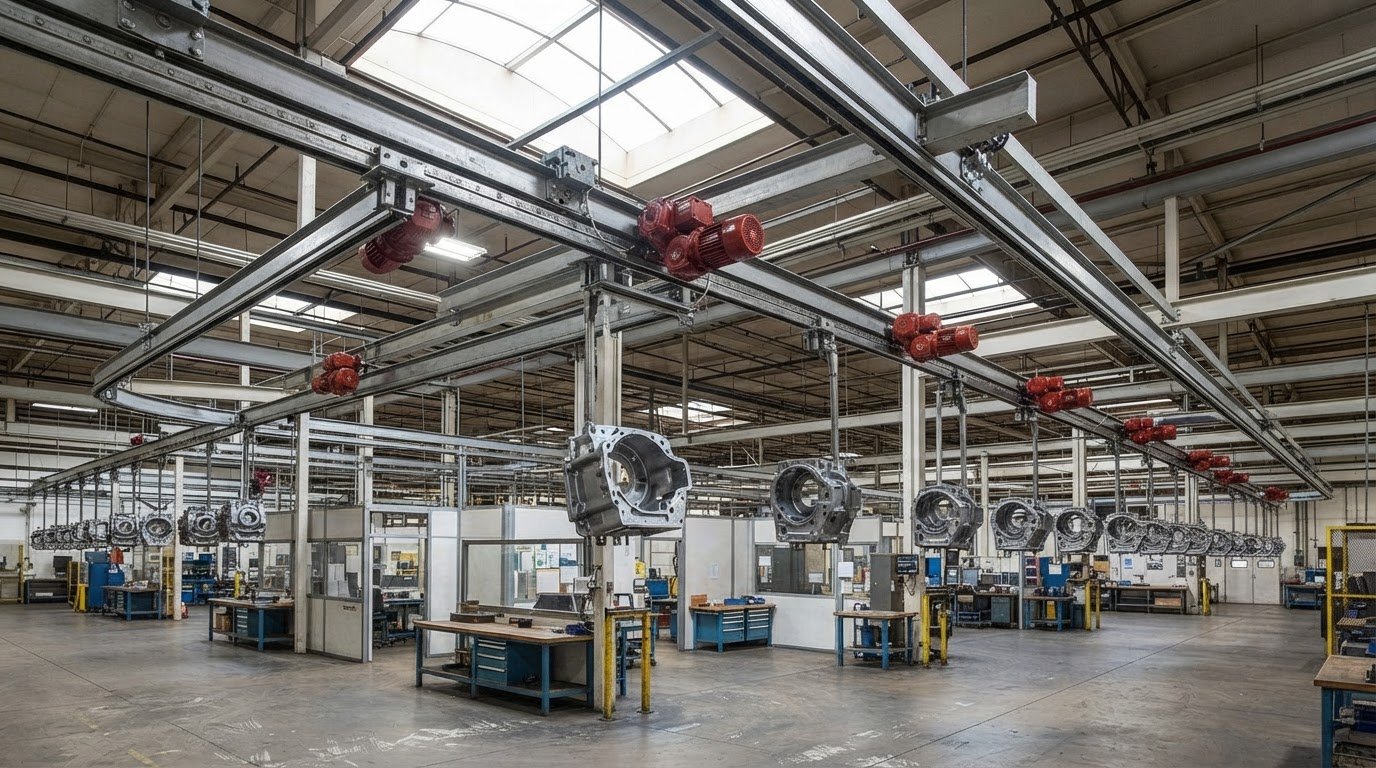
The right conveyor does more than move material: it fits the way your operation works. Assess a Quintec conveyor system against the materials you handle, your throughput needs, facility layout, and automation plans.
A conveyor should support reliable movement through your facility without creating new bottlenecks. To choose the right system, consider which capabilities your operation needs and how design, integration, and maintenance shape the decision.
This guide explains Quintec conveyor options and how to assess their fit for your material handling requirements. Learn which operational factors to weigh, what professional design and installation involve, and when a tailored conveyor solution makes sense. The aim is to help you evaluate a system against your workflow, not broad claims or assumptions.
Key Takeaways
- Assess conveyor suitability against your materials, workflow, throughput needs, and facility layout.
- Consider how system design and integration affect material movement and operational fit.
- Use the history of conveyor technology as context, while prioritizing the requirements of your current operation.
- Consider conveyor maintenance when an existing system needs ongoing support as part of your material handling operation.
Quintec conveyor
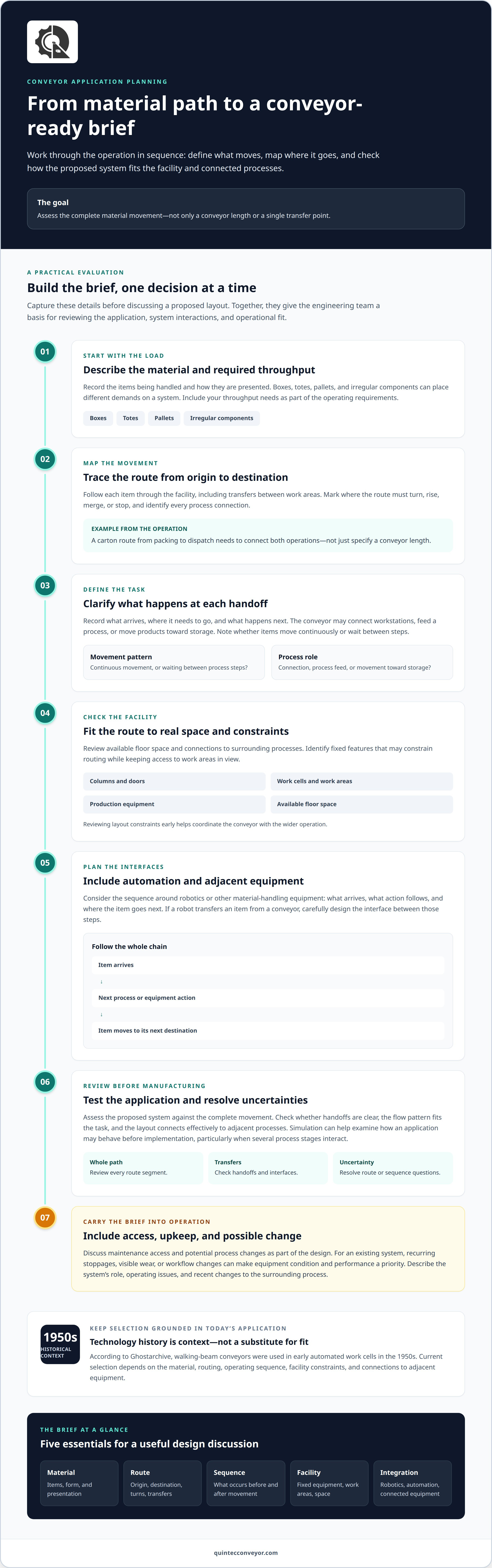
Start with the material and the route it must travel. Boxes, totes, pallets, and irregular components place different demands on a system. Map each movement from its starting point to its destination, including transfers between work areas. This shows where equipment must turn, rise, merge, or stop. For example, a line moving cartons from packing to dispatch needs a clear route through both operations, not just a conveyor length.
Next, define the task. Record what arrives, where it needs to go, and what happens at each handoff. A conveyor might connect workstations, feed a process, or move products toward storage. Each function shapes the layout and integration requirements. Note whether items move continuously or wait between steps. These details help engineers design a system around your facility and workflow, rather than treating the conveyor as a standalone machine.
Facility conditions matter as much as the items being carried. Columns, doors, work cells, and production equipment can constrain routing. A design must account for available floor space and connections to surrounding processes. In a warehouse, for example, a route may need to pass around fixed infrastructure while preserving access to work areas. Reviewing the layout early helps identify constraints and coordinate the conveyor with the wider operation.
Automation adds another layer. A conveyor may be part of a broader material handling process, with movement coordinated around robotics or other equipment. Consider the sequence: what arrives, what action follows, and where the item goes next. If a robot transfers an item from a conveyor, the interface between those steps needs careful design. Simulation can help examine how an application may behave before implementation, especially when several process stages interact.
Conveyor technology has a long industrial history. According to Ghostarchive, walking-beam conveyors were used in early automated work cells in the 1950s. That history provides context, but current selection depends on the application. A useful review focuses on present-day material, routing, operating sequence, and facility constraints. It should also consider how the conveyor connects with adjacent equipment, because a well-matched component can still create problems when its interfaces do not suit the process.
For a practical evaluation, organize the project information into a short operational brief:
- Material: Describe the items handled, including their form and how they are presented.
- Route: Identify the origin, destination, turns, transfers, and process connections.
- Sequence: Explain what occurs before and after each conveyor movement.
- Facility: Note fixed equipment, work areas, and spatial limits affecting the layout.
- Integration: Identify where robotics, automation, or other material-handling equipment connects.
This information makes design discussions more useful than a general request for conveyor equipment. It gives the engineering team a basis for reviewing application requirements, developing the layout, and considering system interactions. Manufacturing and simulation also help connect the proposed design to its intended operation. The right solution depends on how these elements work together in your facility.
Review the complete material path, not just the conveyor. A transfer point can affect flow, and a route change may affect several connected work areas. Include maintenance access and potential process changes in the design discussion. With the application, facility, and interfaces clearly defined, you can assess whether a proposed quintec conveyor system meets operational needs and supports an integrated material handling plan.
Base the review on the material, route, operating task, facility constraints, and interfaces already identified. Assess the proposed system against the complete movement, not just a single transfer. For each option, consider whether every handoff is clear, whether the flow pattern fits the task, and whether the layout connects effectively to adjacent processes. Resolve uncertainty about routing or sequence during the application review, before manufacturing decisions are made.
Quintec Conveyors provides quintec conveyor application, manufacturing, and simulation services. These capabilities support project development from requirements through design and simulation. Keep the review focused on the material, route, facility, and operating sequence, and use simulation to explore how process stages and interfaces may interact. Clear requirements give manufacturing a defined basis and keep attention on how the quintec conveyor connects with neighboring equipment and the wider operation.
Quintec Conveyors: Conveyor Maintenance
Quintec Conveyors provides conveyor maintenance for facilities managing existing material handling systems. Consider maintenance when recurring stoppages, visible wear, or workflow changes make equipment condition and performance a priority. It can also support a conveyor that is part of a wider operation involving automation or facility infrastructure, where connected processes rely on equipment working together.
Start by describing the system’s role, the issues affecting its operation, and recent changes to the surrounding process. This context helps focus the maintenance discussion on your facility’s needs. If you are planning a new system or a broader operational change, conveyor solutions and related automation may also be relevant.
For support with conveyor maintenance, contact Quintec Conveyors.
Plan the Next Stage of Material Flow
Use your conveyor evaluation to set a clear direction for your facility’s next operational change. Identify whether the priority is improving an existing process, connecting equipment, or planning for future automation. Consider a Quintec conveyor project as part of the wider material handling environment, where conveyor equipment, Robotics & Automation, and Infrastructure each contribute to the overall design. Start with the operational need, not the assumption that every facility requires the same system.
Bring your process goals and key layout considerations into a discussion with Quintec Conveyors. That creates a practical basis for exploring how its offerings may relate to your operation and what direction makes sense for the next stage. Whether you’re planning a system or considering a change to an existing setup, a focused conversation can help clarify the path ahead. Contact Quintec Conveyors to discuss your material handling needs and take the next step with confidence.

Article by
Jon Huang