Warehouse Robotics Integration: The 2026 Strategic Guide to Automated Flow
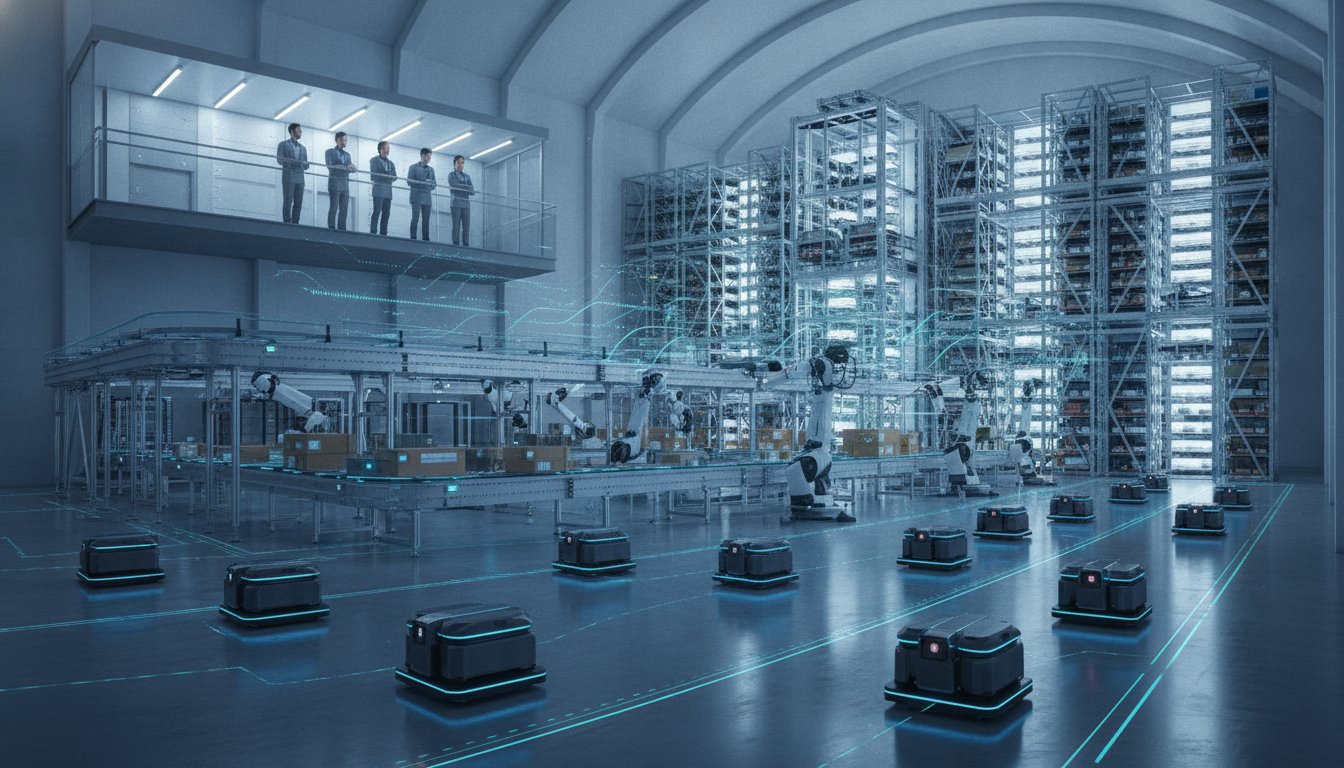
Fifty-six percent of supply chain leaders are increasing their automation investments in 2026, yet many discover that adding high-tech hardware to a disjointed facility only accelerates existing bottlenecks. You've likely experienced the friction of a fragmented technology stack where software, conveyors, and autonomous units fail to communicate. This lack of cohesion creates expensive downtime and limits your throughput. Successful warehouse robotics integration isn't about simply purchasing the latest autonomous mobile robots; it's about engineering a unified material handling logic where every component functions as a single, synchronized organism.
At Quintec Conveyors, we believe that strategic integration is the bridge between raw hardware and operational excellence. This guide provides a comprehensive roadmap to unify your robotics, conveyors, and software to achieve maximum throughput and ROI in your 2026 operations. We'll examine the core components of a robotic strategy, compare emerging technologies like AMRs and AS/RS, and outline a step-by-step roadmap for a future-proofed automated flow.
Key Takeaways
- Transition from fragmented "islands of automation" to a unified, facility-wide ecosystem where all hardware and software systems communicate in real-time.
- Balance physical infrastructure with AI-native execution systems to ensure your conveyors and robotic cells operate as a single, synchronized organism.
- Identify the ideal synergy between AMRs and AS/RS technology to maximize vertical space and transport speed while maintaining operational flexibility.
- Follow a structured roadmap for warehouse robotics integration that prioritizes professional process engineering to eliminate bottlenecks before purchasing equipment.
- Understand how a strategic integrator protects your ROI by managing the complex intersection of mechanical hardware and digital logic layers.
What is Warehouse Robotics Integration in 2026?
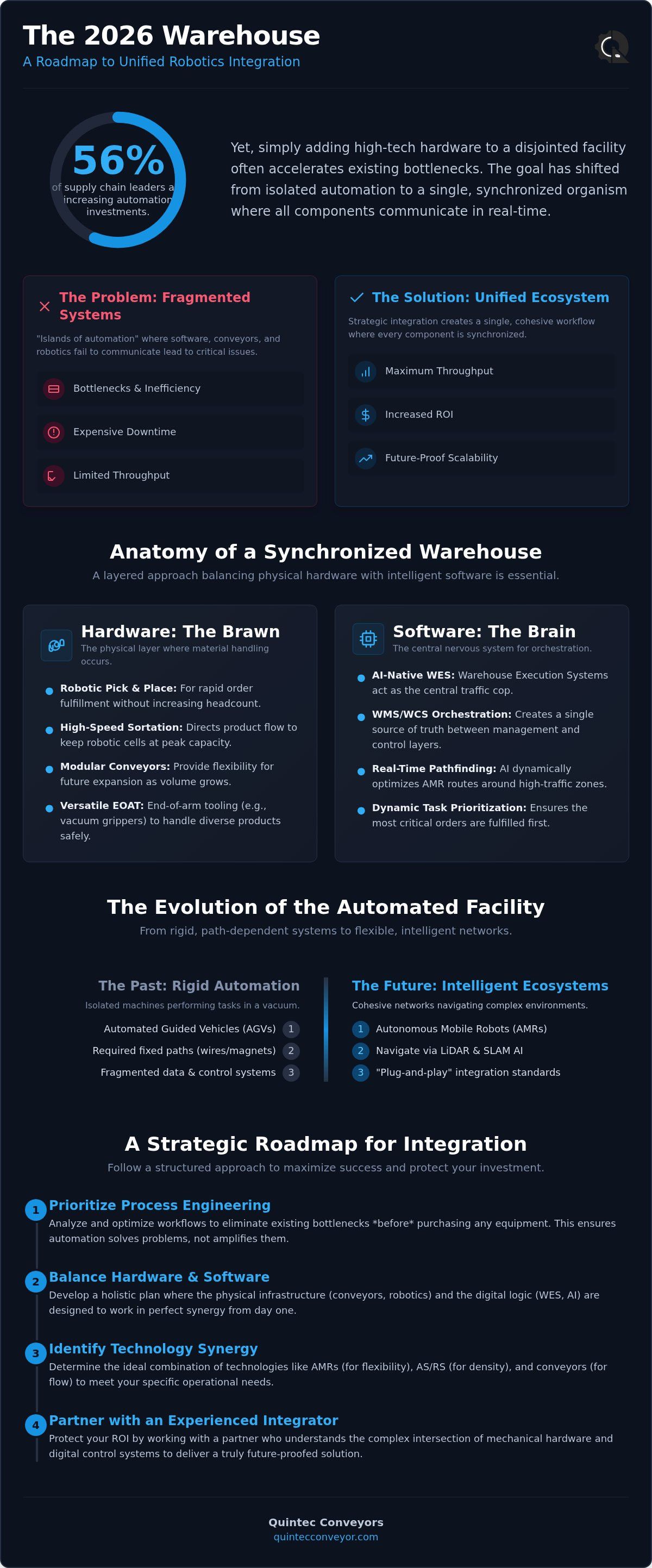
In 2026, warehouse robotics integration is defined as the strategic unification of mechanical hardware, digital control software, and physical infrastructure into a single, synchronized workflow. We've moved past the era of "islands of automation," where isolated machines performed tasks in a vacuum. Today's leading facilities operate as cohesive ecosystems where every component communicates in real-time. This shift is no longer a luxury for industry giants. With 56% of supply chain leaders increasing their automation investments this year, mid-sized facilities are reaching a tipping point where AI-driven orchestration is essential for survival.
At the heart of this transformation are industrial conveyor systems, which serve as the circulatory system of the robotic warehouse. These systems don't just move boxes; they provide the steady, metered flow of product required to keep robotic picking arms and sorters operating at peak capacity. When the mechanical flow and robotic logic are perfectly aligned, the facility achieves a level of throughput that manual labor simply cannot match.
The Evolution of the Automated Facility
The field of Logistics automation has evolved from rigid, path-dependent systems to flexible, intelligent networks. We've seen a decisive move from basic Automated Guided Vehicles (AGVs) that require floor wires toward Autonomous Mobile Robots (AMRs) that use LiDAR and SLAM to navigate complex environments. Robotic pick and place systems have also matured. Once confined to the repetitive tasks of automotive manufacturing, they now handle the high-variability demands of general e-commerce logistics. This evolution is accelerated by the move toward "plug-and-play" integration standards, which reduce the time and technical expertise needed to deploy new robotic cells.
Key Benefits of a Unified Approach
A unified approach to warehouse robotics integration solves the most persistent pains in material handling. By ensuring that the Warehouse Management System (WMS) and the physical robotics share a single source of truth, facilities see a dramatic drop in errors. The benefits include:
- Elimination of Data Silos: Automated systems remove the need for manual data entry between fragmented software stacks.
- Handling Cost Reduction: Streamlined workflows significantly lower the cost per touch for every item in the facility.
- Future-Proof Scalability: A unified infrastructure allows you to scale operations during seasonal peaks without an equivalent increase in headcount.
The Core Components of a Robotic Integration Strategy
Building a truly automated facility requires a layered architectural approach that transcends simple machine installation. We categorize these into four critical domains: physical, logical, infrastructure, and maintenance. Without synergy between these layers, even the most expensive robots become high-tech bottlenecks. A robust warehouse robotics integration ensures that your high-speed sorters and conveyors aren't just moving items; they're actively communicating with the racking and software layers to optimize every square foot of your operation.
Hardware: The Brawn of the Operation
The physical layer is where the actual material handling occurs. Integrating robotic pick and place systems with high-speed sortation allows for rapid order fulfillment without increasing headcount. However, the hardware must be modular. As product mixes change, you need the ability to swap end-of-arm tooling (EOAT) or expand conveyor lines without a total system overhaul. Selecting the right EOAT, whether vacuum grippers or soft-touch actuators, is essential for handling diverse product types safely. Modular conveyor designs provide the flexibility needed for future robotic expansion as your volume grows.
Software: The Brain of Orchestration
By 2026, the industry has shifted from traditional WMS bolt-ons toward AI-native Warehouse Execution Systems (WES). These platforms act as the central nervous system, serving as a high-level traffic cop between the Warehouse Management System (WMS) and the Warehouse Control System (WCS). This orchestration is vital for real-time pathfinding and task prioritization. AI now optimizes AMR routes dynamically, allowing robots to navigate around high-traffic conveyor discharge points during peak fulfillment windows. Real-time data visualization provides a digital twin of your facility, allowing stakeholders to identify and resolve throughput issues before they impact shipping deadlines. This level of insight ensures that your warehouse robotics integration delivers on its promise of maximum efficiency.
Supporting these advanced systems requires specialized automated warehouse racking system services and mezzanines specifically engineered for robotic weight and movement. Finally, the maintenance layer uses predictive analytics to monitor motor health and sensor alignment. This proactive approach ensures maximum uptime and protects the long-term ROI of your automation investment. If you are ready to evaluate your current facility layout, our team can help you audit your existing infrastructure for robotic readiness.
Comparing Robotic Technologies: AMRs, AS/RS, and Conveyor Synergy
Selecting the right technology for your facility requires a nuanced understanding of how different robotic units interact with your physical layout. With approximately 4.7 million commercial warehouse robots installed globally in 2026, the market offers a diverse range of solutions. However, the most successful warehouse robotics integration projects don't treat these units as standalone purchases. Instead, they utilize modular conveyor systems to bridge the gap between disparate robotic zones, ensuring a continuous, metered flow of product from receiving to shipping.
AMRs: Flexibility in Dynamic Environments
Autonomous Mobile Robots (AMRs) have largely superseded traditional Automated Guided Vehicles (AGVs) in 2026. While AGVs rely on fixed paths like magnetic tape or wires, AMRs use sophisticated LiDAR and SLAM navigation to move dynamically through a facility. This makes them ideal for brownfield sites where floor space is already constrained. Integrating AMRs with conveyor induction points allows for "flexible automation," where robots handle the long-distance travel while conveyors manage high-speed, high-volume transport. The key to ROI here is ensuring the software can dynamically reprioritize AMR tasks to avoid creating bottlenecks at the conveyor discharge.
AS/RS: Maximizing the Vertical Footprint
For facilities facing high real estate costs, Automated Storage and Retrieval Systems (AS/RS) provide a way to reclaim vertical space. These systems interface directly with vertical conveyor solutions to move goods between high-density racking and ground-level pick stations. In e-commerce fulfillment, shuttle-based systems are often preferred over traditional crane-based storage due to their higher throughput and redundancy. By integrating AS/RS with your wider warehouse robotics integration strategy, you can achieve a "goods-to-person" workflow that eliminates the time human workers spend walking between aisles.
Determining which technology to prioritize depends on your specific throughput requirements and existing infrastructure. While AMRs offer the lowest barrier to entry for flexible transport, AS/RS provides the highest density for long-term storage. Most well-planned automation projects in 2026 are expected to return 200% to 400% over a ten-year period, but these results are only possible when the mechanical interface between robots and conveyors is flawlessly engineered. We focus on creating that synergy, ensuring that your capital investment translates into measurable operational excellence.
A Step-by-Step Roadmap for Successful Robotics Integration
Successful warehouse robotics integration requires a methodical approach that prioritizes operational logic over hardware acquisition. Many facility managers make the mistake of purchasing autonomous units before understanding how those units will interact with their existing infrastructure. This "hardware-first" mentality often leads to expensive rework and integration delays. To achieve a seamless transition to an automated flow, we recommend a structured five-step roadmap:
- Step 1: Conduct a comprehensive warehouse design services audit to evaluate your current spatial constraints and throughput capacity.
- Step 2: Define your operational logic through expert process engineering to eliminate manual touchpoints.
- Step 3: Select robotic hardware and software based on long-term scalability rather than immediate cost.
- Step 4: Pilot the integration in a controlled "sandbox" zone to validate the communication between your WCS and the physical robots.
- Step 5: Execute a full-scale deployment supported by continuous maintenance monitoring and predictive analytics.
The Importance of Process Engineering
Process engineering is the foundational step that determines the success of your automation investment. We begin by mapping your "as-is" material flow to identify hidden bottlenecks that could be amplified by faster robotic systems. By creating a "to-be" model, we can simulate throughput and validate the system design before a single robot arrives on site. This simulation ensures that your conveyors and robotic cells are perfectly synchronized. It prevents the common issue of high-speed robots standing idle because the downstream conveyor cannot handle the increased volume.
Preparing Your Infrastructure
Your physical facility must be "robot-ready" to maximize the efficiency of warehouse robotics integration. This often involves floor leveling, as AMRs require precise surfaces to navigate at peak speeds without sensor errors. Power distribution is another critical factor. You must plan for high-demand charging zones that don't interfere with main traffic aisles. Finally, preparing your workforce is essential. Transitioning to a collaborative "cobot" environment requires specialized training to ensure human operators can work safely and effectively alongside their robotic counterparts. If you are ready to begin this transition, you can request a facility audit to identify the best starting point for your automation journey.
Maximizing ROI: Why Partner with an Experienced System Integrator?
While direct-to-manufacturer purchasing might appear cost-effective on an initial quote, it often ignores the expensive reality of system disharmony. Manufacturers are experts in their specific hardware, but they rarely specialize in the complex intersection of mechanical flow and digital logic. This is where many warehouse robotics integration projects face significant delays. When you buy a robot directly, the burden of making it talk to your existing conveyors and WMS falls on your internal team. This often results in hidden costs related to custom coding, mechanical modifications, and extended operational downtime that can derail your peak season fulfillment.
A professional conveyor system integrator acts as a strategic architect for your entire facility. We don't just sell equipment; we engineer a unified ecosystem where every component is selected for its ability to enhance the total flow. By managing the mechanical and digital interfaces between different brands, an integrator reduces project risk and ensures that your throughput targets are actually met. This holistic oversight protects your capital investment and guarantees that your automation delivers a return of 200% to 400% over its operational lifespan.
The Quintec Conveyors Advantage in 2026
The team at Quintec Conveyors utilizes a team-based approach built on over 100 years of collective industry insight. We've seen the evolution of material handling from simple gravity rollers to AI-driven robotic cells; we apply that veteran perspective to every project. Quintec Conveyors maintains a national reach, providing professional installation and ongoing system optimization across the United States. Unlike manufacturers who are incentivized to sell their specific product line, we prioritize your facility's unique flow. We specialize in custom process engineering, ensuring that the foundational logic of your facility is sound before a single piece of hardware is bolted to the floor. This brand-agnostic approach ensures your technology stack remains flexible as new innovations emerge.
Next Steps for Your Automation Journey
Moving toward a fully integrated facility doesn't have to happen all at once. Most successful 2026 projects begin with a targeted facility audit to identify the highest-impact areas for automation. During this phase, Quintec Conveyors helps you establish a realistic budget for mid-sized distribution center automation, focusing on scalable solutions that grow with your volume. If you're ready to eliminate labor bottlenecks and future-proof your infrastructure, the first step is requesting a custom process engineering consultation. We'll help you map out a warehouse robotics integration strategy that prioritizes long-term reliability and measurable excellence over short-term trends. You can request a facility audit to identify the best starting point for your automation journey.
Engineering the Future of Automated Material Handling
The landscape of logistics has shifted from isolated machines to fully synchronized ecosystems. Achieving a high ROI in 2026 requires more than just purchasing hardware; it demands a strategic warehouse robotics integration that aligns your physical conveyors with AI-driven execution systems. By prioritizing custom process engineering before implementation, you eliminate the risk of expensive bottlenecks and ensure your facility is ready for seasonal peaks without increasing headcount. It's a transformation that values precision and long-term stability.
Navigating this complexity requires a partner who understands the intersection of mechanical engineering and digital orchestration. We bring 100+ years of collective industry experience and national installation and maintenance support to every project. Our custom process engineering expertise ensures that your solution is built for your unique facility flow, protecting your long-term stability and modern excellence.
Partner with Quintec for Expert Warehouse Robotics Integration and take the first step toward a future-proofed, automated warehouse. Your path to operational excellence starts with a single, well-engineered decision.
Frequently Asked Questions
What is the difference between warehouse robotics and warehouse automation?
Warehouse automation is a broad category encompassing any technology that reduces manual labor, while robotics refers specifically to programmable machines performing physical tasks. Automation includes static systems like traditional conveyors or high-speed sorters. Robotics involves dynamic units such as AMRs or picking arms. A successful warehouse robotics integration combines these elements into a single, fluid material handling ecosystem that can adapt to seasonal shifts and changing operational demands.
Can I integrate robots into an existing conveyor system?
Yes, integrating robots into existing conveyor systems is a standard practice for modernizing brownfield facilities. This process typically requires adding intelligent induction points or modular conveyor sections to ensure the robots and conveyors can exchange real-time data. We utilize custom process engineering to map these mechanical interfaces. This careful planning ensures that your autonomous units don't create bottlenecks when discharging goods onto your legacy sorting lines or packing stations.
What is the typical ROI for a warehouse robotics integration project?
Most well-planned automation projects in 2026 are expected to return between 200% and 400% over a ten-year period. Specific technologies like Autonomous Mobile Robots often show returns above 250% because of their flexibility and lower infrastructure requirements. The exact ROI for your facility depends on throughput volume and current labor costs. Partnering with an experienced system integrator helps protect this investment by avoiding the expensive rework often associated with direct-to-manufacturer hardware purchases.
How long does a full robotics integration project take from design to installation?
A comprehensive robotics integration project typically spans six to twelve months depending on the facility's scope and complexity. The initial design and process engineering phase usually requires eight to twelve weeks of detailed analysis. Procurement and software configuration follow, with physical installation and testing occurring in the final months. Large-scale deployments involving high-density AS/RS or complex multi-tier mezzanines may require a longer timeline to ensure total system synchronization and safety compliance across the facility.
What are the infrastructure requirements for Autonomous Mobile Robots (AMRs)?
Autonomous Mobile Robots require level flooring and robust wireless connectivity to navigate effectively throughout your facility. Unlike older AGVs, they don't need magnetic tape or wires, but floor flatness is critical to prevent sensor errors when robots travel at peak speeds. You also need to plan for high-demand charging zones that don't obstruct main traffic aisles. Proper infrastructure planning ensures your robots can move at maximum velocity while safely interacting with human workers and stationary equipment.
Do I need to replace my Warehouse Management System (WMS) for robotics integration?
You usually don't need to replace a modern WMS, but you'll likely need a Warehouse Control System (WCS) to act as a bridge. These middle-layer platforms manage the real-time movement of robots and conveyors while communicating high-level task data to your existing WMS. We specialize in engineering these digital interfaces so your current software stack can successfully orchestrate your new automated hardware. This approach allows you to leverage your existing data while gaining robotic efficiency.
How does process engineering impact the success of robotics integration?
Process engineering is the foundational step that determines the ultimate success of your automation investment. It involves mapping your current material flow to identify hidden bottlenecks before any hardware is purchased. By simulating different "to-be" scenarios, we can validate that your conveyor speeds and robotic cycle times are perfectly matched. This proactive step prevents the common issue of high-speed robots standing idle because the downstream conveyor system cannot handle the increased volume.
What maintenance is required for integrated robotic and conveyor systems?
Integrated systems require a blend of traditional mechanical maintenance and sophisticated digital health monitoring. Conveyors need regular motor inspections and belt tensioning, while robots require sensor calibration and periodic software updates. Using predictive analytics allows you to identify potential component failures before they cause unexpected downtime. We provide national maintenance support to ensure your infrastructure remains reliable, protecting the long-term ROI of your warehouse robotics integration strategy and ensuring consistent facility throughput.