Conveyor Installation Companies: A Project Planning Guide

A conveyor can be installed correctly and still fail to fit the way your facility moves materials. That’s why comparing conveyor installation companies means looking beyond equipment. Design, mechanical installation, controls, automation, and facility infrastructure all need to work together, while the project plan accounts for active operations and site constraints.
A reliable result starts with a clear picture of your workflows, material types, throughput needs, facility layout, and existing systems. This guide explains the stages of conveyor installation, the information that supports sound engineering decisions, and how integration choices affect the finished system. It also distinguishes an equipment supplier from a project partner responsible for connecting equipment to your operation. Quintec Conveyors brings design, engineering, installation, and integration together, drawing on more than 100 years of collective industry experience across the team. Read on to see how a coordinated approach can align conveyors, robotics, automation, and infrastructure with your facility’s requirements.
Key Takeaways
- Conveyor installation involves more than equipment placement. Plan for engineering, controls, testing, and operational handover.
- Understand the project stages so workflow and system requirements inform the decisions that follow.
- Look for conveyor installation companies that coordinate equipment, interfaces, and controls around your facility’s operations.
- Prepare layout documents, workflow details, access information, utility requirements, and stakeholder input to support effective planning.
- Consider how conveyors, robotics, automation, and facility infrastructure can work together in an integrated project.
What Conveyor Installation Companies Do Beyond Installing Equipment
A conveyor project involves more than delivering equipment and placing it on the floor. A conveyor installation company coordinates the engineering, equipment placement, controls integration, testing, and operational handover needed to connect a system to a facility’s material flow. Each decision affects the next: the layout determines where equipment can go, product characteristics influence how items move, and throughput requirements shape how the conveyor connects with surrounding processes.
That planning distinguishes equipment delivery from an installation designed around the operation. The conveyor must fit both the physical environment and the work it supports, from moving products between stations to accommodating staff access. For a foundational overview of a conveyor system and its common applications, see the general reference. Project planning translates those broad concepts into requirements for a specific facility.
Installation company, equipment supplier, or system integrator?
An equipment supplier focuses on sourcing and providing machinery. An installation company puts equipment in place. System integration connects the conveyor with controls and adjacent material handling equipment so the components function as a coordinated process. Before work begins, clarify how equipment interfaces, how controls support the workflow, and what must be tested before handover.
Quintec provides custom conveyor design, engineering, and installation as part of its integration services. This connects equipment decisions to facility workflows and makes it possible to consider related needs, such as robotics, automation, and infrastructure, within the project.
Which facilities and workflows need a planned installation?
Warehouses, distribution operations, and industrial facilities may all need conveyors designed around distinct material flows. Receiving may require moving incoming goods into storage or processing. Picking and shipping may depend on accumulation and controlled movement between work areas. Product size, weight, packaging, handling requirements, available floor space, and expected throughput can all influence the system layout and installation scope.
Start by mapping where materials enter, where they pause or change direction, and where they need to go next. This makes it easier to tie installation decisions to actual work instead of treating conveyor placement as a standalone task.
- Facility layout: Identify fixed structures, work areas, and available installation space.
- Workflow: Trace receiving, movement, accumulation, picking, and shipping steps.
- Operating needs: Describe the products handled and the required flow through each stage.
These details give engineering a practical basis for planning. Once the workflow and facility context are clear, the project can move into the phases that turn requirements into an installed, integrated system.
How a Conveyor Installation Project Moves from Engineering to Startup
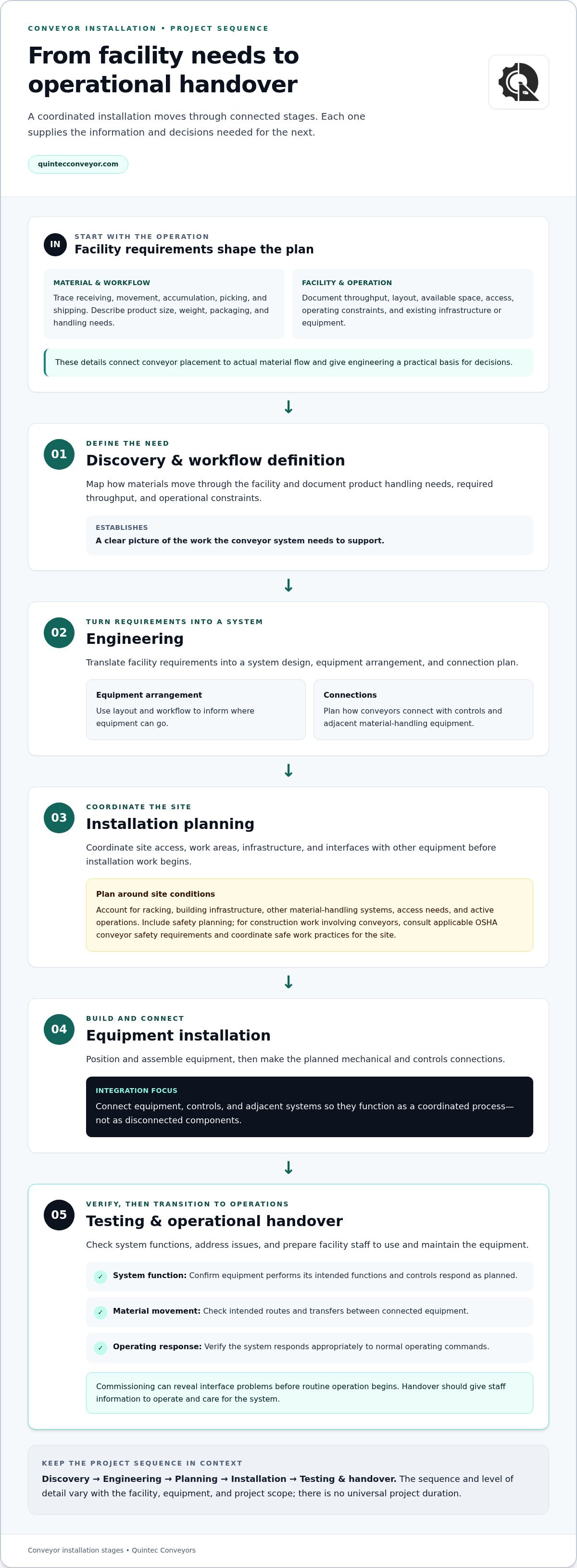
A typical conveyor installation moves through discovery, workflow definition, engineering, installation planning, equipment installation, testing, and operational handover. Each stage establishes information needed for the next, helping align the system with facility requirements and making startup part of the plan from the beginning. The sequence and level of detail vary with the facility, equipment, and project scope. There is no universal project duration.
From facility assessment to installation planning
Planning starts with understanding how materials move through the facility, the required throughput, the available layout, and operating constraints. Engineering uses those requirements to develop the system design and installation plan, including how conveyors connect to controls and adjacent equipment. Racking, building infrastructure, and other material handling systems can affect equipment placement and access, so account for them during coordination.
For conveyor installation companies, a defined sequence helps surface decisions before they affect work in the facility:
- Discovery and workflow definition: Document material flow, product handling needs, throughput, and operational constraints.
- Engineering: Translate requirements into a system design, equipment arrangement, and connection plan.
- Installation planning: Coordinate site access, work areas, infrastructure, and interfaces with other equipment.
- Installation: Position and assemble equipment, then make the planned mechanical and controls connections.
- Testing and handover: Check system functions, address issues, and prepare the operation to use and maintain the equipment.
Include safety planning in the installation plan. For construction work involving conveyors, consult the applicable OSHA conveyor safety requirements and coordinate safe work practices for the site.
Testing, commissioning, and operational handover
Testing checks whether equipment performs its intended functions and whether controls respond as planned. Teams can verify that items follow the intended route, transfers between connected equipment work, and the system responds appropriately to normal operating commands. Commissioning can also reveal interface problems before routine operation begins.
Handover should provide facility staff with the information they need to operate and care for the system. This may include operating guidance, relevant system documentation, operator orientation, and a maintenance plan. Quintec’s conveyor maintenance services can support lifecycle planning beyond startup. Quintec combines custom design, engineering, and installation, and its conveyor integration services connect project planning with the system’s operational needs.
What Separates a Coordinated Conveyor Installation from a Disconnected One?
A conveyor line can be mechanically installed and still fall short if its controls, adjoining equipment, or operating workflow were not planned together. A coordinated project defines how materials should move, which equipment needs to communicate, who is responsible for each connection, and how the completed system will be tested and handed over. A shared scope helps teams identify dependencies before they become installation or startup problems.
This systems-level perspective reflects the wider material handling field represented by MHI. In a facility, integration might involve a conveyor transferring items to a sorter, responding to a control signal, or working in sequence with another piece of equipment. The exact interfaces depend on the project, but teams should consider them during planning rather than leave them as assumptions.
| Project area | Fragmented approach | Integrated approach |
|---|---|---|
| Scope | Equipment is specified separately from the workflow it must support. | Requirements connect material flow, equipment, controls, and handover. |
| Interfaces | Connections between conveyors and adjacent equipment may be unclear. | Equipment boundaries and connection responsibilities are mapped. |
| Controls | Control requirements are addressed late or in isolation. | Control behavior is planned around the intended process. |
| Startup | Testing and operational responsibilities may be divided or incomplete. | Testing and handover are considered in the project plan. |
How workflow and controls shape installation decisions
Begin with the route materials need to follow and the throughput goals for each part of that route. These requirements inform the conveyor layout and, where applicable, the control logic that starts, stops, or coordinates equipment. A programmable logic controller (PLC) may manage conveyor actions, while a warehouse control system (WCS) may coordinate equipment behavior across a broader workflow. The systems involved and how they exchange information vary by facility and project scope.
Defining these interfaces helps engineering align equipment placement, controls, and adjacent systems. For conveyor installation companies, the distinction is important: integration is not simply connecting components. It means planning how they work together to support the defined process.
How integration planning helps manage operational disruption
Active facilities have operating requirements that shape installation planning. Project teams can identify affected areas, coordinate equipment and infrastructure work, and consider whether work should be phased around facility priorities. Phasing can help organize the work, but it does not guarantee uninterrupted operations or a fixed schedule.
Coordination among engineering, equipment, infrastructure, controls, and installation teams also clarifies dependencies and responsibilities. Quintec brings these disciplines together through custom conveyor design, engineering, installation, and integration. Explore Quintec’s conveyor integration approach to see how a connected project can account for facility workflows from planning through installation.
How to Prepare Your Facility for Conveyor Installation
Preparation gives engineering a clearer picture of the facility and the work the conveyor needs to support. Assemble existing information and identify operating constraints before planning discussions. The installation team can then assess how those details affect system design, site readiness, and coordination with other equipment.
Facility information to assemble before planning
Gather current facility layout drawings, process-flow information, and relevant details about existing equipment. Record how materials move through the operation, what products the system will handle, and when demand or operating activity peaks. Note access routes, possible staging areas, utility information, and any areas where installation work could affect routine operations.
Also identify interfaces with warehouse racking, building infrastructure, robotics, or existing material handling systems. These inputs guide planning, but they do not replace project-specific engineering review. Engineering determines how requirements translate into equipment layout, connections, and installation details.
- Layout and workflow: Current drawings, material routes, process steps, and relevant equipment locations.
- Operating needs: Product characteristics, operating shifts, peak demand, and constraints on work areas.
- Site readiness: Access routes, staging considerations, and available utility information.
- System interfaces: Details about racking, infrastructure, robotics, controls, and existing equipment.
Checklist summary: Bring current layouts, workflow details, operating requirements, access and utility information, interface notes, and the names of key facility stakeholders to the installation planning discussion.
Aligning stakeholders and installation activities
Involve operations, facilities, engineering, and safety stakeholders early. Operations staff can explain how work moves through the facility and identify sensitive processes. Facilities staff can share site and utility information, while engineering and safety teams can contribute relevant technical and work-planning requirements. Agree on who will provide information, coordinate site readiness, and communicate changes.
Discuss equipment access, possible staging areas, work zones, and how installation activities may interact with facility operations. These are planning inputs, not a fixed installation schedule. The project team evaluates them alongside system scope and engineering requirements. Broader warehouse layout and infrastructure considerations can also inform conveyor planning.
For conveyor installation companies, preparation is most useful when facility information and stakeholder responsibilities are clear, while design decisions remain grounded in engineering review. Quintec connects custom conveyor design, engineering, and installation with material handling integration. Plan your conveyor installation with Quintec as part of a coordinated facility approach.
How Quintec Connects Conveyor Engineering and Installation
A conveyor project works best when the system is planned around the facility’s material flow, not treated as a standalone equipment purchase. Quintec connects custom conveyor design, engineering, installation, and material handling integration so the project can account for the systems and site conditions that shape how materials move.
That coordination can include robotics and automation, warehouse racking, infrastructure, and process engineering where they relate to the facility’s requirements. For example, a conveyor route may need to align with existing work areas, connect with adjacent material handling equipment, or fit into a broader automation plan. Defining these relationships during planning helps clarify interfaces and responsibilities before installation begins. The project scope is specific to the operation, its workflow, and its facility conditions.
A connected approach to conveyor and warehouse integration
Quintec’s integration approach brings equipment and engineering decisions together. Conveyor layout can be considered alongside process requirements, while related automation, robotics, racking, and infrastructure needs can be included in planning where relevant. This gives facility teams a clearer view of how project components relate, rather than leaving connections between separate systems as assumptions.
Quintec’s team brings over 100 years of collective industry experience. That experience informs the planning process, while each system is designed around the needs and constraints of the facility. When planning a project, consider how the integration partner will connect equipment decisions to the workflow and site requirements.
Plan the next step around your operation
Start with a concise outline of the current workflow and what needs to change. Note where materials enter and move, where delays or handling challenges occur, what facility constraints could affect installation, and what the project needs to support. Current layout drawings and relevant equipment details can help frame the discussion.
These inputs give Quintec a practical foundation for custom engineering and installation planning. They also connect the project discussion to operational priorities, from material flow to automation and infrastructure considerations. Share your facility workflow needs and project goals to begin shaping an approach suited to your operation.
Discuss your conveyor installation project with Quintec.
Plan Your Conveyor Project Around the Way Your Facility Works
A reliable conveyor installation begins with more than equipment selection. Clear workflow requirements, facility information, and coordination across engineering, controls, infrastructure, and installation help shape a system that fits the operation. Planning through testing and handover also helps teams understand what needs to happen at each stage.
As you compare conveyor installation companies, look for an approach that connects design decisions to material flow and considers how equipment will work together. Quintec provides custom design, engineering, installation, and integration for industrial material handling, backed by more than 100 years of collective industry experience across the team.
Start with your facility’s workflow challenges, constraints, and project goals. Discuss your conveyor installation project with Quintec and take the next step toward a plan built around your operation.
Frequently Asked Questions
What does a conveyor installation company do?
A conveyor installation company helps plan and implement a system that fits a facility’s material flow. Work can include assessing workflows and site conditions, designing and engineering the conveyor layout, installing equipment, coordinating interfaces with controls or adjacent systems, and testing the completed setup. Project scope depends on facility requirements. Quintec provides custom conveyor design, engineering, installation, and integration for industrial material handling.
How long does a conveyor installation project take?
Project duration depends on the system’s scope and facility requirements, so there is no single timeline for every installation. Factors include engineering needs, equipment and controls interfaces, site access, infrastructure work, and how installation activities relate to ongoing operations. A defined project plan can map the stages and dependencies, but the sequence and duration should be established around the specific system and facility rather than assumed in advance.
What should I prepare before installing a conveyor system?
Prepare current facility layout drawings, process-flow information, and details about existing equipment and system interfaces. Document the products being handled, workflow requirements, operating shifts, peak demand, access constraints, staging considerations, and available utility information. Identify relevant racking, infrastructure, robotics, and material handling equipment. These details help engineering understand the site and operation. Project-specific engineering review determines how they translate into system design and installation requirements.
Can a conveyor installation company integrate controls and automation?
Yes. A conveyor installation project can include planning for controls and automation alongside equipment and workflow requirements. Depending on the system, a programmable logic controller (PLC) may manage conveyor actions, while a warehouse control system may coordinate equipment across a broader process. Specific interfaces vary by project. Quintec connects custom conveyor engineering and installation with material handling integration, warehouse automation, and robotics to suit facility needs.
How can conveyor installation minimize disruption to warehouse operations?
Careful planning can help manage installation’s effect on warehouse activity, but it cannot guarantee uninterrupted operations. Identify affected work areas, access routes, staging needs, operating constraints, and dependencies among installation, infrastructure, and equipment. Facility teams can also coordinate communication and responsibilities across operations, facilities, engineering, and safety stakeholders. The project team can use these inputs to consider work phasing around facility requirements.
What is the difference between a conveyor manufacturer and an installation company?
A conveyor manufacturer produces conveyor equipment, while an installation company focuses on putting a system into the facility and coordinating the work needed for it to operate as planned. The roles can overlap, but equipment supply alone does not necessarily address workflow engineering, connections to other equipment, controls, installation planning, or handover. An integrator connects these project elements so equipment choices align with facility requirements and material flow.
Does conveyor installation include testing and commissioning?
Testing and commissioning can be included in the installation scope. They help verify that the system performs its intended functions before routine operation. Depending on the project, checks may cover conveyor movement, control responses, and transfers between connected equipment. Handover can also include system documentation, operator orientation, and maintenance planning. Define these activities as part of the project scope so responsibilities and completion expectations are clear.