Flexible Conveyor Integration: A Practical Guide to Adaptable Material Flow
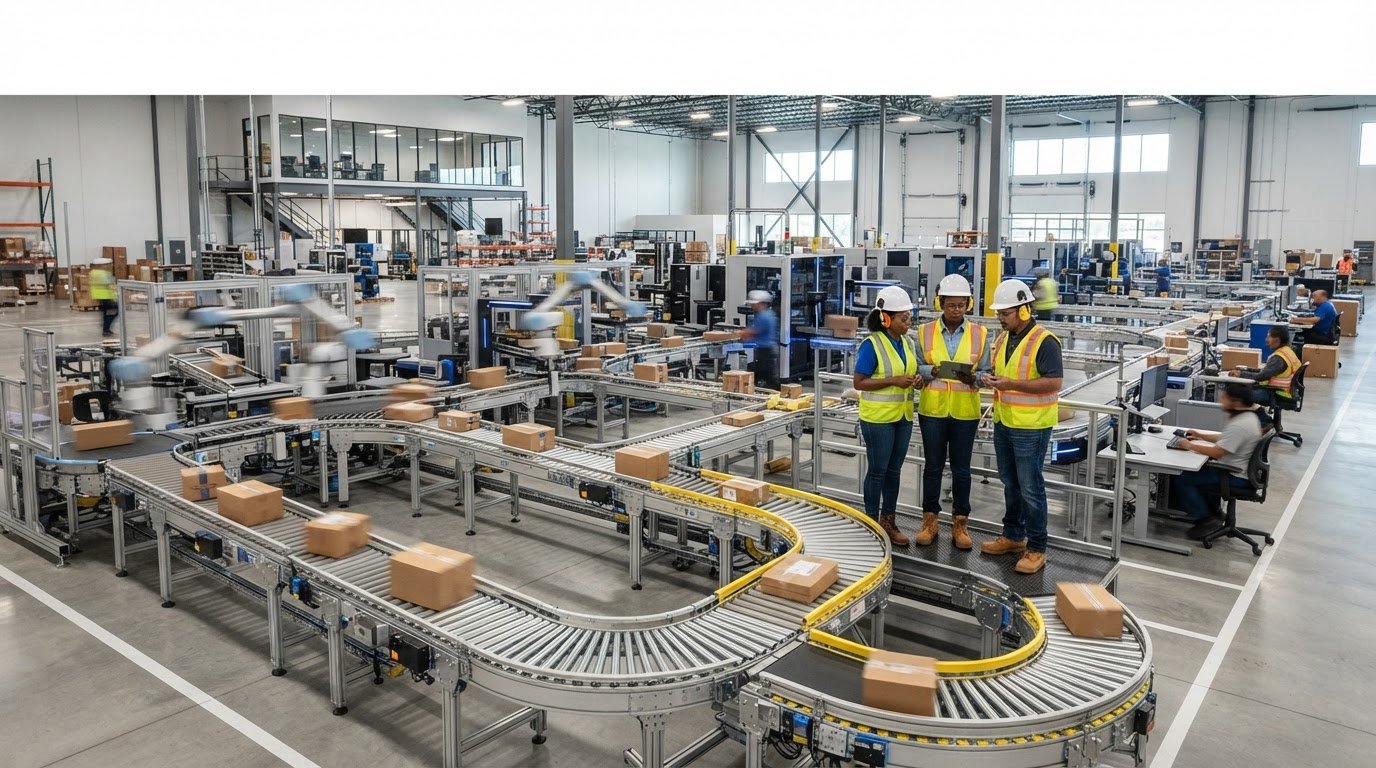
What makes a conveyor system flexible isn’t just equipment that moves. It’s a workflow that can adapt. Flexible conveyor integration should connect with the machinery, space, and processes you rely on today while allowing for changes in throughput, product mix, or layout. Before choosing a system, consider whether it will fit existing operations and whether a fixed design could limit future changes.
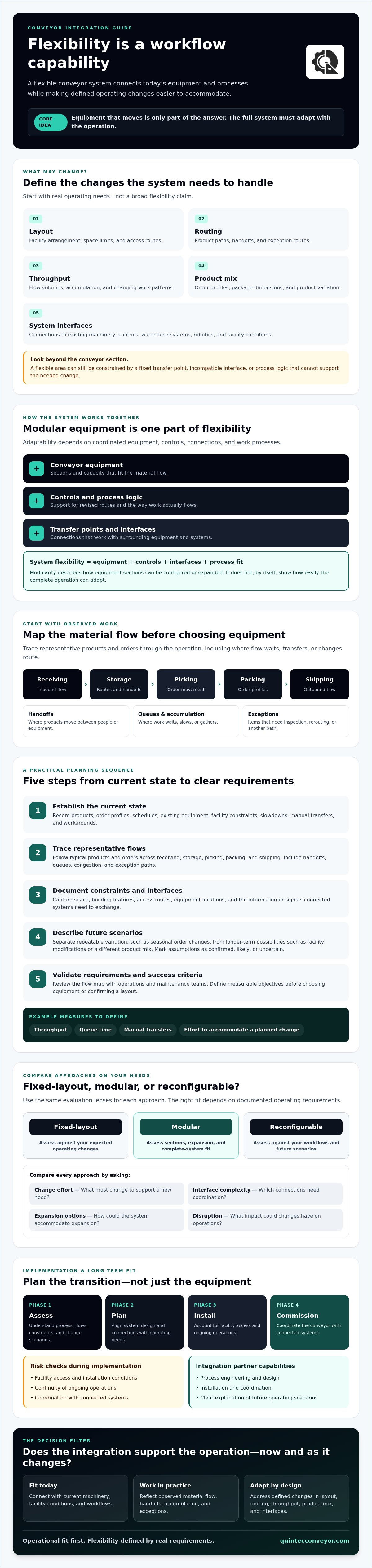
A practical plan starts with operational requirements, not a flexibility claim. This guide explains how to identify the changes your operation needs to accommodate, assess connections to existing equipment and workflows, and compare integration approaches against real operating needs. It also outlines a phased path from process assessment and system planning through installation and commissioning. Considering conveyors, automation, infrastructure, and process engineering together can help you evaluate options for both current performance and future adaptability.
Key Takeaways
- Map product flow, volumes, handoffs, accumulation points, and exception paths before selecting equipment.
- Use documented requirements to evaluate how Flexible conveyor integration handles layout, routing, throughput, product mix, and system interfaces.
- Compare fixed-layout, modular, and reconfigurable approaches by change effort, interface complexity, expansion options, and disruption.
- Plan installation and commissioning around facility access, ongoing operations, and connected systems to manage implementation risk.
- Assess integration partners on process engineering, design, installation, and coordination. Ask how proposed flexibility supports future operating scenarios.
What Flexible Conveyor Integration Means for Changing Operations
Flexible conveyor integration coordinates conveyor equipment, controls, and workflows so material can keep moving as operating needs change. It means more than choosing equipment that can be repositioned or adding capacity. The system must connect effectively with upstream and downstream equipment, facility conditions, and the way work is done. A conveyor system can include different equipment types, but integration determines how those components work together.
Flexibility can involve changes to the physical layout, product routes, throughput, product mix, or connections to other systems. These needs may arise in receiving, where inbound flows vary; in storage and picking, where routes and handoffs matter; or in packing and shipping, where order profiles affect how items move. A system that adapts in one area may still be constrained by a fixed transfer point or an incompatible interface elsewhere.
In practical terms, adaptability means the operation can respond to a defined change without creating avoidable bottlenecks. Modular equipment may help, but it is only part of the picture. Controls, transfer points, facility interfaces, and process logic all affect how easily the system can change while supporting day-to-day work.
Which operational changes should an integrated conveyor accommodate?
Start with changes that affect material flow, such as shifts in order profiles, package dimensions, product mix, or work patterns. Separate predictable seasonal variation from longer-term changes, such as a revised facility layout or a different process. Record current constraints, including difficult handoffs, space limits, and points where work accumulates. Then document anticipated changes and consider which parts of the operation they could affect.
How does flexible integration differ from a modular conveyor system?
Modularity describes how equipment sections can be configured or expanded. System flexibility also depends on whether controls can support revised routes, transfer points can connect equipment as needed, facility interfaces can accommodate changes, and process logic reflects how work actually flows. A modular conveyor may be useful, but its sections alone don’t show how easily the complete operation can adapt. For a closer look at equipment modularity, see this strategic guide to modular conveyor systems.
Use these distinctions to define what “flexible” needs to mean for your operation. Specific requirements make it easier to assess integration options against real workflows instead of relying on equipment labels or broad claims.
How to Plan Flexible Conveyor Integration Around Real Workflows
Plan around observed work, not an idealized floor plan. A structured discovery process gives operations, engineering, and equipment teams a shared basis for design decisions. It also separates current operating conditions from assumptions about future demand.
- Step 1: Establish the current state. Record products, order profiles, operating schedules, existing equipment, and facility constraints. Note where work slows, transfers manually, or depends on a workaround.
- Step 2: Trace representative flows. Follow typical products and orders from receiving through storage, picking, packing, and shipping. Include handoffs, queueing and accumulation points, congestion, and exception paths, such as items that need inspection or rerouting.
- Step 3: Document constraints and interfaces. Capture available space, access routes, building features, and equipment locations. Identify connections with warehouse systems, robotics, and existing machinery, including the information or signals each interface needs to exchange.
- Step 4: Describe future scenarios. Separate repeatable variation, such as seasonal order changes, from longer-term possibilities such as facility modifications or a different product mix. Mark each scenario as confirmed, likely, or uncertain so assumptions don’t become hidden design requirements.
- Step 5: Validate requirements and success criteria. Review the flow map with the people who operate and maintain the process. Define measurable objectives before choosing equipment or confirming a layout. Relevant measures might include throughput, queue time, manual transfers, or the effort required to accommodate a planned change.
How do you map material flow before designing the conveyor layout?
Use a process map or annotated floor plan to show each movement and handoff. Observe representative orders across different operating conditions. Record where products wait, change direction, move between equipment, or leave the normal process. Keep measured baseline conditions separate from future-state assumptions. This helps show whether a proposed layout addresses a verified constraint or only a projected one.
Which requirements should teams validate before comparing solutions?
Confirm product characteristics, operating schedules, demand variation, and the space available for equipment and access. Then validate system interfaces with warehouse technology, robotics, and existing equipment alongside the relevant teams. Broader system considerations are covered in this industrial conveyor systems executive guide.
Success criteria should reflect operational priorities, not a supplier’s preferred equipment configuration. The Fabricator’s discussion of customization versus flexibility offers a useful reminder to weigh a tailored fit against the ability to adjust as needs change. With requirements documented, you can assess conveyor and process-engineering needs alongside Quintec Conveyors’ conveyor and process-engineering capabilities.
How to Compare Flexible Conveyor Integration Approaches
Compare approaches against your documented requirements, not broad labels such as “flexible” or “future-ready.” A fixed layout may suit a stable process; a modular or reconfigurable design may better support planned changes. Each approach also affects the effort needed to make changes, coordinate system interfaces, expand capacity, and maintain operations during modifications.
Fixed-layout integration
- Change effort: Often higher if equipment or routes need substantial alteration.
- Interface complexity: Defined around the selected layout and connected equipment.
- Expansion options: Depend on available space and the original system design.
- Operational disruption: Changes may require more extensive work around the installed system.
Modular integration
- Change effort: Potentially lower for changes supported by repeatable components.
- Interface complexity: Still requires coordination across modules, controls, and handoffs.
- Expansion options: Can use compatible components where the layout and interfaces allow.
- Operational disruption: Depends on how modifications affect connected processes.
Reconfigurable integration
- Change effort: Designed to accommodate changes to routes or processes, subject to system limits.
- Interface complexity: May require careful coordination of routing, controls, and equipment connections.
- Expansion options: Depend on the design, facility conditions, and available capacity.
- Operational disruption: Requires planning for changeovers and interaction with active operations.
Use these as comparison prompts, not guaranteed outcomes. Flexibility belongs to the complete material flow system, not to a conveyor label or component alone. MHI’s discussion of adaptable warehouse workflows also highlights why application conditions matter, including how equipment will be used and where its limitations lie.
When might a fixed, modular, or reconfigurable approach fit?
A fixed layout may suit workflows and operating requirements expected to remain stable. Modular components can work well for planned changes that use repeatable sections or connections. Reconfigurable approaches may be worth assessing when routing or process needs could shift. Verify each option against site conditions, change scenarios, and operating priorities before deciding.
What makes integration with automation and controls workable?
Review each equipment handoff, control logic, safety requirement, and information exchange. If robotics or warehouse automation affects sequencing or routing, clarify how those systems coordinate with conveyor movement and exception handling. For additional context, see this warehouse robotics integration guide.
A systems-focused review can connect conveyor, automation, and process-engineering requirements. Explore Quintec’s conveyor and automation capabilities as you assess what your operation needs.
How to Reduce Risk During Flexible Conveyor Installation and Commissioning
Installation is where a planned system meets the realities of a working facility. Flexible conveyor integration can affect access, material routes, connected equipment, and daily operations, so coordinate the work before equipment arrives. Where project conditions allow, a phased implementation can limit disruption by separating work into manageable areas or stages. Base the sequence on site conditions and system dependencies, not an assumed standard timeline.
What should an installation readiness plan cover?
Set clear responsibilities for operations, facilities, engineering, equipment installation, and controls coordination. Confirm site conditions, equipment interfaces, access requirements, and the work sequence, including dependencies that could affect installation or testing. If work touches live operating areas, agree how teams will communicate changes, access restrictions, and temporary adjustments to material flow.
Readiness also means confirming that connected equipment and systems are available for integration. A delay in one interface or prerequisite can affect later work, so identify dependencies early and establish how plan changes will be reviewed. Keep the plan specific to the facility rather than assuming every installation follows the same order.
How should teams validate an integrated system before handover?
Define acceptance criteria before commissioning begins. Describe how the system should perform under normal flow, demand variation, stops, restarts, and agreed exception paths. Include checks for material movement, controls, safety functions, and interaction with connected equipment. This gives the project team a shared basis for recording what has been tested and what still needs attention.
- Test normal operation: Confirm products move through intended routes and handoffs.
- Test variations and exceptions: Check defined changes in flow, rerouting, and exception handling against the agreed requirements.
- Check controls and connections: Verify that conveyor controls and connected equipment respond as intended, including during stops and restarts.
- Prepare for handover: Document operating procedures, training needs, unresolved items, and appropriate next steps for each open issue.
Commissioning should produce more than a successful run. Operators and relevant support teams should understand system operation, expected responses, and outstanding work. Documenting results against acceptance criteria helps make handover orderly and gives teams a useful reference as operations continue.
If you’re assessing installation readiness or commissioning requirements, discuss your conveyor integration requirements with Quintec Conveyors.
Choose an Integration Partner for Flexible Conveyor Performance Over Time
A suitable integration partner should understand how material moves through your operation, not just which conveyor components could fit the floor plan. For flexible conveyor integration, look for a team that can connect process engineering, system design, installation, and coordination with existing equipment and automation. Assess proposed flexibility against documented requirements and future operating scenarios. Ask what can change, how it can change, and what limits apply.
What questions reveal a partner's integration capability?
Ask how the team checks workflow assumptions before finalizing a design and how it assesses existing equipment, controls, and facility infrastructure. Request examples of relevant integration experience, then verify project-specific performance claims before relying on them. A capable partner should explain how design choices relate to your requirements, which interfaces or dependencies need attention, and where the proposed approach has limits.
- Process engineering: How will the proposed design reflect documented flows, handoffs, and operating needs?
- Design and coordination: How will conveyors connect with existing equipment, controls, robotics, or infrastructure within the project scope?
- Installation: How will site conditions, sequencing, and operational requirements inform the installation plan?
- Adaptability: Which future scenarios does the design accommodate, and what changes would require additional engineering?
- Maintenance planning: What maintenance considerations should be addressed in the design, and how will access and service needs be documented?
Discuss maintenance and future engineering needs during planning, not only after commissioning. Clarifying access, operating procedures, and possible changes helps the team consider maintainability alongside current workflow requirements. The right scope depends on the facility and system, so ask for responsibilities and assumptions to be made explicit.
How can Quintec support a workflow-led integration project?
Quintec Conveyors designs, engineers, and installs custom conveyor and material handling systems for industrial operations. Its capabilities also include robotics and automation, infrastructure, warehouse racking, process engineering, and conveyor maintenance. Which capabilities are relevant depends on project scope. Robotics may be part of the discussion when automated equipment affects material movement; infrastructure or racking may matter when the facility layout shapes the design.
Quintec’s team brings over 100 years of collective industry experience. Use a project discussion to review your documented processes, system interfaces, installation considerations, and future operating scenarios. Ask how each proposed design decision relates to your requirements and what information is still needed to confirm the fit.
To discuss your project’s workflow and integration needs, start a conversation about your integration project.
Build a Conveyor System Ready for What’s Next
Flexible conveyor integration works best when planning starts with actual workflows and clear requirements. Map material flow, identify the changes your operation needs to accommodate, and compare approaches by how the complete system handles those demands. Before commissioning, agree on how flow, controls, safety, and exception paths will be validated.
Long-term performance also depends on coordinated design, engineering, installation, and attention to maintenance needs. Quintec Conveyors brings over 100 years of collective industry experience and offers capabilities in these project areas, along with automation, infrastructure, and conveyor maintenance. The right scope depends on your operation and requirements.
Ready to explore an approach that fits your workflow today and can respond to future changes? Discuss your flexible conveyor integration requirements with Quintec. Start with your current material flow, constraints, and planned changes.
Frequently Asked Questions
What does flexible conveyor integration mean?
Flexible conveyor integration coordinates conveyor equipment, controls, and workflows so a material handling system can accommodate defined operational changes. Flexibility may involve layout, routing, throughput, product mix, or connections to existing equipment and systems. The goal isn’t simply to install adjustable or modular equipment. It’s to plan how the complete flow can respond to changing needs while remaining compatible with facility conditions and day-to-day processes.
How do you plan a flexible conveyor integration project?
Document how materials move through the operation before selecting equipment or finalizing a layout. Trace representative orders through receiving, storage, picking, packing, and shipping. Record volumes, product characteristics, handoffs, queues, bottlenecks, manual transfers, and exception paths. Then note existing equipment, facility constraints, and system interfaces. Validate requirements with operations and engineering teams, and define measurable acceptance criteria for the proposed design.
What is the difference between modular conveyors and flexible conveyor integration?
A modular conveyor is built from components that can be configured or expanded in particular ways. Flexible conveyor integration is broader: it considers how equipment, controls, transfer points, facility interfaces, and process logic work together. Modularity can support flexibility, but it doesn’t automatically make the whole operation adaptable. Evaluate whether changes to routes, workflows, or connected systems can be handled within the planned design and site conditions.
Can flexible conveyor systems integrate with robotics and warehouse automation?
Yes, conveyor systems can be integrated with robotics and warehouse automation when equipment, controls, and workflows are coordinated. Planning should establish how products transfer between systems, how routing or sequencing decisions are communicated, and what happens during stops or exceptions. Teams should also verify facility and safety requirements and test connected equipment together before handover. The integration approach depends on the systems involved and the operation’s requirements.
What should I compare when evaluating conveyor integration approaches?
Compare each approach against documented operating requirements, not flexibility claims alone. Consider the effort required to make changes, interface complexity, expansion options, and potential disruption during modifications. Also assess how well the design supports current workflows, expected product and demand variation, controls, and connections to existing equipment. A fixed, modular, or reconfigurable approach may suit different conditions, so verify assumptions against your facility and future operating scenarios.
How can a business reduce disruption during conveyor installation?
Coordinate installation with facility access, existing operations, and connected systems before work begins. Where project conditions allow, teams can plan phases around operational areas or system dependencies. Confirm responsibilities, work sequencing, communication methods, and any changes to live operating areas. Identify prerequisites that could affect installation or testing, but avoid assuming a fixed timeline. Clear coordination helps teams prepare for changes and manage the cutover process.
When should a company involve a conveyor system integrator?
Involve an integrator while workflows and requirements are being assessed, before equipment choices and layouts are finalized. Early input can help identify constraints involving existing conveyors, controls, facility infrastructure, robotics, or material flow. A partner such as Quintec Conveyors can bring design, engineering, installation, and relevant automation or maintenance capabilities into the discussion. Confirm the project scope and ask how proposed decisions map to documented requirements and future scenarios.
How do you know whether a conveyor integration is ready for handover?
A system is ready for handover when it has been tested against agreed acceptance criteria and operating teams understand how to use it. Validate normal material flow, demand variation, stops, restarts, defined exception paths, controls, safety functions, and connected equipment. Document test results, operating procedures, training needs, and unresolved items with clear next steps. Handover should give relevant teams an accurate record of system operation and outstanding work.