
Selective Pallet Racking Systems: A 2026 Buyer’s Guide
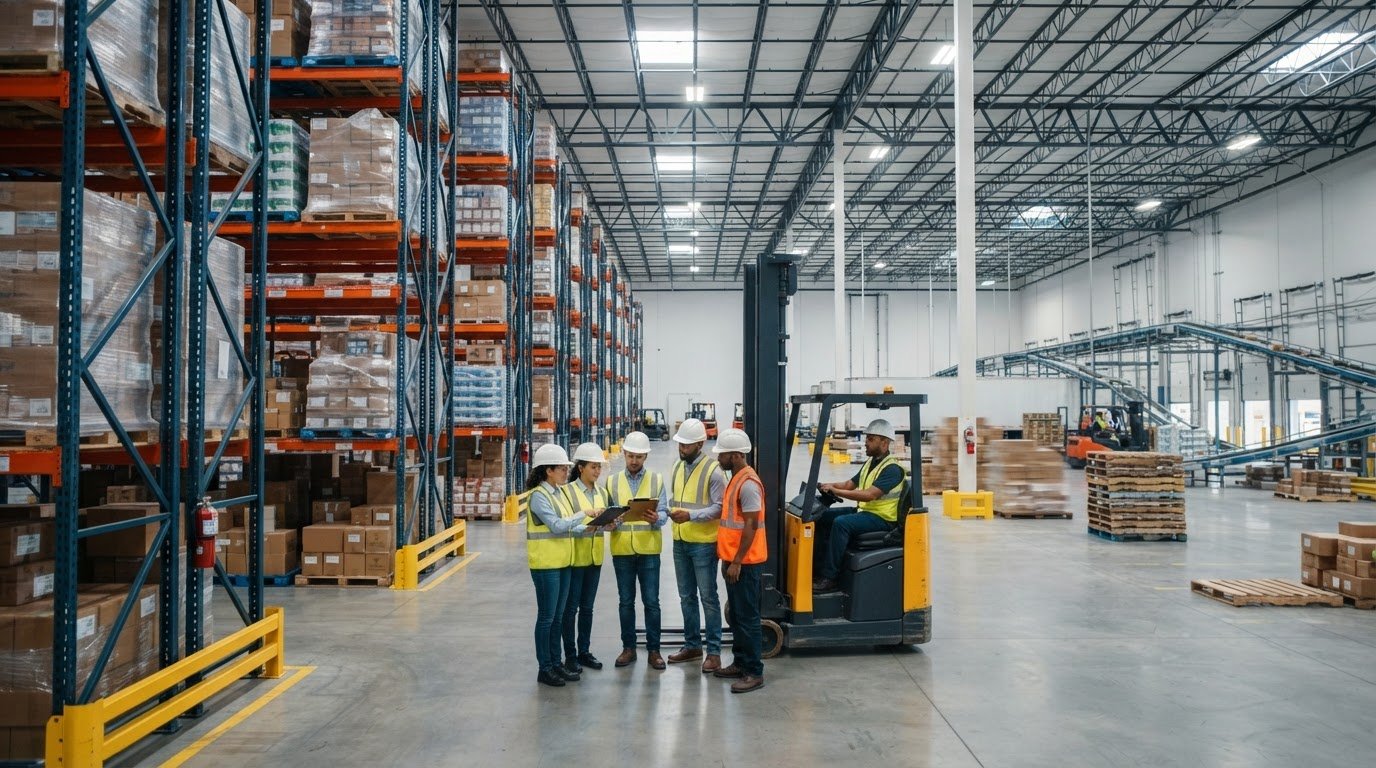
The rack that stores the most pallets may be the wrong choice for your operation. Selective pallet racking systems provide direct access to stored pallets, but the right layout depends on more than storage density. It should reflect the inventory you handle, how often items move, and how replenishment works.
If you’re deciding whether selective access fits your operation, start by checking load data, clearances, forklift requirements, and facility constraints. A layout that looks efficient on paper can create problems if it does not support actual material flow.
This guide explains how to evaluate selective pallet racking systems against your inventory profile, operating requirements, and facility plans. You’ll learn what information to gather, which design factors to assess, and how to compare suppliers’ capabilities. It also covers how racking decisions connect with conveyors, automation, and future material-handling plans, so you can bring a clear specification to supplier discussions.
Key Takeaways
- Check whether selective access suits your SKU range, picking frequency, and replenishment patterns before prioritizing storage density.
- Gather pallet dimensions, loaded weights, inventory turnover, and facility measurements to give suppliers a sound basis for proposals.
- Compare selective pallet racking systems with higher-density options by weighing access, capacity, SKU variation, and handling requirements.
- Plan aisle layout and rack placement around the movement of goods from receiving through storage, picking, and shipping.
- Ask suppliers to clarify design responsibilities, engineering inputs, installation scope, equipment interfaces, and future flexibility.
What Selective Pallet Racking Systems Do Best in a Warehouse
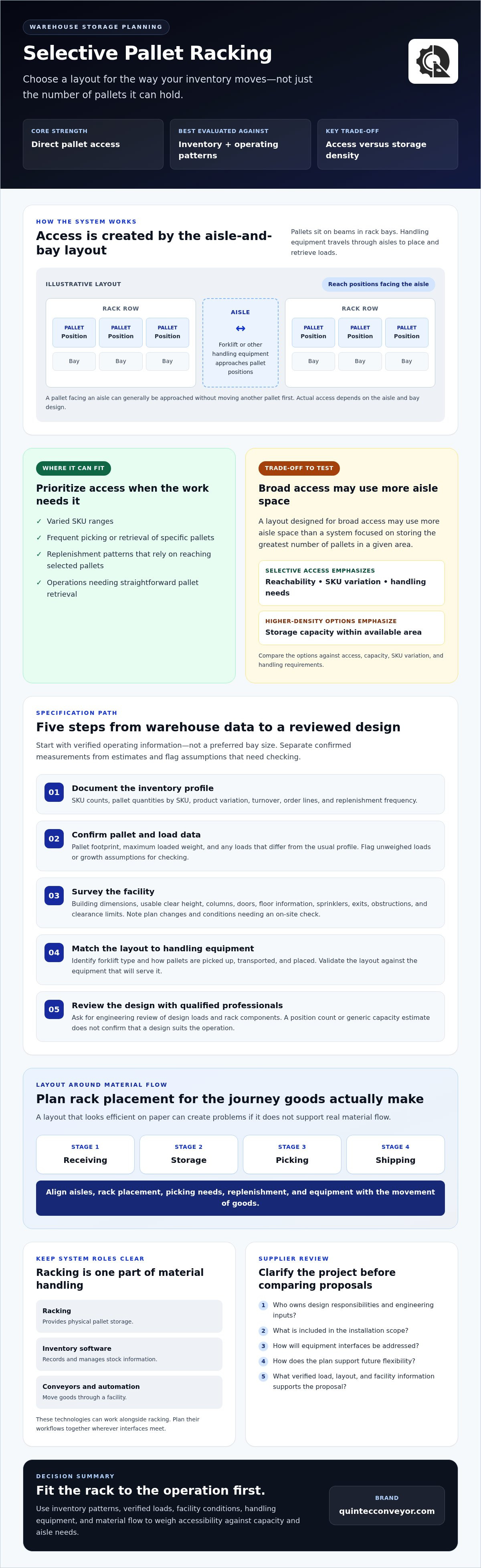
Selective pallet racking is a configurable storage system that gives warehouse teams access to individual pallet positions from designated aisles. Its main operational advantage is accessibility: teams can retrieve a selected pallet without first moving other pallets in the same storage lane. This arrangement can suit operations with varied SKUs, frequent picking, or replenishment patterns that depend on reaching specific pallets.
In a typical layout, pallets rest on beams within rack bays arranged in rows. Forklifts or other handling equipment travel through aisles to place and retrieve loads. The arrangement determines which positions are reachable and from where. As the pallet racking systems overview describes, configurations vary, so “selective” does not mean every position is equally accessible in every layout.
How selective pallet rack supports direct pallet access
Access depends on the aisle and bay design, not just the rack itself. A pallet facing an aisle can generally be approached without moving another pallet first. In a modified layout, however, some positions may require additional handling or have more limited access. When planning picking and replenishment, identify which SKUs need frequent retrieval, how often stock is replenished, and whether teams need access to individual pallets throughout the day.
Selective pallet racking systems provide physical storage, not inventory control or automated movement. Inventory software records and manages stock information; conveyors and automation move goods through a facility. These technologies can work alongside racking, but they address different needs. Where their workflows meet, plan the interfaces together.
Which warehouse operations should consider selective racking?
Consider selective racking if your operation needs straightforward pallet retrieval across a range of products. It may suit warehouses with varied SKUs, active picking, or replenishment practices that rely on locating particular pallets without reorganizing a storage lane. The trade-off is that a layout designed for broad access may use more aisle space than a system focused on storing the greatest number of pallets in a given area.
Test the fit against inventory and order data rather than assumptions about warehouse needs. Review SKU counts, pallet quantities by SKU, turnover, order lines, and replenishment frequency. Then compare those patterns with the planned bays, aisles, and handling equipment. Capacity also depends on verified load information, the final layout, and facility conditions. A position count alone does not confirm that a proposed design is suitable. This information gives suppliers a clearer basis for assessing the system and its operating trade-offs.
How to Specify Selective Pallet Racking for Your Inventory and Facility
A reliable rack proposal starts with verified operating information, not a preferred bay size. Follow five steps: document the inventory profile, confirm load data, survey the facility, match the layout to handling equipment, and review the resulting design with qualified professionals. Before rack configuration begins, gather pallet dimensions, maximum loaded weights, SKU counts, turnover and replenishment patterns, usable building dimensions, site constraints, and forklift details.
Inventory, pallet, and load information to prepare
Record the pallets and products the system must support. Include the pallet footprint, maximum loaded weight, product variation, and how frequently each SKU is stored, picked, or replenished. Note loads that differ from the usual profile, since outliers can affect design assumptions.
Separate confirmed measurements and operating data from estimates. Flag assumptions that need checking, such as future inventory growth or an unweighed product load. Give the supplier enough detail to assess the proposed configuration, and request an engineering review of design loads and rack components. Do not treat an unverified rating or generic capacity estimate as confirmation that a design suits your operation.
Facility and forklift constraints that shape the layout
Document the space available for storage. Record building dimensions and usable clear height, along with columns, doors, floor information, sprinklers, exits, and other obstructions or clearance limits. A site plan is useful, but note any changes since it was created and flag conditions that need an on-site check.
The rack arrangement must also suit the equipment that will serve it. Identify the forklift type and how pallets are picked up, transported, and placed. Ask the project team to validate handling clearances and aisle assumptions against the actual equipment and workflow. Consider rack protection in relation to traffic paths and potential impact areas.
Some questions need review by qualified professionals familiar with the facility and applicable requirements. Flag fire protection, egress, seismic conditions, floor suitability, and building-code considerations early. Do not assume a preliminary layout resolves them. The Material Handling Industry (MHI) is a useful starting point for industry information; confirm project-specific requirements with the appropriate professionals.
Before approving a configuration, compare its assumptions with the inventory records, facility survey, and equipment plan. Check that unresolved estimates are identified and that the proposal explains who is responsible for design inputs and engineering review. If racking choices also affect conveyors, automation, or facility infrastructure, discuss how those interfaces should be coordinated with a material-handling provider such as Quintec Conveyors' material-handling capabilities.
Selective Pallet Racking vs. Higher-Density Storage: Compare the Trade-Offs
Storage configurations balance pallet access, space use, and handling requirements in different ways. Assess storage density and pallet selectivity together: gaining positions may change how easily teams reach, replenish, and retrieve individual loads. Use this comparison to identify options for a layout review, not as a substitute for checking your inventory and equipment.
| Configuration | Direct access | Storage density | SKU variation | Handling needs and complexity |
|---|---|---|---|---|
| Selective rack | Generally, each pallet position is reached from an aisle. | Often lower than systems that reduce aisle access or store pallets in lanes. | Can accommodate varied SKUs and individual pallet retrieval. | Requires aisle access; layout must suit the handling equipment and workflow. |
| Double-deep rack | Front positions are directly accessible; rear positions require moving a front pallet. | Can increase storage density by placing positions deeper. | May suit operations with more pallets per SKU or planned access to rear loads. | May require equipment capable of reaching deeper positions and deliberate sequencing. |
| Drive-in rack | Access is organized by lane, so pallets within a lane may not be individually reachable from the aisle. | Can provide higher density by reducing the number of aisles. | Often better suited to fewer SKUs stored in multiple pallets per lane. | Forklifts enter the rack structure; loading and retrieval sequence becomes a key consideration. |
| Pallet flow rack | Loads enter and exit from different ends of a lane, rather than being accessed from a shared aisle at each position. | Can increase density by using deeper lanes and fewer aisles. | Typically organized around dedicated lanes for specific SKUs. | Uses flow lanes and requires compatible handling, replenishment, and retrieval processes. |
These distinctions are general, and actual configurations vary. An overview of pallet racking systems can help familiarize buyers with common layouts. A site-specific design must still account for loads, facility conditions, and equipment.
When direct access can outweigh maximum storage density
Selective pallet racking systems may be worth evaluating when teams pick from many SKUs or replenish individual products frequently. More aisle access can support those workflows, but aisles also take up floor area and must accommodate the equipment in use. Assess usable capacity across the whole layout, not just the number of rack positions.
When another pallet-racking configuration may be worth evaluating
If your main objective is to store more pallets within a constrained footprint, compare deeper or lane-based configurations. Drive-in and pallet flow options change how loads are accessed and may require different replenishment sequences or equipment. Review the proposed layout against SKU quantities, picking patterns, aisle needs, and facility flow before choosing a system based on density alone.
Plan Selective Pallet Rack Installation Around Safety and Material Flow
Rack installation is a facility project, not simply an equipment delivery. Selective pallet racking systems need to fit the approved layout, site conditions, material-handling equipment, and daily operating sequence. Plan these interfaces early to identify conflicts before they affect installation or warehouse operations.
Installation readiness and safety coordination
Start with a site survey and confirm that the proposed layout reflects current building conditions. Before scheduling work, clarify the approved drawings, site access, installation sequence, work-area coordination, and who is responsible for resolving design questions. Check that rack locations and aisles account for columns, doors, exits, fire-protection equipment, and other facility constraints.
Include rack protection and inspection planning in the project discussion. Consider where forklift traffic, turning movements, and staging could expose rack components to impact, then determine whether protection measures are appropriate. Establish how the completed installation will be reviewed and what information operators need at handoff. Requirements vary by facility, so have qualified professionals verify applicable engineering, building, fire, seismic, and workplace obligations rather than relying on a generic checklist.
Connect rack locations to warehouse movement
Trace the pallet journey through receiving, storage, picking, staging, and shipping. Check that each transition works with the planned aisle arrangement and that temporary staging will not obstruct travel paths or access to stored loads. Include staff practices in the review: teams need to understand traffic patterns, handling procedures, and how to report rack damage or other concerns.
Conveyors or automation can change where pallets enter, exit, or queue, so identify those interfaces when validating rack placement. For example, a conveyor transfer point near a rack aisle may affect traffic separation, access, and how replenishment reaches picking areas. For related planning, see industrial conveyor systems planning. Broader strategic warehouse design services and custom material handling system design can also help frame how storage connects to facility flow.
Close the project with an operational handoff that confirms the installed layout, review responsibilities, and relevant operating information. If your rack plan intersects with conveyors, automation, or facility infrastructure, discuss material-handling coordination with Quintec.
Choose a Selective Pallet Racking Partner for the Whole Project
A sound proposal makes its assumptions and responsibilities visible. Compare suppliers not only on the proposed rack layout, but also on who reviews design inputs, coordinates installation, addresses equipment interfaces, and provides information for operational handoff. Selective pallet racking systems are one part of a working facility, so the project scope should account for how storage connects with daily material movement and possible future changes.
Questions to ask before approving a rack proposal
Use the same review sequence for each proposal. Ask how the supplier reached its recommendations, what work is included, and where your team or other specialists need to contribute.
- Which inventory, pallet, and load assumptions informed the configuration, and which still need verification?
- What site conditions were reviewed, and what facility information remains outstanding?
- Who is responsible for design review, installation coordination, and operational handoff?
- What is included or excluded from the scope, and are specialist reviews required?
- How could the layout accommodate changes to inventory, equipment, or material flow?
Clear answers help you compare proposals on scope and accountability, not just on drawings. Before approval, confirm that load information, engineering inputs, and installation responsibilities are documented and reviewed by the appropriate professionals.
When to involve a material-handling integration partner
Consider a partner with broader material-handling capabilities when rack locations interact with conveyors, automation, or facility-wide workflows. A new transfer point or automated movement path, for example, may influence where pallets are stored, staged, or retrieved. Coordinated planning lets project teams examine those interfaces together while keeping technical requirements and responsibilities clear.
Quintec supplies warehouse racking and infrastructure alongside conveyors, automation, and process engineering capabilities. The company emphasizes a team with more than 100 years of collective industry experience. Confirm the racking products, engineering inputs, installation scope, and handoff responsibilities relevant to your project.
Bring your layout, inventory assumptions, equipment plans, and open questions to the first discussion. To explore whether coordinated racking and material-handling capabilities fit your project, discuss your warehouse material-handling requirements with Quintec.
Make Your Next Racking Decision With Confidence
The right storage plan starts with how your operation handles inventory, not with a target pallet count alone. Match rack access to SKU variety, picking, and replenishment patterns, then verify load information, facility constraints, and forklift requirements before approving a configuration. Compare selective and higher-density options, and consider how aisles and equipment interfaces affect the movement of goods across the facility.
A clear supplier proposal should document its assumptions, design and installation responsibilities, open questions, and handoff plan. This gives your team a stronger basis for comparing solutions and preparing for future operational changes.
Quintec provides warehouse racking alongside conveyor, automation, infrastructure, and process-engineering capabilities. The company emphasizes a team with more than 100 years of collective industry experience. If you’re ready to assess how racking fits your wider material-handling plans, discuss your warehouse racking and material-handling requirements.
With sound information and coordinated planning, selective pallet racking systems can be evaluated against your facility’s needs and the way your operation moves goods. Take the next step with a clear brief and the right questions for your supplier discussion.
Frequently Asked Questions
What is a selective pallet racking system?
A selective pallet racking system stores palletized goods in bays arranged along aisles, allowing equipment to reach pallet positions from the aisle. Selective pallet racking systems are commonly considered when an operation needs access to a range of SKUs or regularly retrieves individual pallets. The layout, aisle arrangement, loads, and handling equipment all affect how accessible positions are, so evaluate the system against actual warehouse workflows and facility conditions.
Is selective pallet racking right for a warehouse with many SKUs?
It can be a practical option for warehouses with many SKUs because teams can generally retrieve pallets from accessible positions without moving other loads first. This can support varied picking and replenishment needs, but the layout also needs aisle space for handling equipment. Compare the access benefits with the storage density of alternative configurations. Use SKU quantities, order activity, and replenishment patterns to assess whether the trade-off suits your operation.
How do you determine the load capacity needed for pallet racking?
Start with verified information about the heaviest pallet loads the rack must hold, including loaded pallet weight and the intended storage arrangement. Collect measurements and distinguish confirmed data from estimates that need checking. Give these inputs, along with facility and layout details, to qualified professionals for engineering review. Do not rely on a generic capacity figure or assume a proposed configuration is suitable without confirming its design assumptions.
Can selective pallet racking work with different forklift types?
It can work with different forklift types, but the rack layout must be assessed against the equipment that will serve it. Forklift dimensions, turning needs, lift reach, pallet handling, and aisle clearances can influence where racks fit and how positions are accessed. Confirm the actual equipment specifications and operating method with the project team, then validate aisle and clearance assumptions against the facility plan before approving a configuration.
What is the difference between selective and drive-in pallet racking?
Selective rack generally provides aisle access to individual pallet positions, while drive-in rack stores pallets in lanes that forklifts enter. In drive-in layouts, reaching a pallet may depend on its position and the loading sequence. Drive-in configurations can prioritize storage density, while selective arrangements emphasize access. The better fit depends on SKU variety, pallets per SKU, picking patterns, equipment, and available facility space.
Does selective pallet racking need to be integrated with conveyors or automation?
No. Racking can operate as a standalone storage system; integration is a project choice based on facility flow and handling requirements. Consider coordination if conveyors or automation move goods to, from, or near rack locations. Transfer points, staging needs, and traffic paths may affect rack placement and workflow. Define project interfaces early, and confirm responsibilities and technical requirements with the relevant equipment and facility professionals.
What should I ask a pallet racking supplier before buying?
Ask which pallet dimensions, loaded weights, inventory assumptions, and site conditions informed the proposal. Clarify who reviews design inputs, coordinates installation, and manages operational handoff, and request a clear list of included work and exclusions. Ask how the layout accommodates handling equipment and future changes. Have qualified professionals verify applicable engineering, building, fire, seismic, and workplace requirements for your facility before approval.