Sortation Conveyors: How to Design for Accurate, High-Throughput Flow
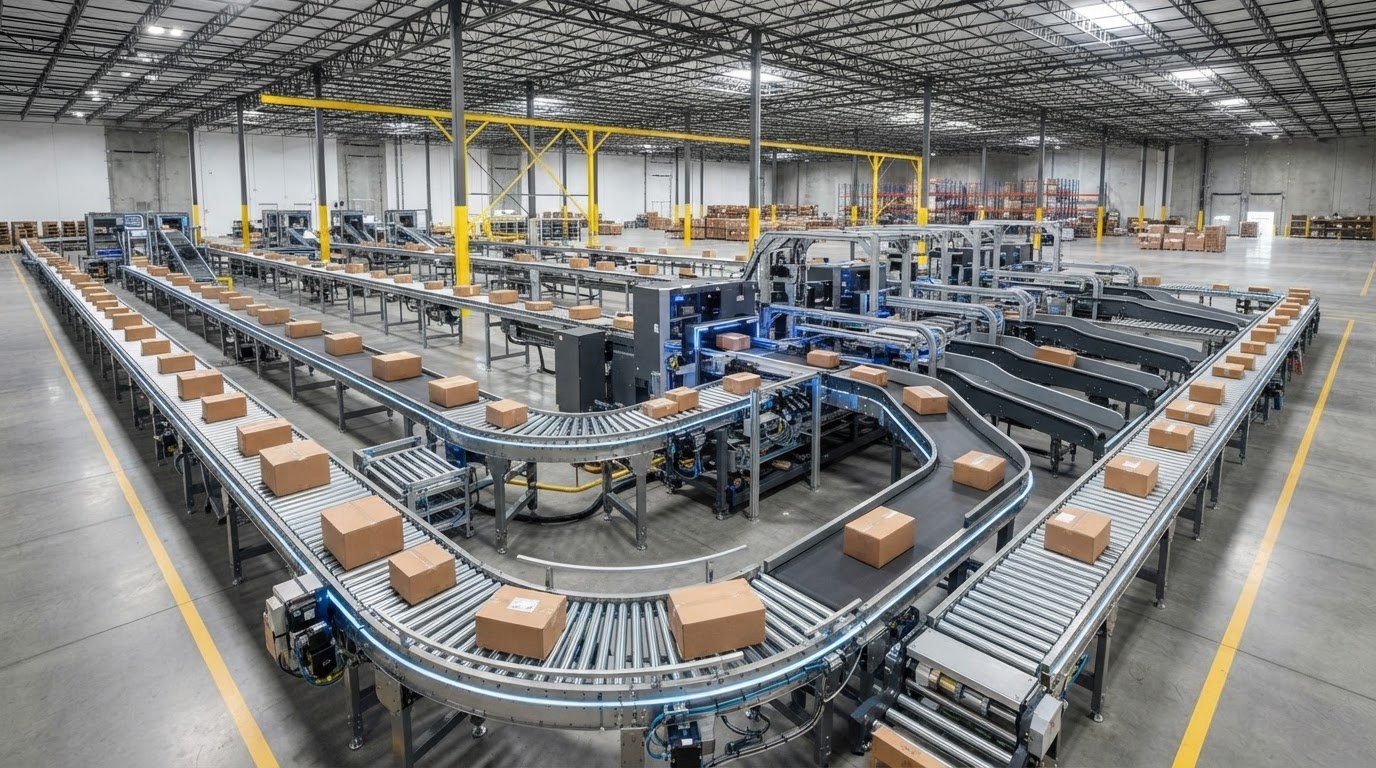
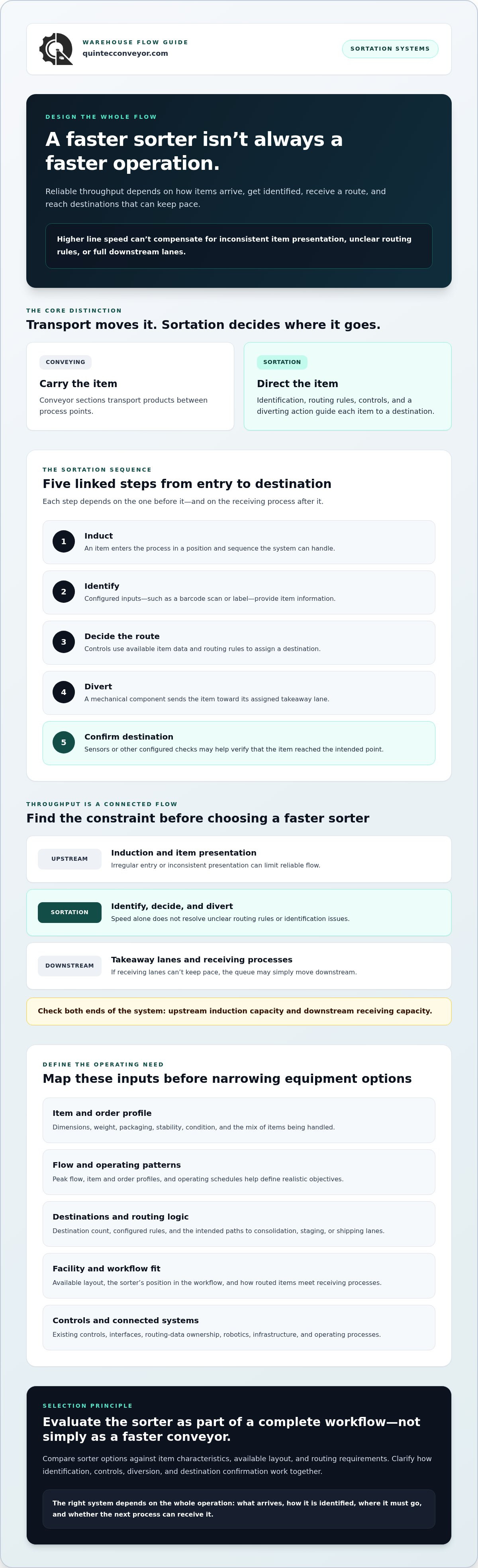
What if the fastest sorter still slows your operation down? Sortation conveyors deliver reliable throughput only when the flow is designed around how items arrive, get identified, and move to their destinations. Higher line speed can’t compensate for inconsistent item presentation, unclear routing rules, or downstream lanes that can’t keep pace.
Choosing a sortation technology also means considering how it will fit the existing operation. The right system depends on more than a target number of items per hour. Product mix, destination count, facility layout, operating patterns, and connections to existing controls all shape performance.
This guide explains how sortation conveyors identify and route items, what can affect accuracy and throughput, and how common conveyor and sorter types differ. It also outlines the requirements to define before selecting equipment, from peak flow and package characteristics to routing logic and downstream capacity. With those needs mapped, you can evaluate the sorter as part of a complete workflow, not simply as a faster conveyor.
Key Takeaways
- Separate the tasks of moving, identifying, routing, diverting, and confirming items to clarify what your sortation workflow needs.
- Compare sorter types against item characteristics, available layout, and routing requirements before narrowing equipment options.
- Use item and order profiles, operating schedules, and destination logic to define realistic system objectives.
- Check upstream induction and downstream receiving capacity so the sorter doesn’t shift the bottleneck elsewhere.
- Plan controls, robotics, infrastructure, and operating processes as connected parts of the sortation conveyors project.
Sortation Conveyors and Their Role in Warehouse Flow
A sortation conveyor system moves items through a material handling flow and directs each one to a designated destination. Conveying is the transport function; sortation adds the decisions and actions that determine where an item should go. As the Material-handling equipment overview describes, these systems can bring products together, identify them, induct them into the process, and separate them toward different destinations.
In a warehouse, sortation may follow picking or packing and feed order consolidation, outbound staging, or shipping lanes. Its position depends on the workflow. An item might be routed to a packing station, grouped with other items for an order, or sent to a carrier-specific staging area. The destinations should reflect the operation’s routing rules, not just the building layout.
How does a sortation conveyor route an item?
Routing begins at induction, where an item enters the sorting process in a position and sequence the system can handle. Identification may use a barcode scan, a configured label, or another system input, depending on the equipment and design. Controls use the available item data and routing rules to assign a destination, then signal the diverting mechanism to send the item toward the appropriate takeaway lane. Sensors or other configured checks may help confirm that the item reached the intended point. Verify how confirmation works in the proposed system.
These functions are related but distinct. A conveyor carries the item, an identification step supplies or reads information, controls determine the route, and a mechanical component performs the diversion. Separating these roles helps teams trace where a routing error or delay might occur.
What warehouse problems can sortation address?
Sortation can organize products by destination, directing picked or packed items toward order consolidation and outbound staging. For example, if items for several orders arrive on a shared conveyor, routing can send them to different lanes or work areas according to configured logic. This can reduce reliance on people manually carrying or separating every item, particularly when volumes or destination needs change.
Sortation addresses a routing need, not every workflow constraint. If induction is irregular, downstream lanes are full, or another process step can’t keep pace, the sorter may simply move the queue elsewhere. Before choosing sortation conveyors, map how items enter, where they need to go, and whether receiving processes can handle the routed flow.
How Sortation Conveyors Work: From Item Identification to Destination
A sortation process typically moves an item through induction, identification, a routing decision, diversion, and destination confirmation, though equipment and controls at each stage depend on the system design. Each step must work with the next: a correct route decision won’t help if the item wasn’t identified clearly or the takeaway lane can’t receive it.
The Conveyor and Sortation Systems (CSS) Industry Group describes sortation systems within the broader role of moving products through manufacturing and distribution. In practice, coordination matters as much as the mechanical sorter. Scanners or other configured inputs provide item information; sensors can detect presence or position; controls process signals and coordinate equipment; and diverting components direct items onto selected paths.
Which components coordinate the sortation process?
Conveyor sections carry items between process points, while identification devices capture information such as a label or barcode when the system is configured to use it. Controls translate routing instructions into equipment actions, and mechanical diverting mechanisms move items toward assigned lanes. Sensors may support timing and status checks, but their role varies by design.
A warehouse management system may determine an item’s order or destination, while equipment-level controls manage actions such as conveyor movement and diversion. That division isn’t universal. Confirm the system architecture, interfaces, and ownership of routing data during project planning.
Why do item and flow characteristics matter?
Reliable handling depends on the products as well as the equipment. Dimensions, weight, packaging, stability, and condition can influence how an item travels, whether it can be identified, and how a diverting mechanism handles it. A rigid carton and a soft, irregularly shaped package may behave differently on the same conveyor. Allowable item profiles depend on the selected equipment, so compare proposed specifications with the actual product mix.
Presentation matters, too. Items arriving at inconsistent angles or with little spacing between them can make identification and diversion more difficult. An obscured label or a package that shifts during travel may also interfere with the configured process. Document typical and outlier items, their orientation, and the spacing expected at induction. Then validate those conditions against the proposed design instead of assuming one configuration will handle every package.
For a project-specific review, discuss item profiles, identification inputs, and control interfaces with a partner experienced in conveyor engineering and integration.
Sortation Conveyor Types and Trade-Offs: Match the Method to the Flow
No sorter is right for every operation. The best fit depends on the items being handled, the destinations they must reach, the available footprint, and how the rest of the system feeds and receives product. The MHI overview of sortation systems is a useful reference for understanding common automated methods, but equipment details still need to be checked against the application.
How do common sortation methods differ?
These systems use different mechanisms to move items off the main conveying path. The table is a starting point for comparison, not a substitute for reviewing equipment specifications and testing representative items.
| Method | How it diverts | What to assess | Questions to validate |
|---|---|---|---|
| Sliding shoe | Moving shoes travel along the sorter and push items toward a side destination. | Item stability, dimensions, packaging, and space for side takeaways. | Can the item be pushed reliably, and can the lane receive it without disrupting flow? |
| Cross-belt | Items ride on individual belt-equipped carriers that transfer them laterally toward a destination. | Item presentation, carrier configuration, loop or track layout, and destination access. | Does the proposed configuration suit the product mix and required routing pattern? |
| Tilt-tray | Items travel on trays that tilt to release them toward a chute or takeaway. | Package stability, tray fit, chute arrangement, and return-path footprint. | Will items remain stable during travel and discharge as intended? |
| Pop-up wheel | Wheels rise from the conveyor surface and guide items onto an angled path. | Item base, orientation, spacing, and the available space for divert lanes. | Can the item be guided without shifting or interfering with adjacent product? |
Which selection criteria should operations teams compare?
Start with the full operating picture: item mix, destination count, routing patterns, available footprint, and anticipated changes in facility operations. Then review accumulation needs, recirculation paths for items that miss a destination, and exception handling for unreadable or unexpected product. Include maintenance access and the work needed to keep the system supplied and clear.
Flexibility has trade-offs. A layout that accommodates varied routing may require more coordination between controls, conveyor sections, and downstream processes. A simpler arrangement may be easier to operate but less adaptable to changing destination needs. Confirm these implications with design documentation and the equipment supplier.
Keep sorter selection separate from total system capacity. Induction may limit how consistently items enter the sorter, while takeaway lanes or receiving processes may constrain how quickly routed items can be cleared. Evaluate the complete flow, including upstream feed and downstream capacity, before setting system objectives for sortation conveyors.
How to Plan a Sortation Conveyor System Around Real Throughput Needs
Set system objectives from observed work, not a target speed in isolation. Before specifying sortation conveyors, document what moves through the facility, how orders are grouped, which destinations receive items, and how those patterns change across shifts and peak periods. This evidence connects the routing requirement to the full workflow.
What data should a facility gather before design?
Build a representative operating profile using available records and input from warehouse, operations, and maintenance teams. Include:
- Item dimensions, weights, packaging types, and any unusual or unstable products.
- Order profiles, destination distribution, and the routing rules items must follow.
- Operating schedules, shift patterns, and known peak periods.
- Current process times, observed queues, congestion points, and manual handling steps.
- Data interfaces, exception paths, safety needs, and access requirements for inspection and maintenance.
Validate the information with the people who run each process. Order records may show destination volume, for example, while floor observations reveal that a downstream work area regularly backs up during a particular shift. Both matter. Note assumptions and gaps so they can be checked during engineering instead of being treated as established facts.
How can teams avoid a new bottleneck?
Map flow from upstream induction through sorter discharge, accumulation, and downstream receiving. Check whether each process can accept the intended flow, including during busy periods. Identify where items wait, how exceptions are removed or recovered, and what happens if a destination lane is temporarily unavailable.
Plan safe, practical maintenance access and consider how the system will be inspected without disrupting adjacent work. Where appropriate, use modeling or an engineering review to test the proposed flow. Confirm the method, assumptions, and equipment specifications for the project. A model is only useful when its inputs reflect actual items, schedules, and operating rules.
Sortation planning is a workflow and integration exercise, not just equipment selection. Conveyor design, process requirements, infrastructure, and automation interfaces may all shape the solution. For broader context on how conveyor choices fit into a facility system, explore industrial conveyor systems and consider how the wider material flow supports your routing objectives.
Integrating Sortation Conveyors: From System Requirements to Next Steps
A sortation project connects more than conveyor equipment. Controls must exchange the right information, infrastructure must support the layout, and operating processes must work with how items are inducted, routed, and received. Robotics or other automation may also be part of the workflow. Treating these elements as one coordinated system helps surface interface questions before they become installation or operational issues.
What should an integration partner help coordinate?
An integration partner can help translate operational requirements into coordinated decisions about facility layout, conveyor equipment, controls, and work practices. Agree early on who owns each interface, what information must pass between systems, how testing will be handled, and who is responsible for training and handover. Document these responsibilities rather than assuming they are understood.
Project planning typically moves through discovery, requirements definition, system design, installation, commissioning, and operational handover. The stages may overlap, but each should produce clear inputs for the next. Quintec Conveyors capabilities in conveyor design, engineering, installation, and integration, along with automation and process engineering, support the need to connect equipment choices with the work the system must perform. When evaluating potential partners, ask how they coordinate those responsibilities and what experience they bring to projects with comparable requirements.
What are practical next steps for a sortation project?
Before committing to a technology or performance assumption, assemble the information an engineering review needs. A concise project-readiness checklist can include:
- Representative item and order profiles, including dimensions, weights, packaging, and destination patterns.
- Current process flow, operating schedules, observed constraints, and expected changes in demand or routing.
- Facility layout, available footprint, upstream induction, downstream receiving capacity, and maintenance access needs.
- Required data interfaces, exception paths, safety considerations, and stakeholders responsible for decisions.
- Clear success measures, such as routing requirements and process objectives, validated against the proposed system design.
Use this information to review assumptions with operations, engineering, maintenance, and technology stakeholders. Confirm equipment limits and interfaces against design documentation rather than relying on generic capacity claims. This review can clarify whether the proposed arrangement supports the whole flow or shifts a constraint to another process step.
With requirements in hand, discuss conveyor integration and process engineering needs with Quintec Conveyors to assess how the system could fit your facility’s workflow.
Build a Sortation Plan Around Your Entire Workflow
Effective sortation begins with a clear understanding of item flow, destination logic, and the capacity of the processes around the sorter. The right equipment depends on those operating requirements, while reliable performance also relies on coordinated induction, identification, controls, diversion, and downstream receiving.
Planning sortation conveyors means evaluating the complete system, not just choosing a sorter. Define item profiles and operating constraints, compare technology options against facility needs, and review interfaces and assumptions before committing to a design. A well-defined project gives engineering teams a stronger basis for matching conveyor and automation choices to actual workflows.
Quintec’s team brings over 100 years of collective industry experience, with conveyor design, engineering, installation, and integration capabilities for industrial customers across the United States. To discuss your facility’s requirements, contact Quintec about your sortation conveyor requirements.
Frequently Asked Questions
What is a sortation conveyor?
A sortation conveyor is a material handling system that moves items and directs them to assigned destinations, such as order consolidation areas, packing stations, or outbound lanes. Unlike a conveyor used only to transport products, a sortation system also uses item information and routing logic to determine where items should go. Its purpose is to organize product flow across multiple destinations within a warehouse or distribution process.
How does an automated sortation conveyor work?
An automated sortation conveyor typically moves an item through induction, identification, a routing decision, diversion, and, where configured, destination confirmation. A scanner or other system input may provide item information, while controls match that information to routing instructions. Sensors can detect item presence or position, and a mechanical diverting device directs the item toward a lane or takeaway. The specific sequence and components depend on the equipment and system design.
Which types of sortation conveyors are commonly used?
Common methods include sliding-shoe, cross-belt, tilt-tray, and pop-up wheel sortation. Sliding shoes push items toward side lanes; cross-belt carriers transfer items laterally; tilt trays release items toward chutes or takeaways; and pop-up wheels guide items onto an angled path. These methods differ in handling action and layout needs. Review equipment specifications against item characteristics and routing requirements rather than assuming one type suits every operation.
How do I choose the right sortation conveyor for my warehouse?
Choose a system by matching equipment to your item mix, destination count, routing patterns, facility footprint, and operating needs. Confirm item dimensions, weight, packaging, stability, and presentation, then assess how items enter the sorter and whether downstream areas can receive them. Also compare exception handling, accumulation, maintenance access, and control interfaces. A design review based on observed flow can help validate assumptions before selecting a technology.
Can a sortation conveyor increase warehouse throughput?
A sortation conveyor can support higher flow by routing items to destinations without requiring each one to be manually carried and separated. However, the sorter alone doesn’t determine overall throughput. Induction, identification, diverting, takeaway lanes, and downstream work areas must all support the intended flow. If one stage is constrained, the queue may simply move elsewhere. Evaluate system capacity across the complete process and verify performance against the proposed design.
What information is needed to plan a sortation conveyor system?
Gather representative item dimensions, weights, packaging types, order profiles, destination patterns, and operating schedules. Document current process times, peak periods, congestion points, and how items are inducted and received downstream. Include exception paths, facility constraints, data interfaces, safety needs, and maintenance access. Validate records with operations, engineering, and maintenance stakeholders so the design reflects actual work as well as planned routing requirements.
How do sortation conveyors integrate with warehouse software and controls?
Integration connects routing information with equipment actions. Depending on the project architecture, warehouse software may provide order or destination data, while equipment-level controls coordinate conveyor movement and diversion. Scanners, sensors, and other configured inputs can support item identification and position checks. Define interfaces, data ownership, exception handling, testing responsibilities, and handover requirements early. The exact division of functions varies, so confirm it with the project engineering team.