
Preventative Maintenance for Conveyor Systems: 2026 Guide

Did you know that unplanned downtime from conveyor failures can cost manufacturers as much as $260,000 per hour? In the high-stakes industrial landscape of 2026, a reactive approach to equipment health is no longer a viable strategy. You likely understand that consistent throughput depends on the reliability of your mechanical assets, yet finding the time for thorough preventative maintenance for conveyor systems often feels impossible when your facility runs 24/7.
We're here to help you bridge that gap by evolving your maintenance culture from simple grease-and-tension checks into a sophisticated asset management strategy. This guide provides the protocols and predictive strategies you need to eliminate unplanned downtime and maximize the lifespan of your industrial infrastructure. We'll outline a clear, tiered roadmap that integrates traditional mechanical expertise with modern IoT sensors, ensuring your systems hit their performance targets while delaying expensive capital expenditures.
Key Takeaways
- Shift from reactive repairs to a proactive asset management strategy that protects your entire integrated system rather than just individual components.
- Focus on the "Triple Threat" of high-wear areas—belts, motors, and drives—to ensure your facility maintains precise timing and consistent throughput.
- Establish a tiered roadmap for preventative maintenance for conveyor systems that balances daily visual inspections with deeper weekly mechanical adjustments.
- Utilize predictive technology to identify early warning signs of belt slippage and structural mistracking before they escalate into costly failures.
- Understand the strategic value of professional engineering audits and how they provide deeper operational insights than standard in-house cleaning routines.
The Strategic ROI of Preventative Maintenance for Conveyor Systems
Preventative maintenance (PM) is far more than a simple cleaning schedule; it is a rigorous, proactive approach to system health that prioritizes scheduled inspections and adjustments over emergency repairs. By addressing mechanical wear before it triggers a system shutdown, facilities can maintain a consistent operational tempo. This strategic foresight is essential for protecting the integrity of complex industrial conveyor systems, where a single failed bearing can halt an entire production line.
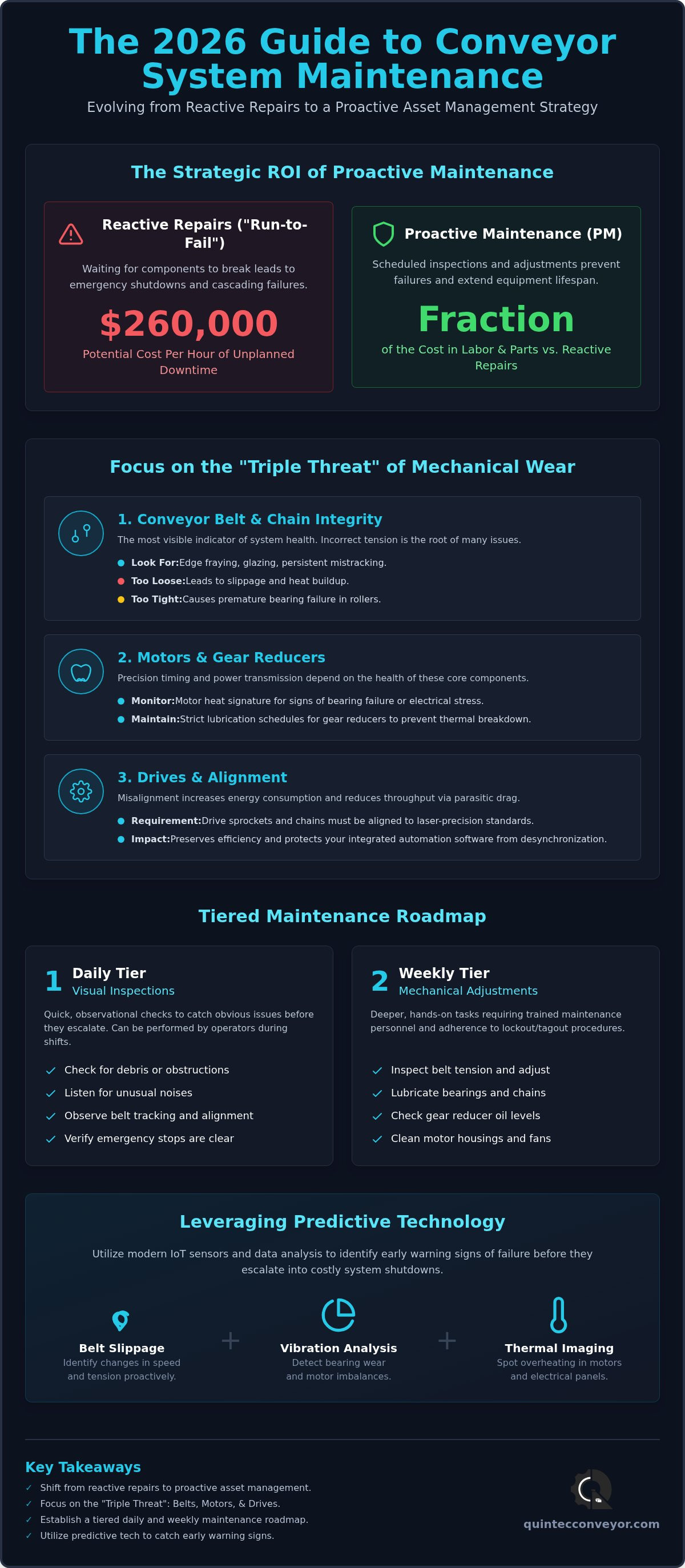
In high-volume distribution centers, the financial disparity between proactive care and reactive repair is stark. Industry data indicates that unplanned downtime can cost manufacturers up to $260,000 per hour. Conversely, a structured PM program requires a fraction of that cost in labor and parts. Investing in Conveyor system care and maintenance ensures that you are not just fixing equipment, but actively managing your facility's throughput. This approach extends the functional lifecycle of your hardware, allowing you to delay massive capital expenditures (CapEx) by several years.
Moving from Reactive to Proactive Operations
A "run-to-fail" mentality is a significant liability in 2026 logistics. When components are pushed to their absolute breaking point, the resulting failures are rarely isolated. A snapped belt often damages rollers or sensors, leading to cascading repairs that extend downtime. Consistent preventative maintenance for conveyor systems reduces the frequency of emergency sortation errors that plague unoptimized facilities. The Maintenance Gap is the delta between designed and actual equipment lifespan. Closing this gap requires a commitment to routine technical audits that keep your machinery running at its original engineering specifications.
Protecting Your Integrated Automation Investment
Modern facilities increasingly rely on sophisticated robotics and high-speed sortation. These systems require a higher degree of maintenance precision than traditional gravity conveyors because their tolerances are much tighter. Small deviations in belt tension or motor timing can cause software logic to desynchronize from mechanical hardware, leading to jams or incorrect routing. Utilizing professional warehouse design services during the planning phase ensures that your infrastructure includes sufficient access points for these critical tasks. Regular audits ensure that your physical assets remain perfectly aligned with your automation software, preserving the efficiency of your total integrated system.
Critical Components: Where Maintenance Matters Most
Effective preventative maintenance for conveyor systems requires a granular focus on the "Triple Threat" of mechanical wear: belts, motors, and drives. While a system is only as strong as its weakest link, these three components are responsible for the vast majority of mechanical failures in high-volume environments. Misalignment in the drive system doesn't just risk a breakdown; it substantially increases energy consumption and reduces overall throughput by creating parasitic drag. To maintain operational safety and compliance, all procedures must align with OSHA conveyor safety standards, particularly regarding lockout/tagout protocols during component inspection.
Conveyor Belt and Chain Integrity
The belt is the most visible indicator of system health, yet its care is often oversimplified. Maintenance teams should look for signs of fatigue such as edge fraying, glazing on the bottom surface, or persistent mistracking. These symptoms often point to incorrect tensioning. A belt that's too tight causes premature bearing failure in the rollers, while a loose belt leads to slippage and heat buildup. Cleaning protocols also vary by material; modular plastic belts require high-pressure washdowns to clear debris from hinges, whereas fabric belts often need dry cleaning methods to avoid moisture-related delamination.
Motors, Drives, and Gear Reducers
Precision timing relies heavily on the health of industrial conveyor motors. If a motor's heat signature rises above its baseline, it's often a lead indicator of internal bearing failure or electrical winding stress. Similarly, maintaining strict lubrication schedules for conveyor reducers is critical to preventing thermal breakdown of the gear oil. In modern 2026 facilities, drive sprockets and chains must be aligned to laser-precision standards to prevent vibration that can disrupt sensitive automation sensors. For facilities struggling to balance these technical requirements, a professional maintenance audit can identify hidden bottlenecks in your drive train before they cause a total system stop.
Even secondary components like O-rings and gear reducers play a pivotal role in system reliability. A brittle O-ring on a line-shaft conveyor might seem minor, but a single failure can lead to a localized jam that triggers a global system fault. By treating these components as part of a holistic ecosystem, you ensure that your infrastructure remains reliable through peak seasons and beyond. This level of detail is what separates a world-class operation from one that is constantly fighting unplanned downtime.
The 2026 Tiered Maintenance Checklist
To achieve maximum uptime, maintenance must be categorized by frequency. A tiered strategy ensures that minor issues are caught daily by floor staff while complex engineering concerns are addressed during deeper monthly and annual audits. Implementing a rigorous schedule for preventative maintenance for conveyor systems transforms your facility from a reactive environment into a precision-calibrated operation.
Daily and Weekly Operational Checks
Operators are your first line of defense against mechanical failure. Every shift should begin with a visual and auditory inspection. Staff must listen for grinding, clicking, or high-pitched squealing that indicates bearing wear or motor stress. In modular conveyor systems, it is critical to check for small debris caught in the plastic links; left unaddressed, these particles act as abrasives that shorten the belt's lifespan.
Weekly adjustments focus on safety and logic integrity. Every emergency stop must be tested to ensure immediate system cessation. Technicians should also verify belt tracking while the system is under a full operational load, as belts often behave differently than they do when running empty. Finally, staff should remove dust and film buildup from sensors and photo-eyes. Even a thin layer of warehouse dust can cause logic errors, leading to missed sortation and unnecessary system jams.
Monthly and Quarterly Technical Audits
Monthly deep-dives shift the focus to the power train and electrical infrastructure. Maintenance teams must check oil levels and clarity in all gearboxes. Inspections should also include a review of electrical terminals for signs of corrosion or loose connections that could cause intermittent faults. These small technical failures are often the root cause of "ghost" stoppages that frustrate operations teams.
On a quarterly basis, use data-driven insights to identify hidden friction points. Technicians should analyze motor amperage draw; a spike in power consumption often reveals a failing bearing or a misaligned roller that isn't yet audible. Reviewing system throughput data during these audits helps identify mechanical bottlenecks where the system is consistently underperforming compared to its original engineering specifications.
Once per year, schedule a "Full System Reset." This involves more than just standard preventative maintenance for conveyor systems; it is a comprehensive engineering audit. During this window, recalibrate the entire line to its original design parameters. This ensures that a year of high-volume operation hasn't caused the system to drift away from peak efficiency, effectively resetting the clock on your infrastructure's functional lifespan.
Troubleshooting Common Failures with Predictive Technology
While mechanical wear is inevitable, the primary cause of conveyor failure remains avoidable: debris and inadequate sanitation. The accumulation of dust, grit, and product fragments creates friction that erodes belts and jams bearings. When you see belt slippage or persistent mistracking, don't just tighten the take-ups. These are often symptoms of deeper structural issues, such as a racked frame or a failing drive pulley, that require more than a standard adjustment. Effective preventative maintenance for conveyor systems must address these root causes rather than just treating the surface-level effects.
Solving Recurring Mechanical Issues
To solve recurring mechanical issues, you must look beyond the immediate break. Roller seizure is a common culprit; if a roller stops turning, the belt slides over it, creating a flat spot that eventually saws through the belt surface. Addressing material spillage is equally vital. By utilizing process engineering, you can redesign chute transitions and maintain skirtboards to contain product flow and protect sensitive internals. Vibration Analysis is a diagnostic tool used to detect early-stage bearing failure by measuring abnormal frequency patterns in rotating components.
The Future: Predictive Maintenance and AI
The industry is rapidly moving beyond scheduled preventative maintenance for conveyor systems toward data-driven predictive models. Thermal imaging allows technicians to identify "hot spots" in control panels or motors before they lead to an electrical fire or thermal shutdown. In modern MDR conveyor systems, the integration of IoT sensors enables real-time monitoring of every individual motor-driven roller. This granular data feeds into predictive algorithms that target only the components showing signs of distress. This surgical approach reduces planned downtime by eliminating unnecessary inspections of healthy parts.
If your facility is caught in a cycle of repetitive repairs, it's time to apply a more sophisticated diagnostic lens to your infrastructure. Contact Quintec today to schedule a technical audit and implement a predictive maintenance framework that secures your operational future. By shifting your focus toward these advanced methodologies, you ensure that your system hits its throughput targets consistently while extending the functional lifespan of every critical component.
Implementing a Professional Maintenance Partnership
A robust strategy for preventative maintenance for conveyor systems requires a clear distinction between routine upkeep and technical engineering. While your internal staff excels at "In-House Cleaning" and basic visual checks, these tasks are fundamentally different from "Expert Engineering Audits." A professional audit involves a deep dive into the system's structural integrity and software synchronization. This level of scrutiny identifies issues that a standard cleaning crew might overlook, such as micro-fractures in drive mounts or subtle timing drifts in sortation logic.
Success starts with selecting the right conveyor system integrator to act as your strategic partner. An integrator understands how individual components interact within your specific operational flow. Establishing a formal Service Level Agreement (SLA) provides a reliable framework for this partnership, ensuring that your material handling equipment receives consistent, high-level attention. This formalization transforms maintenance from an occasional chore into a predictable, managed business process.
Effective partnerships also address the logistical side of system health. You must maintain a precise inventory of conveyor spare parts to mitigate the risks of global supply chain volatility. Relying on an integrator to help forecast part failure rates allows you to stock critical items like motors and specialized belts before they are needed. This proactive sourcing eliminates the long lead-time delays that often turn a minor repair into a multi-day shutdown.
Training Your Internal Maintenance Team
A professional partnership doesn't replace your internal team; it empowers them. We recommend establishing clear "Ownership" roles where specific technicians are responsible for designated system zones. This accountability ensures that no section of the line is neglected. Standardized work orders and digital documentation are vital for tracking the history of every asset. By leveraging your integrator's expertise, you can upskill your on-site technicians, turning them into a sophisticated first-response unit that understands the nuances of your integrated automation.
The Quintec Approach to System Longevity
At Quintec, we leverage over 100 years of collective industry experience to design systems that are inherently maintenance-friendly. We don't just look at the belts and rollers; our process engineering team analyzes the entire flow to identify "hidden wear" in complex sortation loops. This comprehensive perspective allows us to solve mechanical bottlenecks that others might miss. To secure the future of your facility and ensure consistent throughput, consult with Quintec for a comprehensive maintenance audit. Our national service coverage ensures that your industrial infrastructure remains a reliable asset for years to come.
Securing Your Operational Future with Strategic Oversight
Modern logistics demands more than just occasional repairs; it requires a disciplined approach to asset management. By implementing a tiered schedule and integrating predictive sensors, you transform your maintenance department from a cost center into a driver of reliability. Effective preventative maintenance for conveyor systems isn't just about preserving individual belts; it's about protecting your entire automated investment from the catastrophic costs of unplanned downtime.
As specialists in high-throughput automation with over 100 years of collective industry experience, Quintec provides the national integration and engineering support necessary to keep your facility at peak performance. Don't let mechanical drift erode your bottom line. Request a Professional Conveyor System Maintenance Audit from Quintec today to identify hidden bottlenecks and extend the functional lifespan of your infrastructure.
With a proactive strategy and a dedicated partner, you can hit your throughput targets with total confidence and achieve the long-term stability your operations deserve.
Frequently Asked Questions
What is the most common cause of conveyor system failure?
Debris and material accumulation remain the primary causes of mechanical failure. When product fragments or dust enter the drive train, they act as abrasives that degrade rollers and bearings. This friction increases the load on your motors, eventually leading to thermal shutdown. Consistent sanitation routines and professional engineering audits are the most effective ways to prevent these cascading issues and protect your facility's throughput targets.
How often should a conveyor belt be inspected for wear?
We recommend a tiered approach for your facility. Floor staff should conduct visual and auditory inspections daily to catch obvious signs of fraying or unusual noises. A more technical inspection should occur weekly to verify belt tracking and tension. These frequent checks ensure that small deviations don't evolve into major structural damage, which is a core tenet of effective preventative maintenance for conveyor systems.
Can predictive maintenance completely replace preventative maintenance?
Predictive maintenance doesn't replace traditional protocols; it enhances them. While AI and sensors identify specific high-risk components, basic tasks like cleaning and manual lubrication remain essential. A hybrid strategy uses data to tell you when to intervene, but the physical work of preventative maintenance for conveyor systems is still what ultimately extends the functional life of your hardware. Both are necessary for a reliable, high-throughput environment.
What spare parts should I always keep in stock for my conveyor?
Your inventory should focus on high-wear items with long lead times. Always stock replacement belts, drive rollers, and a selection of bearings. It's also vital to have spare photo-eyes and sensors on hand, as these electronic components are prone to damage in high-traffic zones. Consult your system integrator to identify specific motors and gear reducers that are critical to your sortation loops to avoid extended downtime.
How do I know if my conveyor motor is about to fail?
Signs of motor distress usually manifest as excessive heat, increased vibration, or a high-pitched whining sound. You can use thermal imaging to detect hot spots that indicate winding stress or bearing friction. Additionally, monitoring the amperage draw during operation provides a clear signal; if the motor is pulling more power than its baseline rating, it's likely struggling against mechanical resistance and nearing a failure state.
Is it better to repair an old conveyor system or replace it?
This decision depends on the system's integration capacity and the cost of ongoing repairs. If your current infrastructure can't support modern robotics or if spare parts for your specific model are becoming obsolete, a full replacement is often more cost-effective. However, if the frame is sound, our process engineering team can often retrofit new drives and controls to modernize the system without the expense of a complete overhaul.
Does lubrication frequency change based on warehouse temperature?
Yes, extreme temperatures significantly impact lubricant viscosity and performance. In cold storage environments, standard grease can thicken and increase mechanical drag, while high-heat facilities may cause oil to thin and leak from seals. You must adjust your lubrication schedule and select specific food-grade or industrial lubricants rated for your facility's climate to ensure that your reducers and bearings remain adequately protected year-round.
How can I reduce noise levels in my conveyor system through maintenance?
High noise levels are usually a symptom of mechanical misalignment or component wear. Start by checking the tension and tracking of your belts, as slippage often creates a loud squealing sound. Inspect your rollers for flat spots or seized bearings that rattle during operation. Regular lubrication of chains and sprockets also dampens metal-on-metal friction. Proper maintenance doesn't just protect the equipment; it creates a safer and more productive work environment.