Warehouse Process Optimization: A 2026 Guide to Strategic Process Engineering
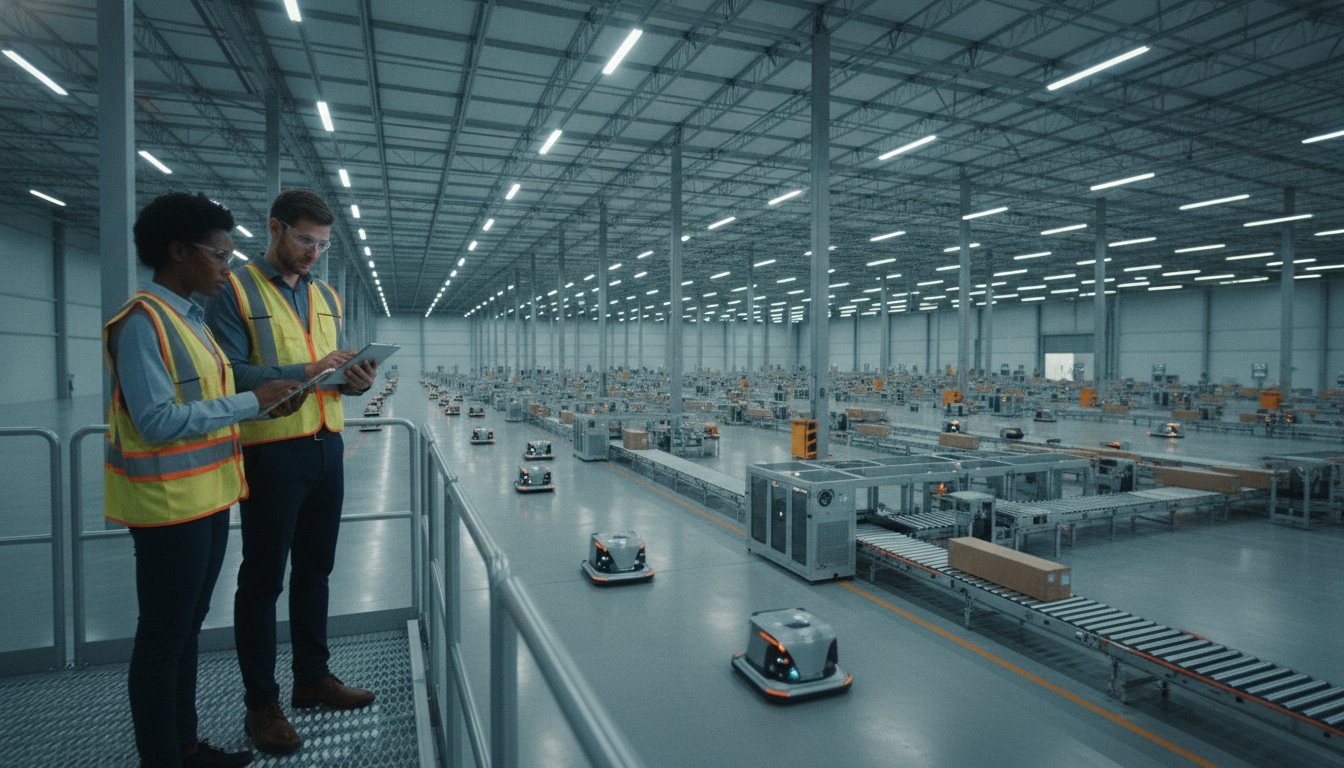
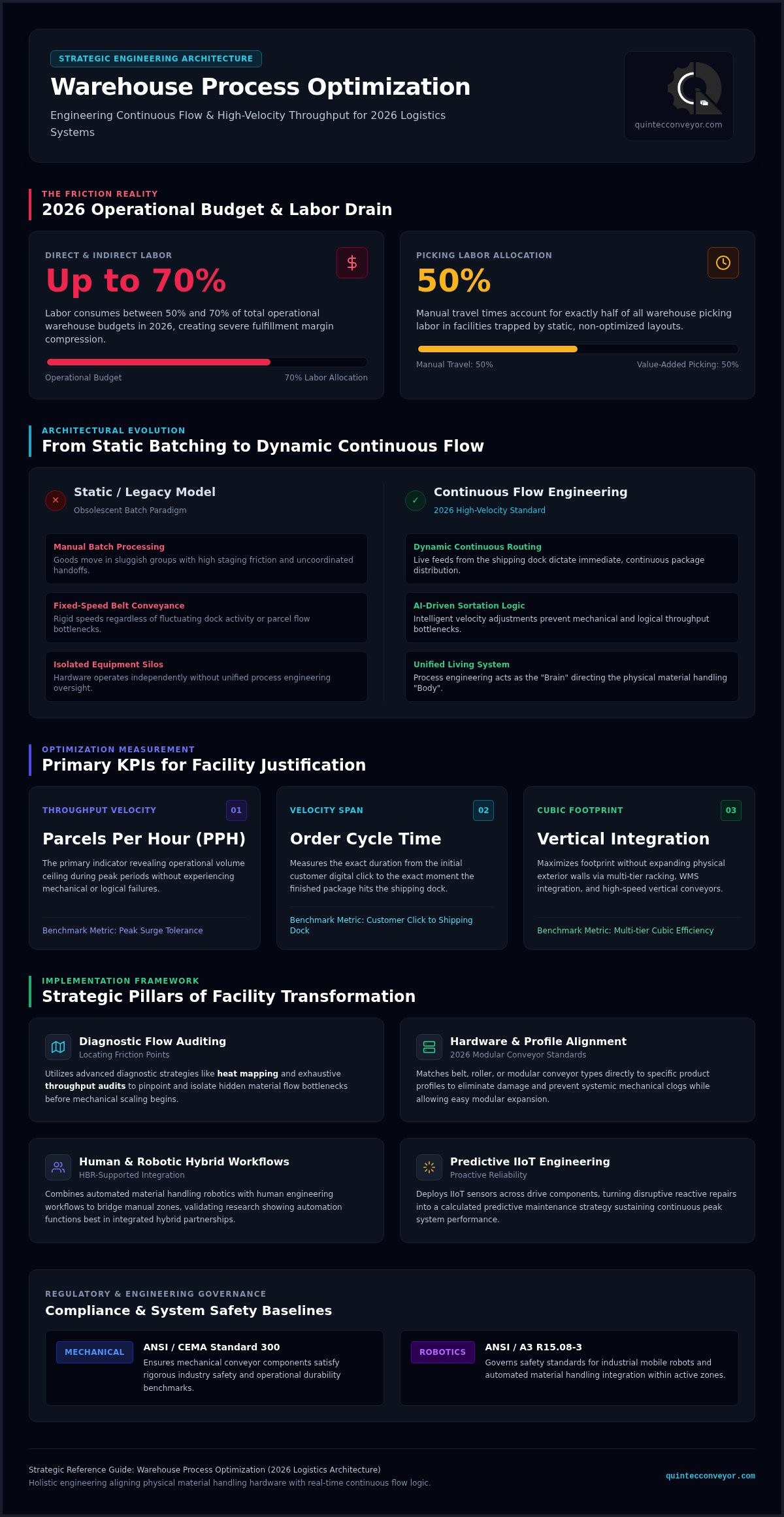
Did you know that direct and indirect labor still consumes up to 70% of total operational warehouse budgets in 2026? Despite the rapid advancement of technology, many facilities remain trapped by manual travel times that account for half of all picking labor. It's frustrating to watch unseen bottlenecks stifle your fulfillment speed while you search for effective warehouse process optimization strategies. You've likely considered automation, but the confusion over which technology yields a genuine ROI often leads to expensive stagnation.
This guide provides a definitive roadmap for facility improvement, showing you how to transform these challenges into high-velocity throughput engines. We'll move beyond simple hardware upgrades to focus on strategic process engineering that scales with your business requirements. You'll discover the critical role of robotics in material handling, learn to justify system integration costs to stakeholders, and understand the latest safety standards like ANSI/A3 R15.08-3. By the end of this article, you'll have the insights needed to implement a sophisticated, integrated system that ensures long-term stability and modern excellence.
Key Takeaways
- Understand why warehouse process optimization is a holistic engineering discipline that serves as the strategic "brain" behind your physical material handling systems.
- Learn to utilize diagnostic strategies like heat mapping and throughput audits to identify and eliminate hidden bottlenecks in your material flow.
- Discover the operational benefits of 2026 modular conveyor standards and how to integrate robotics into existing manual zones for maximum scalability.
- Explore how predictive maintenance and IIoT sensors transform reactive repairs into a proactive strategy that sustains peak system performance.
Understanding the Foundation of Warehouse Process Optimization
True warehouse process optimization is far more than a software patch or a faster motor. It's a holistic engineering discipline that treats your facility as a single, living machine where every component must be synchronized. While many operators focus solely on individual pieces of equipment, process engineering acts as the "brain" that directs the physical material handling "body." Without this strategic layer, even the most advanced robotics will fail to deliver their full potential because they're operating within a flawed framework.
The 2026 logistics market has moved decisively away from manual batch processing toward continuous flow models. This shift requires a fundamental re-evaluation of how goods move through a building. Professional warehouse design services are essential during this transition because they establish the maximum performance ceiling for your facility. If the initial engineering doesn't account for peak volume surges or future modularity, your hardware becomes a liability rather than an asset.
The Evolution of Process Engineering in Logistics
We've seen a massive transition from simple, fixed-speed belt conveyors to sophisticated, AI-driven sortation logic. This evolution was accelerated by e-commerce demands that require near-instantaneous fulfillment. In a high-velocity market, "static" warehouses that rely on traditional storage and slow manual retrieval are becoming obsolete. Modern engineering now focuses on dynamic movement, where products are sorted and routed in real-time based on live data feeds from the shipping dock.
Key Metrics for Measuring Optimization Success
To determine if your warehouse process optimization efforts are succeeding, you must track specific, high-impact data points. Throughput velocity is the primary indicator, typically measured in parcels per hour (PPH). This metric reveals exactly how much volume your system can handle during peak periods without experiencing mechanical or logical failures. Another critical measure is order cycle time, which tracks the duration from the customer's initial click to the moment the package hits the shipping dock.
Finally, space utilization efficiency has become a top priority as real estate costs rise. Engineering for vertical integration allows facilities to maximize their footprint without expanding their physical walls. This often involves integrating warehouse management system capabilities with multi-tier racking and high-speed vertical conveyors. By measuring these KPIs, leadership can justify the investment in advanced systems and prove a tangible ROI to stakeholders.
The Essential Pillars of Modern Process Engineering
While software is vital, the physical arrangement of equipment defines your operational limits. Effective warehouse process optimization begins with eliminating unnecessary travel distance for goods, as direct labor continues to consume 50% to 70% of total operational budgets in 2026. High-performing facilities integrate conveyors, robotics, and racking as a single unit rather than isolated silos. This integration allows for data-driven logic where real-time analytics adjust sortation speeds based on current dock activity. Scalability is equally critical. Your system must handle seasonal spikes without mechanical failure or logical bottlenecks.
Recent Harvard Business Review research on warehouse automation highlights that systems work best when human engineering workflows are combined with robotics. This hybrid approach ensures that the physical layout supports the speed of the automated components. If you're looking to upgrade your facility's logic, expert process engineering can bridge the gap between disparate automated systems and your human workforce.
Mechanical Efficiency and Hardware Selection
Choosing the right hardware is a fundamental engineering decision that dictates your long-term ROI. Matching conveyor types, such as belt, roller, or modular systems, to specific product profiles prevents damaged goods and system clogs. Adhering to ANSI/CEMA Standard 300 ensures that your mechanical components meet rigorous safety and performance benchmarks. Proper warehouse infrastructure solutions provide the necessary structural support for heavy automation, such as high-speed sortation systems. Motor efficiency and drive selection also play a major role in operational costs. High-efficiency drives reduce energy consumption and maintenance requirements over the system's entire lifecycle.
Robotics and Automation Logic
Integrating Autonomous Mobile Robots (AMRs) with fixed conveyor lines requires precise communication to maintain safety and speed. Handshake logic is the synchronized communication protocol between two automated material handling machines. This ensures that an AMR knows exactly when a conveyor is ready to discharge a load, preventing spills or equipment damage. Without this protocol, you risk collisions or throughput delays that can cascade through the entire facility. With over 4.69 million commercial warehouse mobile robots operating globally in 2026, establishing these protocols is no longer optional. It's a requirement for safe, high-velocity throughput that complies with the latest ANSI/A3 R15.08-3-2026 safety requirements for facility end-users.
Diagnostic Strategies: Identifying Hidden Bottlenecks in Your Material Flow
Effective warehouse process optimization isn't a guessing game. It's a data-driven inquiry that begins with visibility. A heat map approach allows our engineers to visualize material flow in real-time, pinpointing exactly where velocity drops and goods begin to pile up. Often, these slowdowns occur at transition points or induction zones that were never designed for current volumes. Conducting a thorough throughput audit reveals the "weakest link" in your conveyor chain, which is frequently a legacy component struggling to keep up with modern sortation speeds.
Space constraints often create physical bottlenecks that traditional equipment simply cannot solve. Integrating low profile conveyors into tight-space induction zones can clear these hurdles without requiring expensive structural changes. However, mechanical hardware is only half the story. Human-Machine Interface (HMI) errors frequently disrupt flow when operator stations are poorly designed or confusing. Adhering to OSHA warehousing safety and operational guidance ensures that these workstations are ergonomic and safe, reducing the likelihood of operator-induced delays and keeping your material flow steady.
Common Causes of Material Handling Congestion
Congestion usually stems from three specific engineering failures. First, inadequate sortation capacity during peak fulfillment windows creates backlogs that stall all upstream processes. Second, misaligned conveyor heights lead to product damage or frequent jams at transfer points, requiring manual intervention. Finally, outdated motor drives often lack the torque to handle 2026 load weights, causing the system to struggle or overheat under full capacity. Identifying these mechanical shortfalls is the first step toward reclaiming your facility's efficiency.
Utilizing Simulation and Digital Twins
In 2026, we don't wait for a system to fail to find its limits. We use digital twins to stress-test layouts in a virtual environment before a single bolt is turned. These simulations allow us to run "What-If" scenarios for future SKU growth, ensuring your investment remains viable as your business scales. By identifying the ROI of a system upgrade through digital modeling, leadership can move forward with total confidence. This proactive approach eliminates the risk of post-installation surprises and ensures that every component is sized correctly for your specific throughput requirements.
Executing Optimization: From Modular Conveyors to Robotics Integration
Execution is where strategic planning meets physical reality. In 2026, the industry has shifted away from rigid, fixed-asset installations toward modularity. Flexible conveyor systems are now the standard because they allow facilities to reconfigure layouts as SKU profiles change. This flexibility is essential for successful warehouse process optimization, as it prevents your infrastructure from becoming a bottleneck during future shifts in demand. Integrating warehouse robotics integration into manual zones further enhances this agility, allowing autonomous units to work alongside existing conveyor lines.
The "Last 100 Feet" of a facility, the packing and shipping sortation area, often requires the most precise engineering. If this zone isn't optimized, it can stall the entire upstream flow. High-density automated storage also relies on custom-designed racking that interfaces perfectly with robotic pickers. When these elements are synchronized, the result is a high-velocity throughput engine. If you're ready to modernize your material flow, consult with our process engineering team to design a system tailored to your specific volume requirements.
Phased Implementation vs. Total Overhaul
Many facility managers fear that optimization requires a total shutdown. However, a phased approach often yields better results with less risk. By identifying "Quick-Win" zones, such as a single congested induction point, you can achieve immediate throughput gains without disrupting the entire facility. Engineering for future expansion is equally important. We design systems that leave "white space" for 2027-2028 growth, ensuring that adding new modules or robotics doesn't require a complete redesign. This methodical progression minimizes downtime and allows for a more manageable capital expenditure.
The Role of Advanced Sortation Systems
Choosing between cross-belt and shoe sorters depends on your specific product volume and fragility. Shoe sorters are excellent for high-speed handling of diverse package sizes, while cross-belt systems provide the precision needed for smaller, lightweight items. A critical component of these systems is the divert logic. Divert logic is the programmed decision-making process that directs a parcel from a main conveyor line to a specific destination lane. Optimizing this logic reduces recirculating loads, which are parcels that must travel through the system multiple times because a divert lane was full or the timing was off. Reducing recirculation is a primary goal of any warehouse process optimization project.
Sustaining Peak Performance Through Integrated Maintenance and Engineering
An unmaintained system is, by definition, a de-optimized system. Even the most sophisticated warehouse process optimization strategy will eventually fail if the physical hardware is allowed to degrade. As mechanical components wear, friction increases and timing slips, which erodes the throughput gains achieved during your initial engineering phase. In 2026, the industry has shifted away from reactive repairs toward condition-based alerting. By utilizing Industrial IoT (IIoT) sensors to monitor vibration, thermal output, and current draw, we can identify a failing motor or a misaligned belt before it causes a catastrophic shutdown. This predictive maintenance approach ensures that your facility maintains its high-velocity throughput engine without unplanned interruptions.
Ongoing process engineering is equally vital for fine-tuning systems post-installation. Your facility is not a static environment. As your SKU mix evolves or seasonal volumes shift, your system logic must be adjusted to maintain operational balance. Quintec’s national maintenance network provides the technical expertise to implement these physical and logical updates across the United States. This partnership ensures that your material handling environment remains at peak efficiency throughout its entire lifecycle, protecting your capital investment from premature obsolescence.
The Lifecycle of an Optimized Facility
Maintaining high-level performance requires regular quarterly performance audits to ensure the system still meets your 2026 operational goals. These audits often reveal opportunities to upgrade individual components, such as high-efficiency motors or modular belts, without the massive expense of replacing the full system. Strategic component upgrades allow you to integrate new technology as it becomes available, keeping your facility on the cutting edge. Professional maintenance also has a direct impact on your Total Cost of Ownership (TCO). By preventing emergency repairs and extending equipment lifespan, you significantly reduce the long-term costs of your warehouse process optimization efforts.
Partnering with a System Integrator
Navigating complex logistical challenges requires a partner with a deep well of collective experience. With over 100 years of industry knowledge, our team understands the intricate troubleshooting required for integrated robotics and high-speed sortation. The value of a national partner is especially clear for multi-site warehouse networks that require consistent engineering standards across various locations. This steady hand provides the security you need to manage large-scale projects with total confidence. Optimize your warehouse flow with Quintec's expert process engineering.
Engineering the Future of Your Material Flow
Achieving sustained excellence in 2026 requires more than just installing the newest robotics. It demands a holistic commitment to warehouse process optimization, where strategic engineering dictates the physical layout and logical flow of your facility. By utilizing advanced diagnostics such as digital twins and heat mapping, you can identify hidden bottlenecks before they impact your fulfillment speed. Integrating modular conveyors and robotics ensures that your infrastructure remains agile enough to scale with future SKU growth and seasonal demand spikes.
Success in complex material handling depends on a partner who understands the intricate relationship between hardware and process logic. With over 100 years of collective industry expertise and national design, engineering, and installation coverage, our team specializes in high-throughput conveyor integration. We provide the steady hand needed to navigate large-scale facility upgrades with total confidence. Streamline your facility with Quintec’s custom process engineering solutions today. Your path to operational excellence is a strategic journey, and we're ready to guide you every step of the way.
Frequently Asked Questions
What is the difference between warehouse optimization and process engineering?
Warehouse optimization refers to the overarching goal of improving facility efficiency, while process engineering is the specific technical discipline used to achieve it. Engineering focuses on the physical design of material movement and the logical synchronization of equipment. It involves analyzing material flow, identifying mechanical constraints, and designing custom solutions like sortation systems or robotics. Process engineering provides the strategic blueprint that makes high-level optimization possible in a complex industrial environment.
How long does a typical warehouse process optimization project take?
The duration of a warehouse process optimization project varies based on the facility's scale and the complexity of the integration. A targeted retrofit of a specific induction zone might take several weeks, while a comprehensive facility overhaul can span several months. We prioritize phased implementation to minimize operational downtime. This methodical approach allows you to achieve immediate throughput gains in "Quick-Win" areas while the larger system integration continues in the background.
Can I optimize my warehouse without replacing all my existing conveyors?
You don't need to replace every piece of equipment to see significant results. Many optimization projects focus on modular retrofits, such as replacing outdated motor drives or adding low-profile conveyors to tight transition points. By re-engineering divert logic and upgrading specific high-wear components, you can significantly increase the velocity of your existing material handling system. This targeted approach allows for a more manageable capital expenditure while still delivering a measurable return on investment.
What are the most common bottlenecks in a modern distribution center?
Bottlenecks frequently occur at induction zones where manual labor meets automated conveyors, or at transition points where material flow is restricted by outdated sortation capacity. In 2026, many distribution centers also struggle with "Last 100 Feet" congestion near the shipping dock. These slowdowns often stem from misaligned conveyor heights or inadequate divert logic that causes parcels to recirculate. Identifying these specific physical constraints is the first step toward restoring high-velocity throughput.
How does robotics integration affect warehouse process engineering?
Robotics integration fundamentally changes the logic of process engineering by introducing autonomous agents into fixed conveyor environments. This requires the establishment of precise "handshake logic" to ensure seamless communication between robots and stationary machines. Engineering for robotics also involves managing dynamic zones and floor markings to comply with ANSI/A3 R15.08-3-2026 safety standards. When properly integrated, these systems reduce manual travel time, which accounts for up to 50% of picking labor in traditional warehouses.
What is the expected ROI for a comprehensive process optimization project in 2026?
While specific figures depend on the project scope, operations integrating robotics and automated sortation in 2026 report significant gains. Data from the SellersCommerce Automation Study indicates that facilities can see up to 25% to 30% reductions in labor expenses. Additionally, order cycle times can improve by up to 300% while maintaining picking accuracy above 99%. These results allow stakeholders to justify the cost of system integration through a rapid and transparent return on investment.
Do I need a new WMS to optimize my physical warehouse processes?
You don't necessarily need a new Warehouse Management System (WMS) to improve your material flow. However, your existing WMS must be capable of communicating effectively with the Warehouse Control System (WCS) or Warehouse Execution System (WES) that directs your physical hardware. Optimization often focuses on the "Logistics Execution Platform" that bridges the gap between high-level inventory planning and real-time machine control. If your current software can handle these handshakes, physical engineering can proceed.
How often should a facility undergo a process engineering audit?
We recommend that facilities undergo a professional process engineering audit at least once per year, though quarterly reviews are ideal for high-volume operations. These audits ensure that your warehouse process optimization strategy still aligns with your current SKU profiles and order volumes. As e-commerce demands shift, your system logic and hardware configuration may require fine-tuning to prevent new bottlenecks. Regular audits help maintain peak system performance and protect your long-term capital investment.